‹ Compare two snakes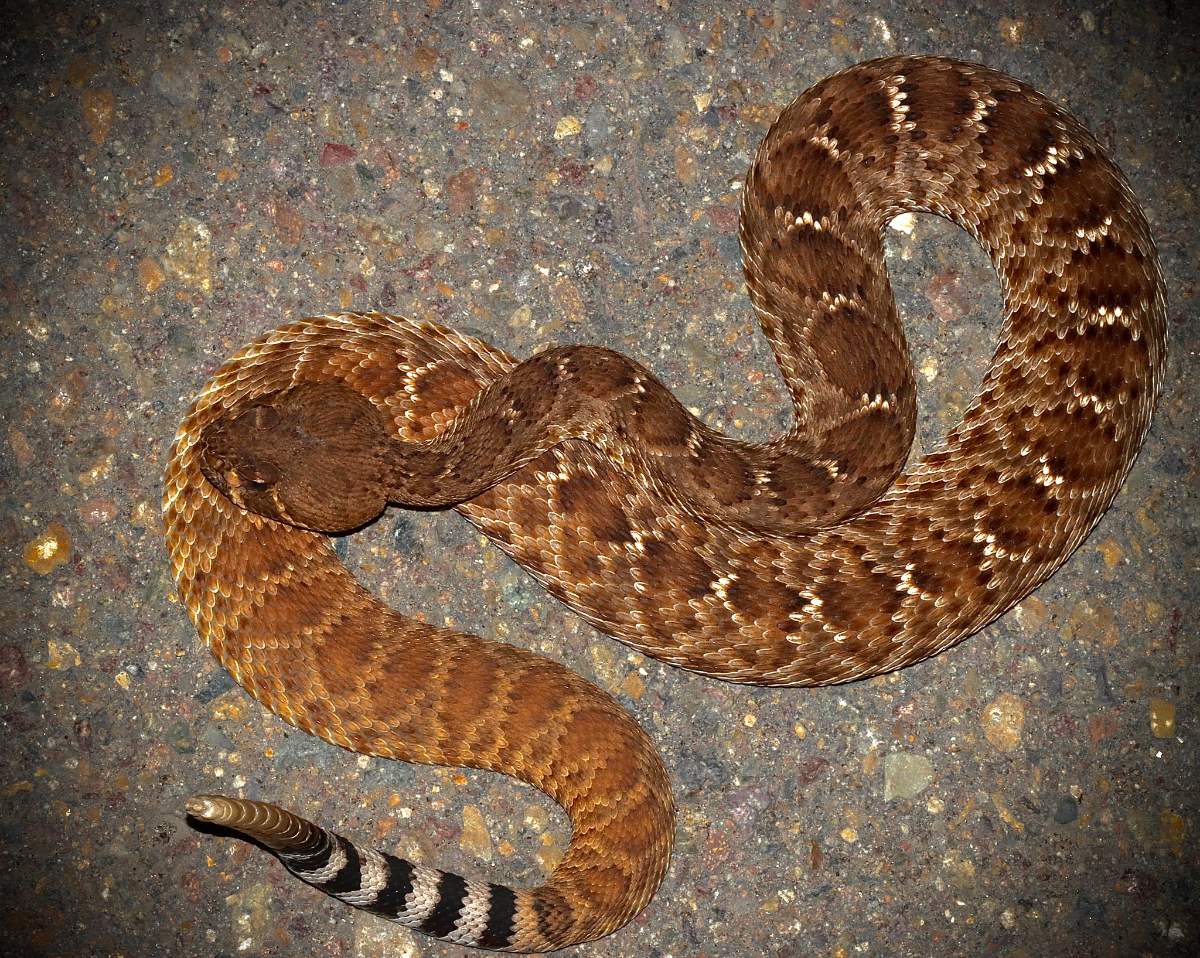
Red Diamond Rattlesnake vs Western Rattlesnake
Tap a part to see it on both. Tap it again to turn it off.
(c) Parsa Fard, some rights reserved (CC BY)
Red Diamond Rattlesnake
Crotalus ruber
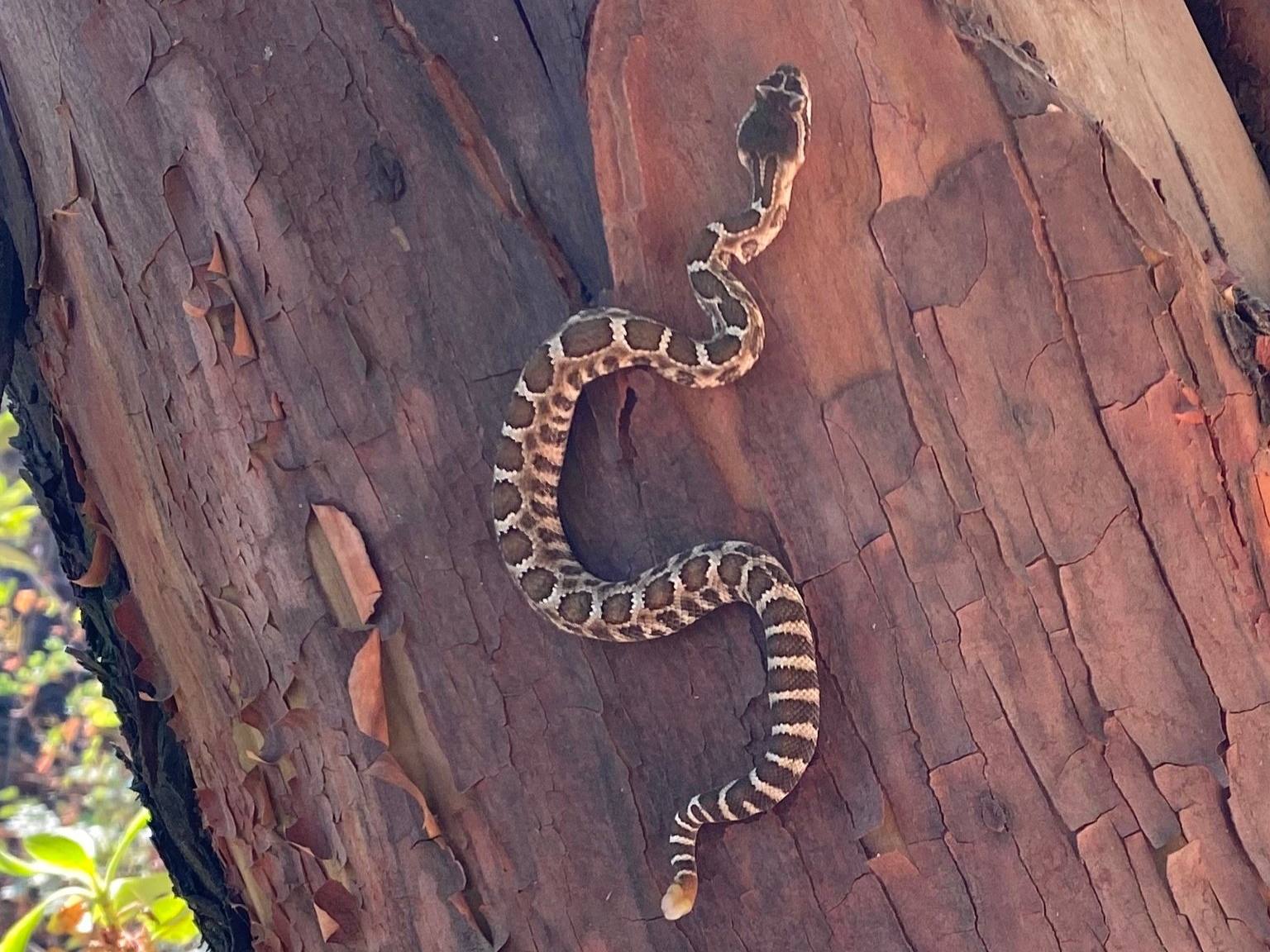
Venomous(c) Yan Davidovich, some rights reserved (CC BY-SA)
Western Rattlesnake
Crotalus oreganus
VenomousThe quick way to tell
Look at the body color and markings. The Red Diamond is reddish with light-edged diamonds and a black-and-white ringed tail. The Western Rattlesnake in the same area is brown to olive-brown with dark brown blotches that turn into crossbars toward the tail.
Pattern ★ This settles it
Reddish-brown diamonds with pale edges, fairly plain inside, on a reddish or tan body.
Pale-edged blotches wider than long, banding near the tail; olive to nearly black.
Head
Broad triangular head on a thin neck, often reddish, with a dark stripe slanting from below the eye to the corner of the mouth, edged by light lines.
Broad triangular head with a dark cheek stripe bordered by white.
Eyes
Vertical slit pupil; heat-sensing pit between eye and nostril.
Vertical slit pupil; heat-sensing pit between eye and nostril.
Pits
A deep heat-sensing pit on each side of the face, between the eye and the nostril.
A deep heat-sensing pit on each side of the face, between the eye and the nostril.
Tail
Black-and-white rings of similar width just ahead of the rattle.
Thin ahead of the rattle.
What it does
Usually calm; many stay still or hide, but it will rattle and strike if provoked.
Coils and rattles; retreats to rocks if given room.
Where it lives
Southwestern California, from southeastern Los Angeles and Orange Counties and the Morongo Valley south through western Riverside and San Diego Counties to extreme southwestern Imperial County; continues south through Baja California, Mexico.
Pacific states and the Great Basin: Washington, Oregon, Idaho, California, Nevada, Utah and Arizona, east into western Colorado and southwestern Wyoming, plus British Columbia and Baja California.