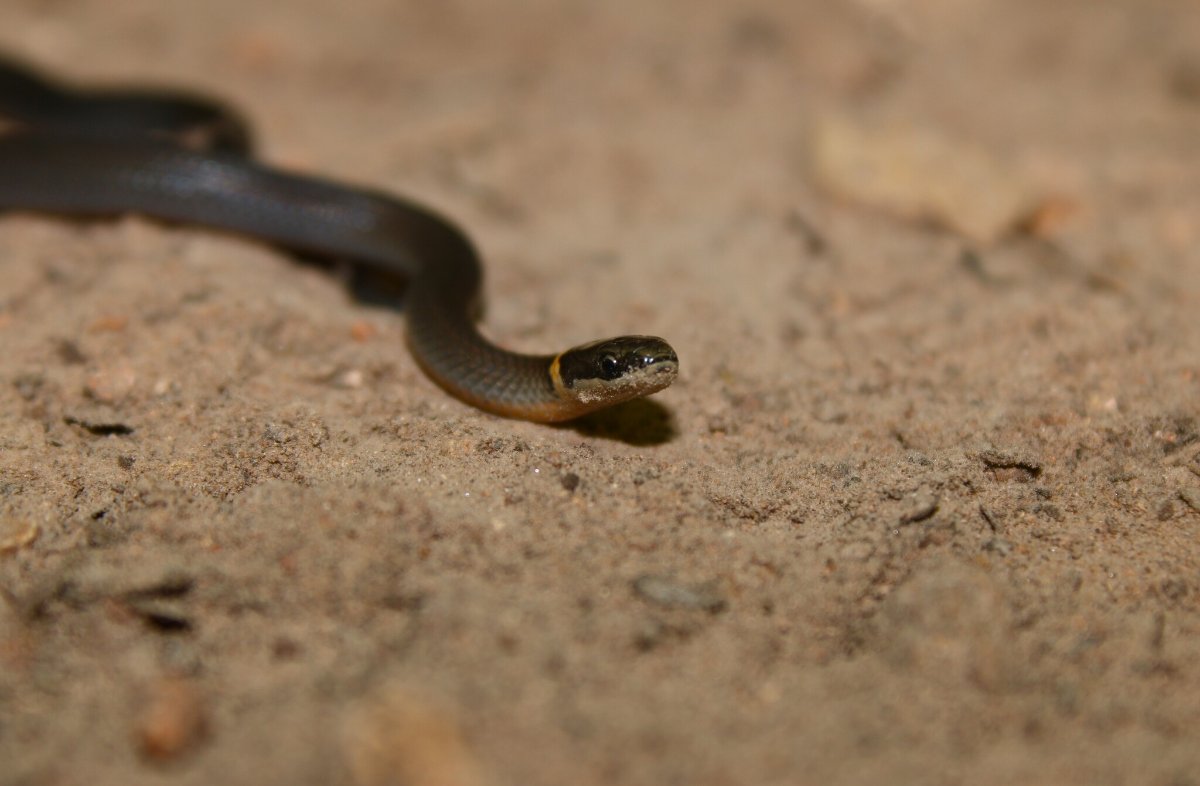
Ring-necked Snake
Diadophis punctatus · Ring-necked & Wormsnakes
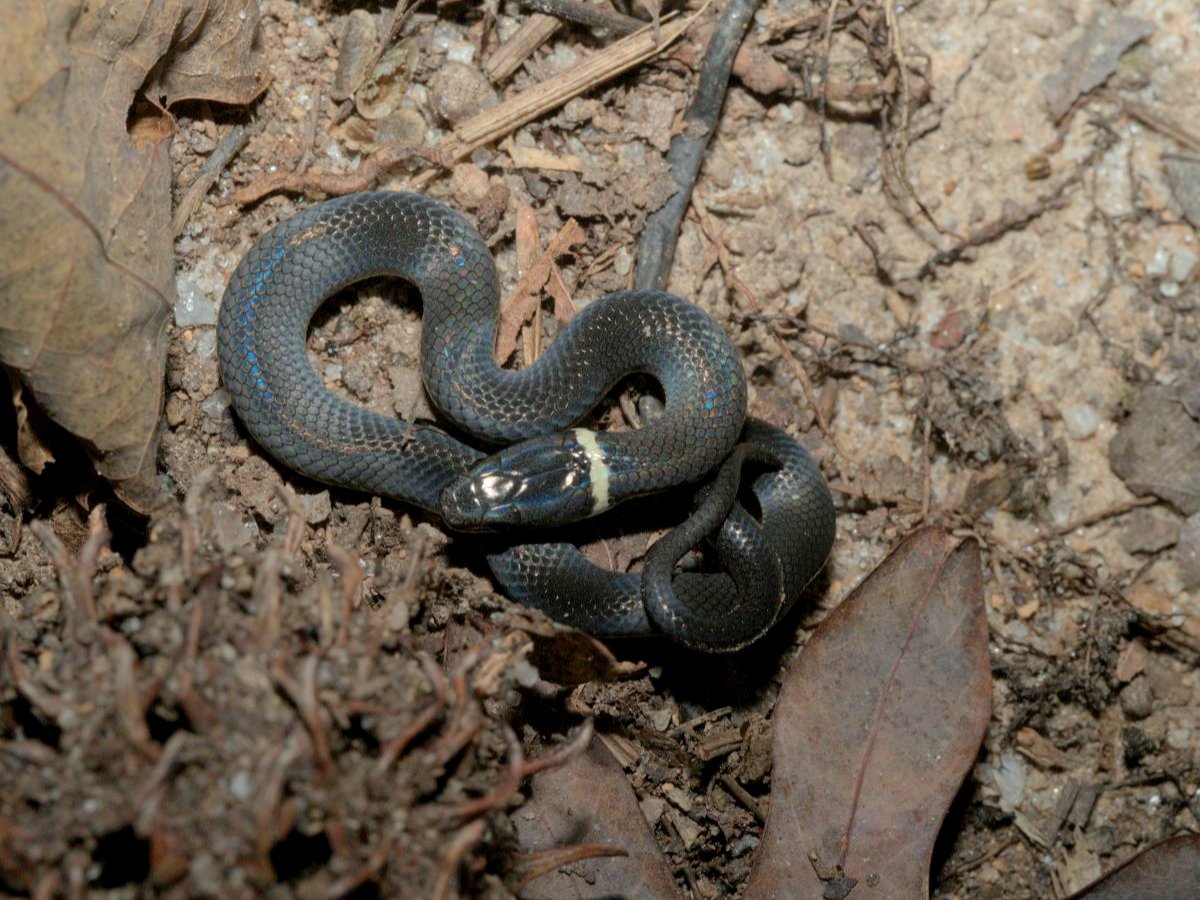
Tap a part to see what to look for. Tap it again to turn it off.
Mild venom from its rear teeth, used on worms and salamanders. It rarely bites. (Generally considered harmless to people.)
How to identify
- Head
- Small plain head, no wider than the neck.
- Pattern
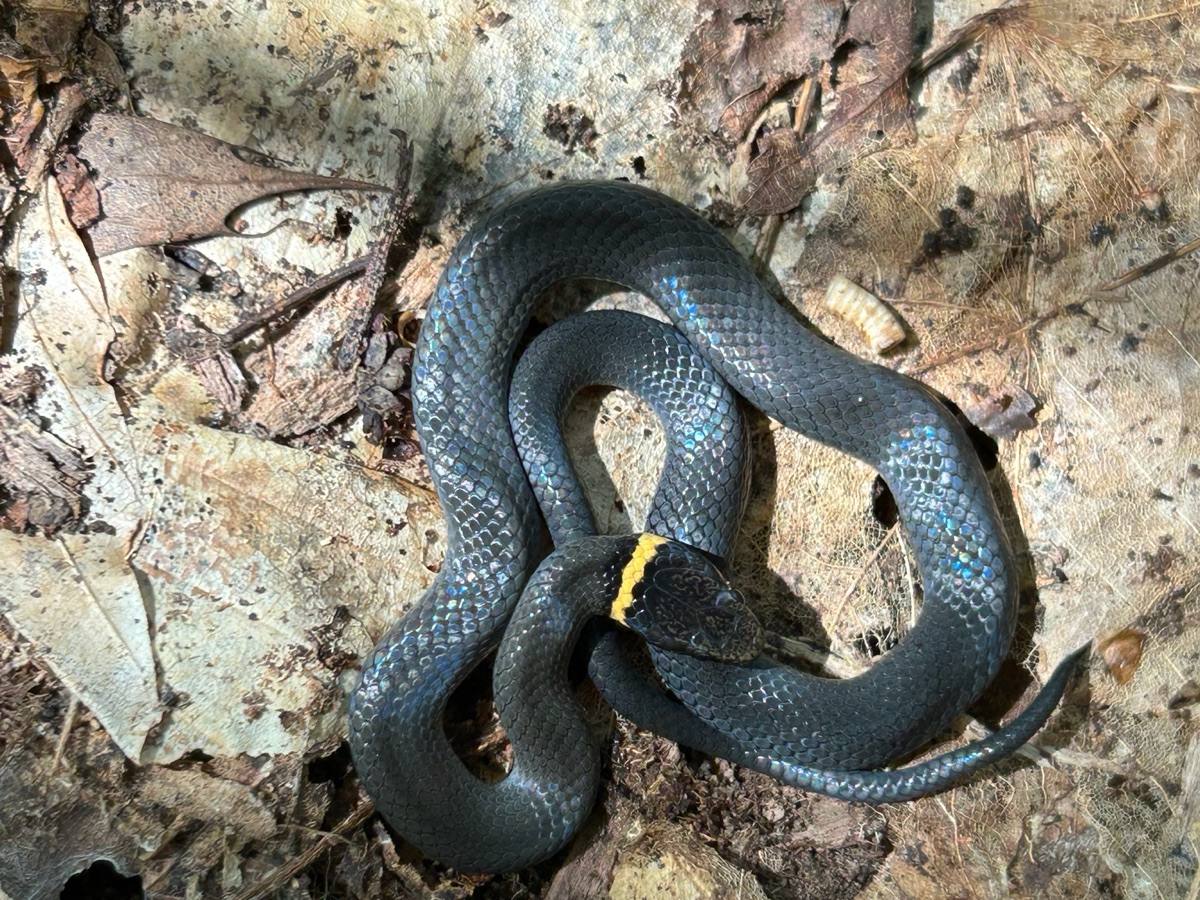
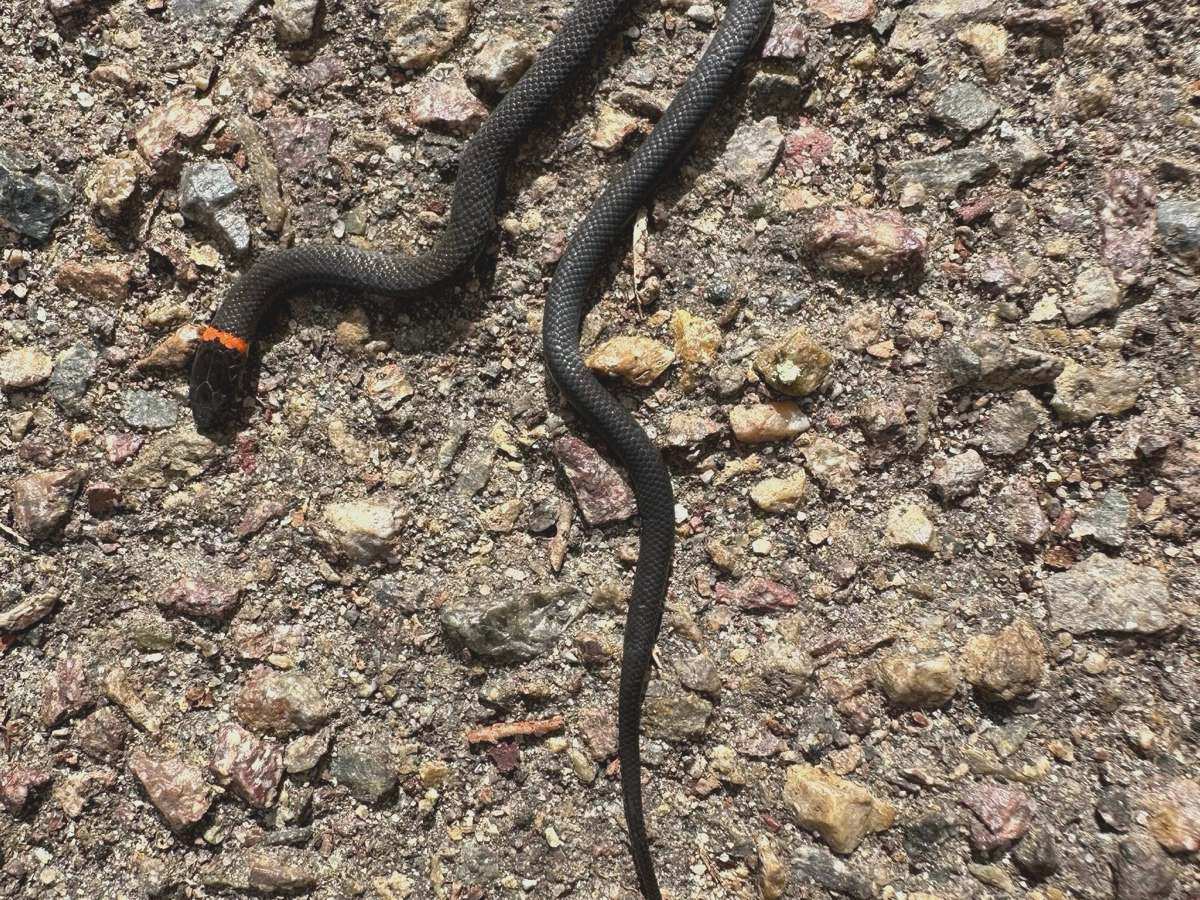
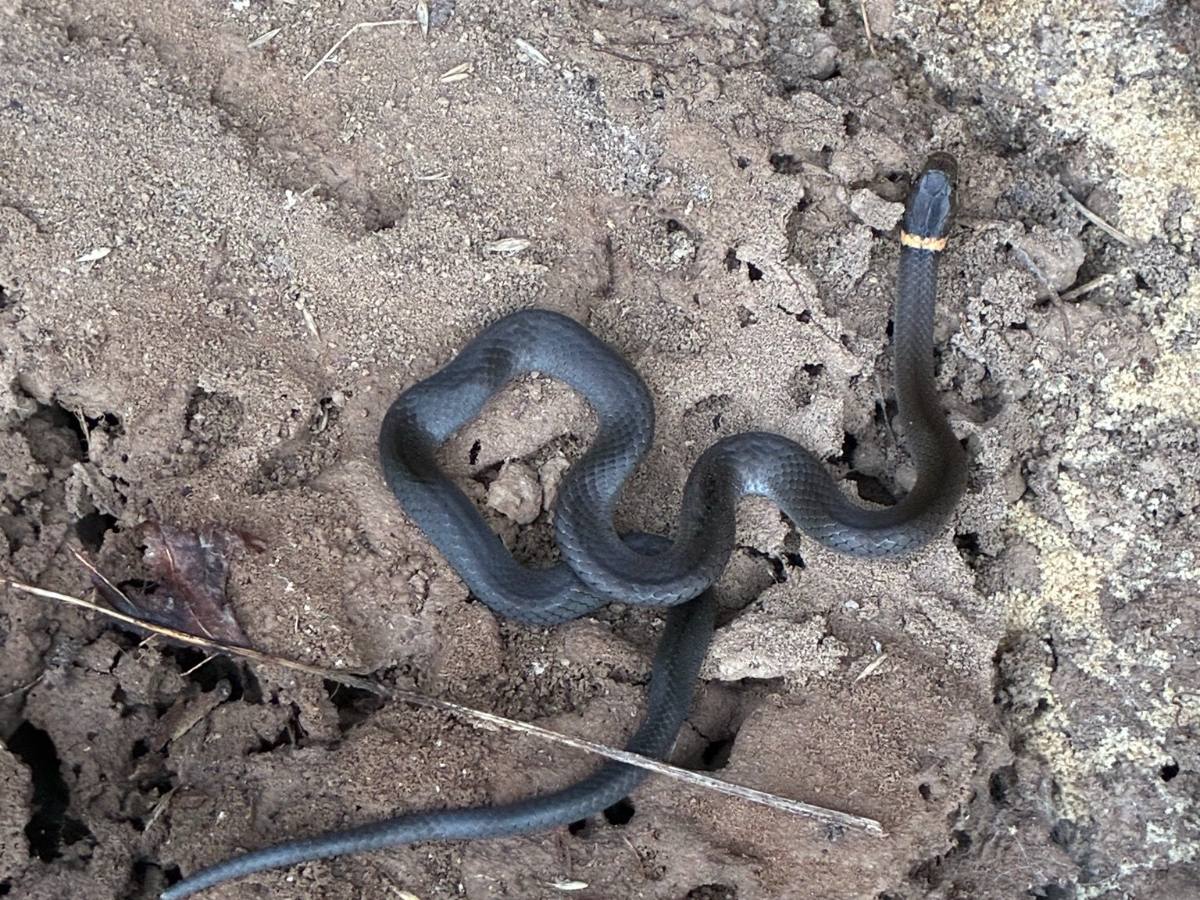
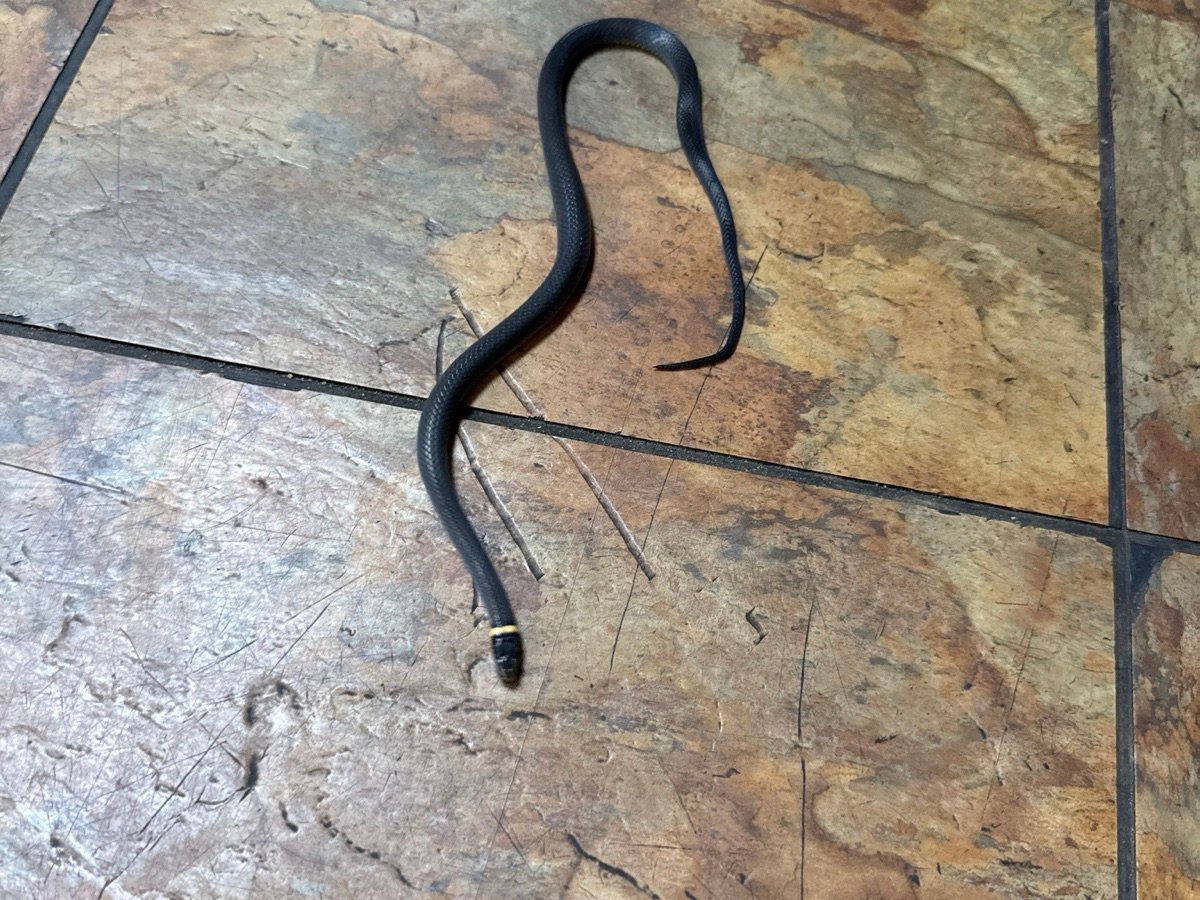
- Plain slate gray with a bright yellow to red neck ring and matching belly.
- Eyes
- Round pupil, small dark eye; no heat-sensing pit.
- Pits
- None. There is no pit between the eye and the nostril.
- Tail
- Short, brightly coloured underneath; no rattle.
- What it does
- Curls its tail into a tight coil to show the bright underside.
Often confused with
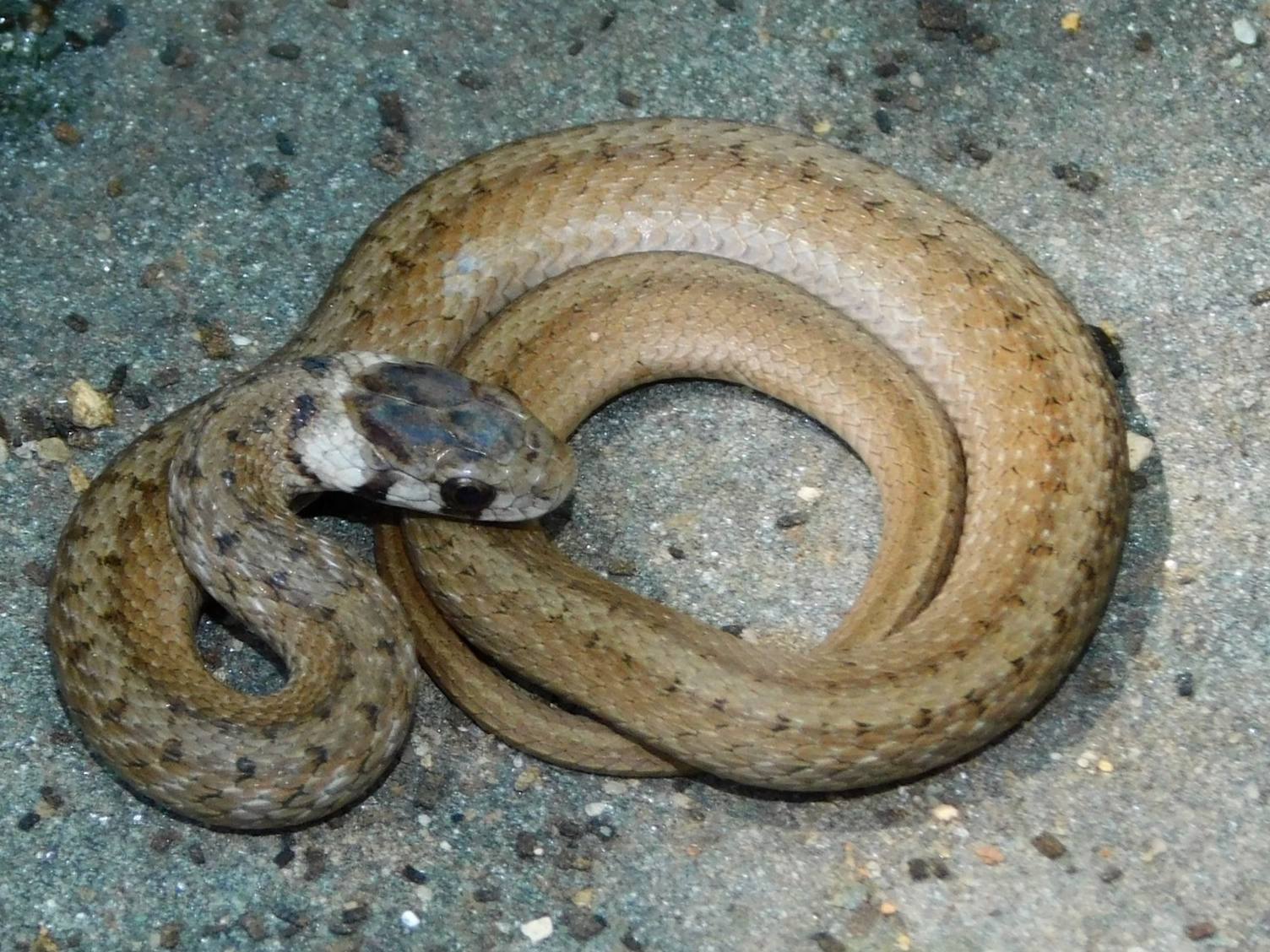
Young DeKay's Brownsnakes also have a pale neck collar, but they have keeled scales and a pale belly without bright yellow or orange. Red-bellied Snake and earthsnakes are the same size but lack the full neck ring.
How to tell them apart
Ring-necked Snake vs DeKay's Brownsnake›
The quick way to tellLook at the neck. The Ring-necked Snake has a bright yellow-orange collar. DeKay's Brownsnake has none.
Ring-necked Snake: Small plain head, no wider than the neck.
DeKay's Brownsnake: Small head, often with a dark mark behind the jaw.
About the Ring-necked Snake›
One of the most abundant snakes in North America and one of the least seen, because it lives under rocks, logs and bark rather than out in the open. Several can often be found under a single flat stone.
When frightened it coils its tail into a tight curl and shows the bright underside, a warning display that looks far more dramatic than the snake is.
The details
Size Usually 10–15 inWeight Well under 0.5 lbLifespan About 10 years
Typical range›
Most of the US except the northern plains and driest desert, plus southern Canada and parts of Mexico.
Activity›
Mostly active at night and after rain; spends the day hidden under cover. Often found in small groups.
Diet›
Earthworms, slugs, salamanders, small frogs and insect larvae.
Reproduction›
Lays eggs, usually 2–10, in early summer, often in shared nests.
Found in parts of 45 states›
Ranges are approximate. It may be found in only part of a state, or be rare there, and snakes can turn up outside of them.