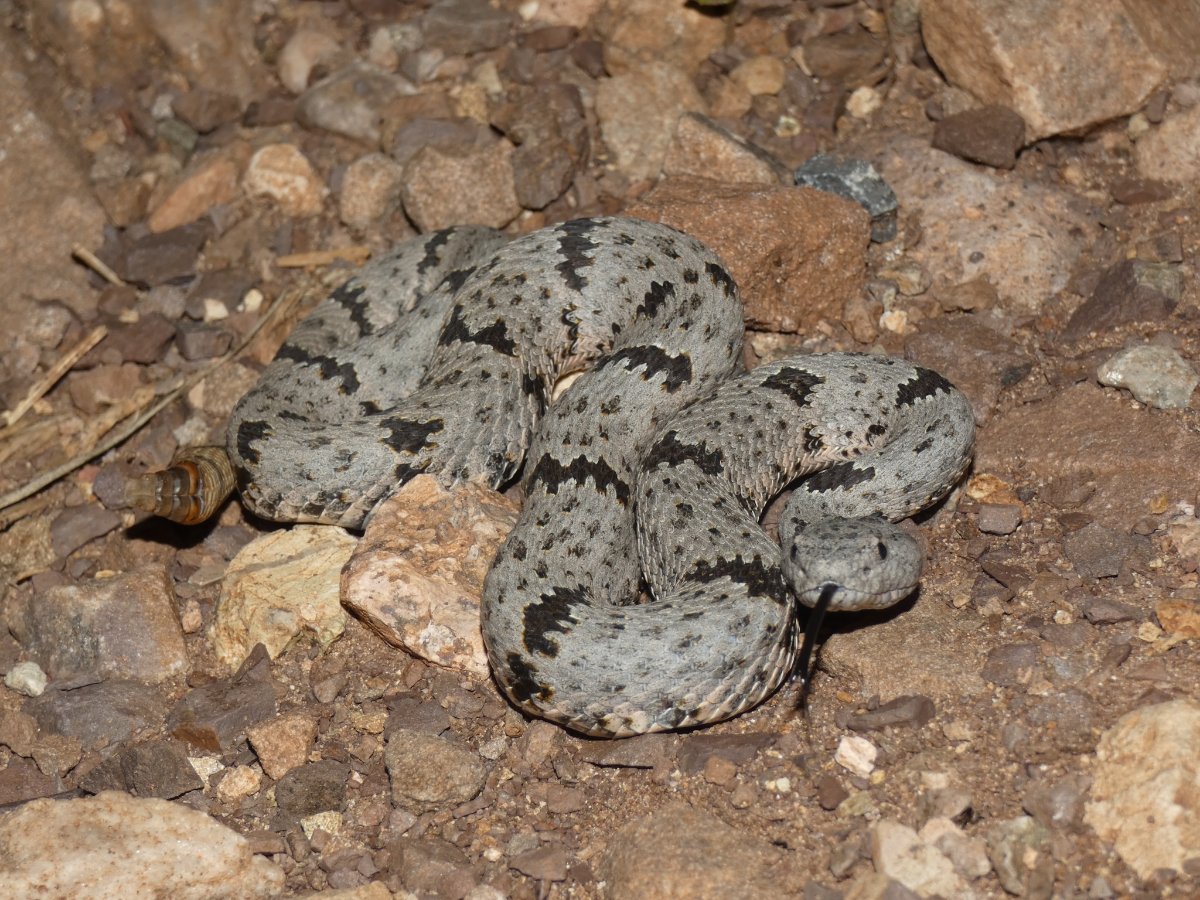
Rock Rattlesnake
Crotalus lepidus · Rattlesnakes
Tap a part to see what to look for. Tap it again to turn it off.
Venomous. It blends into rocks and is easy to miss; keep well back — a bite is a medical emergency.
How to identify
- Head
- Broad triangular head on a slender neck.
- Pattern
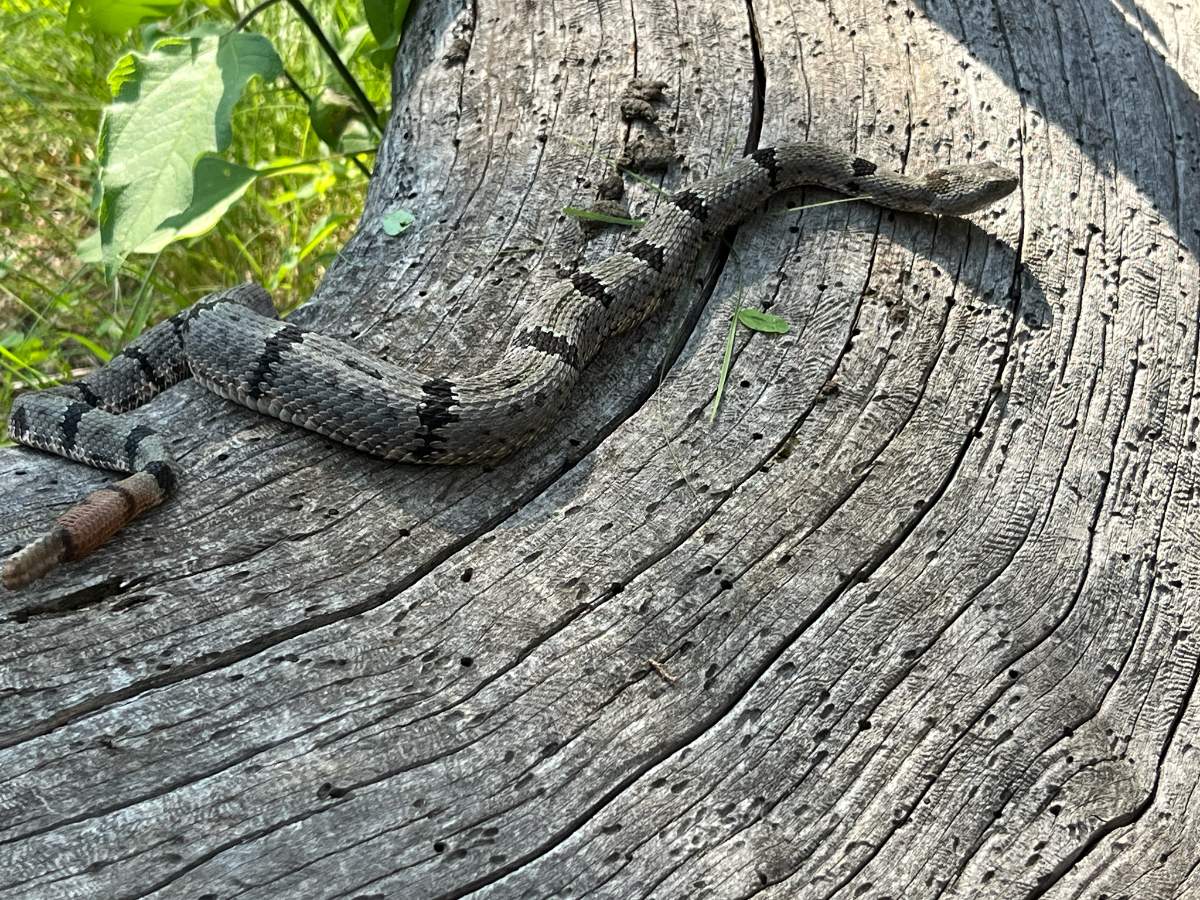
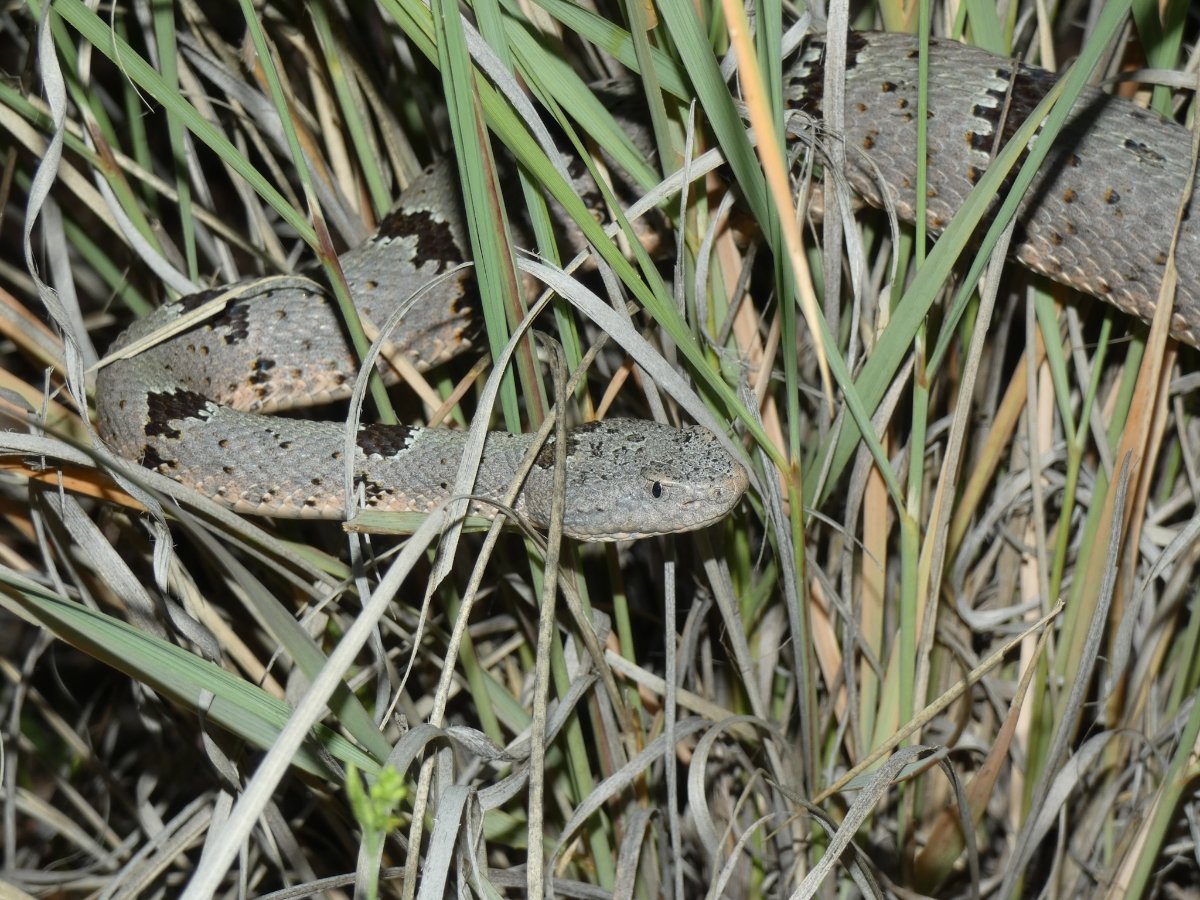
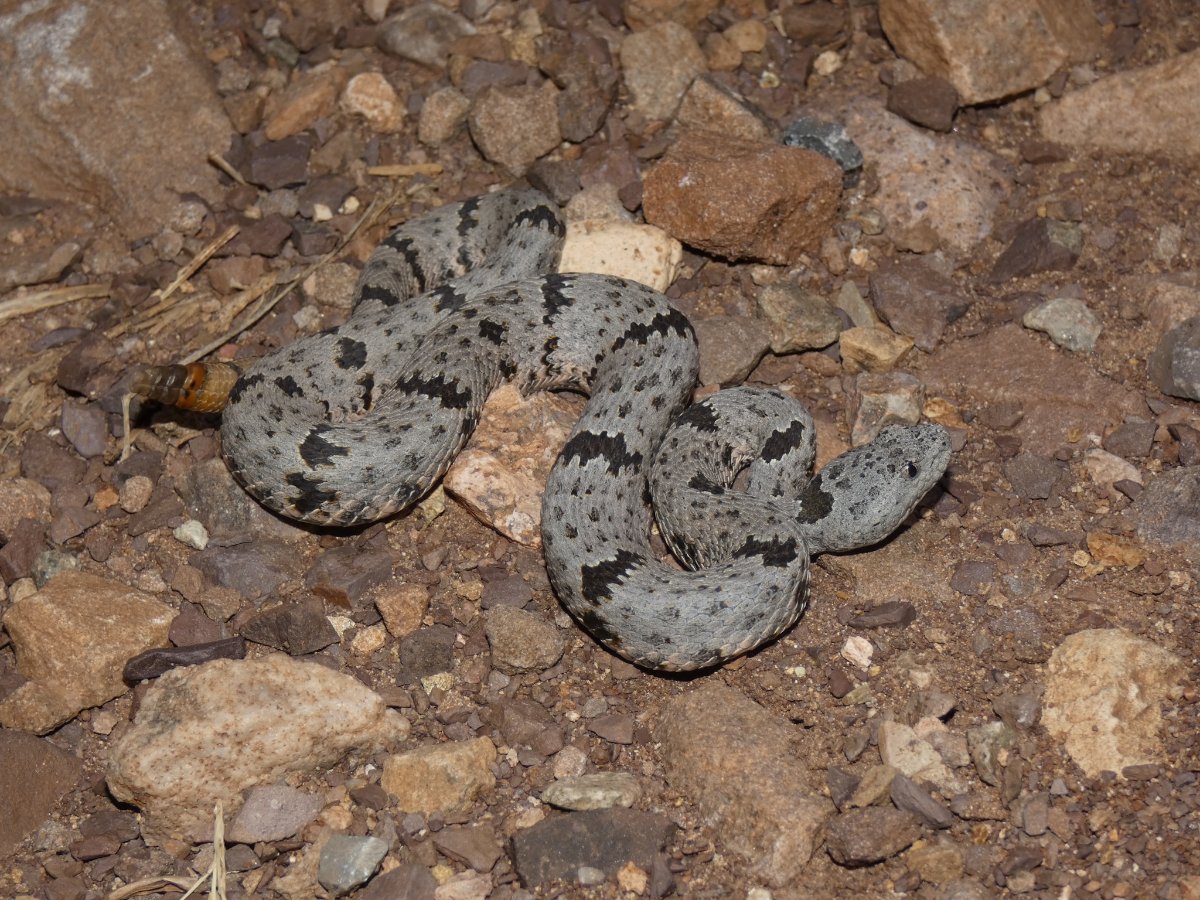
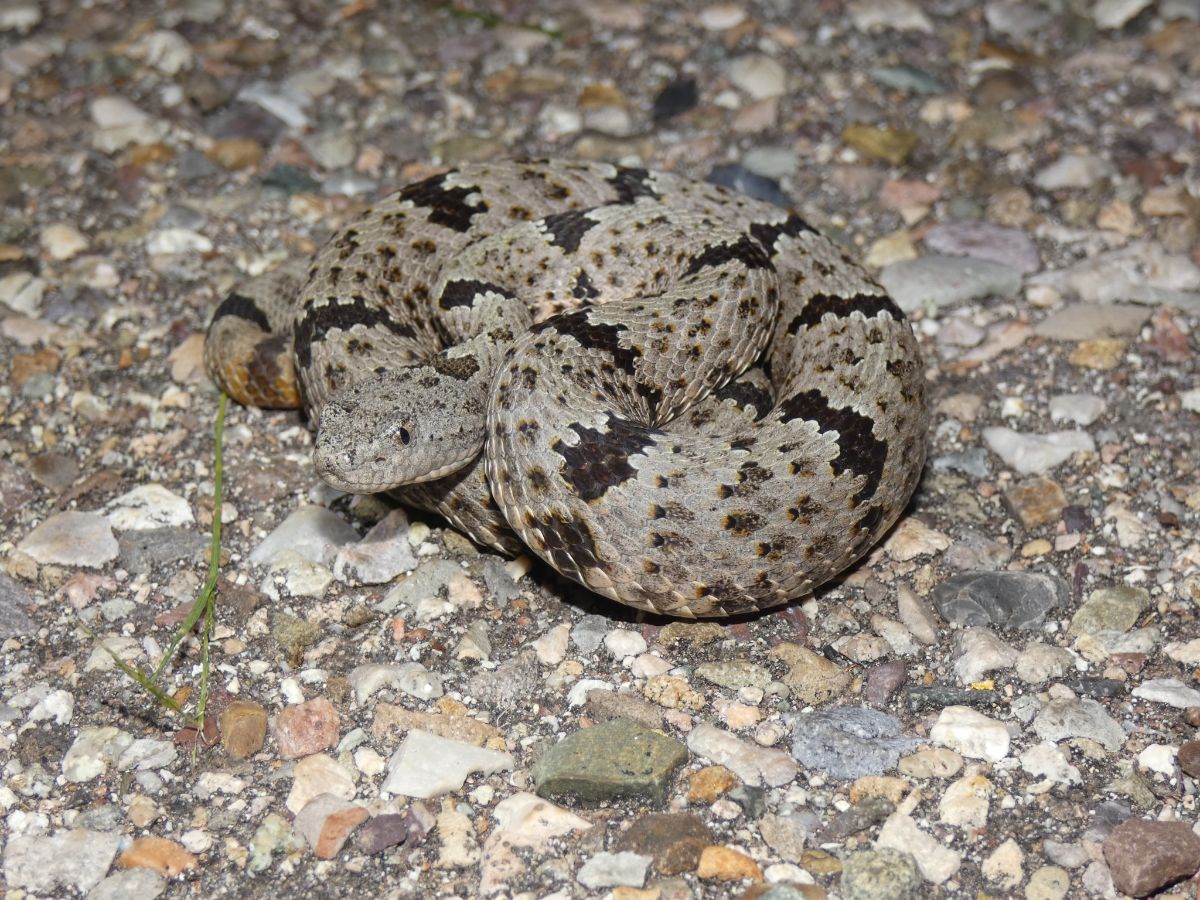
- Narrow, jagged dark crossbands, widely spaced on a pale gray, greenish, tan or pinkish body.
- Eyes
- Vertical slit pupil; heat-sensing pit between eye and nostril.
- Pits
- A deep heat-sensing pit on each side of the face, between the eye and the nostril.
- Tail
- Young have a bright yellow tail; adults' tails are salmon or peach before the rattle.
- What it does
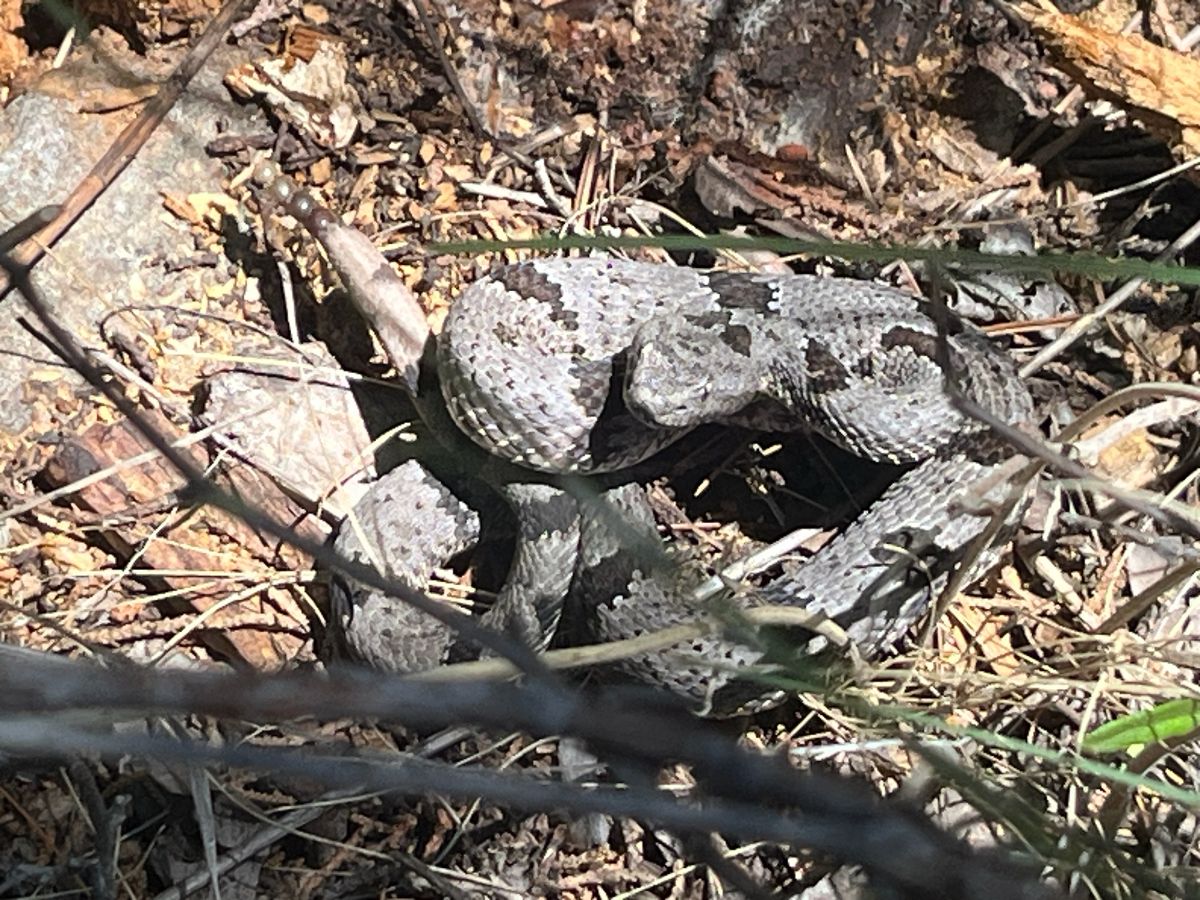
- Stays hidden among rocks and crevices.
Often confused with
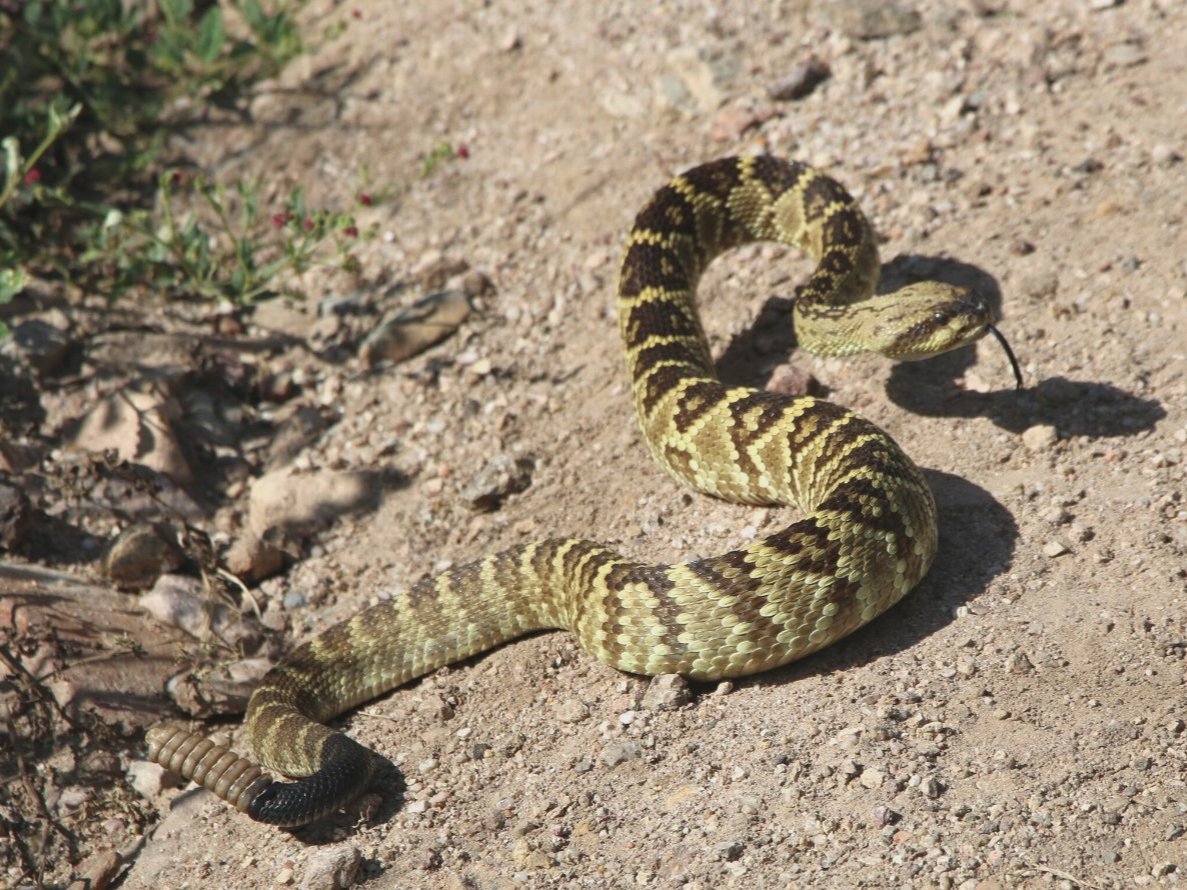
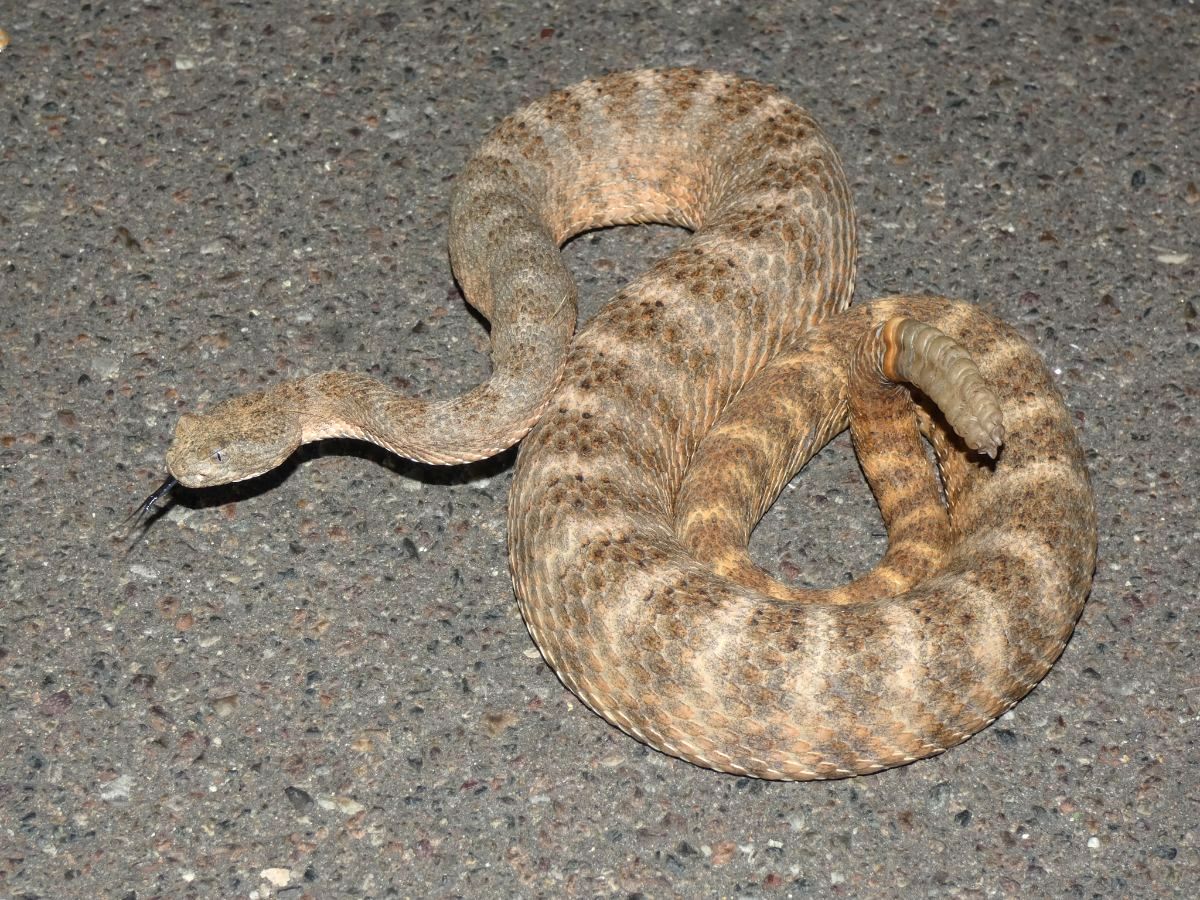
Tiger Rattlesnake and Black-tailed Rattlesnake are the usual mix-ups; the Rock Rattlesnake's few, widely spaced bands and salmon-colored tail are the best clues.
How to tell them apart
Rock Rattlesnake vs Black-tailed Rattlesnake›
The quick way to tellLook at the tail just before the rattle. The Rock Rattlesnake's tail is salmon or peach (yellow in young ones). The Black-tailed Rattlesnake's tail is solid black.
Rock Rattlesnake: Young have a bright yellow tail; adults' tails are salmon or peach before the rattle.
Black-tailed Rattlesnake: Solid black or dark gray ahead of the rattle, with few or no bands.
Rock Rattlesnake vs Tiger Rattlesnake›
The quick way to tellCount the bands. The Rock Rattlesnake has only about 13–24 bands, widely spaced. The Tiger Rattlesnake has many more — about 35–50 — packed close together, and a tiny head.
Rock Rattlesnake: Narrow, jagged dark crossbands, widely spaced on a pale gray, greenish, tan or pinkish body.
Tiger Rattlesnake: Many narrow, dark crossbands from neck to tail — bands, not blotches or diamonds.
About the Rock Rattlesnake›
A small rattlesnake of rocky mountain slopes, canyons and talus in southeastern Arizona, southern New Mexico and West Texas, reaching well into Mexico. It stays close to rock outcrops and crevices.
Its color changes a lot from place to place. The Banded form (mostly Arizona and New Mexico) is greenish or gray with widely spaced black bands. The Mottled form (Texas and New Mexico) is usually gray, tan or pinkish with dark bands.
The details
Size Usually 1.5–2.3 ft; rarely up to about 2.75 ft
Typical range›
Mountains of southeastern Arizona, southern New Mexico and West Texas, south through much of northern and central Mexico.
Activity›
Mainly active by day, especially mornings and late afternoons, from spring to fall.
Diet›
Mostly lizards, plus centipedes, small rodents and occasionally birds.
Reproduction›
Mates in summer; females give birth to a small litter of about 1–10 live young in summer.
Found in parts of 3 states›
Ranges are approximate. It may be found in only part of a state, or be rare there, and snakes can turn up outside of them.