‹ Compare two snakes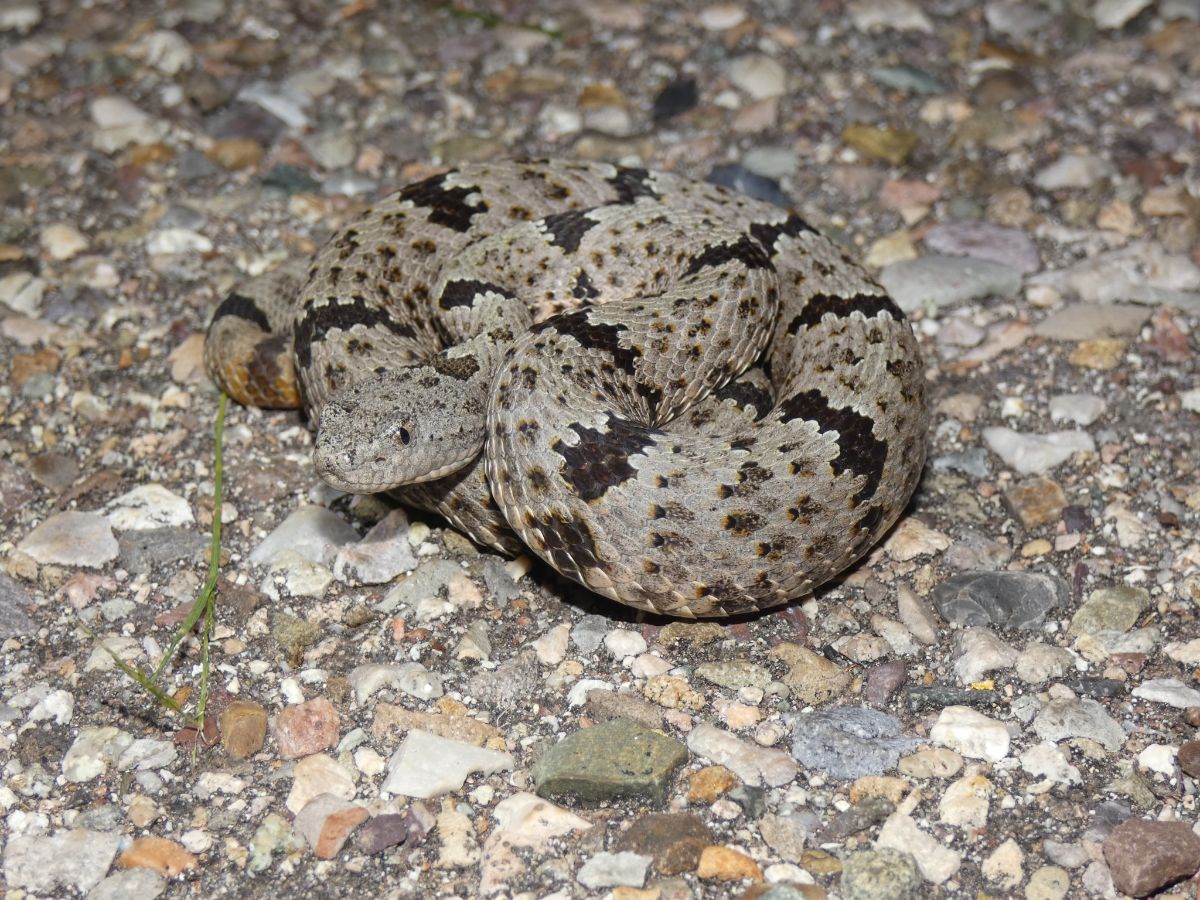
Rock Rattlesnake vs Tiger Rattlesnake
Tap a part to see it on both. Tap it again to turn it off.
Etienne Falquet, no rights reserved
Rock Rattlesnake
Crotalus lepidus
VenomousEtienne Falquet, no rights reserved
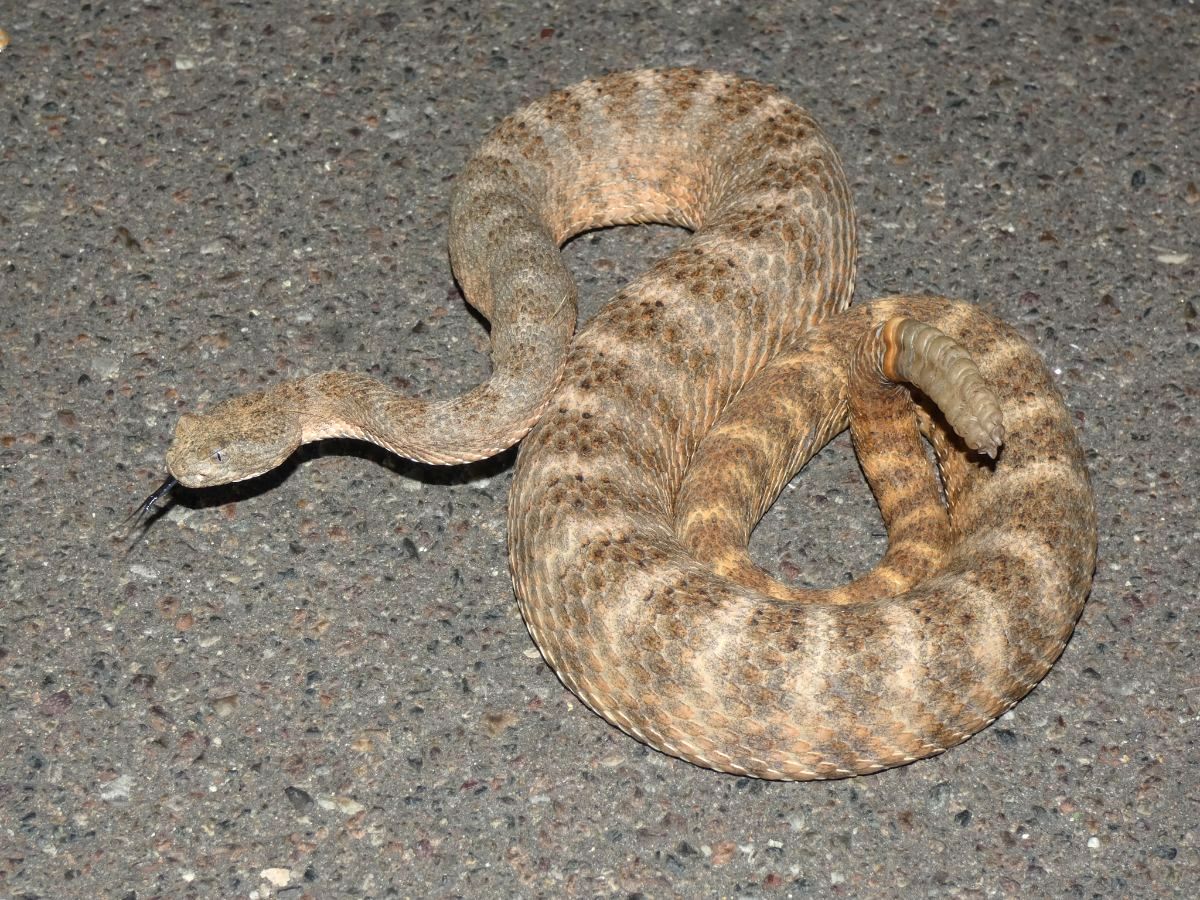
Tiger Rattlesnake
Crotalus tigris
VenomousThe quick way to tell
Count the bands. The Rock Rattlesnake has only about 13–24 bands, widely spaced. The Tiger Rattlesnake has many more — about 35–50 — packed close together, and a tiny head.
Pattern ★ This settles it
Narrow, jagged dark crossbands, widely spaced on a pale gray, greenish, tan or pinkish body.
Many narrow, dark crossbands from neck to tail — bands, not blotches or diamonds.
Head
Broad triangular head on a slender neck.
Very small head for its body, still wider than the slender neck.
Eyes
Vertical slit pupil; heat-sensing pit between eye and nostril.
Vertical slit pupil; heat-sensing pit between eye and nostril.
Pits
A deep heat-sensing pit on each side of the face, between the eye and the nostril.
A deep heat-sensing pit on each side of the face, between the eye and the nostril.
Tail
Young have a bright yellow tail; adults' tails are salmon or peach before the rattle.
Banded like the body, without bold black rings; ends in a large rattle.
What it does
Stays hidden among rocks and crevices.
Usually rattles a warning; most bites happen when people handle it.
Where it lives
Mountains of southeastern Arizona, southern New Mexico and West Texas, south through much of northern and central Mexico.
Central, south-central and southeastern Arizona (US only), south into Sonora, Mexico.