Rosy Boa
Lichanura trivirgata / Lichanura orcutti · Boas & Pythons
Also called Three-lined Boa, Coastal Rosy Boa, Desert Rosy Boa
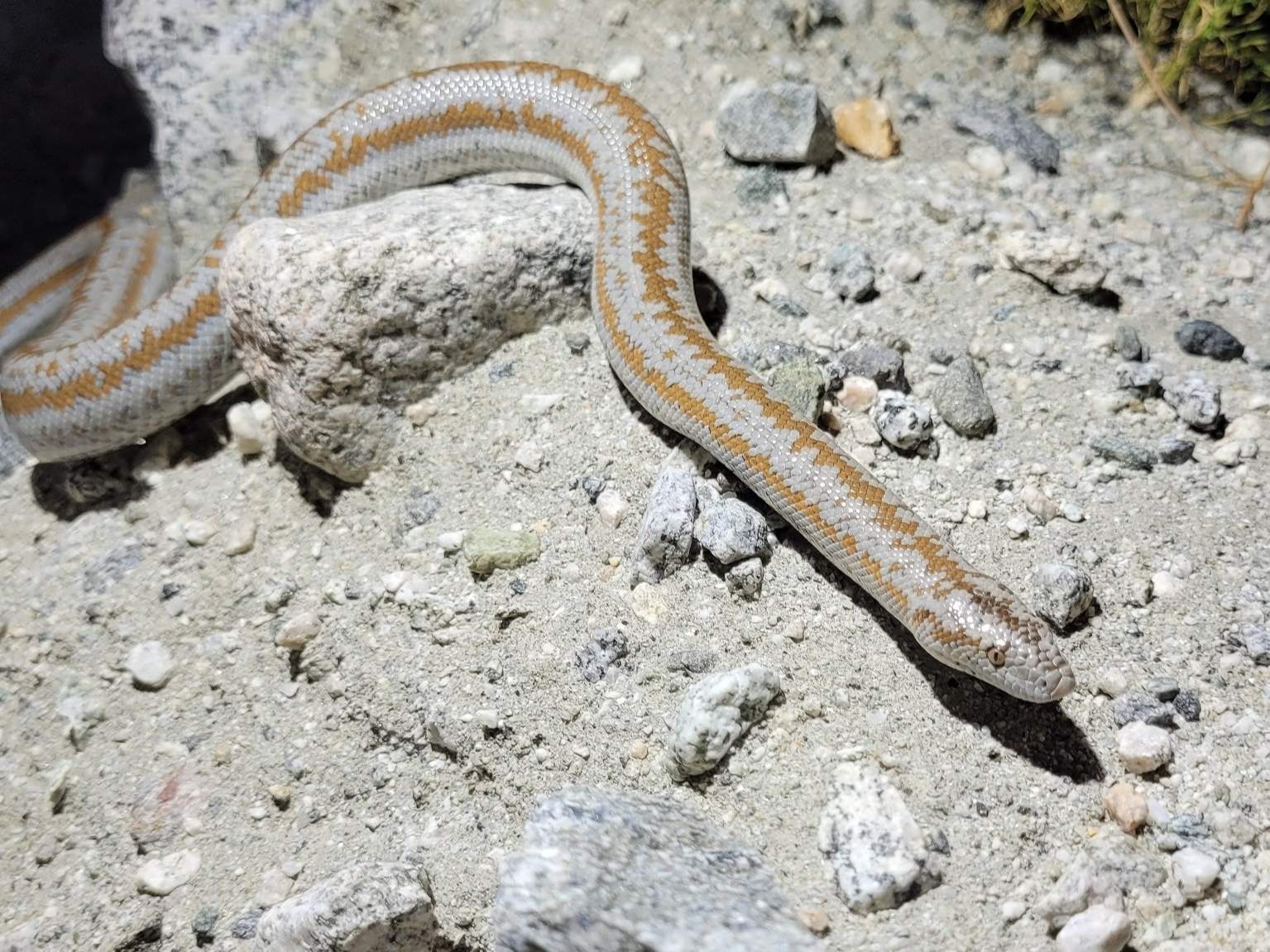
Tap a part to see what to look for. Tap it again to turn it off.
No venom. It rarely bites; if handled it usually rolls into a ball with its head hidden and may release a bad-smelling musk.
How to identify
- Head
- Blunt, only slightly wider than the neck, and covered with small scales.
- Pattern
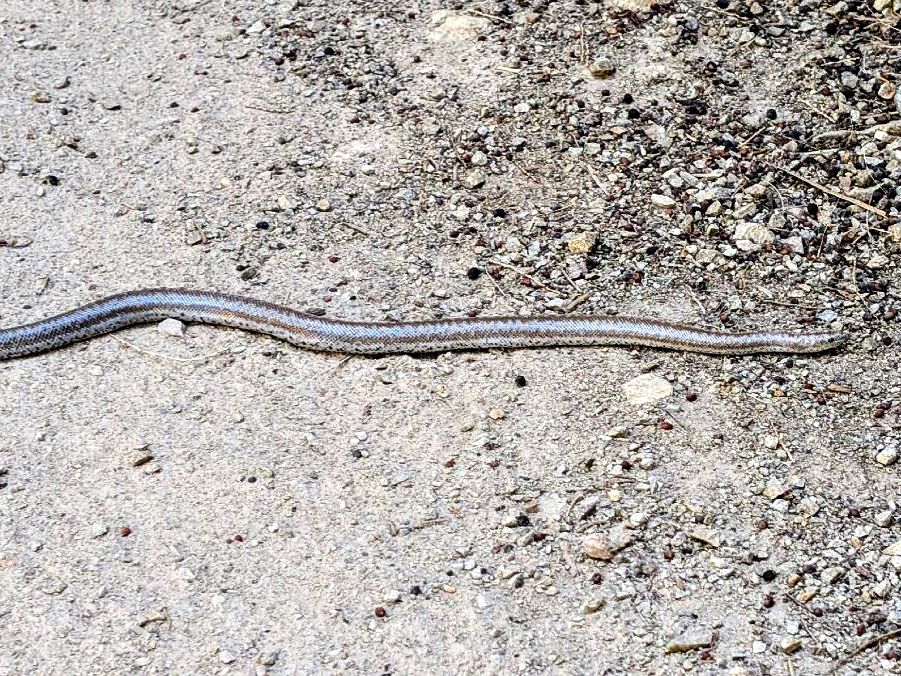
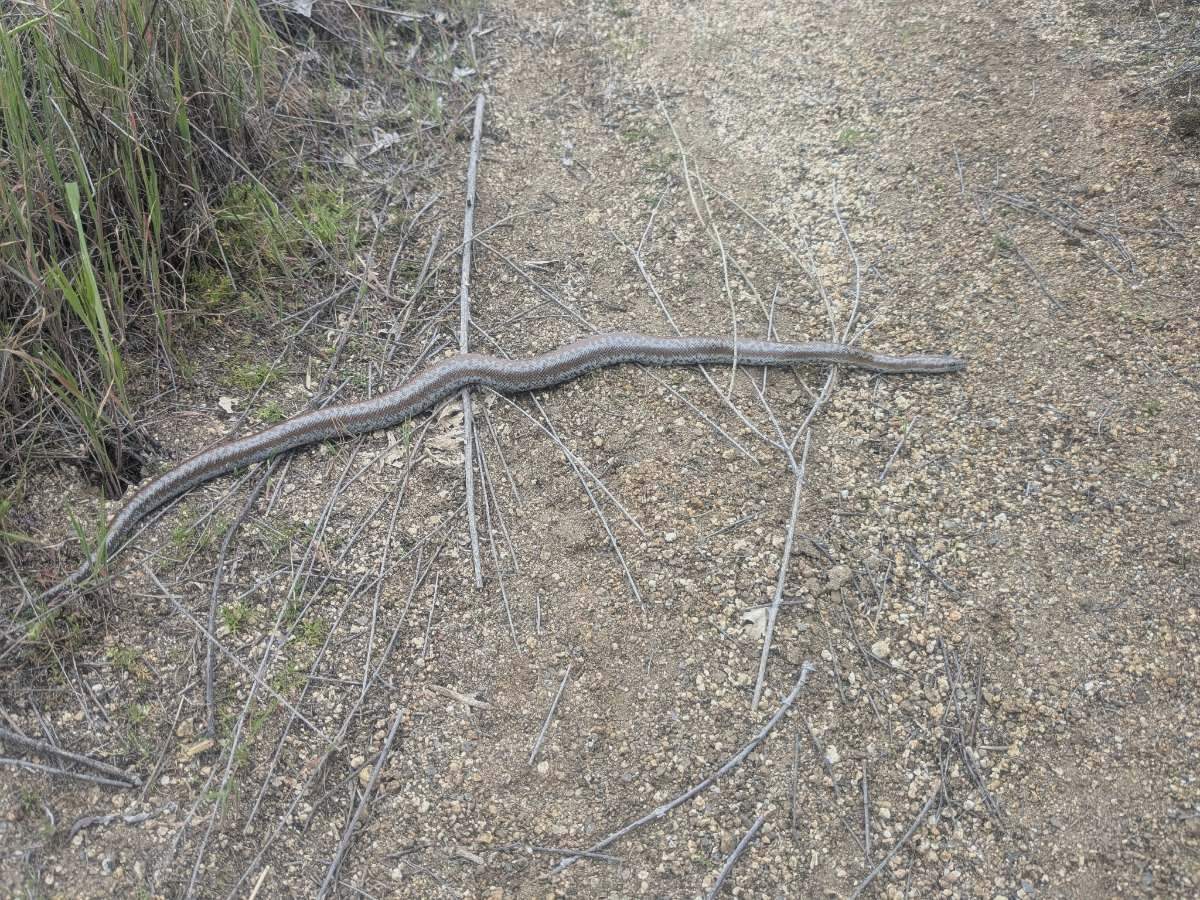
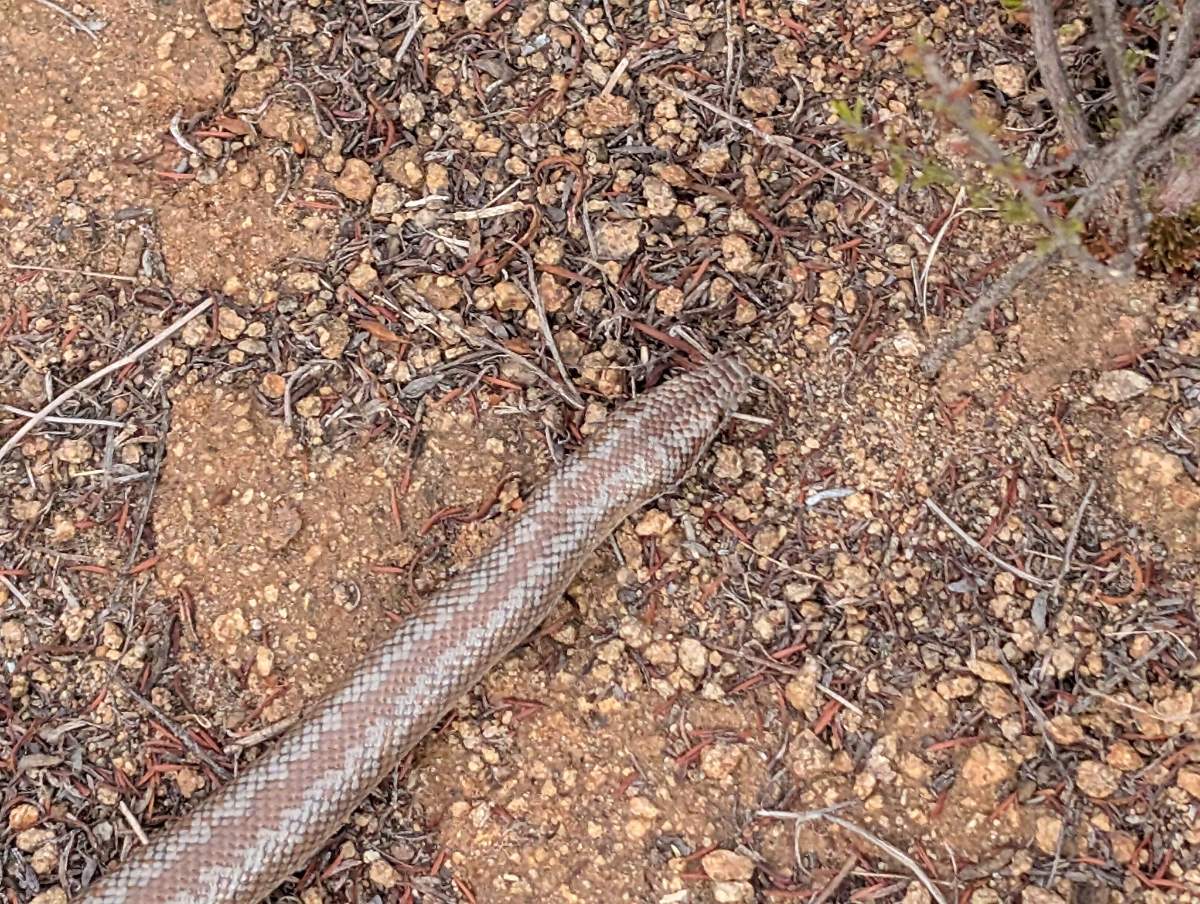
- Three dark stripes run the length of the body: one down the middle of the back and one on each side. Stripes range from dark brown to rust, orange or pinkish, sharp-edged or blurry, on a gray, olive, cream or tan body. Scales are small, smooth and shiny.
- Eyes
- Small, with vertical (cat-like) pupils.
- Pits
- None. There is no pit between the eye and the nostril.
- Tail
- Short, blunt and tapering. Males have small spurs (tiny leftover hind-leg claws) on each side of the vent.
- What it does
- Slow and gentle. When threatened it rolls into a ball with its head hidden inside and may release musk. It moves in a straight, inching crawl and shelters under rocks and in burrows.
Often confused with
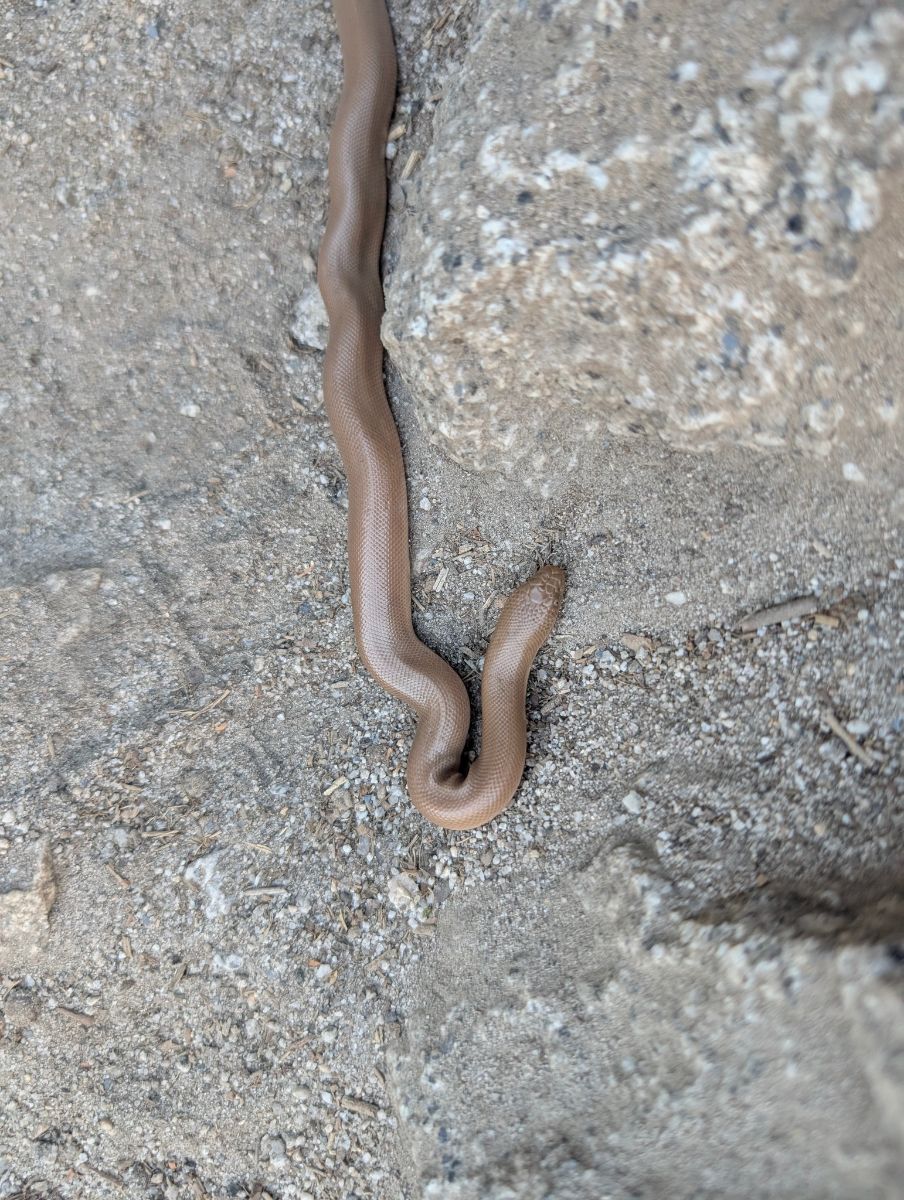
The Rubber Boa (and the rare Southern Rubber Boa) has the same stout build and blunt tail but is one plain color with no stripes; CaliforniaHerps and the San Diego herp atlas name these boas as its main look-alikes. They overlap only in the mountains of southern California.
How to tell them apart
Rosy Boa vs Rubber Boa›
The quick way to tellLook at the body pattern. The Rubber Boa is one plain color with no markings. The Rosy Boa has three dark lengthwise stripes on a paler body.
Rosy Boa: Three dark stripes run the length of the body: one down the middle of the back and one on each side. Stripes range from dark brown to rust, orange or pinkish, sharp-edged or blurry, on a gray, olive, cream or tan body. Scales are small, smooth and shiny.
Rubber Boa: Plain tan, brown, olive or gray, sometimes rosy; no stripes or blotches. Belly yellow to cream, sometimes with dark or orange flecks. Newborns are pinkish-tan. Scales are tiny, smooth and shiny.
About the Rosy Boa›
A slow, thick-bodied little boa of rocky desert hills, canyons and chaparral in southern California and western and southern Arizona. It hides in rock cracks and rodent burrows and comes out mostly at dusk and night in summer, but may be out by day in cool spring and fall weather.
Scientists now split it into two species: the Northern Three-lined Boa (L. orcutti) of California and western Arizona, and the Three-lined Boa (L. trivirgata) of southern Arizona and Mexico. Both have three lengthwise stripes and look very alike, so the page treats them together.
The details
Size Usually under 36 inches; adults about 17–44 inches (43–112 cm). Newborns about 10–14 inches.Lifespan About 18–22 years in captivity, some over 30 years; wild lifespan unknown.
Typical range›
Southwestern US and northwestern Mexico: southern California from the coast (south of Los Angeles) and San Diego County into the Mojave and Sonoran deserts, and western and south-central Arizona; also Baja California and Sonora, Mexico.
Activity›
Mostly active at night and dusk in hot summer weather; may be out by day in cool spring, fall and warm winter days. Inactive in extreme heat and cold.
Diet›
Mainly small rodents such as deer mice, kangaroo rats and woodrats; also small birds, lizards, small snakes and amphibians. It kills by constriction.
Reproduction›
Gives birth to live young. Litters of about 1–14 (often 3–8) are born from mid-summer to November.
Found in parts of 2 states›
Ranges are approximate. It may be found in only part of a state, or be rare there, and snakes can turn up outside of them.
More photos