‹ Compare two snakes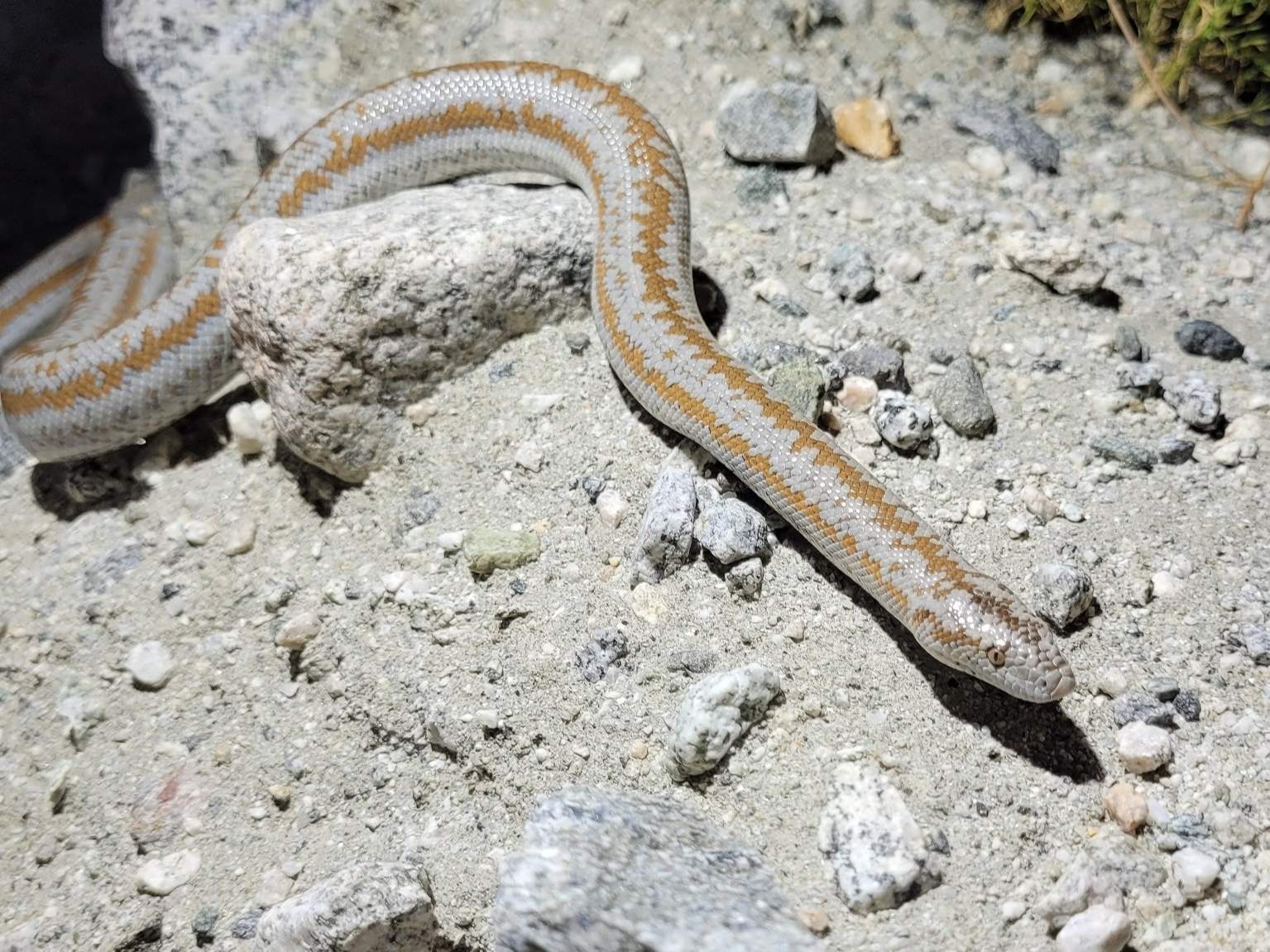
Rosy Boa vs Rubber Boa
Tap a part to see it on both. Tap it again to turn it off.
(c) Guillermo Roque, some rights reserved (CC BY)
Rosy Boa
Lichanura trivirgata / Lichanura orcutti
Non-venomous(c) glitter2136, some rights reserved (CC BY-SA)
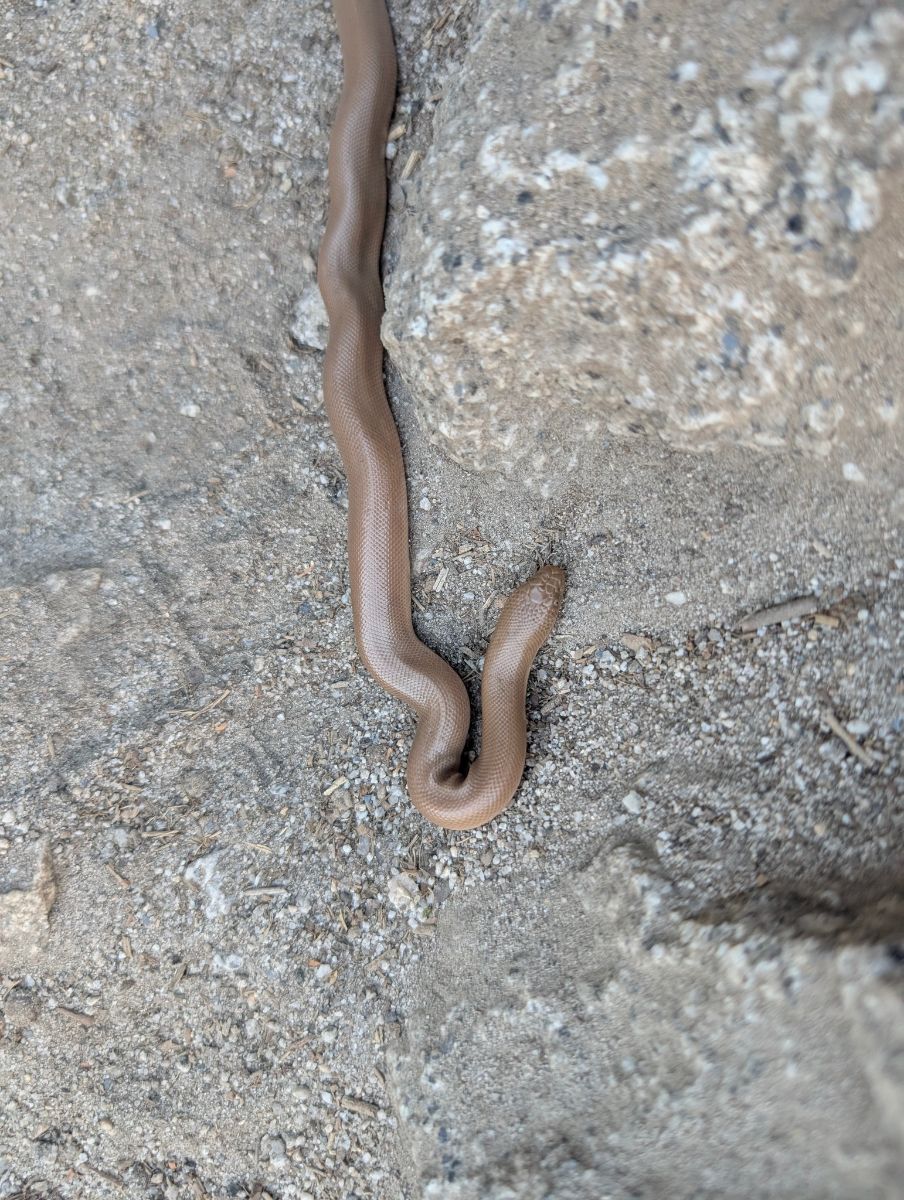
Rubber Boa
Charina bottae
Non-venomousThe quick way to tell
Look at the body pattern. The Rubber Boa is one plain color with no markings. The Rosy Boa has three dark lengthwise stripes on a paler body.
Pattern ★ This settles it
Three dark stripes run the length of the body: one down the middle of the back and one on each side. Stripes range from dark brown to rust, orange or pinkish, sharp-edged or blurry, on a gray, olive, cream or tan body. Scales are small, smooth and shiny.
Plain tan, brown, olive or gray, sometimes rosy; no stripes or blotches. Belly yellow to cream, sometimes with dark or orange flecks. Newborns are pinkish-tan. Scales are tiny, smooth and shiny.
Head
Blunt, only slightly wider than the neck, and covered with small scales.
Blunt and barely wider than the neck, covered with small scales; it looks much like the tail end.
Eyes
Small, with vertical (cat-like) pupils.
Small, with vertical (cat-like) pupils.
Pits
None. There is no pit between the eye and the nostril.
None. There is no pit between the eye and the nostril.
Tail
Short, blunt and tapering. Males have small spurs (tiny leftover hind-leg claws) on each side of the vent.
Short and blunt, ending in a rounded tip, so it looks like a second head. When threatened the snake raises it as a decoy while hiding its real head; many adults have scarred tails from mother rodents.
What it does
Slow and gentle. When threatened it rolls into a ball with its head hidden inside and may release musk. It moves in a straight, inching crawl and shelters under rocks and in burrows.
Slow and gentle. When threatened it rolls into a ball, tucks its head in, waves its tail like a fake head and may release musk. It burrows well, can climb and swim, and stays active in cooler temperatures than most snakes.
Where it lives
Southwestern US and northwestern Mexico: southern California from the coast (south of Los Angeles) and San Diego County into the Mojave and Sonoran deserts, and western and south-central Arizona; also Baja California and Sonora, Mexico.
Western North America: Washington, Oregon, California, Idaho, western Montana, Nevada, northern Utah and western Wyoming; also southern British Columbia, Canada. The Southern Rubber Boa is limited to the San Bernardino and San Jacinto Mountains of southern California.