Rough Earthsnake
Virginia striatula · Earthsnakes
Tap a part to see what to look for. Tap it again to turn it off.
No venom. It does not usually bite, but it may release musk or play dead if handled.
How to identify
- Head
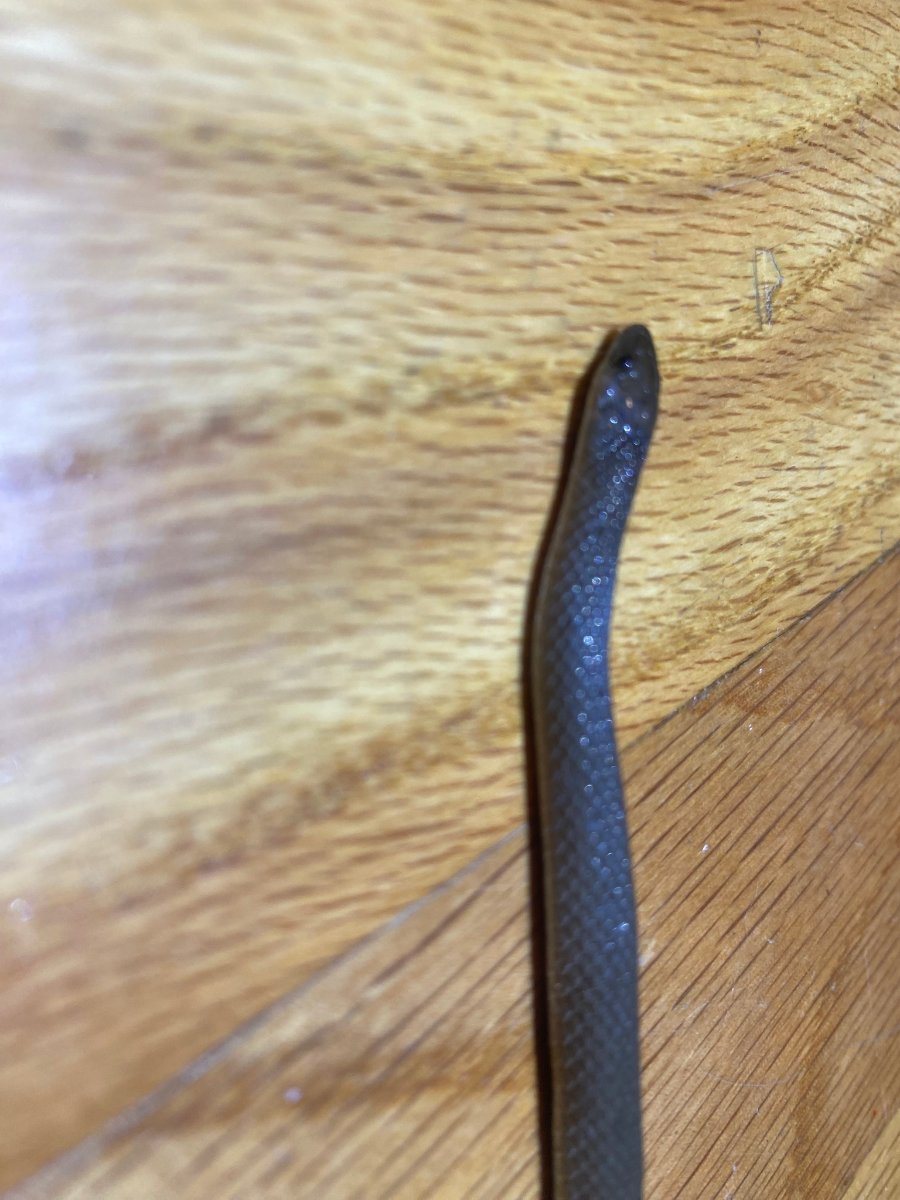
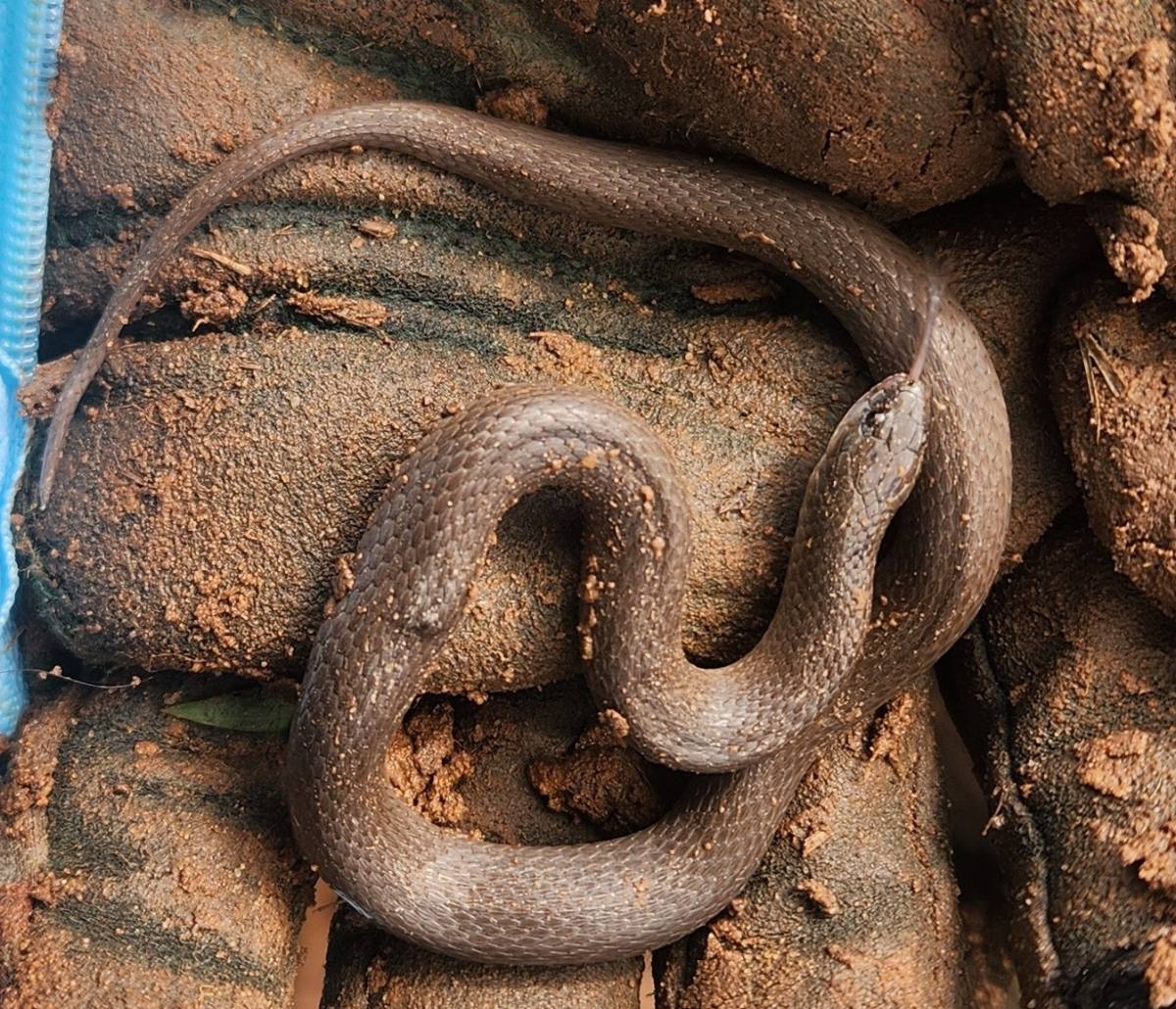
- Small, pointed, cone-shaped head that is darkest toward the snout; the lower lip scales and chin are white.
- Pattern
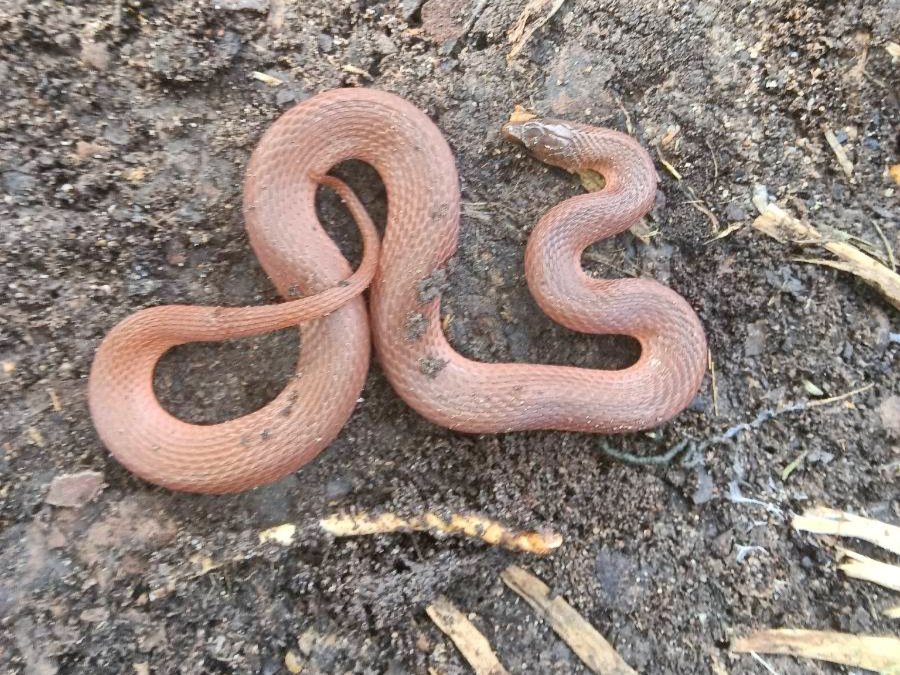
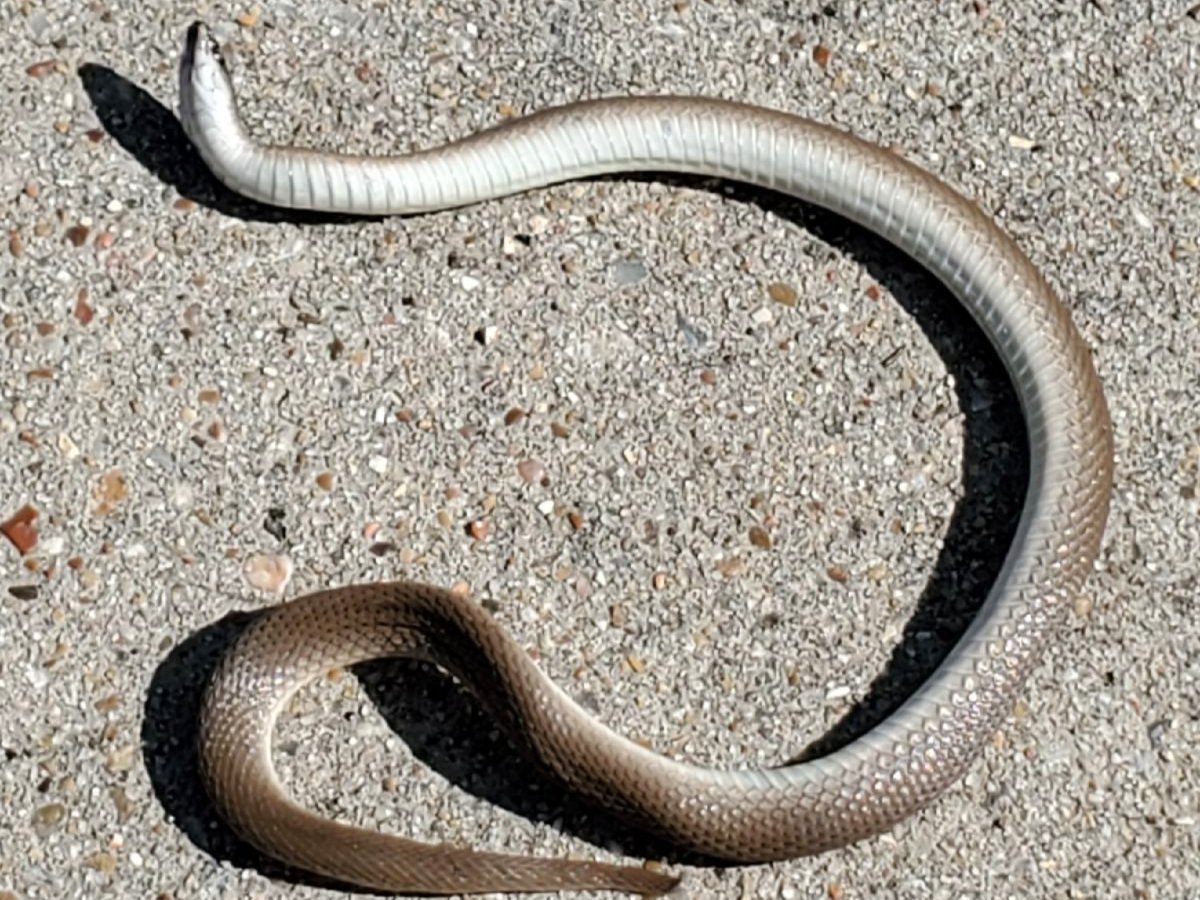
- No pattern: plain brown, gray-brown or gray above with a cream to pale yellow belly. The back scales have a small ridge. Young snakes are darker and may have a pale gray or white band across the neck.
- Pits
- None. There is no pit between the eye and the nostril.
- Tail
- Short and plain, colored like the body.
- What it does
- Lives mostly underground or under cover and is seldom seen in the open. It does not usually bite when picked up but may release musk or droppings, or play dead by going stiff with its mouth open.
Often confused with
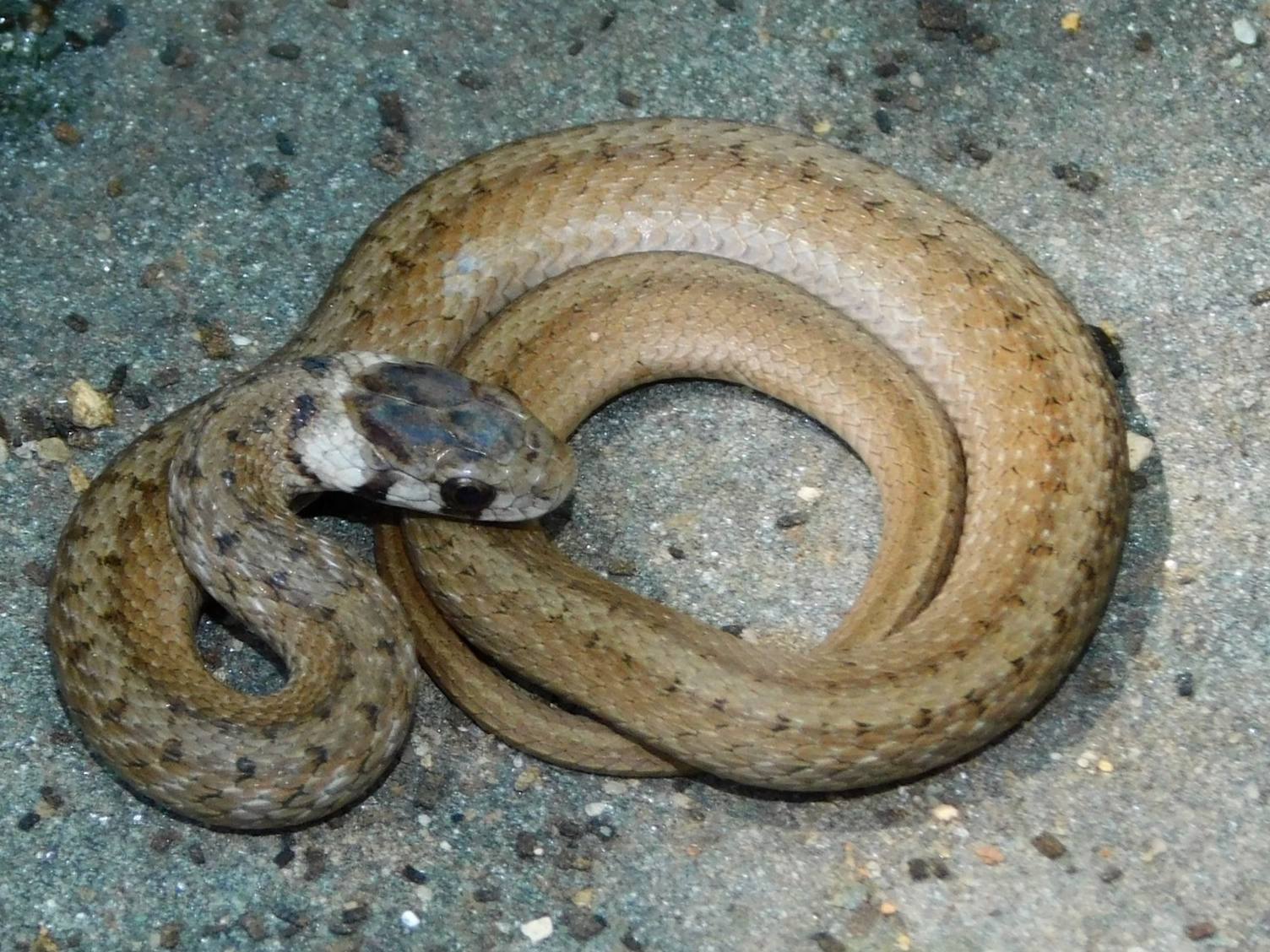
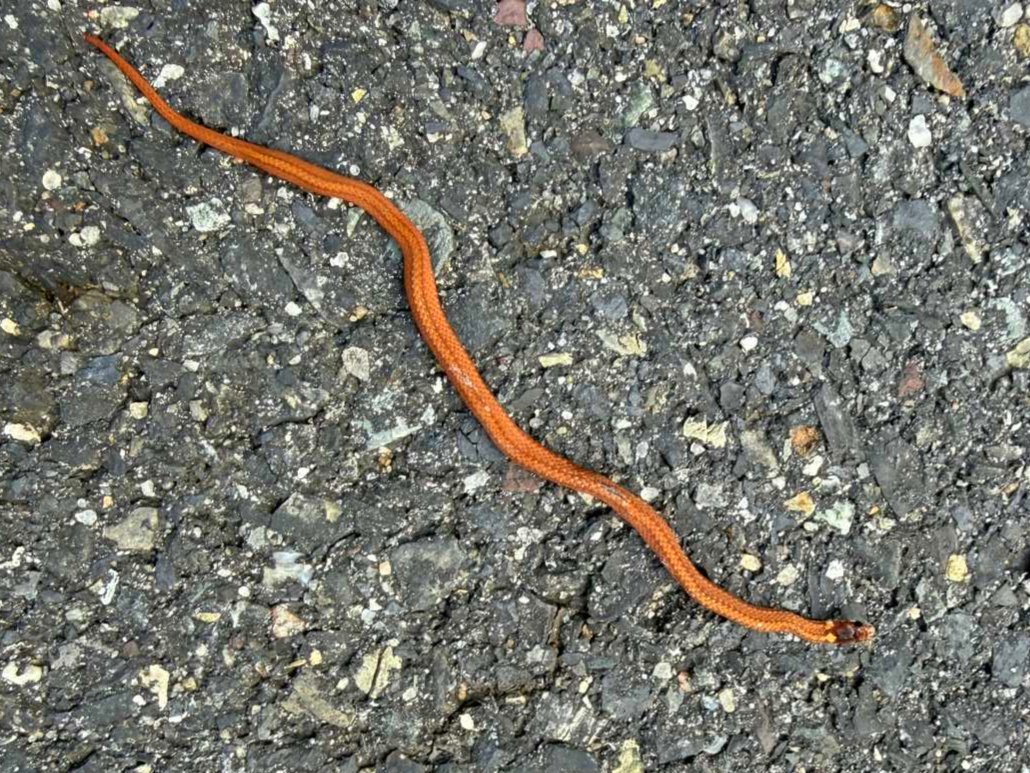
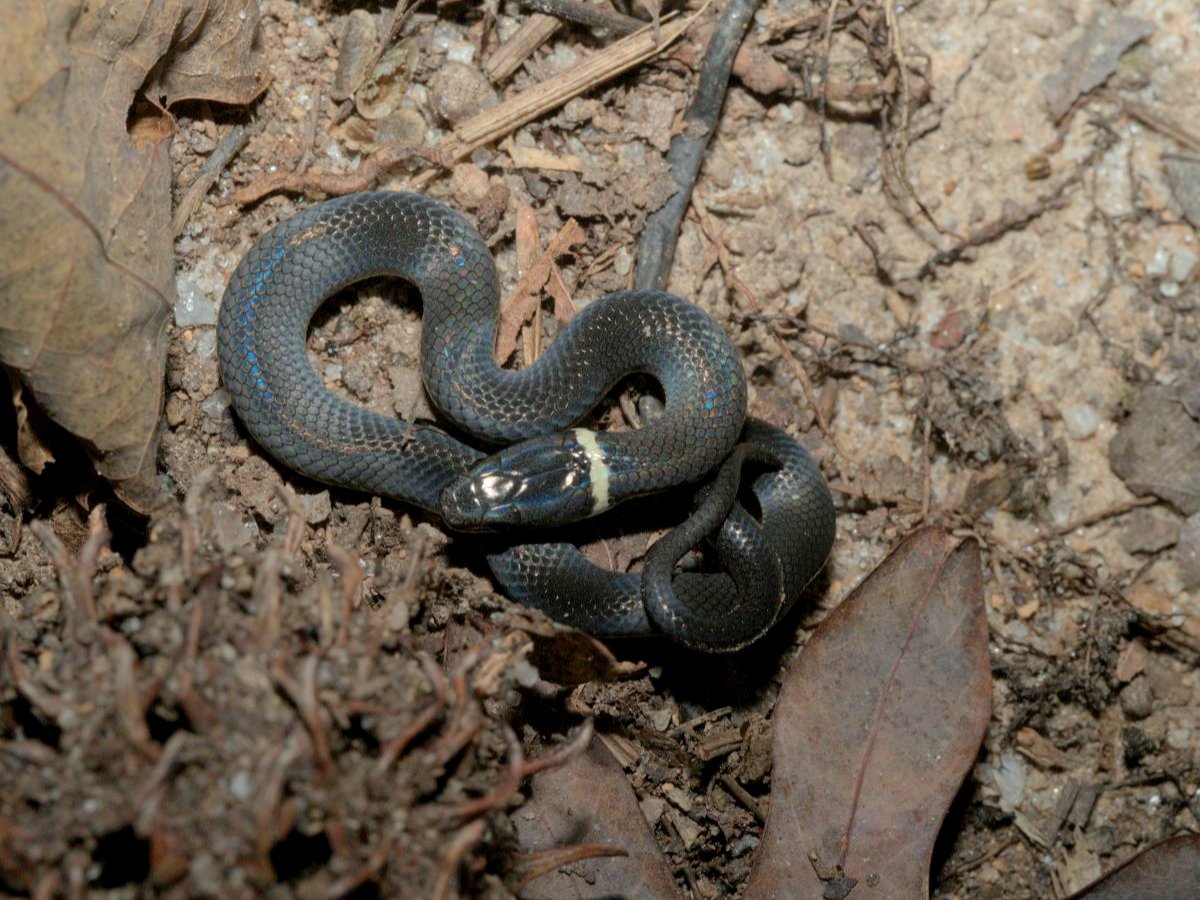
The Smooth Earthsnake is very similar but has smooth scales and lacks the darker snout. DeKay's Brownsnake and the Red-bellied Snake usually show spots, neck marks or a bright belly. The Worm Snake has smooth scales, and the Ring-necked Snake has a bold neck ring and a bright yellow-to-red belly.
How to tell them apart
Rough Earthsnake vs DeKay's Brownsnake›
The quick way to tellLook at the back. The Rough Earthsnake is plain brown or gray with no spots. DeKay's Brownsnake usually has two rows of small dark spots down the back.
Rough Earthsnake: No pattern: plain brown, gray-brown or gray above with a cream to pale yellow belly. The back scales have a small ridge. Young snakes are darker and may have a pale gray or white band across the neck.
DeKay's Brownsnake: Pale stripe down a brown back between two rows of small dark spots.
Rough Earthsnake vs Red-bellied Snake›
The quick way to tellLook at the belly. The Rough Earthsnake's belly is plain cream or pale yellow. The Red-bellied Snake's belly is bright red or orange, and it usually has pale spots on the neck.
Rough Earthsnake: No pattern: plain brown, gray-brown or gray above with a cream to pale yellow belly. The back scales have a small ridge. Young snakes are darker and may have a pale gray or white band across the neck.
Red-bellied Snake: Plain brown, gray, reddish or blackish back, sometimes with a paler stripe down the middle and faint thin dark stripes. The belly is bright red or orange with no spots (sometimes pink, yellow or black).
Rough Earthsnake vs Ring-necked Snake›
The quick way to tellLook at the head and neck. The Rough Earthsnake has a pointed, cone-shaped brown head, and only young ones may show a faint pale neck band. The Ring-necked Snake has a bold yellow-orange ring around the neck and a smooth, shiny dark body.
Rough Earthsnake: Small, pointed, cone-shaped head that is darkest toward the snout; the lower lip scales and chin are white.
Ring-necked Snake: Small plain head, no wider than the neck.
About the Rough Earthsnake›
The Rough Earthsnake lives in the southern US, mainly on the Coastal Plain from Virginia and the Carolinas west to Texas, Oklahoma and southeastern Kansas. It spends most of its time hidden under logs, leaf litter, boards and other debris in pine woods, open hardwoods, grassy areas and even suburban yards.
It is a tiny plain brown or gray snake with a pointed, cone-shaped head and a pale belly. Its back scales have a small ridge (keel), which separates it from the smooth-scaled Smooth Earthsnake. Some sources still call it Haldea striatula.
The details
Size Most adults are 7–10 inches (18–26 cm) long; the largest known was about 12.8 inches (32 cm).
Typical range›
Southern US: mainly the Coastal Plain from Virginia and the Carolinas south to northern Florida and west to Texas, Oklahoma, Arkansas, Missouri and southeastern Kansas. Largely absent from peninsular Florida and the lower Mississippi River Valley.
Activity›
Secretive; usually found by turning over logs, leaf litter and other cover.
Diet›
Almost only earthworms; also some insects, slugs and snails.
Reproduction›
Gives birth to live young. Mating is in spring (March–April) and about 6–7 young (up to about 10) are born in July or August.
Found in parts of 14 states›
Ranges are approximate. It may be found in only part of a state, or be rare there, and snakes can turn up outside of them.
More photos