‹ Compare two snakes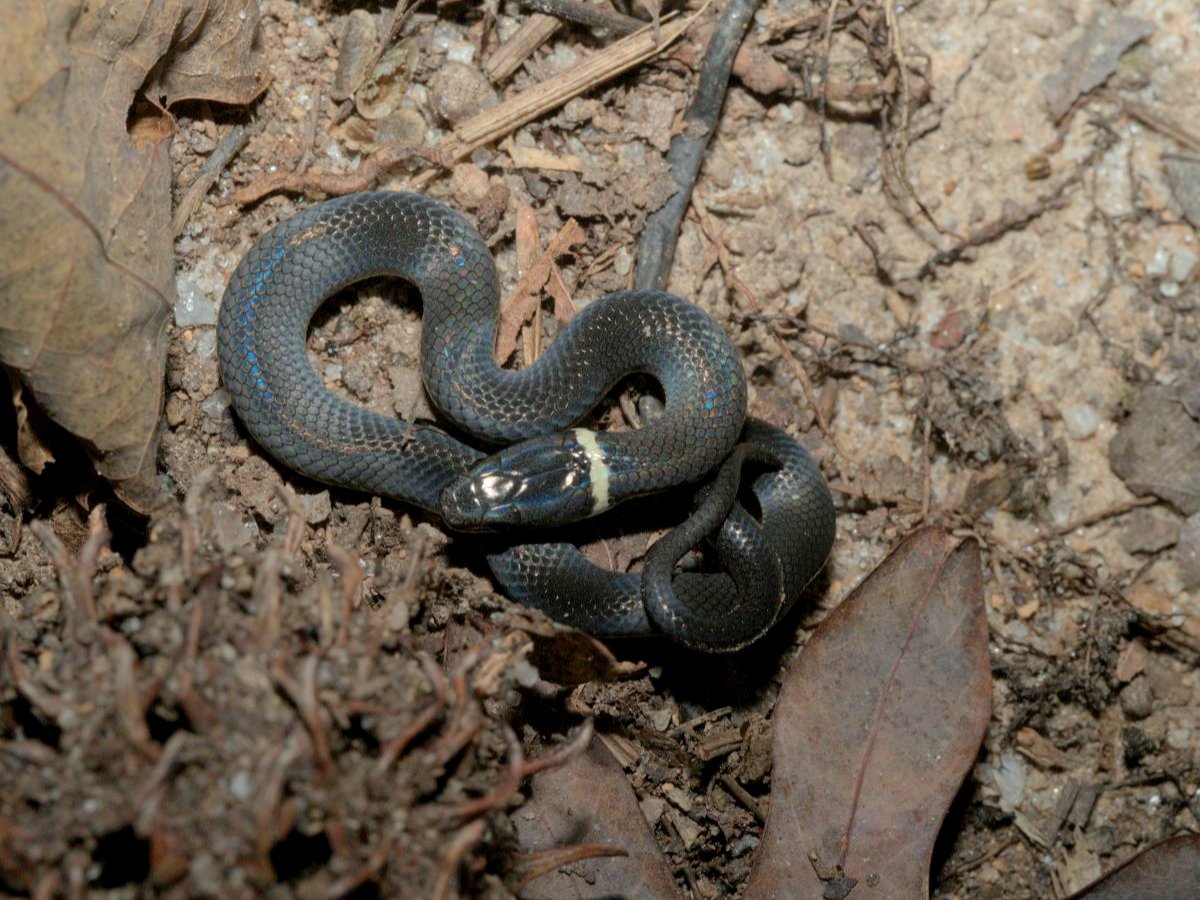
Ring-necked Snake vs Rough Earthsnake
Tap a part to see it on both. Tap it again to turn it off.
(c) Zakqary Roy, some rights reserved (CC BY)
Ring-necked Snake
Diadophis punctatus
Mildly venomous(c) shinylatias, some rights reserved (CC BY)
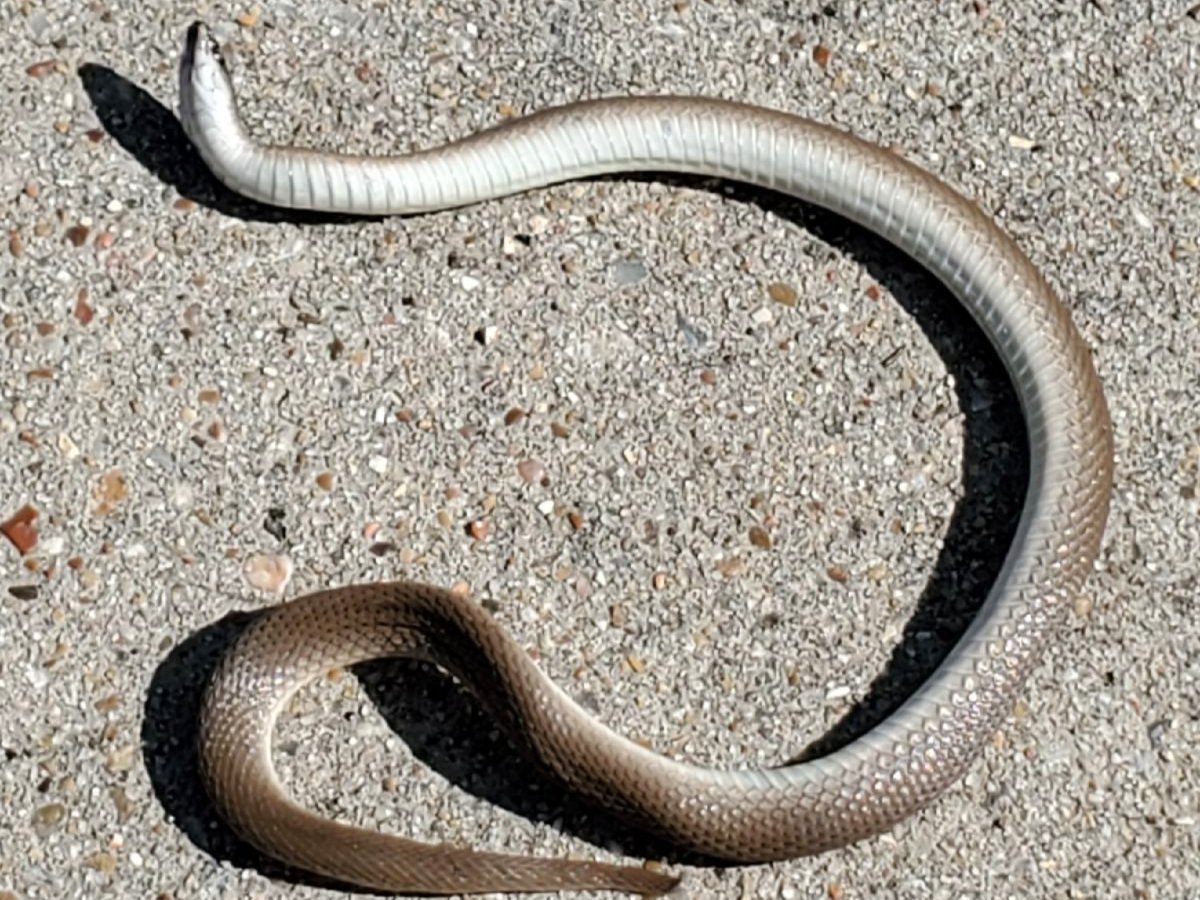
Rough Earthsnake
Virginia striatula
Non-venomousThe quick way to tell
Look at the head and neck. The Rough Earthsnake has a pointed, cone-shaped brown head, and only young ones may show a faint pale neck band. The Ring-necked Snake has a bold yellow-orange ring around the neck and a smooth, shiny dark body.
Head ★ This settles it
Small plain head, no wider than the neck.
Small, pointed, cone-shaped head that is darkest toward the snout; the lower lip scales and chin are white.
Pattern
Plain slate gray with a bright yellow to red neck ring and matching belly.
No pattern: plain brown, gray-brown or gray above with a cream to pale yellow belly. The back scales have a small ridge. Young snakes are darker and may have a pale gray or white band across the neck.
Eyes
Round pupil, small dark eye; no heat-sensing pit.
—
Pits
None. There is no pit between the eye and the nostril.
None. There is no pit between the eye and the nostril.
Tail
Short, brightly coloured underneath; no rattle.
Short and plain, colored like the body.
What it does
Curls its tail into a tight coil to show the bright underside.
Lives mostly underground or under cover and is seldom seen in the open. It does not usually bite when picked up but may release musk or droppings, or play dead by going stiff with its mouth open.
Where it lives
Most of the US except the northern plains and driest desert, plus southern Canada and parts of Mexico.
Southern US: mainly the Coastal Plain from Virginia and the Carolinas south to northern Florida and west to Texas, Oklahoma, Arkansas, Missouri and southeastern Kansas. Largely absent from peninsular Florida and the lower Mississippi River Valley.