Rubber Boa
Charina bottae · Boas & Pythons
Also called Northern Rubber Boa, Southern Rubber Boa
Tap a part to see what to look for. Tap it again to turn it off.
No venom. It rarely bites; if handled it usually rolls into a ball, hides its head and may release a bad-smelling musk.
How to identify
- Head
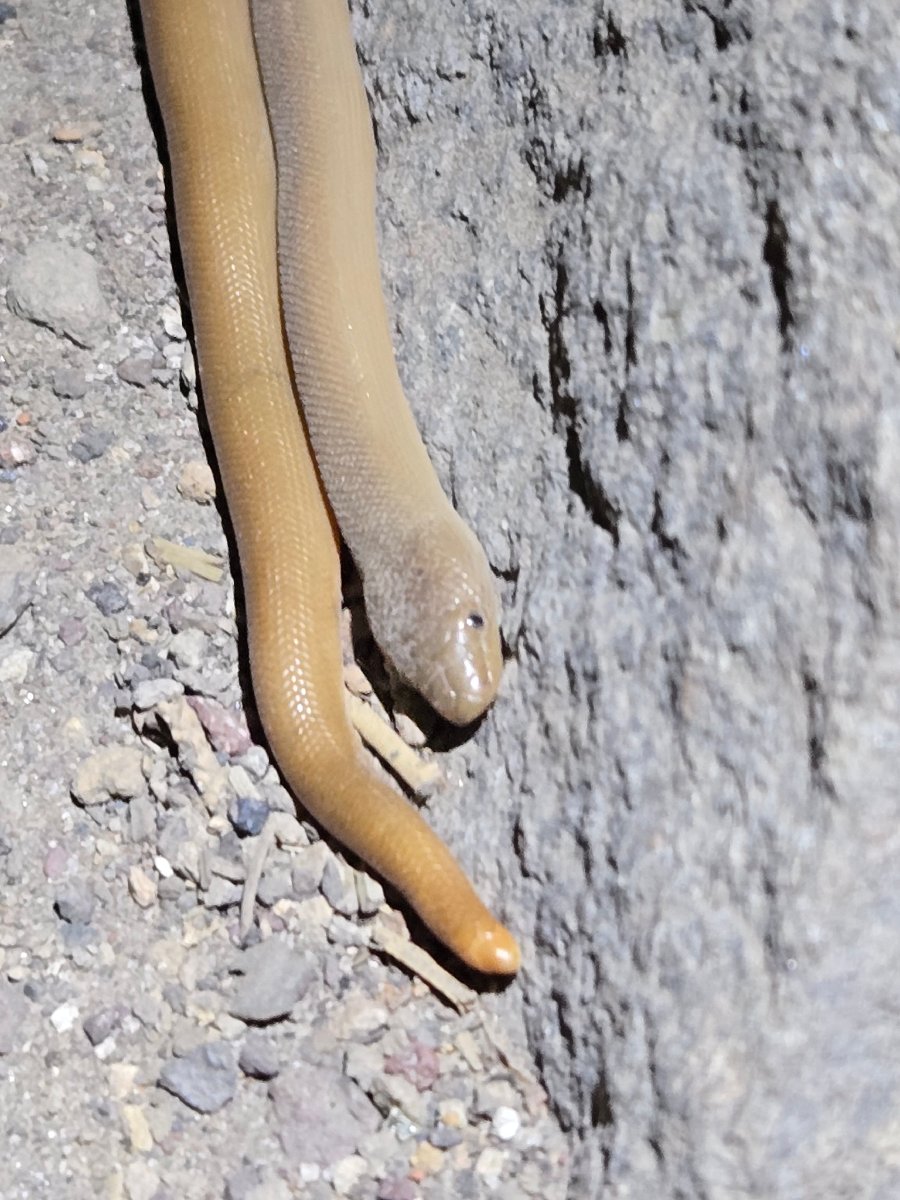
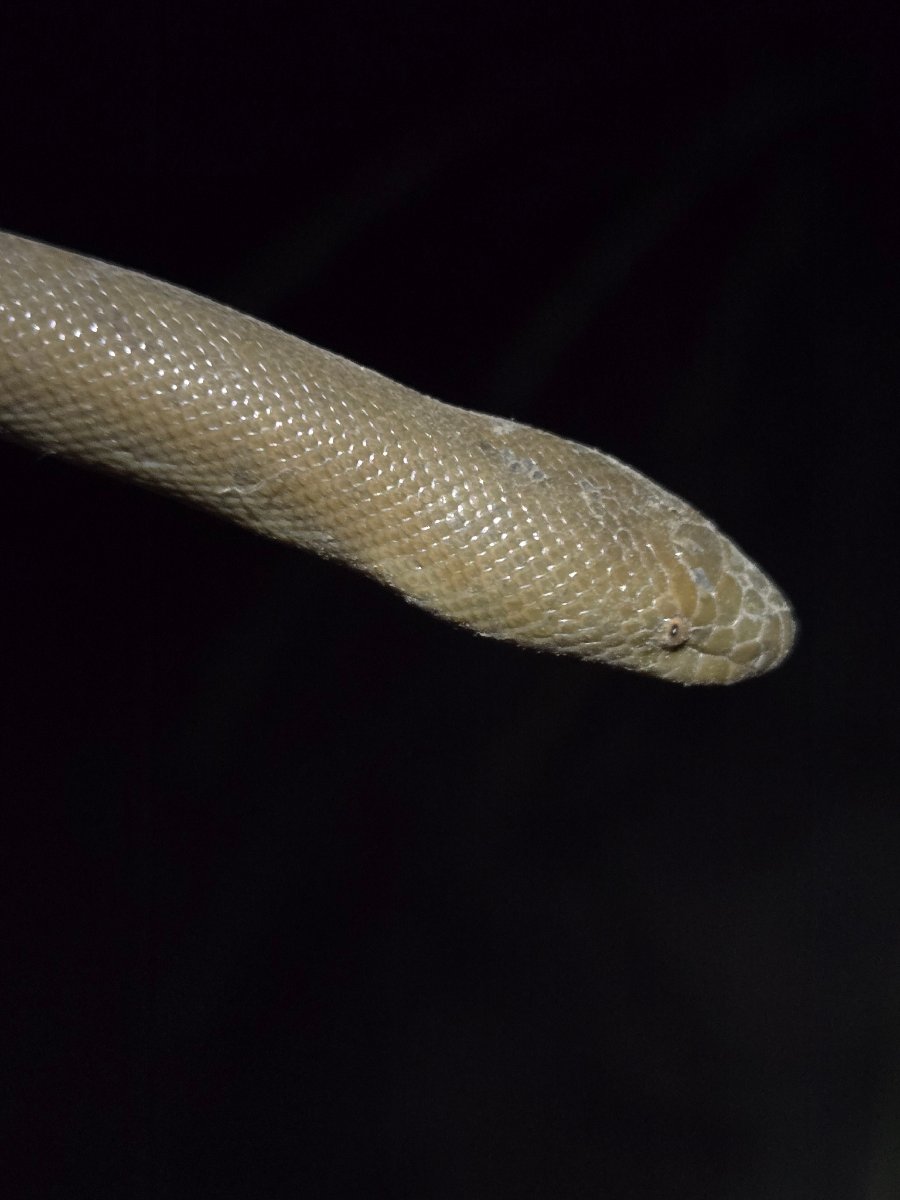
- Blunt and barely wider than the neck, covered with small scales; it looks much like the tail end.
- Pattern
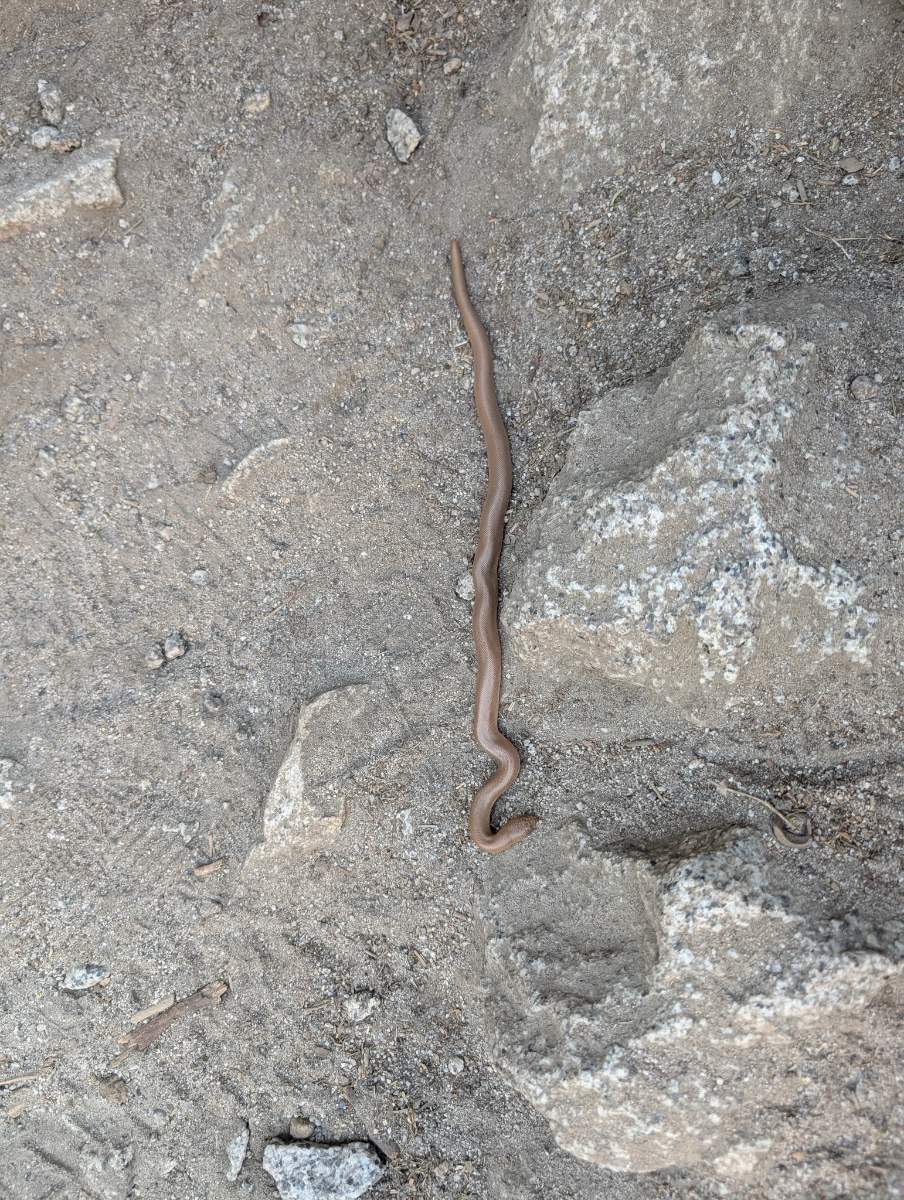
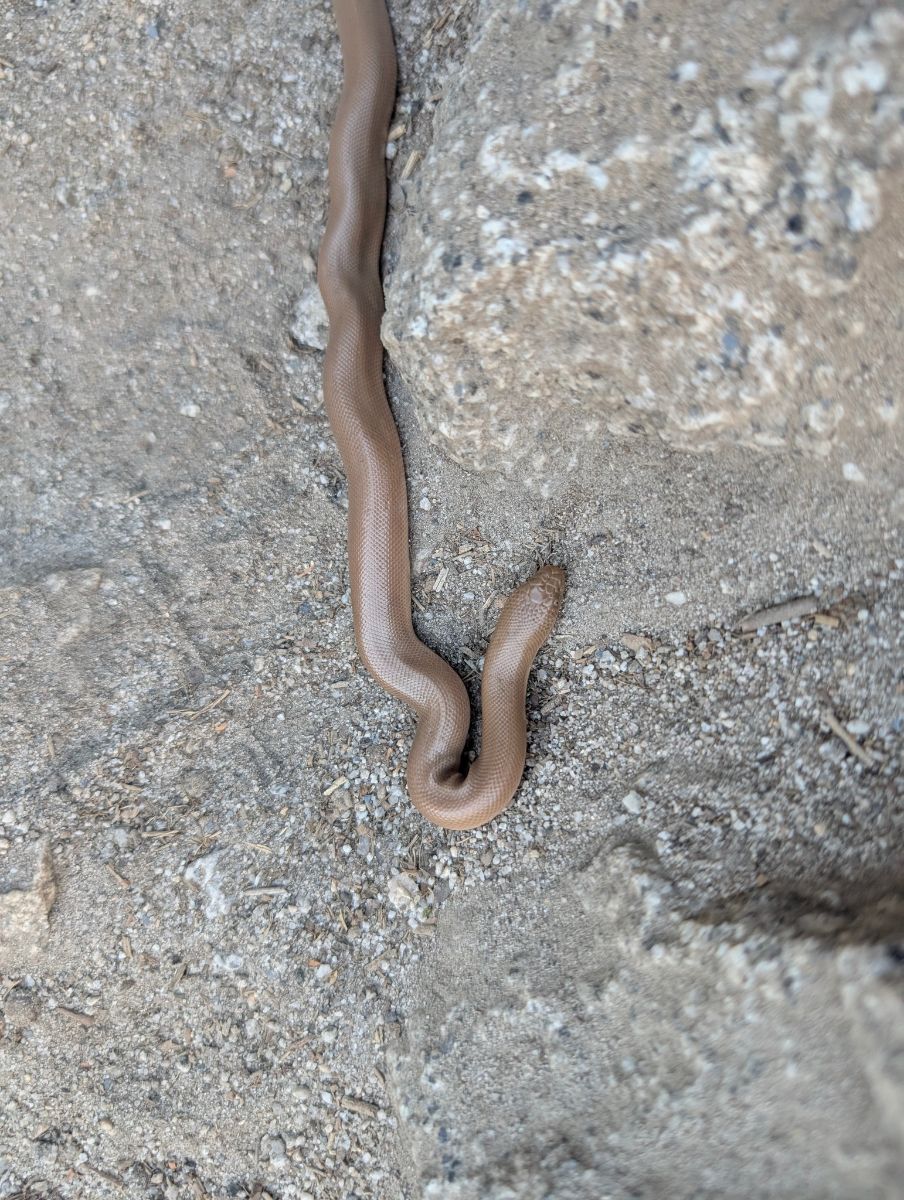
- Plain tan, brown, olive or gray, sometimes rosy; no stripes or blotches. Belly yellow to cream, sometimes with dark or orange flecks. Newborns are pinkish-tan. Scales are tiny, smooth and shiny.
- Eyes
- Small, with vertical (cat-like) pupils.
- Pits
- None. There is no pit between the eye and the nostril.
- Tail
- Short and blunt, ending in a rounded tip, so it looks like a second head. When threatened the snake raises it as a decoy while hiding its real head; many adults have scarred tails from mother rodents.
- What it does
- Slow and gentle. When threatened it rolls into a ball, tucks its head in, waves its tail like a fake head and may release musk. It burrows well, can climb and swim, and stays active in cooler temperatures than most snakes.
Often confused with
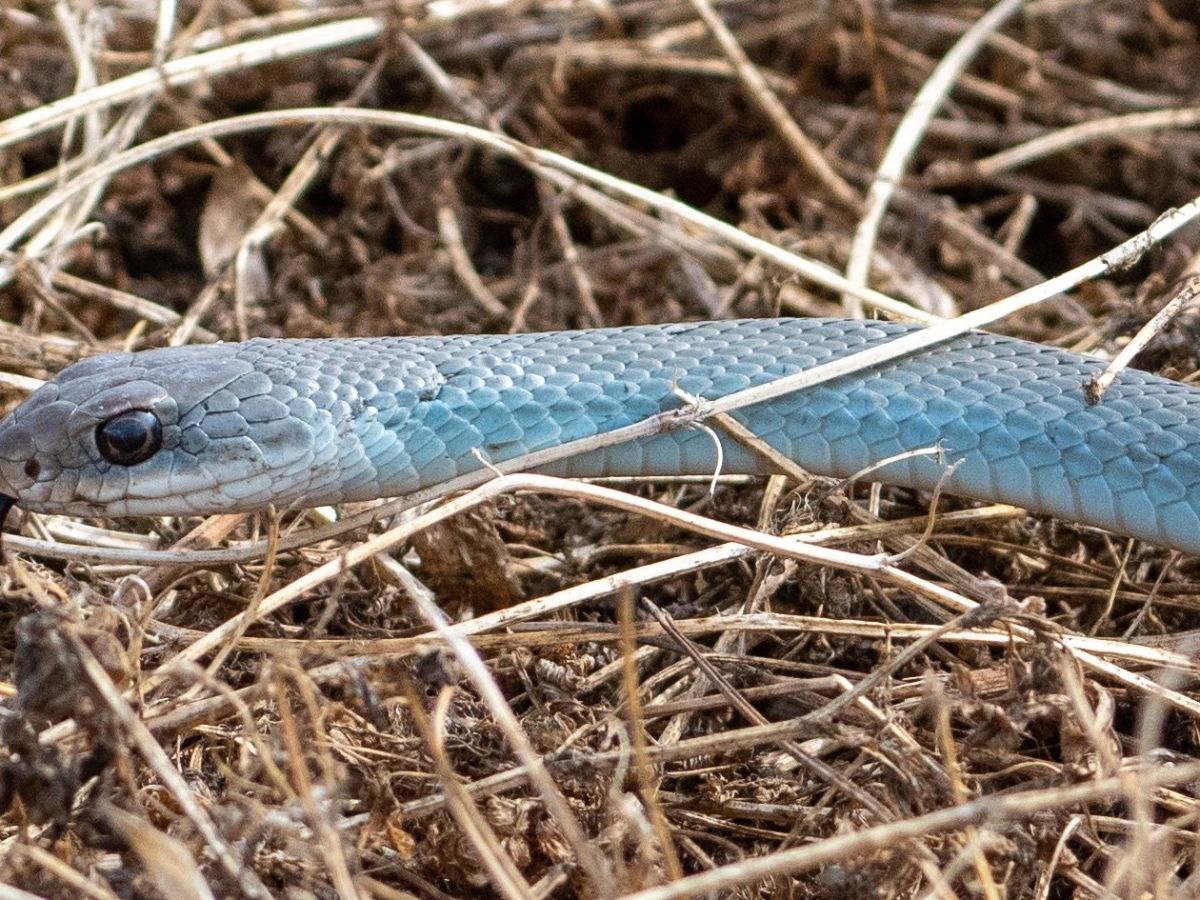
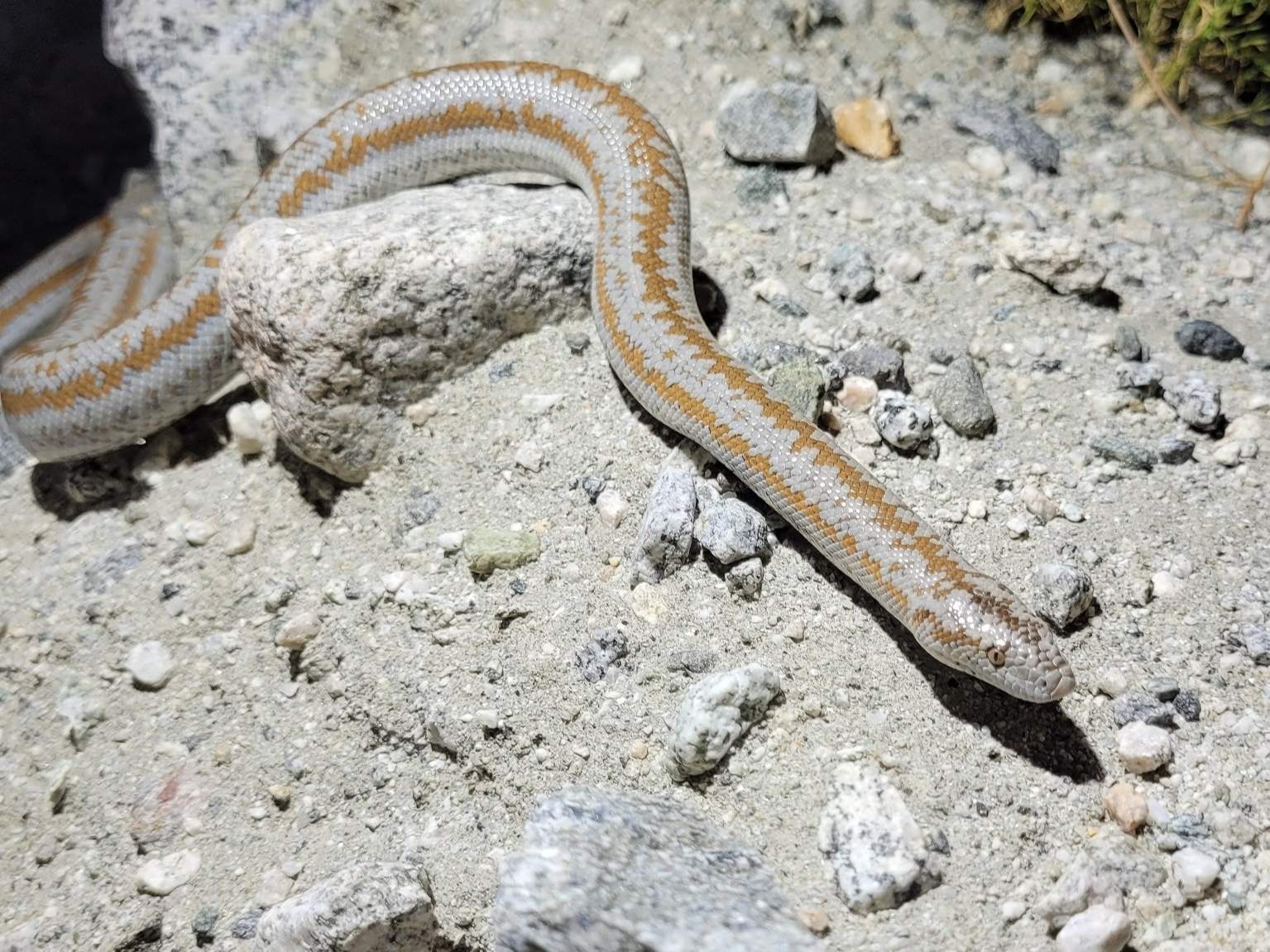
The North American Racer (Western Yellow-bellied Racer) can be the same plain color, but it is slim and fast with big eyes, large scales and a long thin tail. In southern California the Rosy Boa has a similar build and blunt tail but has three lengthwise stripes.
How to tell them apart
Rubber Boa vs North American Racer›
The quick way to tellLook at the eyes. The Rubber Boa has tiny eyes with vertical pupils. The North American Racer has large, round eyes.
Rubber Boa: Small, with vertical (cat-like) pupils.
North American Racer: Round pupil in a large eye - a sight hunter; no heat-sensing pit.
Rubber Boa vs Rosy Boa›
The quick way to tellLook at the body pattern. The Rubber Boa is one plain color with no markings. The Rosy Boa has three dark lengthwise stripes on a paler body.
Rubber Boa: Plain tan, brown, olive or gray, sometimes rosy; no stripes or blotches. Belly yellow to cream, sometimes with dark or orange flecks. Newborns are pinkish-tan. Scales are tiny, smooth and shiny.
Rosy Boa: Three dark stripes run the length of the body: one down the middle of the back and one on each side. Stripes range from dark brown to rust, orange or pinkish, sharp-edged or blurry, on a gray, olive, cream or tan body. Scales are small, smooth and shiny.
About the Rubber Boa›
A small, thick, slow-moving boa of cool, damp forests, woodlands, meadows and shrubland in the western US, from Washington, Idaho and western Montana south through Oregon and California to Nevada, Utah and western Wyoming. It hides under logs, rocks and bark and in rodent burrows, and is out mostly at dusk and night, even in cool weather.
Its plain body, tiny scales and blunt tail that looks like a second head make it one of the easiest snakes to name. The rare Southern Rubber Boa of a few southern California mountains is treated by some as a separate species but looks almost the same.
The details
Size Usually 14–28 inches (35–71 cm); most under 2 feet. Newborns about 7–11 inches.Lifespan Over 18 years in captivity (one source); wild lifespan unknown.
Typical range›
Western North America: Washington, Oregon, California, Idaho, western Montana, Nevada, northern Utah and western Wyoming; also southern British Columbia, Canada. The Southern Rubber Boa is limited to the San Bernardino and San Jacinto Mountains of southern California.
Activity›
Mostly active at dusk and at night, and on cloudy days; active roughly April–October, then hibernates.
Diet›
Mostly baby rodents such as voles and deer mice, also shrews, nestling birds, lizards, salamanders, small snakes and reptile eggs. It kills by constriction.
Reproduction›
Gives birth to live young. Females have about 2–9 young in late summer or fall; young mature in 2–5 years.
Found in parts of 8 states›
Ranges are approximate. It may be found in only part of a state, or be rare there, and snakes can turn up outside of them.