Scarlet Snake
Cemophora coccinea · Scarletsnakes
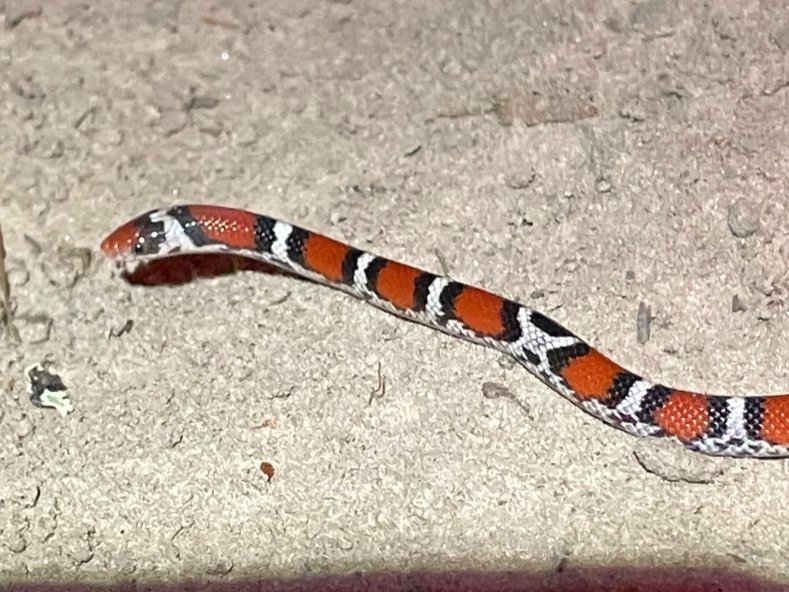
Tap a part to see what to look for. Tap it again to turn it off.
No venom. It rarely tries to bite, but may bite if handled.
How to identify
- Head
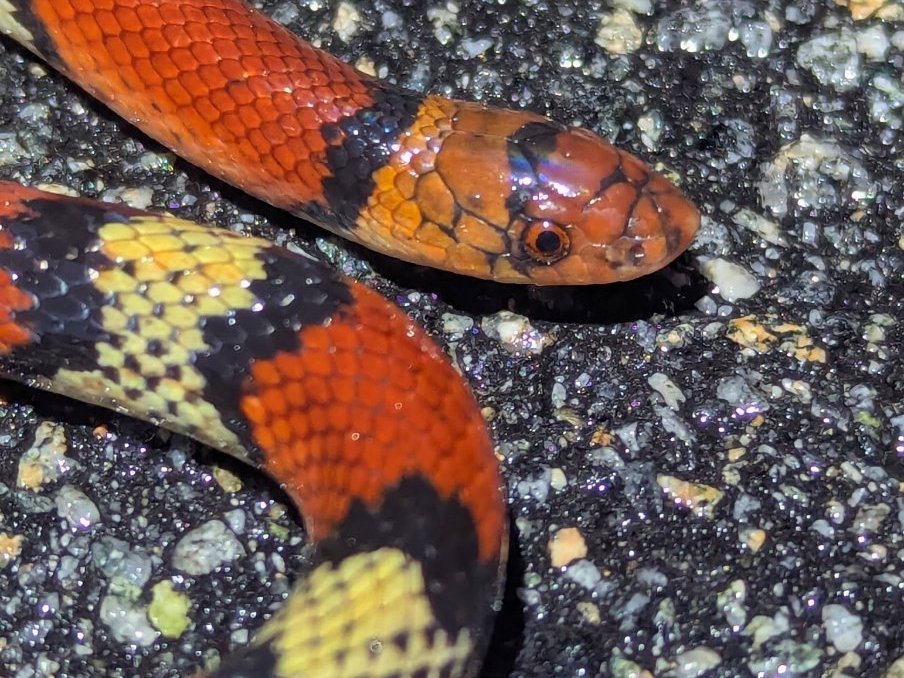
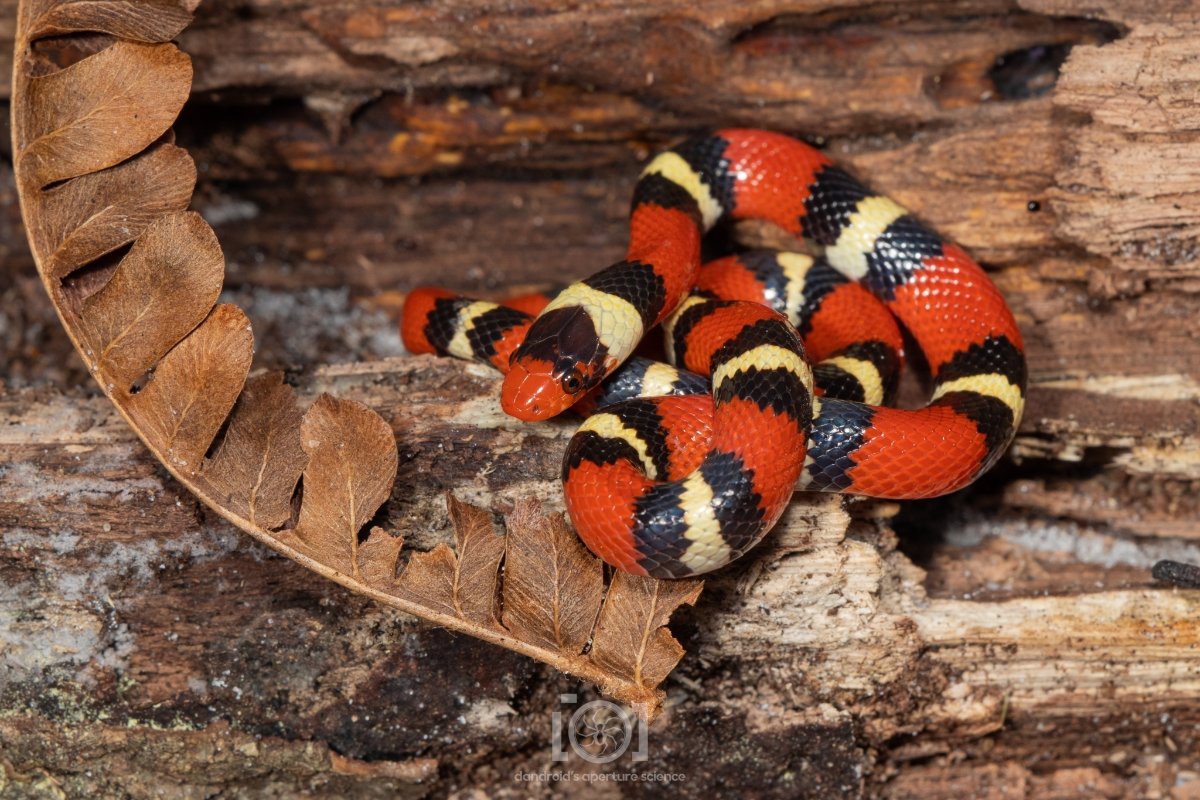
- Small and pointed, barely wider than the neck. The snout is red and sticks out past the lower jaw, and a black band crosses the head behind the eyes.
- Pattern
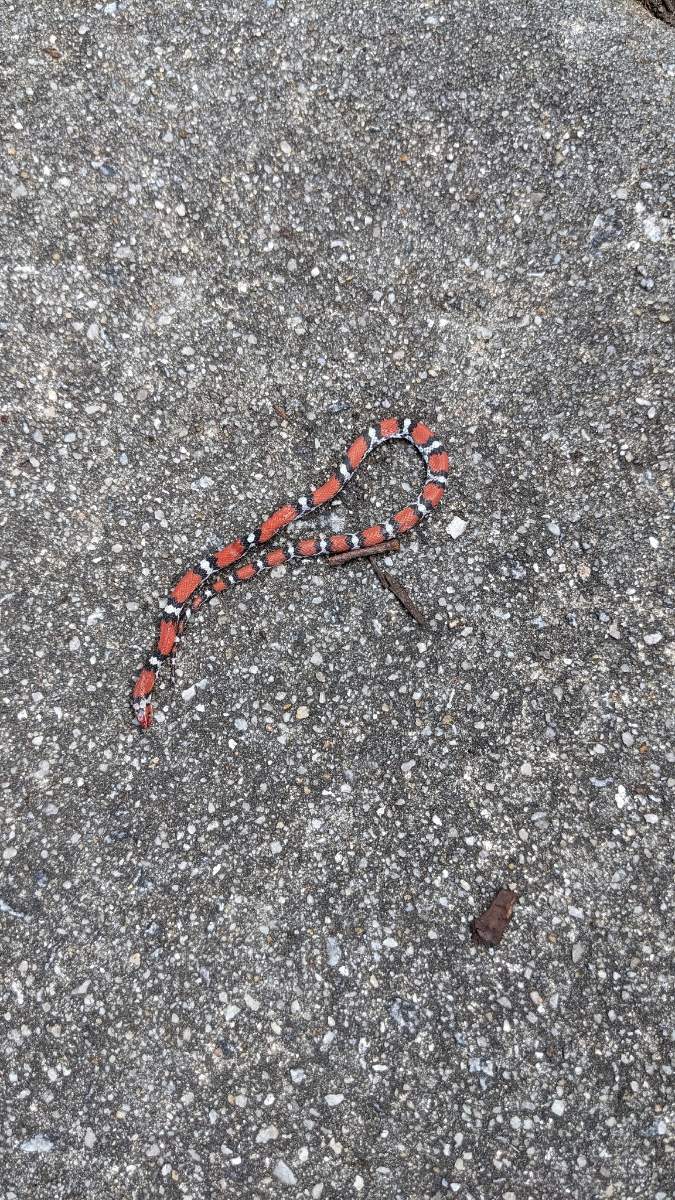
- Red blotches edged in black, with white, cream or yellowish gaps between them. The markings are on the back only; the belly is plain white or cream.
- Eyes
- Small eyes with round pupils.
- Pits
- None. There is no pit between the eye and the nostril.
- Tail
- Short and thin. The red, black and white back pattern carries on down the tail.
- What it does
- Secretive and active at night, burrowing through loose soil by pushing its pointed snout forward and side to side. It seldom tries to bite.
Often confused with
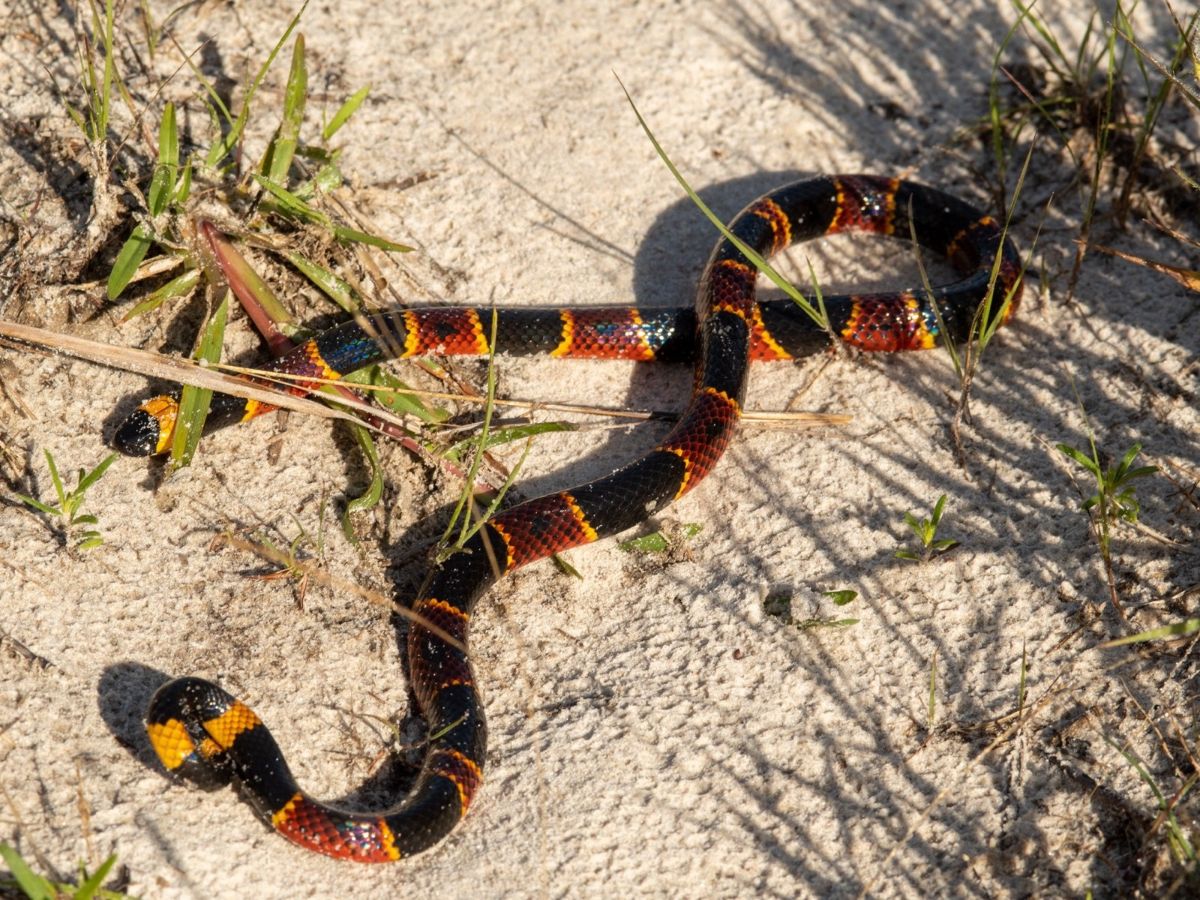
The Scarlet Kingsnake has almost the same colors, but its bands wrap all the way around the body. The Eastern Coralsnake has red and black rings split by yellow rings and a round black snout. The Texas Scarlet Snake of south Texas looks very similar and is now a separate species.
How to tell them apart
Scarlet Snake vs Eastern Coralsnake›
The quick way to tellLook at the snout. The Scarlet Snake has a red, pointed snout. The Eastern Coralsnake has a round black snout, and its red and black rings are split by yellow rings.
Scarlet Snake: Small and pointed, barely wider than the neck. The snout is red and sticks out past the lower jaw, and a black band crosses the head behind the eyes.
Eastern Coralsnake: Small blunt head with a solidly black snout and no distinct neck.
Scarlet Snake vs Scarlet Kingsnake›
The quick way to tellLook at the belly. The Scarlet Snake's belly is plain white or cream because its markings stop at the sides. The Scarlet Kingsnake's bands wrap all the way around the body.
Scarlet Snake: Red blotches edged in black, with white, cream or yellowish gaps between them. The markings are on the back only; the belly is plain white or cream.
Scarlet Kingsnake: Red, black and yellow bands with red touching black; bands break on the belly.
About the Scarlet Snake›
A small burrowing snake of the Southeast, found in sandy pine woods, mixed forests, and nearby fields and roadsides. It spends most of its time underground and comes out mainly on warm nights, especially in early summer or after heavy rain.
Its red, black and white pattern looks like a coralsnake's, but the red, pointed snout and plain white belly tell it apart. The bands stop at the sides and do not wrap around the belly.
The details
Size Usually 14–20 in (36–51 cm); up to about 32 in (82 cm). Hatchlings are about 5–7 in (13–18 cm).Lifespan Up to 15 years (one source: Virginia Herpetological Society).
Typical range›
The southeastern and south-central US: from New Jersey and Maryland south through Florida and west to Oklahoma and east Texas, with small separate groups in Missouri and New Jersey. The Texas Scarlet Snake of south Texas is now treated as a separate species.
Activity›
Active from spring into late fall, mostly at night. Most often seen above ground in June and July.
Diet›
Mostly the eggs of reptiles, which it slices open with enlarged back teeth. Also small lizards, small snakes, mice and some insects.
Reproduction›
Lays eggs: about 2 to 9 eggs in sandy or moist soil or rotting logs in late spring and summer. Eggs hatch from mid-summer to early fall.
Found in parts of 18 states›
Ranges are approximate. It may be found in only part of a state, or be rare there, and snakes can turn up outside of them.
More photos