‹ Compare two snakes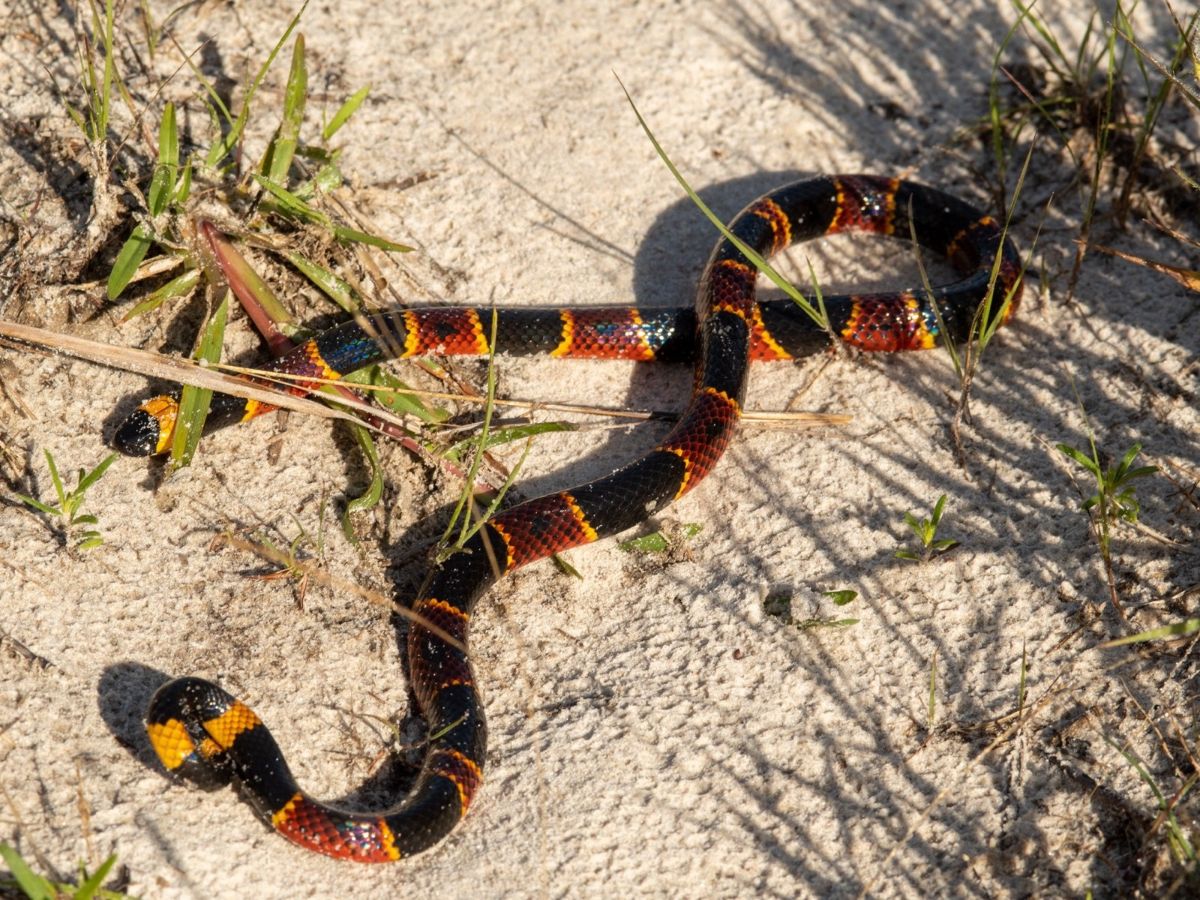
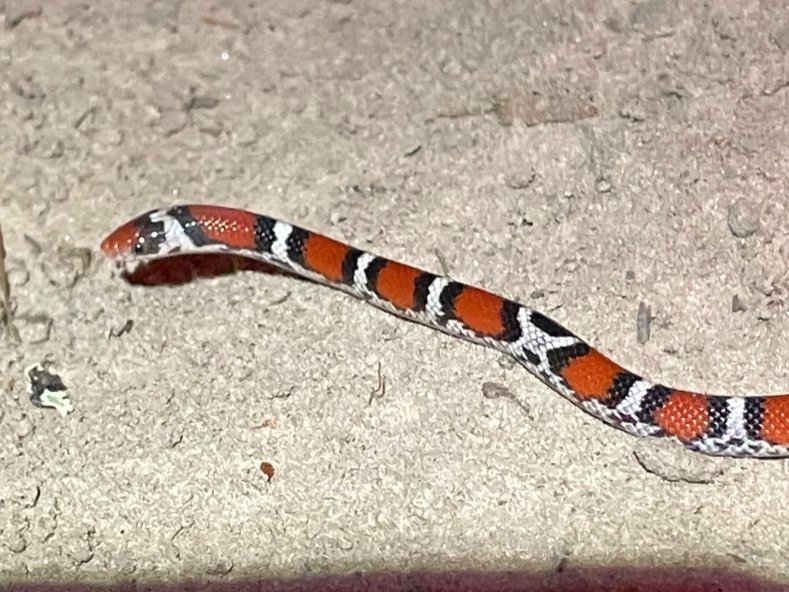
Eastern Coralsnake vs Scarlet Snake
Tap a part to see it on both. Tap it again to turn it off.
(c) Court Harding, some rights reserved (CC BY)
Eastern Coralsnake
Micrurus fulvius
Venomoussmokeybear33, no rights reserved
Scarlet Snake
Cemophora coccinea
Non-venomousThe quick way to tell
Look at the snout. The Scarlet Snake has a red, pointed snout. The Eastern Coralsnake has a round black snout, and its red and black rings are split by yellow rings.
Head ★ This settles it
Small blunt head with a solidly black snout and no distinct neck.
Small and pointed, barely wider than the neck. The snout is red and sticks out past the lower jaw, and a black band crosses the head behind the eyes.
Pattern
Glossy rings right around the body: red, yellow, black, yellow, red - red touching yellow.
Red blotches edged in black, with white, cream or yellowish gaps between them. The markings are on the back only; the belly is plain white or cream.
Eyes
Very small black eyes, round pupils; no heat-sensing pit.
Small eyes with round pupils.
Pits
None. There is no pit between the eye and the nostril.
None. There is no pit between the eye and the nostril.
Tail
Short, with black and yellow rings and no red.
Short and thin. The red, black and white back pattern carries on down the tail.
What it does
Hides its head and waves its curled tail; rarely bites.
Secretive and active at night, burrowing through loose soil by pushing its pointed snout forward and side to side. It seldom tries to bite.
Where it lives
Southeast coastal plain: southeastern North Carolina through South Carolina, Georgia, all of Florida, and west to Alabama, Mississippi and eastern Louisiana.
The southeastern and south-central US: from New Jersey and Maryland south through Florida and west to Oklahoma and east Texas, with small separate groups in Missouri and New Jersey. The Texas Scarlet Snake of south Texas is now treated as a separate species.