Southern Hog-nosed Snake
Heterodon simus · Hognose Snakes
Also called Southern Hognose Snake
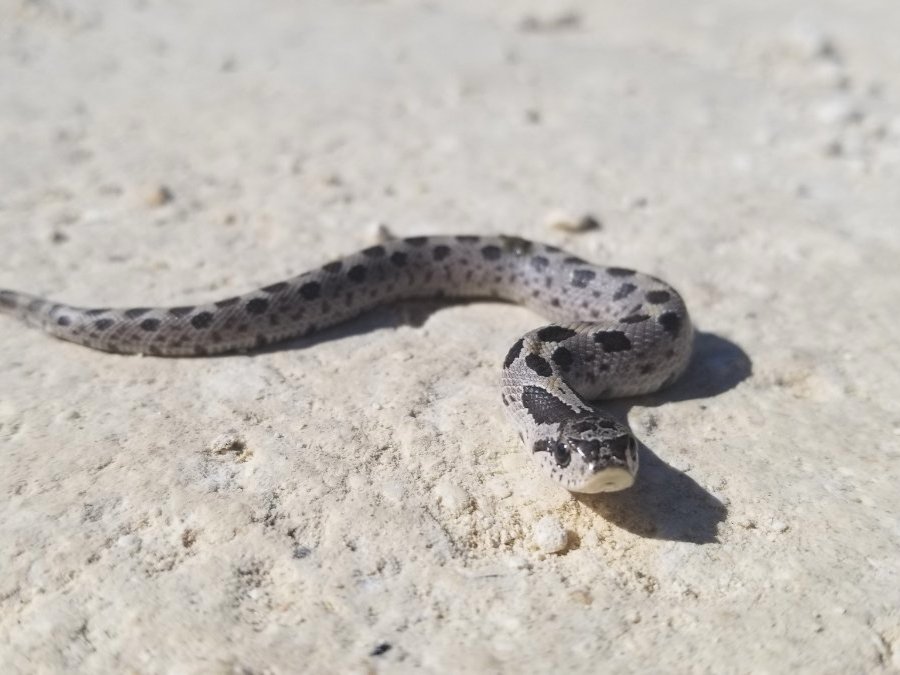
Tap a part to see what to look for. Tap it again to turn it off.
Mild venom from its enlarged rear teeth, used on toads. It hisses, spreads its neck and may play dead; bites are very rare. (Generally considered harmless to people.)
How to identify
- Head
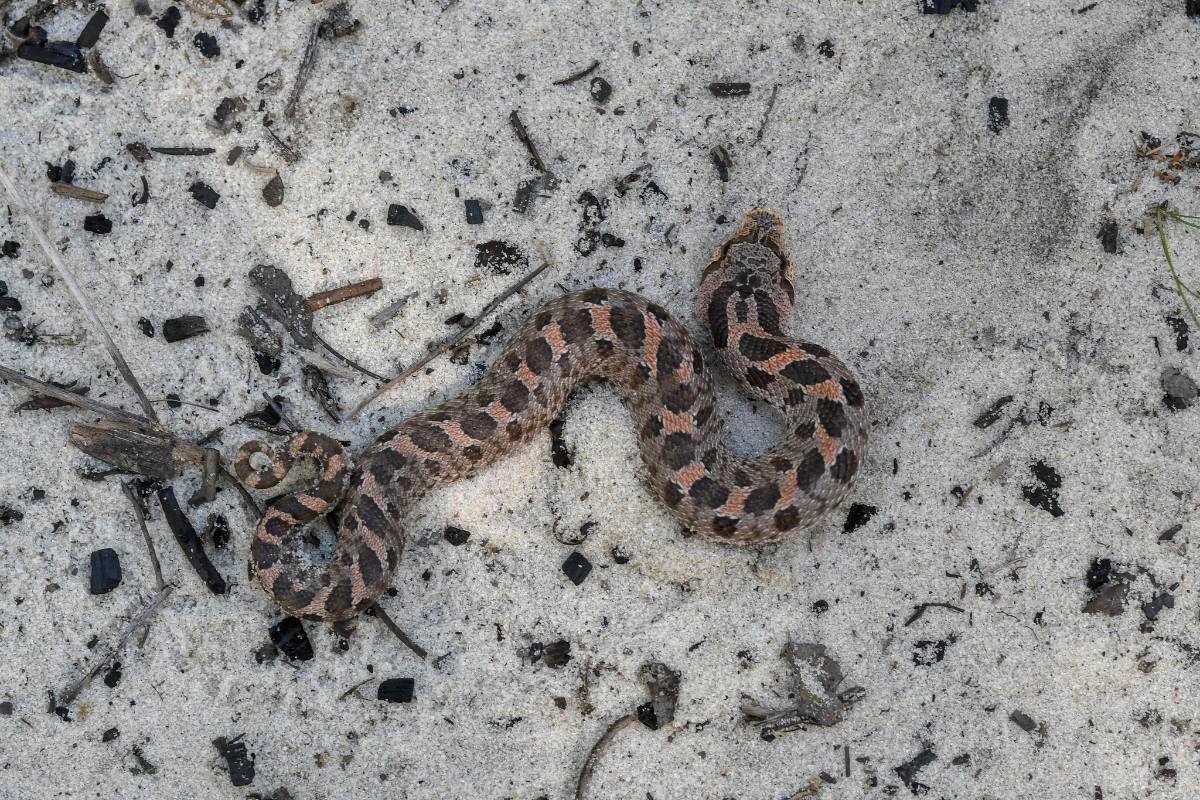
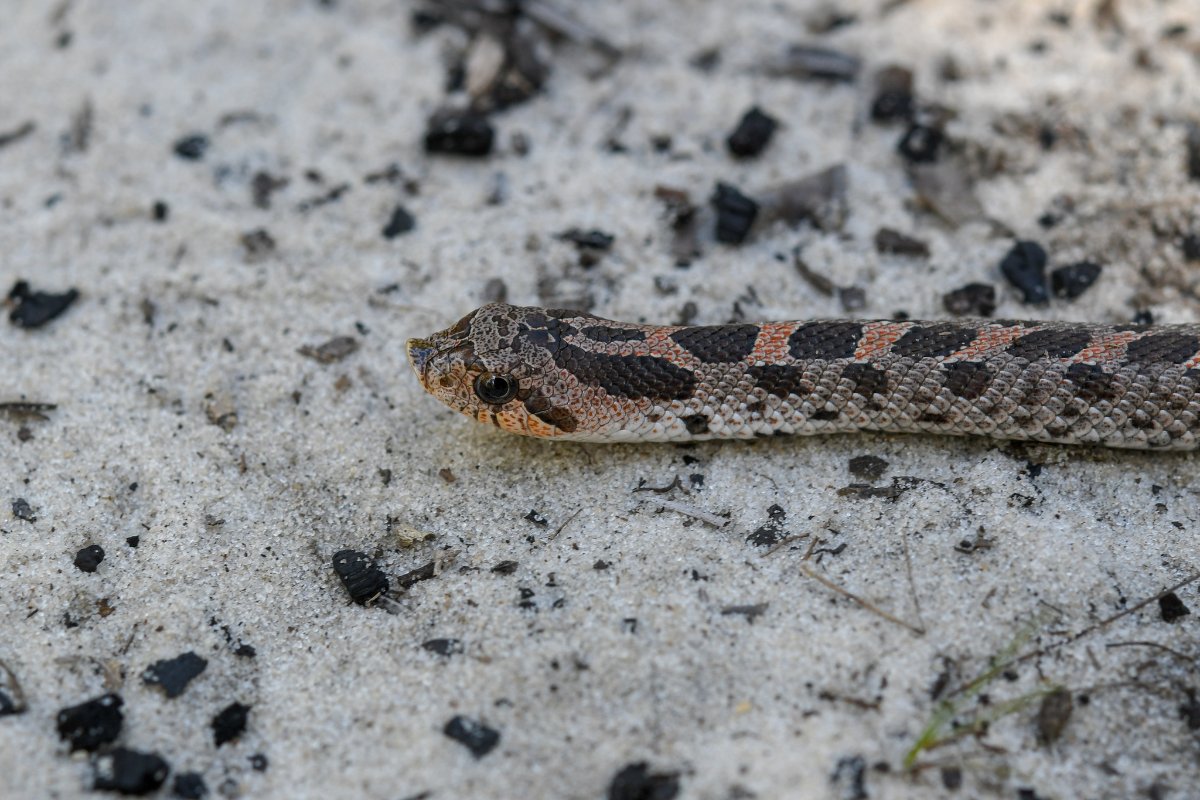
- Sharply upturned, pointed snout, turned up more than on the Eastern Hog-nosed Snake. A dark band crosses between the eyes and a dark line runs from the upper jaw through the eye.
- Pattern
- Light gray, tan, yellowish brown or orange-red with large dark blotches down the middle of the back that alternate with smaller dark blotches on the sides. There is often red-orange between the big back blotches. Never solid black or gray. The scales are rough (keeled). The belly is plain or mottled with gray-brown.
- Pits
- None. There is no pit between the eye and the nostril.
- Tail
- Short. The underside of the tail is about the same color as the belly, not clearly paler.
- What it does
- A bluffer. When threatened it flattens its head and neck, puffs up and hisses loudly, and may roll over and play dead with its mouth open. It uses its upturned snout to dig in sand, including to dig up buried toads.
Often confused with
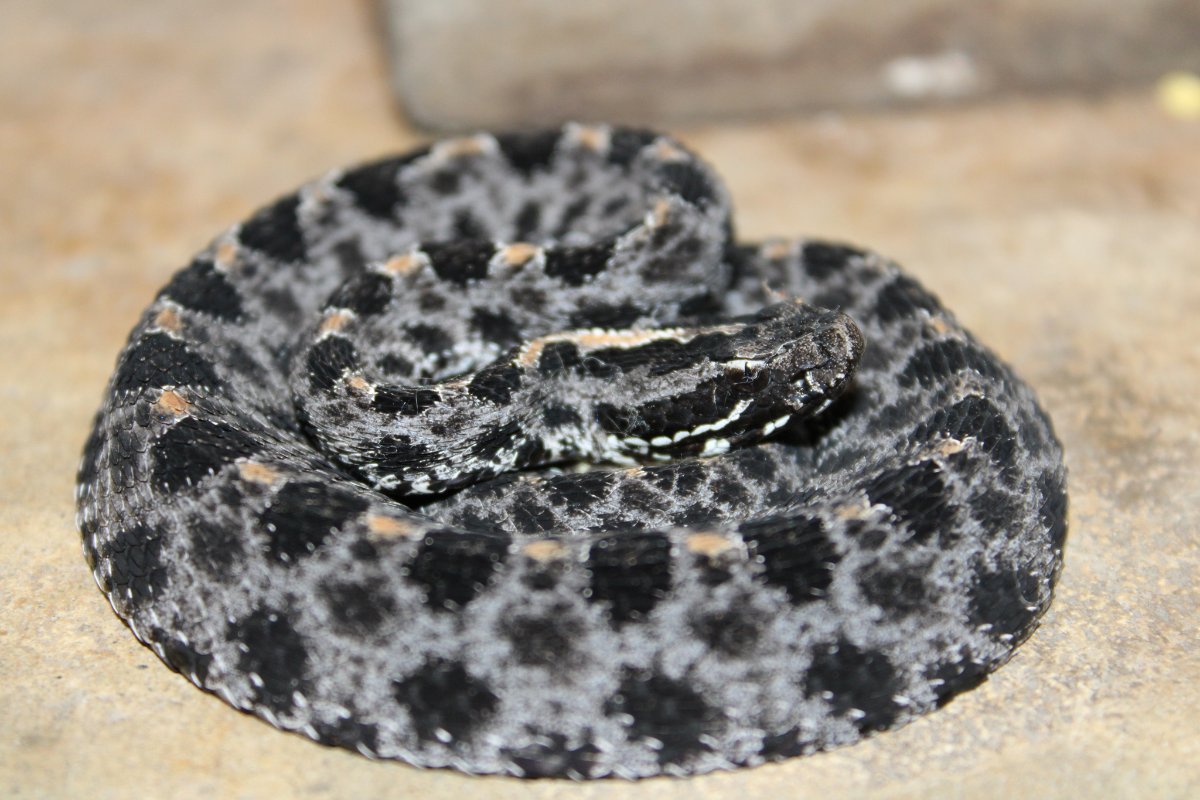
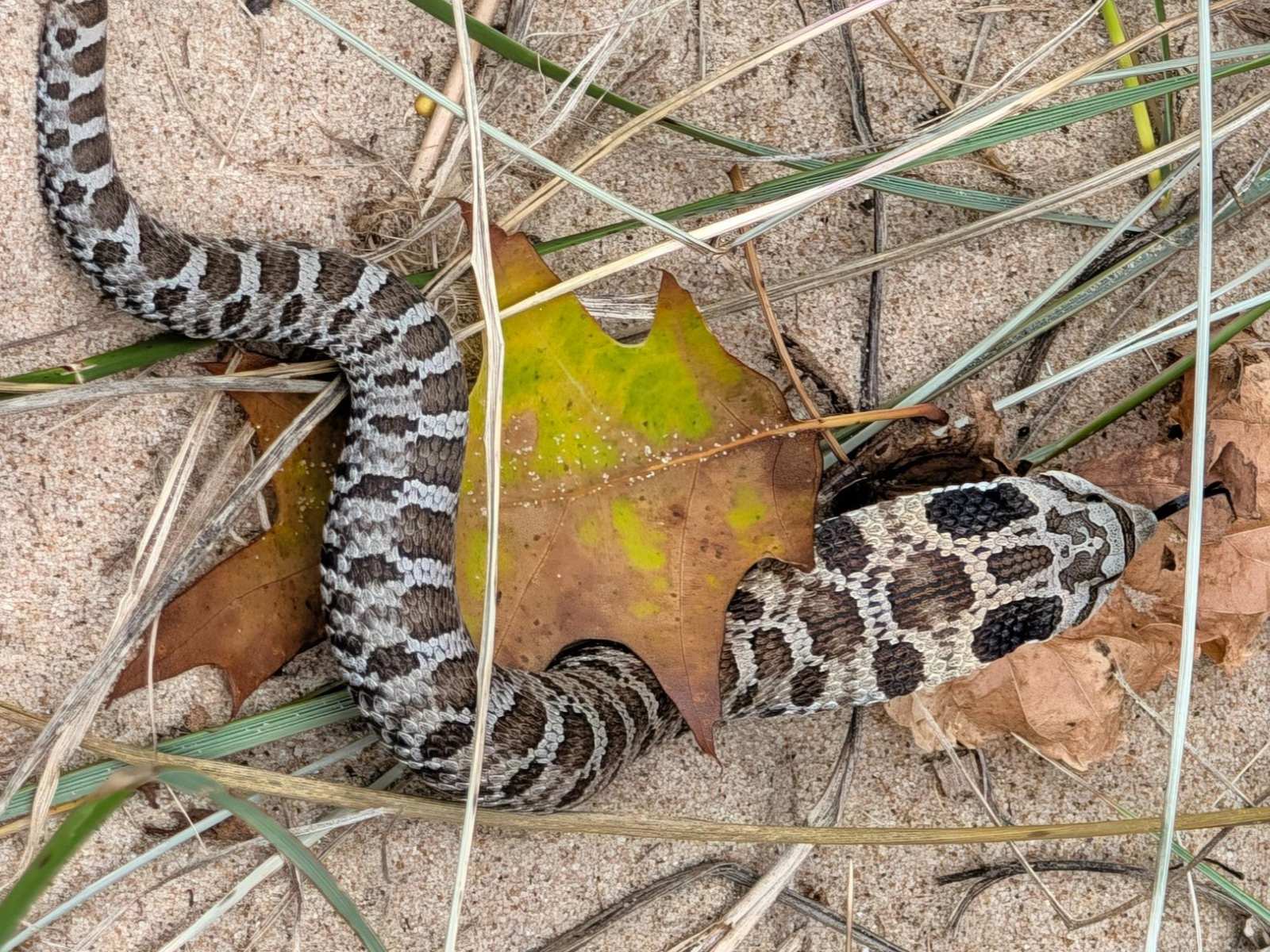
The Eastern Hog-nosed Snake has a less upturned snout, can be solid black or gray, and the underside of its tail is clearly paler than its belly. The Pygmy Rattlesnake has a similar blotched pattern but has a narrow neck, a heat-sensing pit, cat-like pupils and a tiny rattle.
How to tell them apart
Southern Hog-nosed Snake vs Pygmy Rattlesnake›
The quick way to tellLook at the side of the face between the eye and the nostril. The Southern Hog-nosed Snake has no pit there and has an upturned snout. The Pygmy Rattlesnake has a pit there, cat-like pupils, a blunt nose and a tiny rattle.
Southern Hog-nosed Snake: None. There is no pit between the eye and the nostril.
Pygmy Rattlesnake: A deep heat-sensing pit on each side of the face, between the eye and the nostril.
Southern Hog-nosed Snake vs Eastern Hog-nosed Snake›
The quick way to tellLook at the underside of the tail. The Southern Hog-nosed Snake's tail underside is about the same color as its belly, and its snout is sharply upturned. The Eastern Hog-nosed Snake's tail underside is clearly paler than its belly, and its snout is turned up less.
Southern Hog-nosed Snake: Short. The underside of the tail is about the same color as the belly, not clearly paler.
Eastern Hog-nosed Snake: Underside of the tail is lighter than the belly; no rattle.
About the Southern Hog-nosed Snake›
The Southern Hog-nosed Snake lives on the Southeastern Coastal Plain, from southeastern North Carolina through South Carolina and Georgia into the Florida Panhandle and the northern half of the Florida peninsula. It needs dry, sandy ground such as longleaf pine sandhills, scrub, dry oak woods and coastal dunes, and spends much of its time burrowed in sand. It is rare and declining, and it seems to be gone from Alabama and Mississippi.
It is a small, stout snake with a sharply upturned, pointed snout, the most upturned of any US hog-nosed snake. It is gray, tan or reddish with three rows of dark blotches, and it is never solid black.
The details
Size Usually 14–22 in (36–56 cm); maximum about 24 in (61 cm). Females are larger than males. Hatchlings about 5–7 in.Weight About 46–120 g (1.6–4.2 oz) (from Animal Diversity Web; only one source found).
Typical range›
Southeastern US Coastal Plain: southeastern North Carolina, South Carolina, Georgia and northern and central Florida (not the Keys or far south). Old records from southern Alabama and southern Mississippi; now very rare or gone there.
Activity›
Active mainly by day and at dusk; most often seen above ground in late summer and fall. Spends nights and much other time buried in sand.
Diet›
Mainly toads and frogs, especially spadefoots and southern toads; also lizards such as six-lined racerunners, and sometimes small mammals.
Reproduction›
Lays eggs. Mating is thought to be in mid to late May; females lay about 6–14 eggs in early summer in shallow burrows in sand.
Found in parts of 4 states›
Ranges are approximate. It may be found in only part of a state, or be rare there, and snakes can turn up outside of them.