‹ Compare two snakes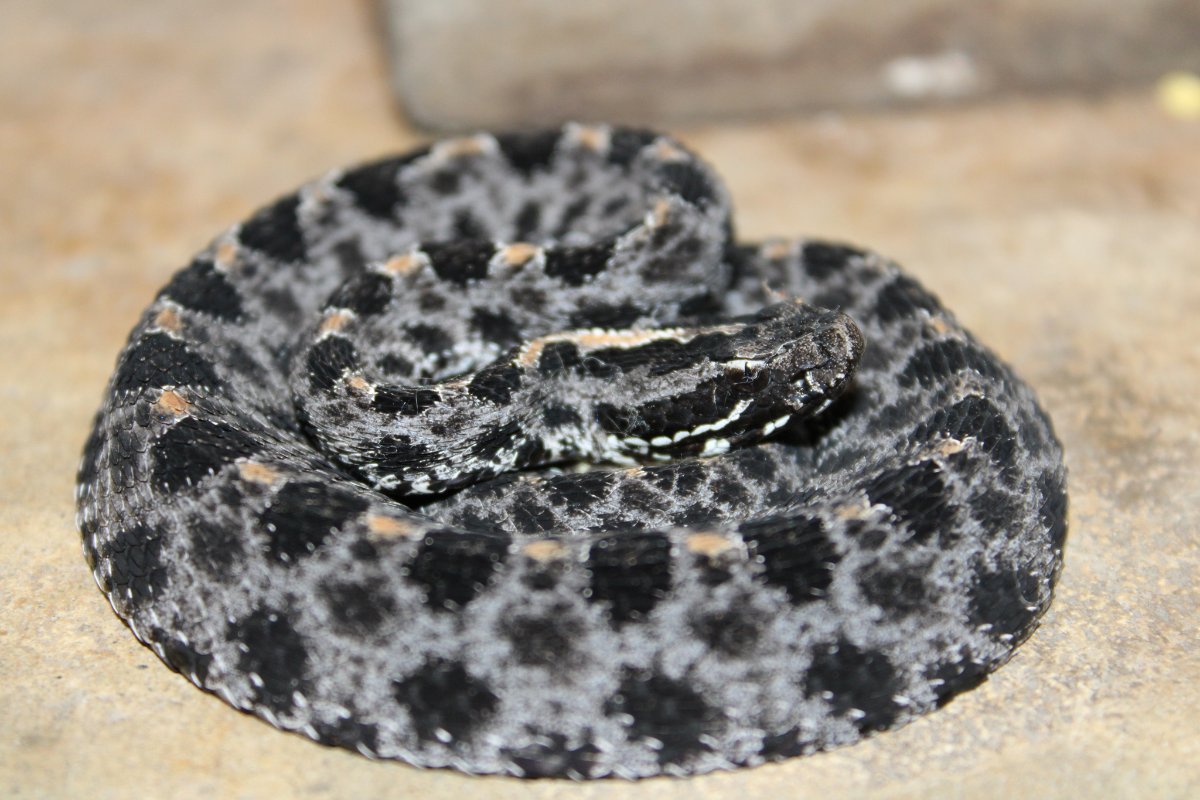
Pygmy Rattlesnake vs Southern Hog-nosed Snake
Tap a part to see it on both. Tap it again to turn it off.
(c) Jolieokefenokee, some rights reserved (CC BY)
Pygmy Rattlesnake
Sistrurus miliarius
Venomous(c) Court Harding, some rights reserved (CC BY)
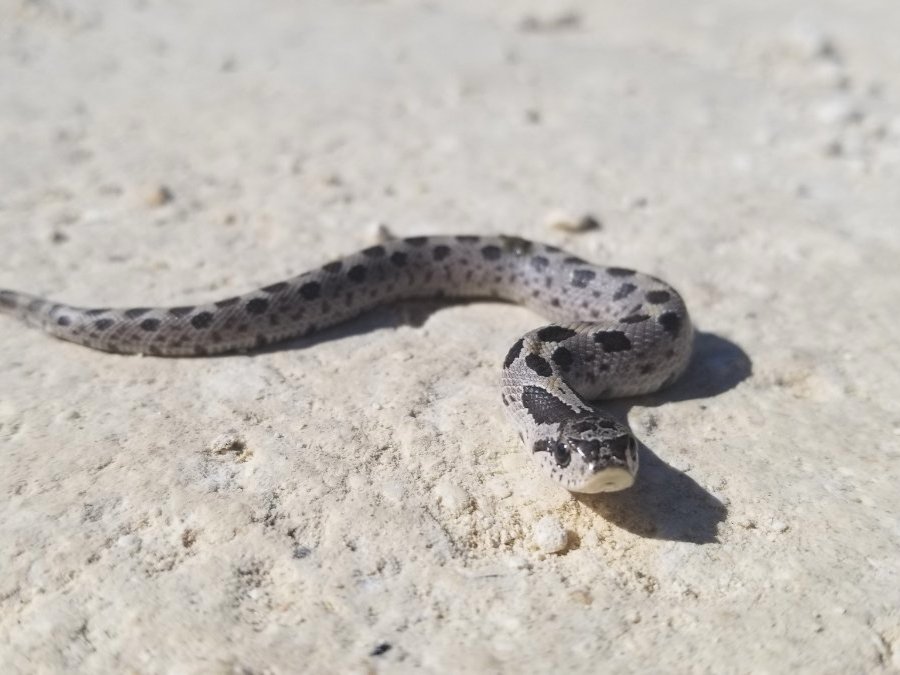
Southern Hog-nosed Snake
Heterodon simus
Mildly venomousThe quick way to tell
Look at the side of the face between the eye and the nostril. The Southern Hog-nosed Snake has no pit there and has an upturned snout. The Pygmy Rattlesnake has a pit there, cat-like pupils, a blunt nose and a tiny rattle.
Pits ★ This settles it
A deep heat-sensing pit on each side of the face, between the eye and the nostril.
None. There is no pit between the eye and the nostril.
Head
Small head, only a little wider than the neck, with a dark stripe through the eye.
Sharply upturned, pointed snout, turned up more than on the Eastern Hog-nosed Snake. A dark band crosses between the eyes and a dark line runs from the upper jaw through the eye.
Pattern
Round dark spots down the back, often with a rusty stripe between them.
Light gray, tan, yellowish brown or orange-red with large dark blotches down the middle of the back that alternate with smaller dark blotches on the sides. There is often red-orange between the big back blotches. Never solid black or gray. The scales are rough (keeled). The belly is plain or mottled with gray-brown.
Eyes
Vertical slit pupil; heat-sensing pit between eye and nostril.
—
Tail
Very slender with a tiny rattle that sounds like an insect.
Short. The underside of the tail is about the same color as the belly, not clearly paler.
What it does
Stays hidden under leaves; rattle often too faint to hear.
A bluffer. When threatened it flattens its head and neck, puffs up and hisses loudly, and may roll over and play dead with its mouth open. It uses its upturned snout to dig in sand, including to dig up buried toads.
Where it lives
Southeast from eastern North Carolina through Florida and west to eastern Texas and Oklahoma, north into western Tennessee, far western Kentucky, Arkansas and southern Missouri.
Southeastern US Coastal Plain: southeastern North Carolina, South Carolina, Georgia and northern and central Florida (not the Keys or far south). Old records from southern Alabama and southern Mississippi; now very rare or gone there.