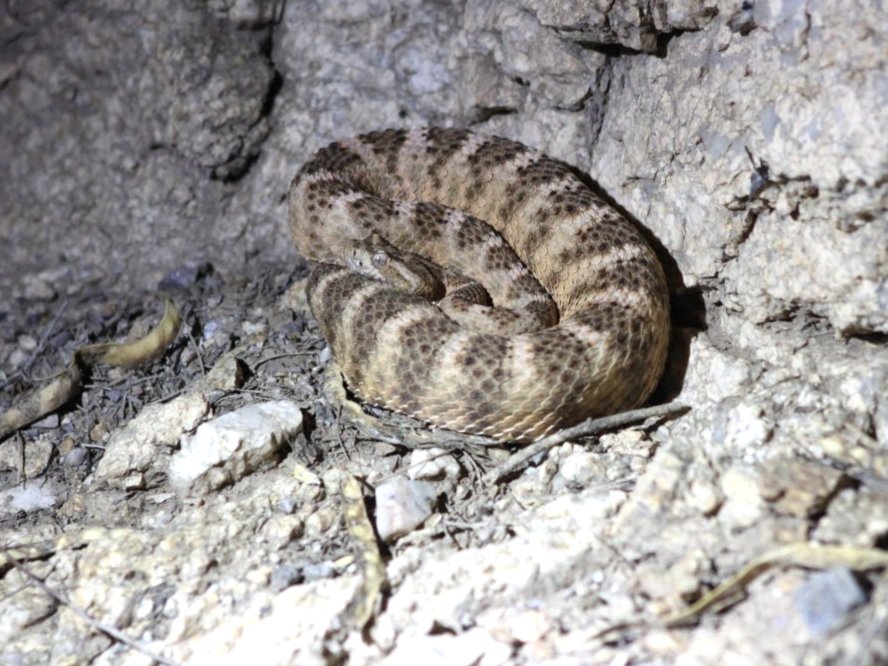
Tiger Rattlesnake
Crotalus tigris · Rattlesnakes
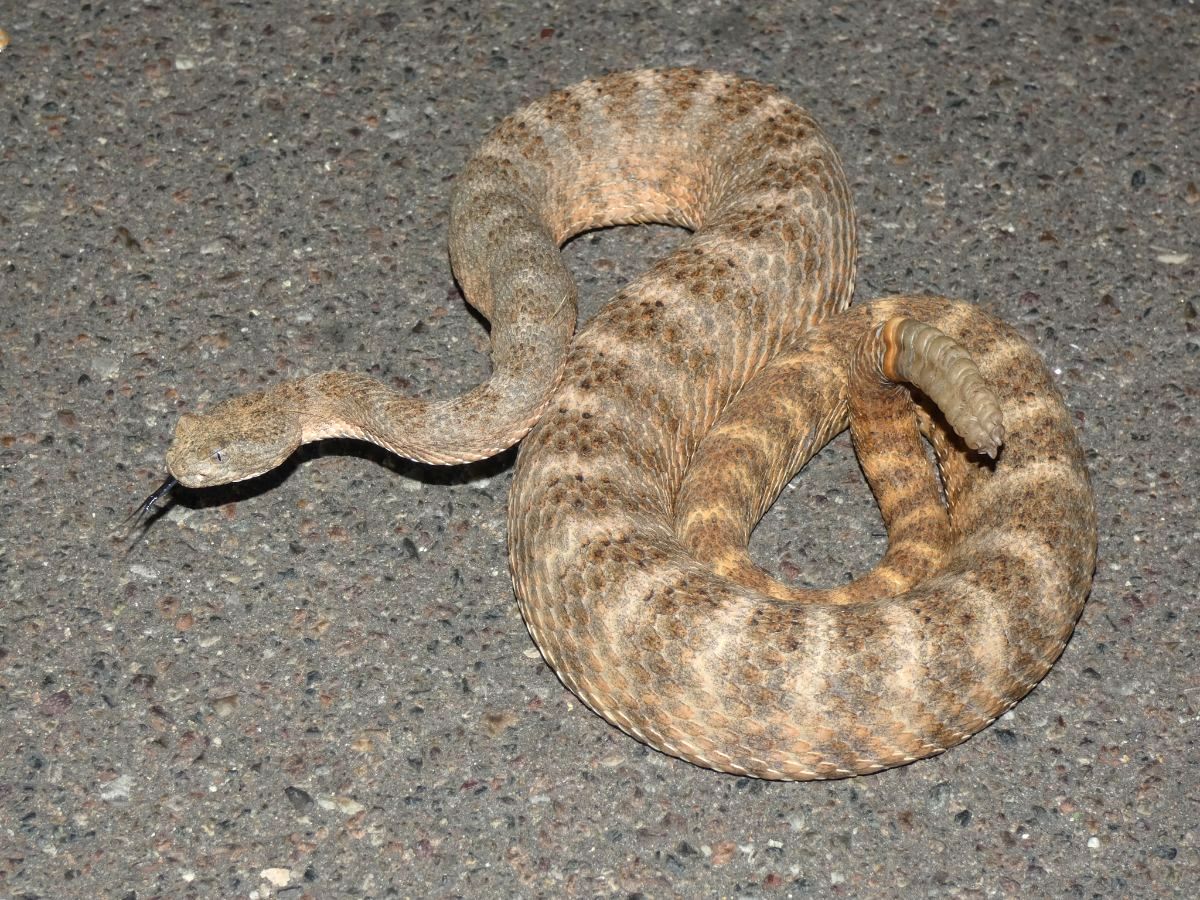
Tap a part to see what to look for. Tap it again to turn it off.
Venomous. Its venom is highly toxic even though it is a small snake, and it usually rattles when disturbed; keep well back — a bite is a medical emergency.
How to identify
- Head
- Very small head for its body, still wider than the slender neck.
- Pattern
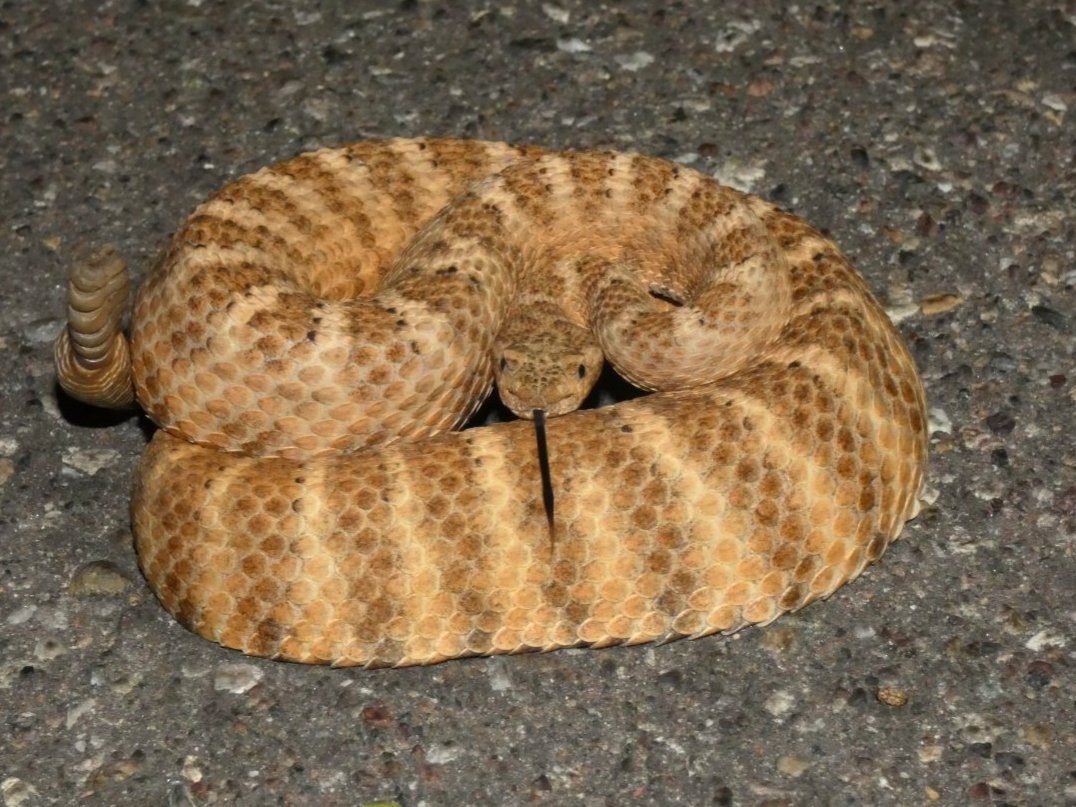
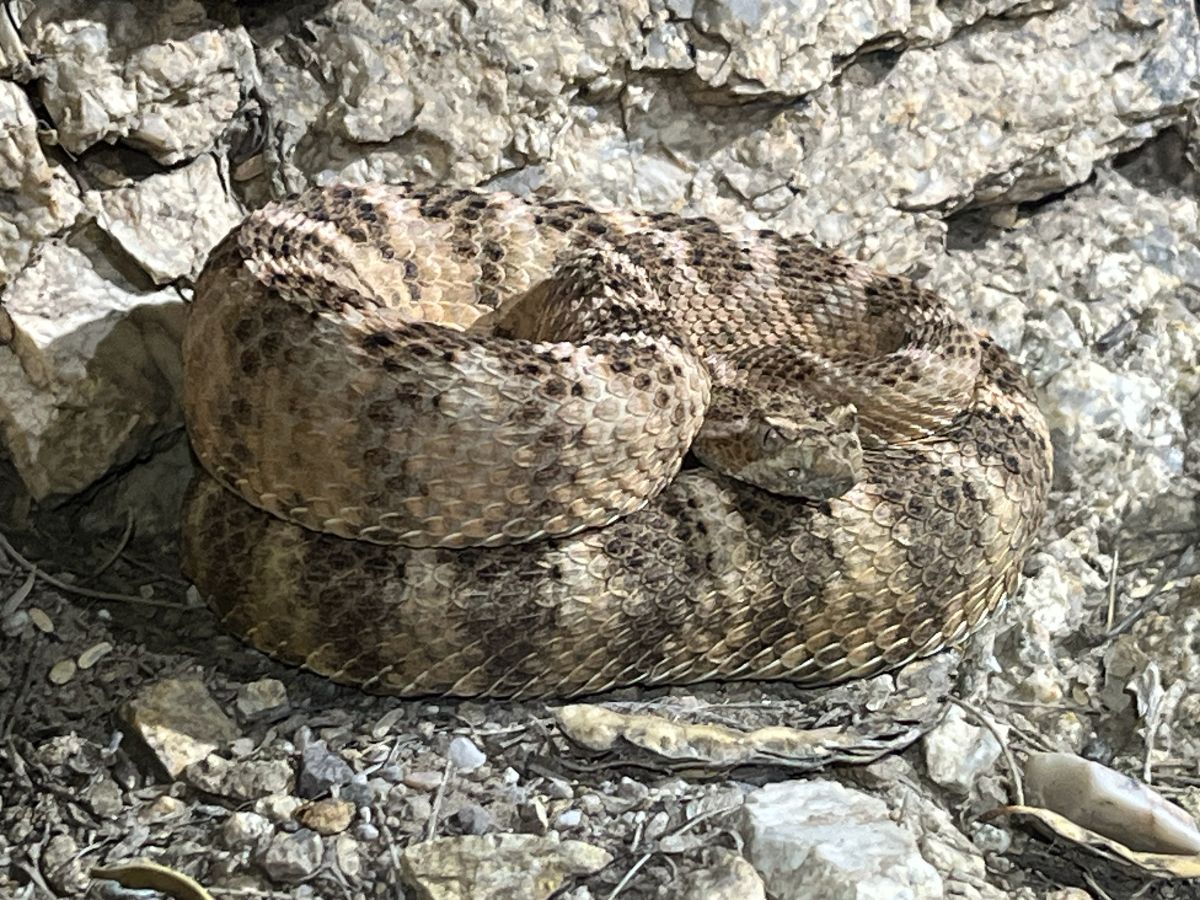
- Many narrow, dark crossbands from neck to tail — bands, not blotches or diamonds.
- Eyes
- Vertical slit pupil; heat-sensing pit between eye and nostril.
- Pits
- A deep heat-sensing pit on each side of the face, between the eye and the nostril.
- Tail
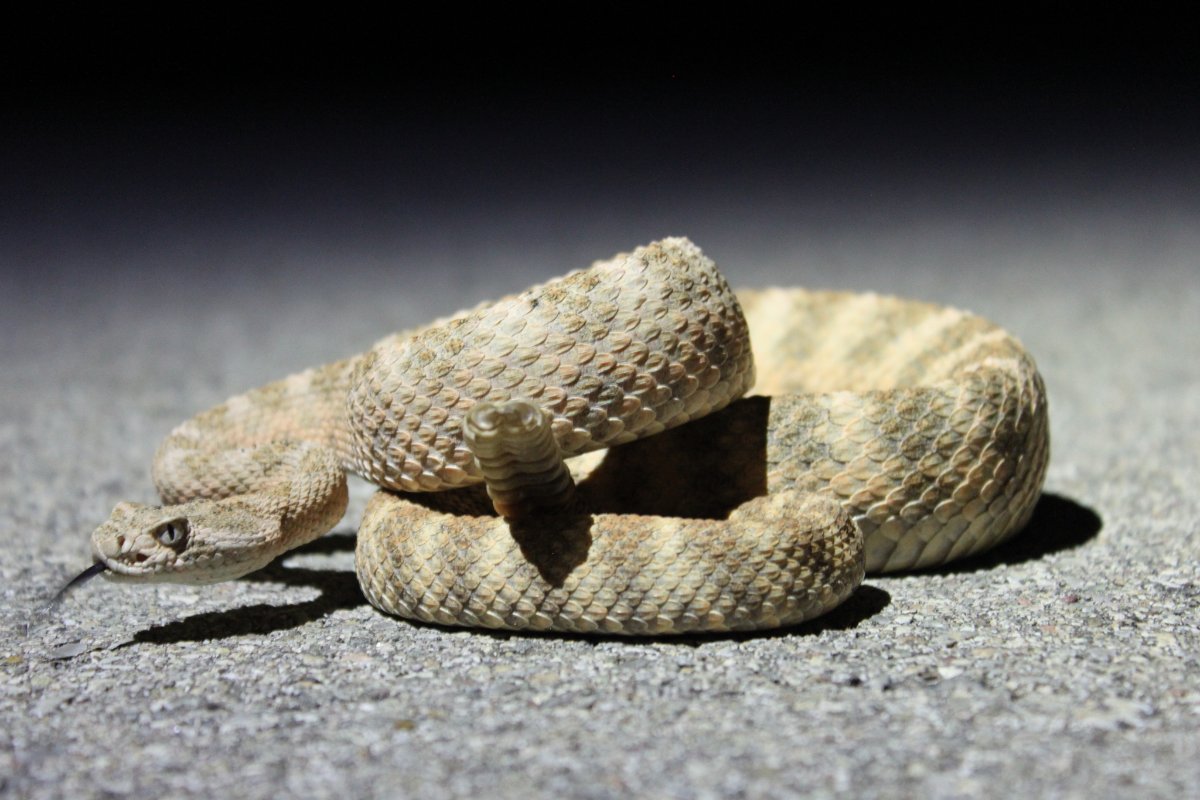
- Banded like the body, without bold black rings; ends in a large rattle.
- What it does
- Usually rattles a warning; most bites happen when people handle it.
Often confused with
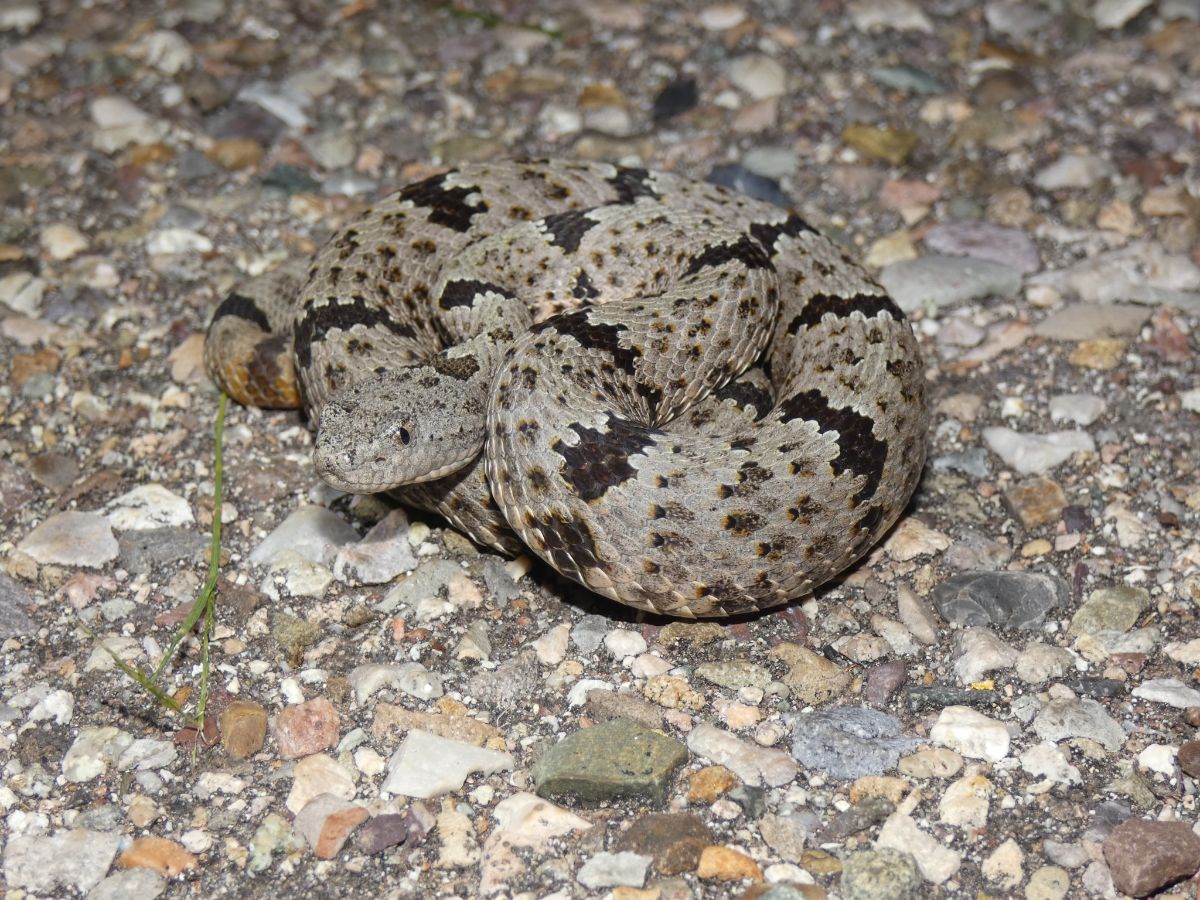
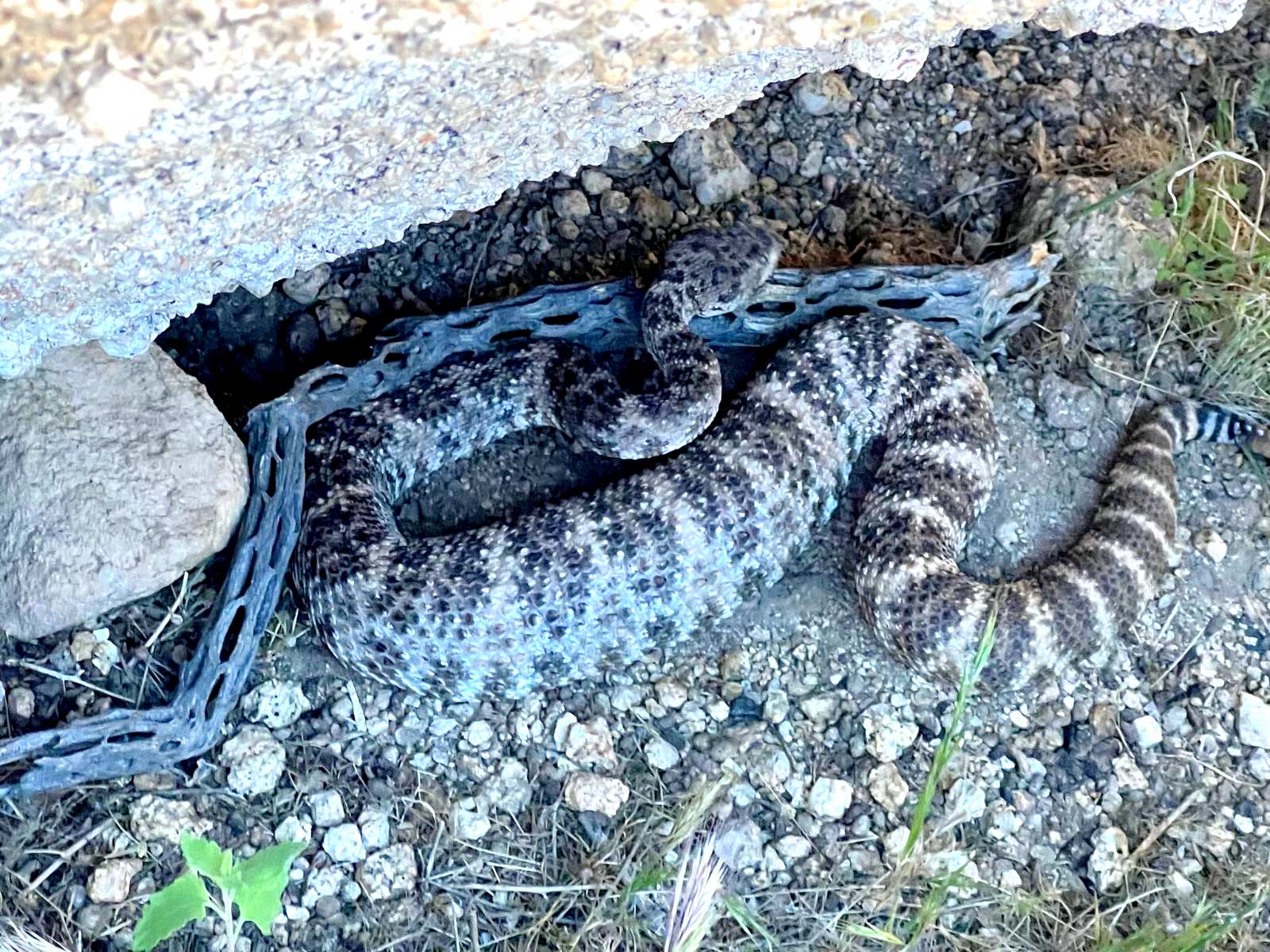
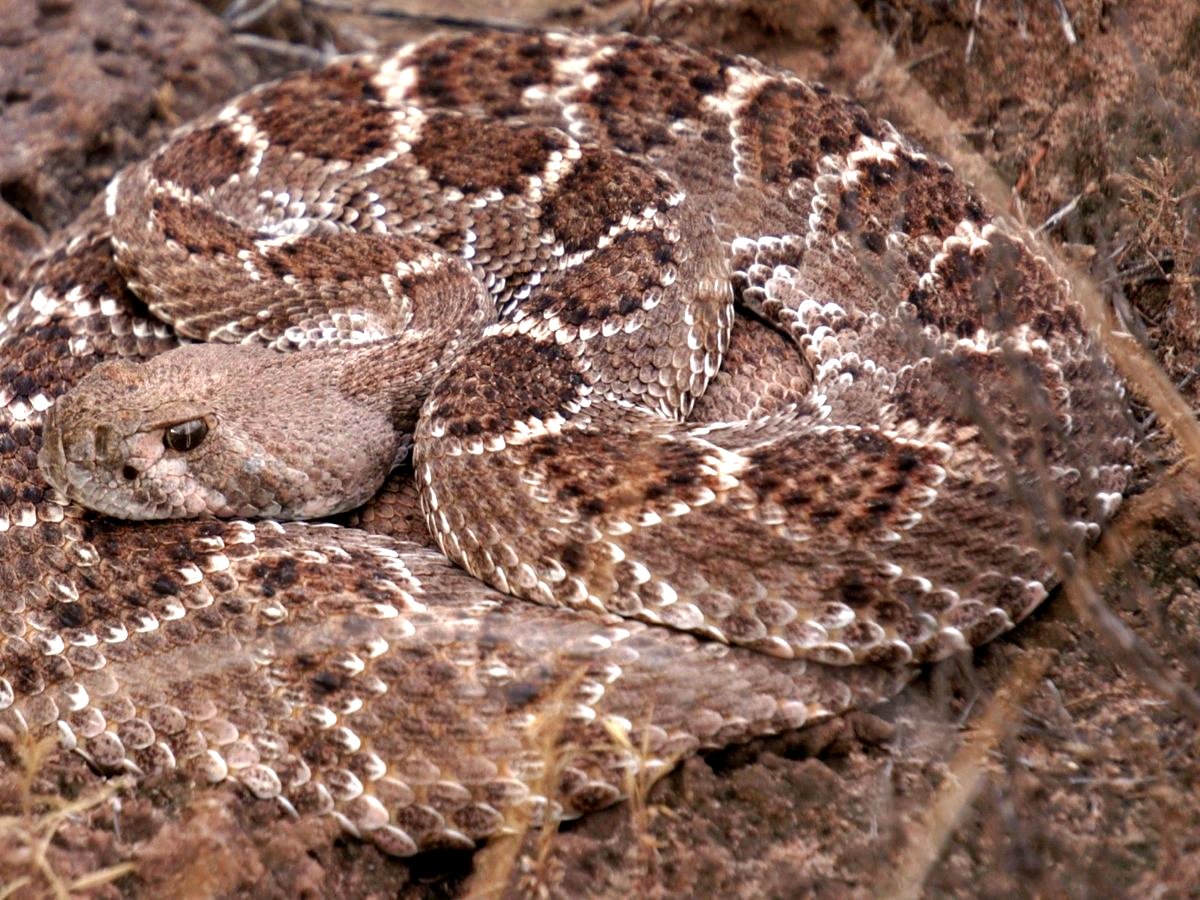
Southwestern Speckled Rattlesnake, Rock Rattlesnake and Western Diamondback Rattlesnake are common mix-ups; the tiny head and many narrow bands are the best clues.
How to tell them apart
Tiger Rattlesnake vs Rock Rattlesnake›
The quick way to tellCount the bands. The Rock Rattlesnake has only about 13–24 bands, widely spaced. The Tiger Rattlesnake has many more — about 35–50 — packed close together, and a tiny head.
Tiger Rattlesnake: Many narrow, dark crossbands from neck to tail — bands, not blotches or diamonds.
Rock Rattlesnake: Narrow, jagged dark crossbands, widely spaced on a pale gray, greenish, tan or pinkish body.
Tiger Rattlesnake vs Southwestern Speckled Rattlesnake›
The quick way to tellLook at the head. The Southwestern Speckled Rattlesnake has a large head for its body. The Tiger Rattlesnake has a strikingly small head and a big rattle, and lacks the Speckled's dark tail rings.
Tiger Rattlesnake: Very small head for its body, still wider than the slender neck.
Southwestern Speckled Rattlesnake: Large triangular head, wide for the body.
Tiger Rattlesnake vs Western Diamondback Rattlesnake›
The quick way to tellLook at the tail just before the rattle. The Western Diamondback has bold black-and-white 'coon-tail' rings. The Tiger Rattlesnake's tail lacks those bold black rings.
Tiger Rattlesnake: Banded like the body, without bold black rings; ends in a large rattle.
Western Diamondback Rattlesnake: Bold black and white rings, usually about equal width - the classic coon tail - ahead of the rattle.
About the Tiger Rattlesnake›
A small desert rattlesnake of rocky slopes, canyons and washes in the Sonoran Desert. In the US it is found only in Arizona, and it ranges south into Sonora, Mexico.
It has the smallest head of any rattlesnake compared to its body, paired with a large rattle. Its many narrow crossbands give it a striped, tiger-like look.
The details
Size Usually 1.5–2.5 ft; rarely up to about 3 ft
Typical range›
Central, south-central and southeastern Arizona (US only), south into Sonora, Mexico.
Activity›
Mostly active at night in hot summer months, and at dawn, dusk or daytime in spring and fall.
Diet›
Mice, kangaroo rats, woodrats and other small mammals, plus lizards.
Reproduction›
Mates during the summer monsoon; females give birth to about 2–6 live young in summer.
Found in parts of 1 state›
Ranges are approximate. It may be found in only part of a state, or be rare there, and snakes can turn up outside of them.
More photos