Timber Rattlesnake
Crotalus horridus · Rattlesnakes
Tap a part to see what to look for. Tap it again to turn it off.
Venomous. It usually warns rather than strikes, but keep well back; a bite is a medical emergency.
How to identify
- Head
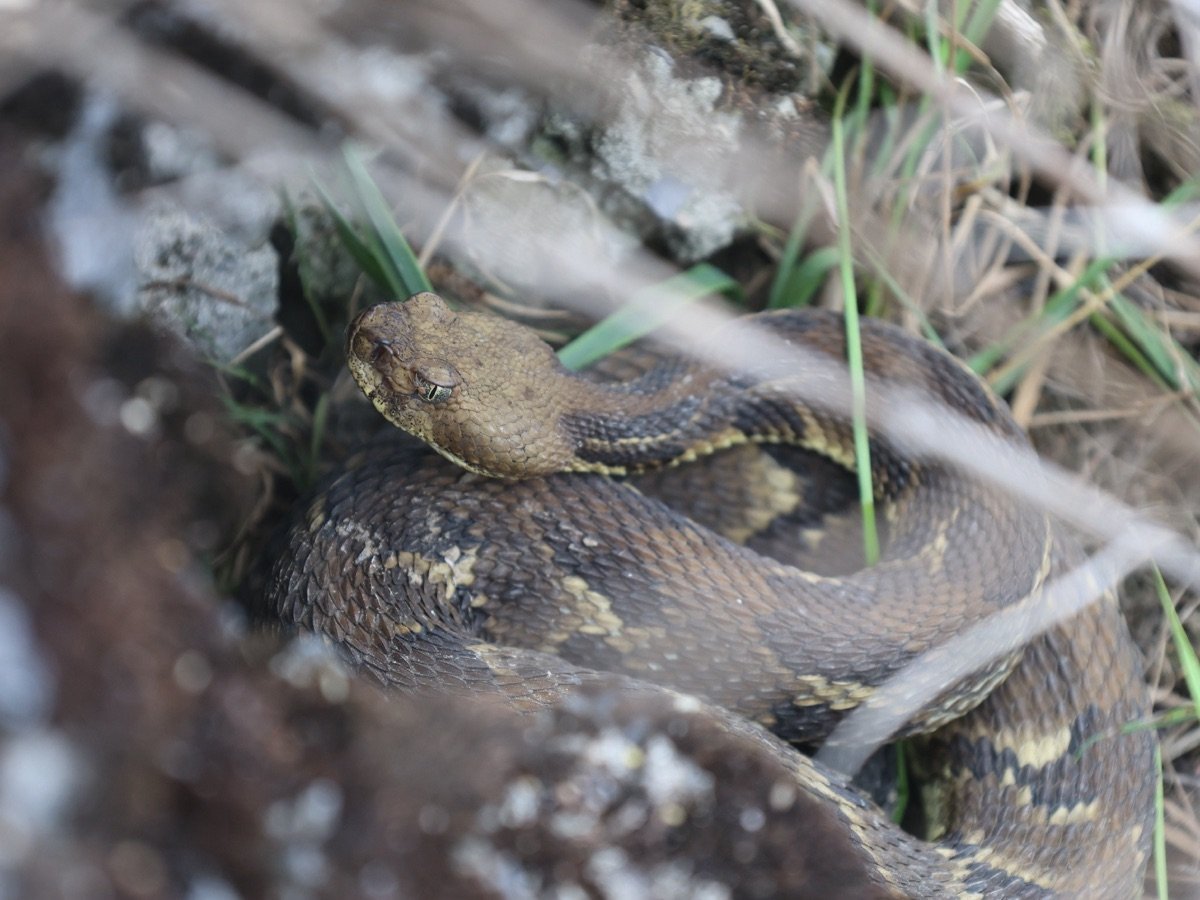
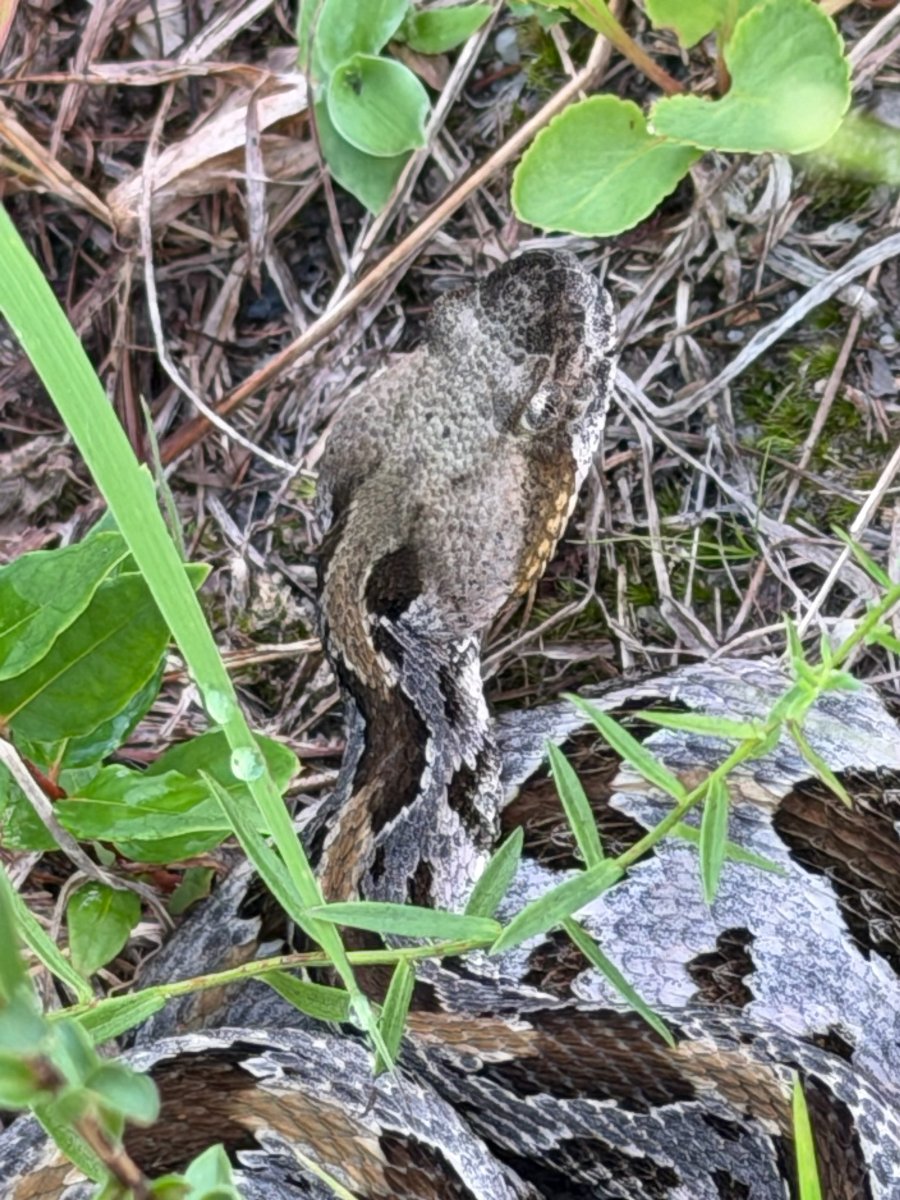
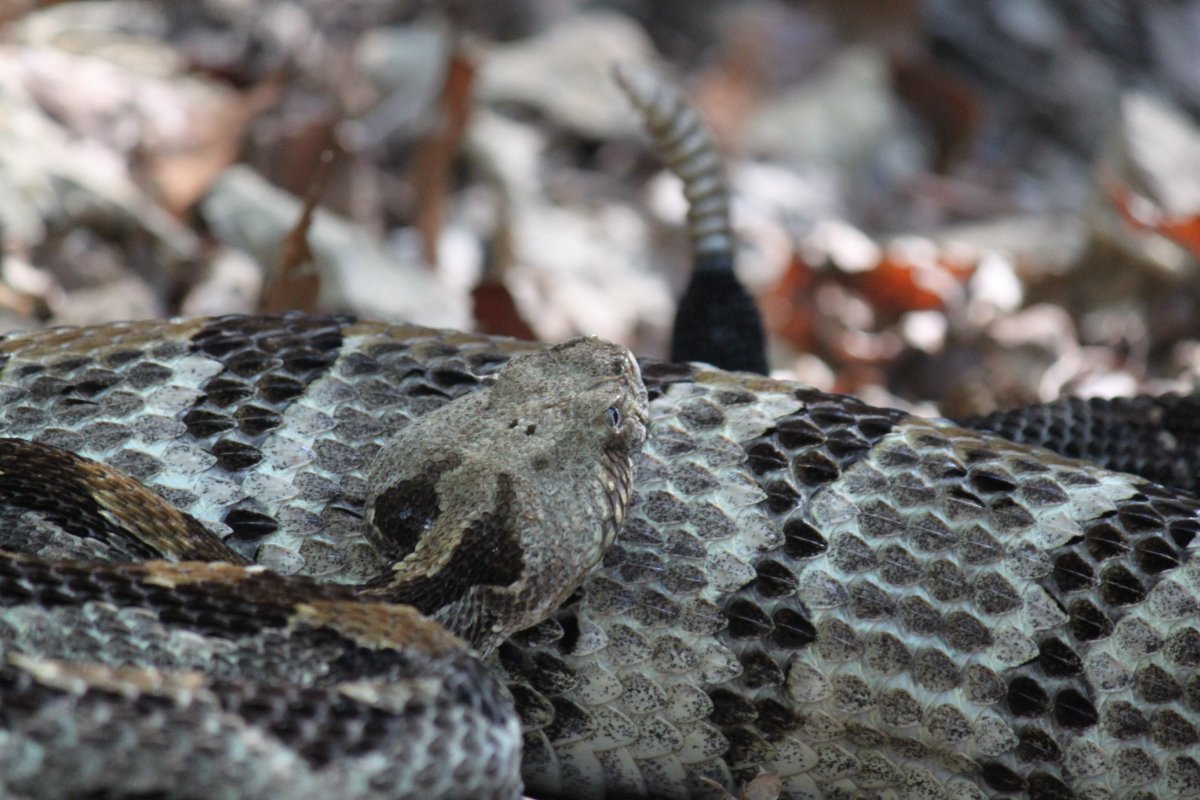
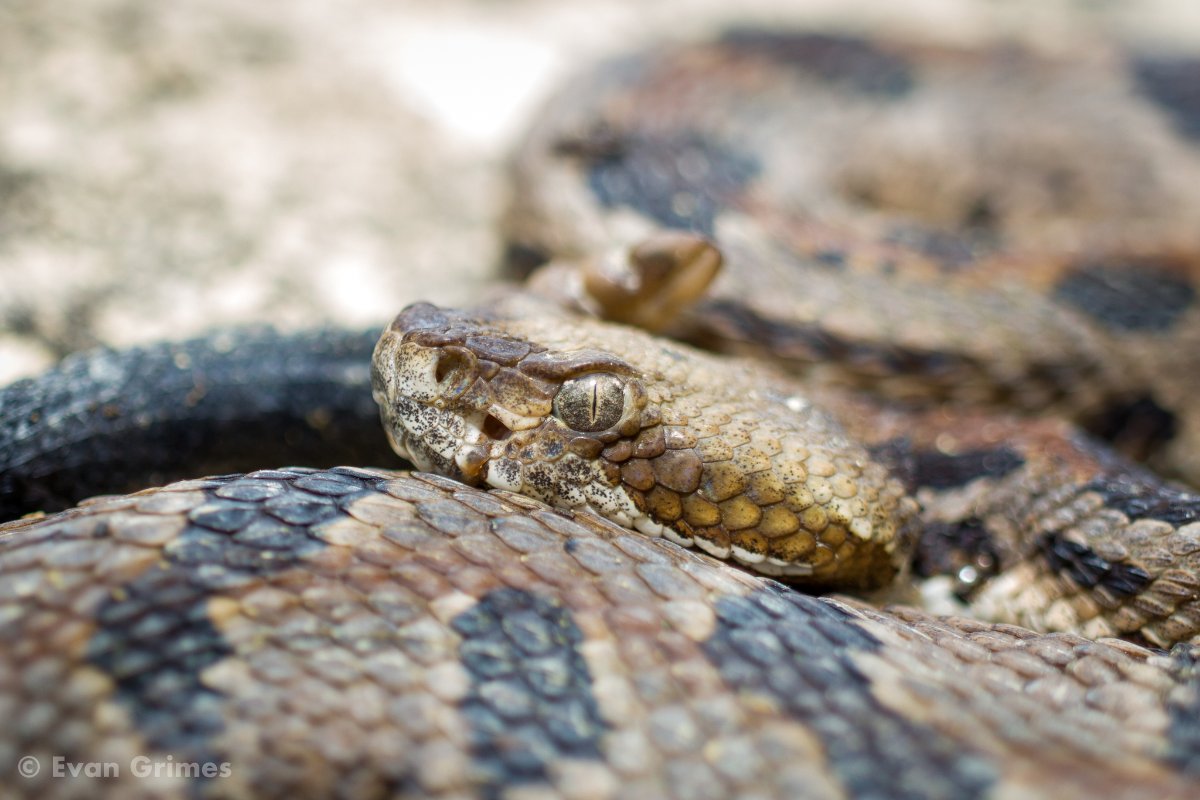
- Heavy triangular head, much wider than the neck, usually with no bold cheek stripe.
- Pattern
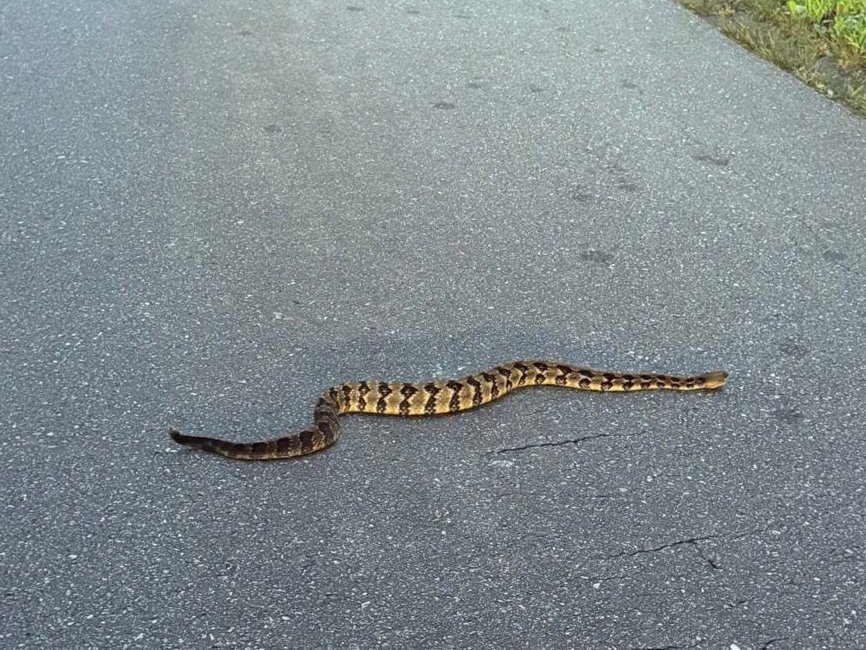
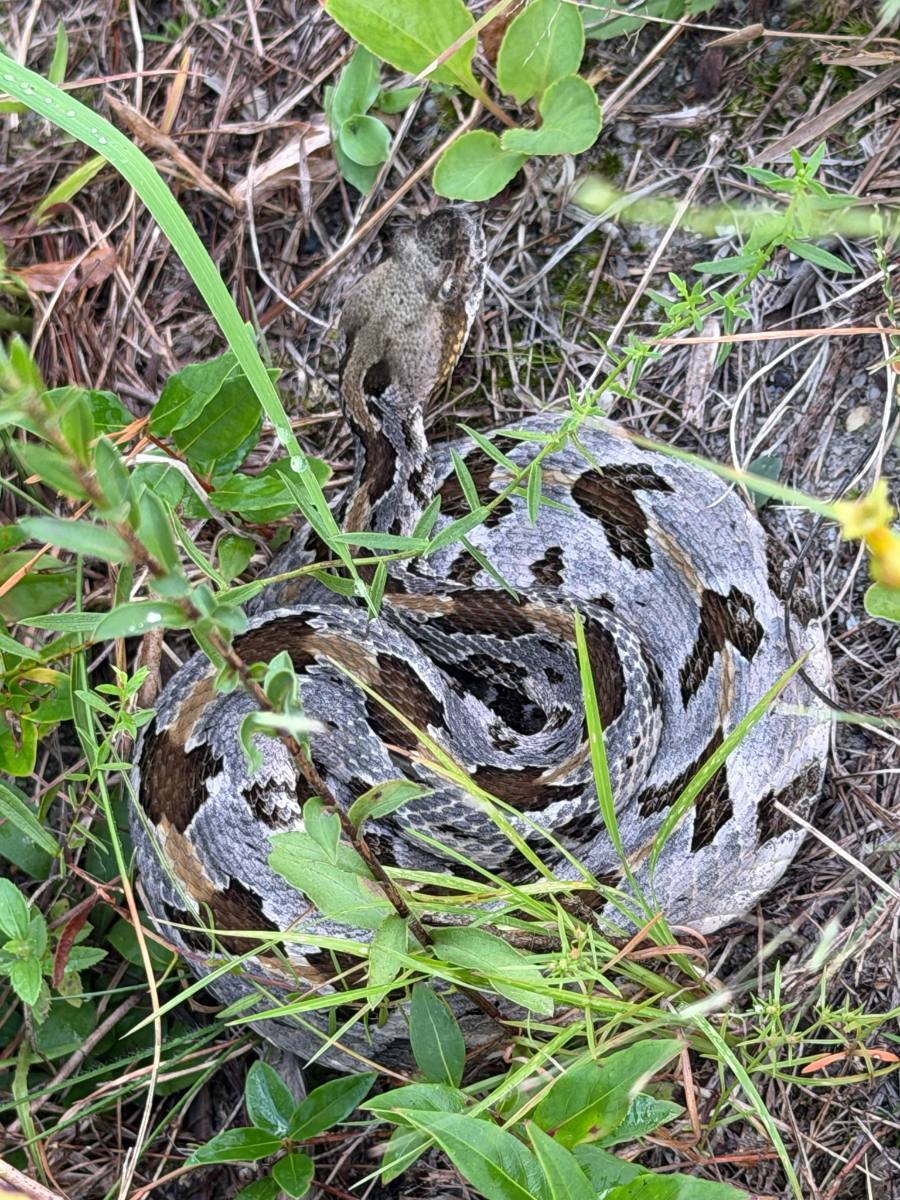
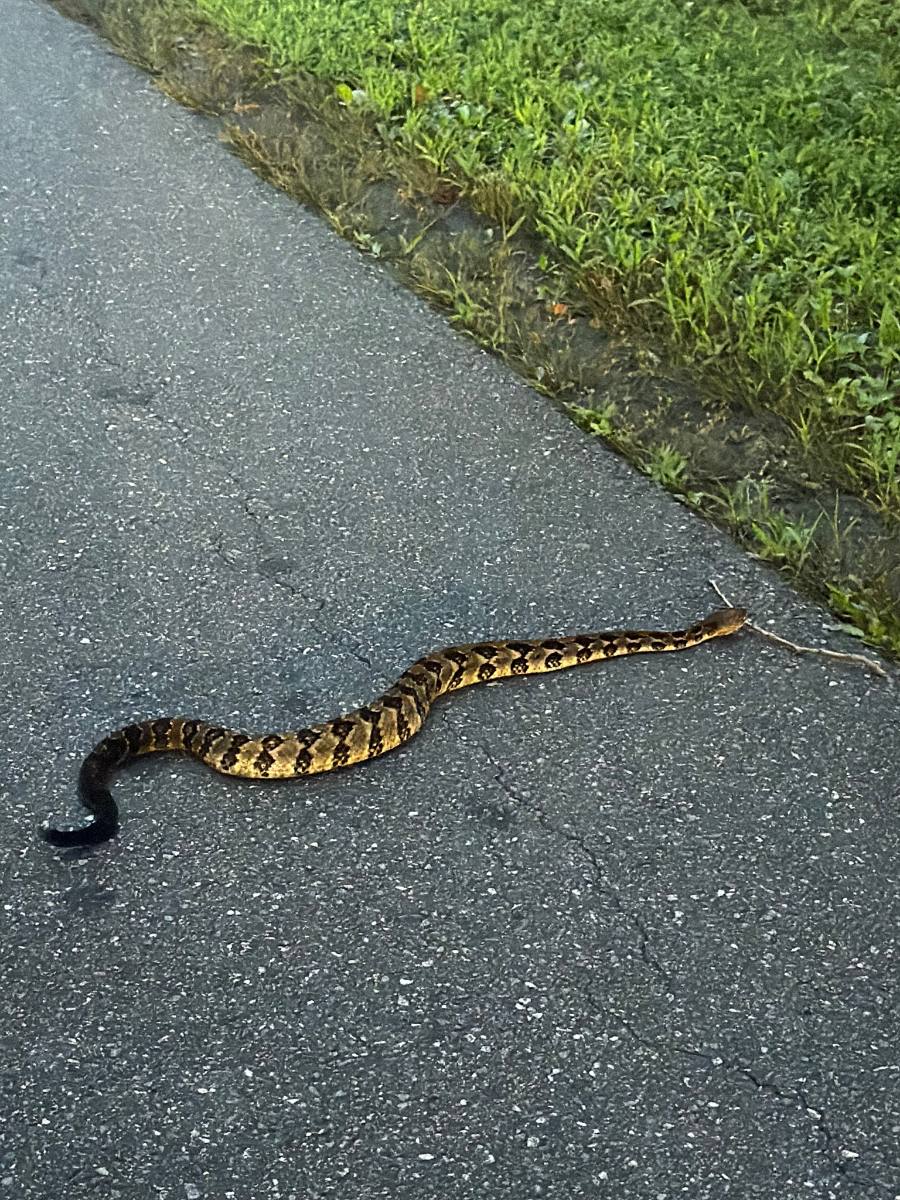
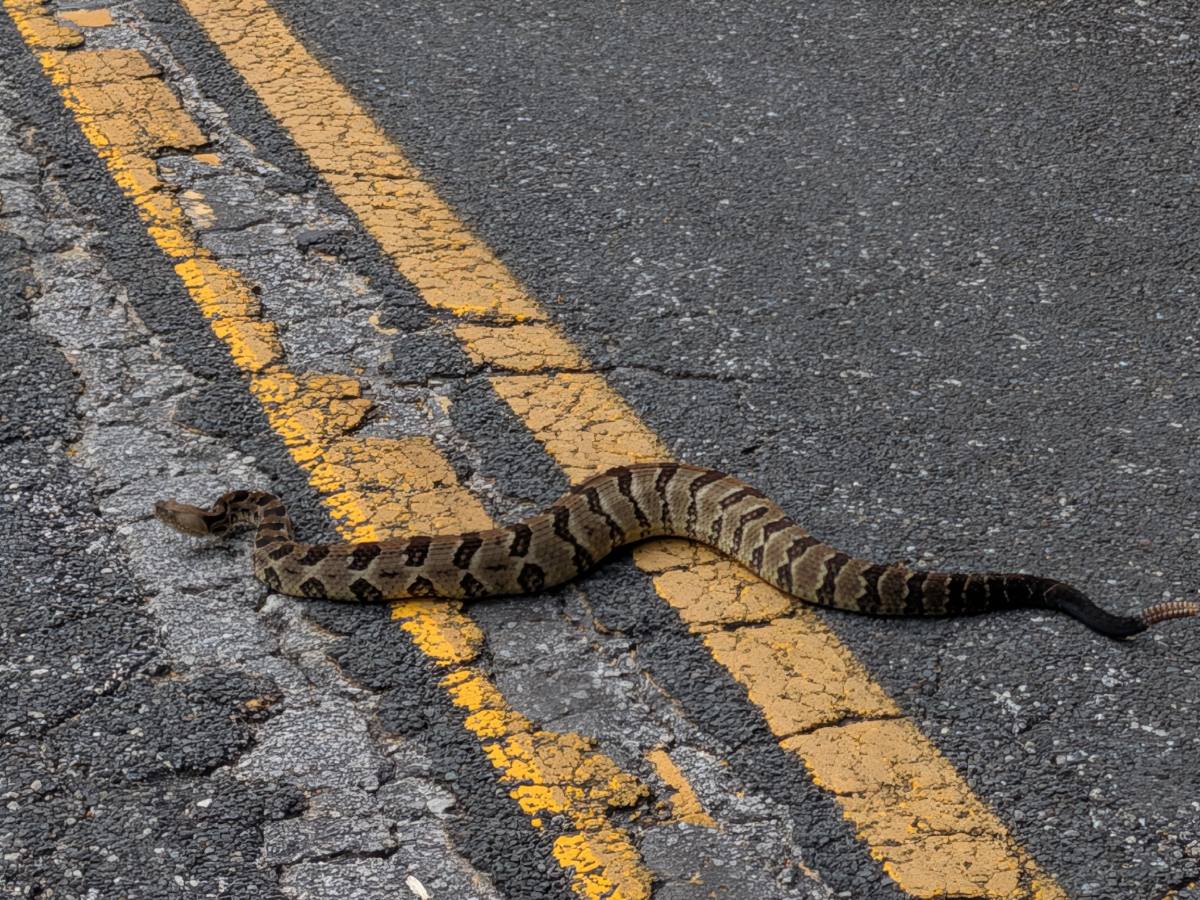
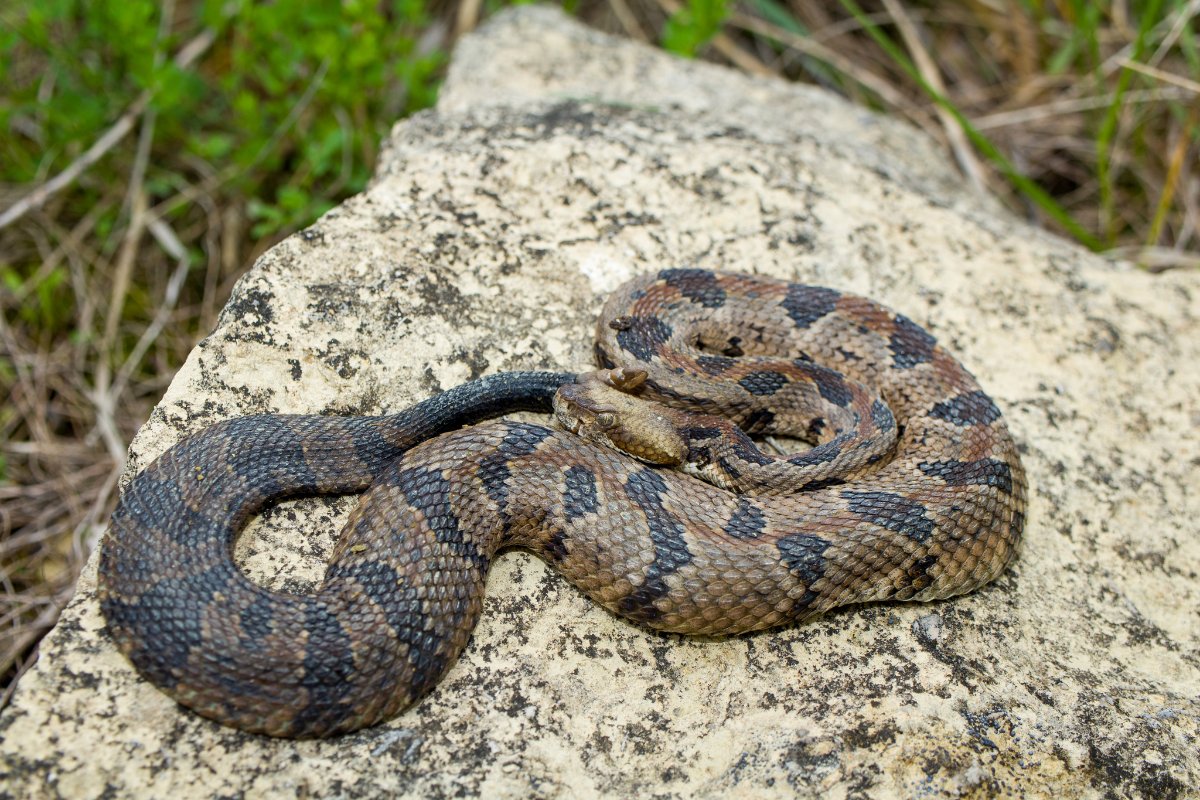
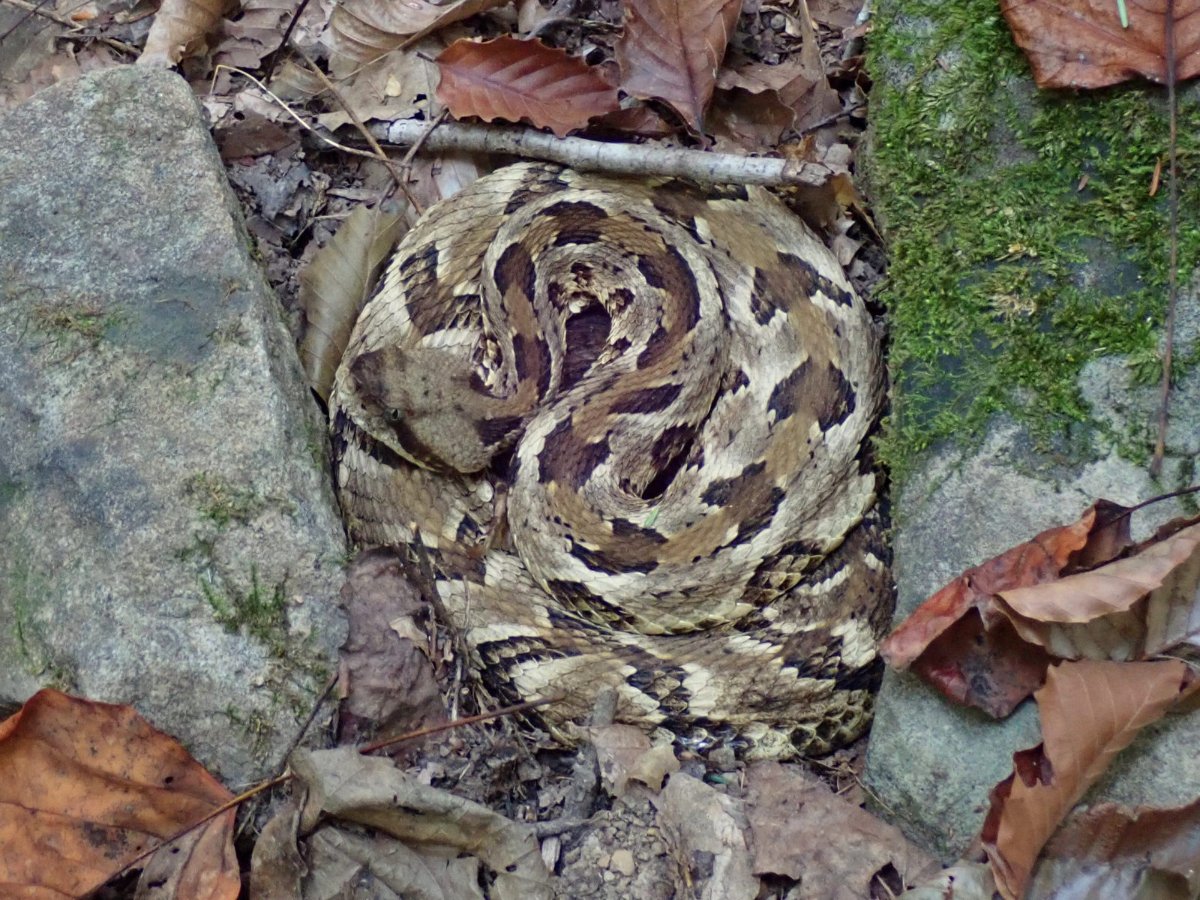
- Dark chevrons - V shapes pointing forward - and often a rusty spine stripe.
- Eyes
- Vertical slit pupil; heat-sensing pit between eye and nostril.
- Pits
- A deep heat-sensing pit on each side of the face, between the eye and the nostril.
- Tail
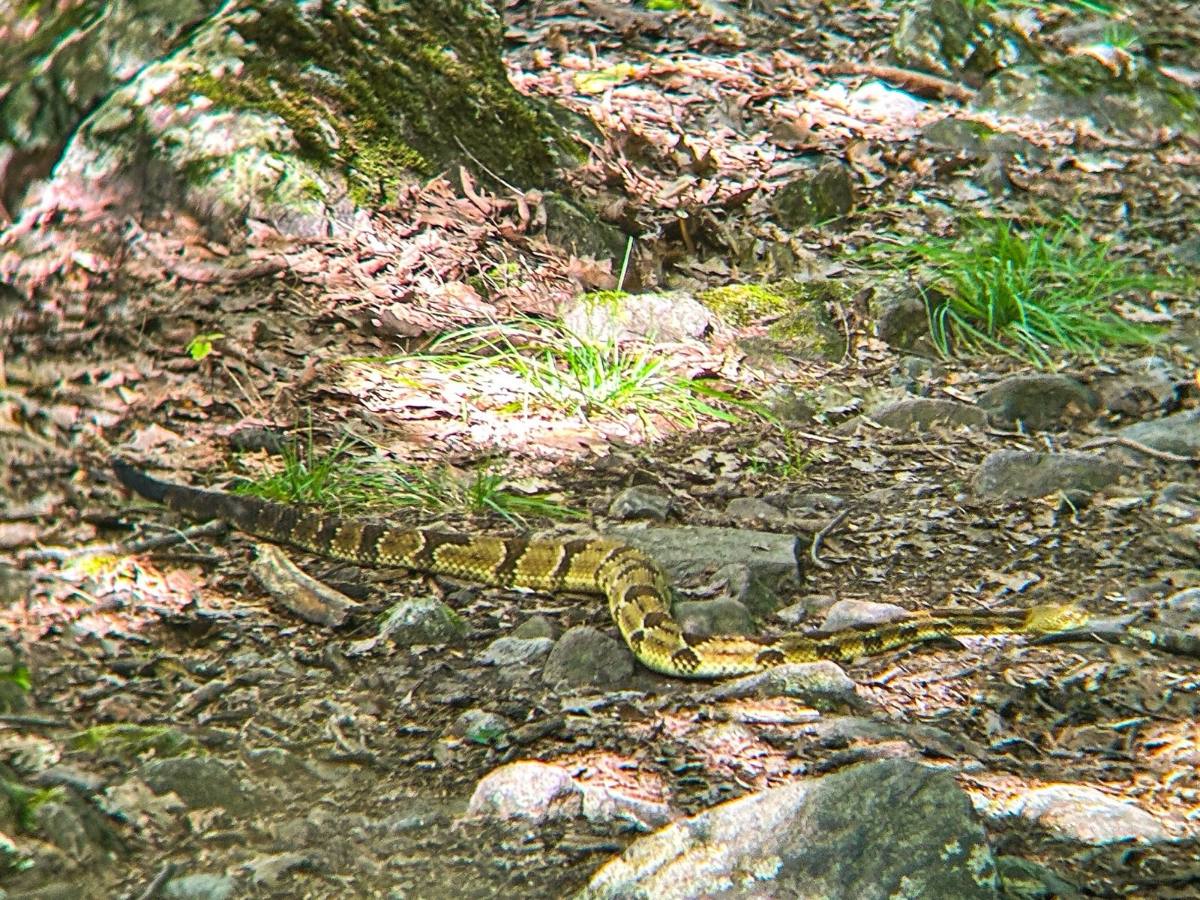
- Solid black ahead of the rattle.
- What it does
- Very reluctant; usually lies still or rattles long before striking.
Often confused with
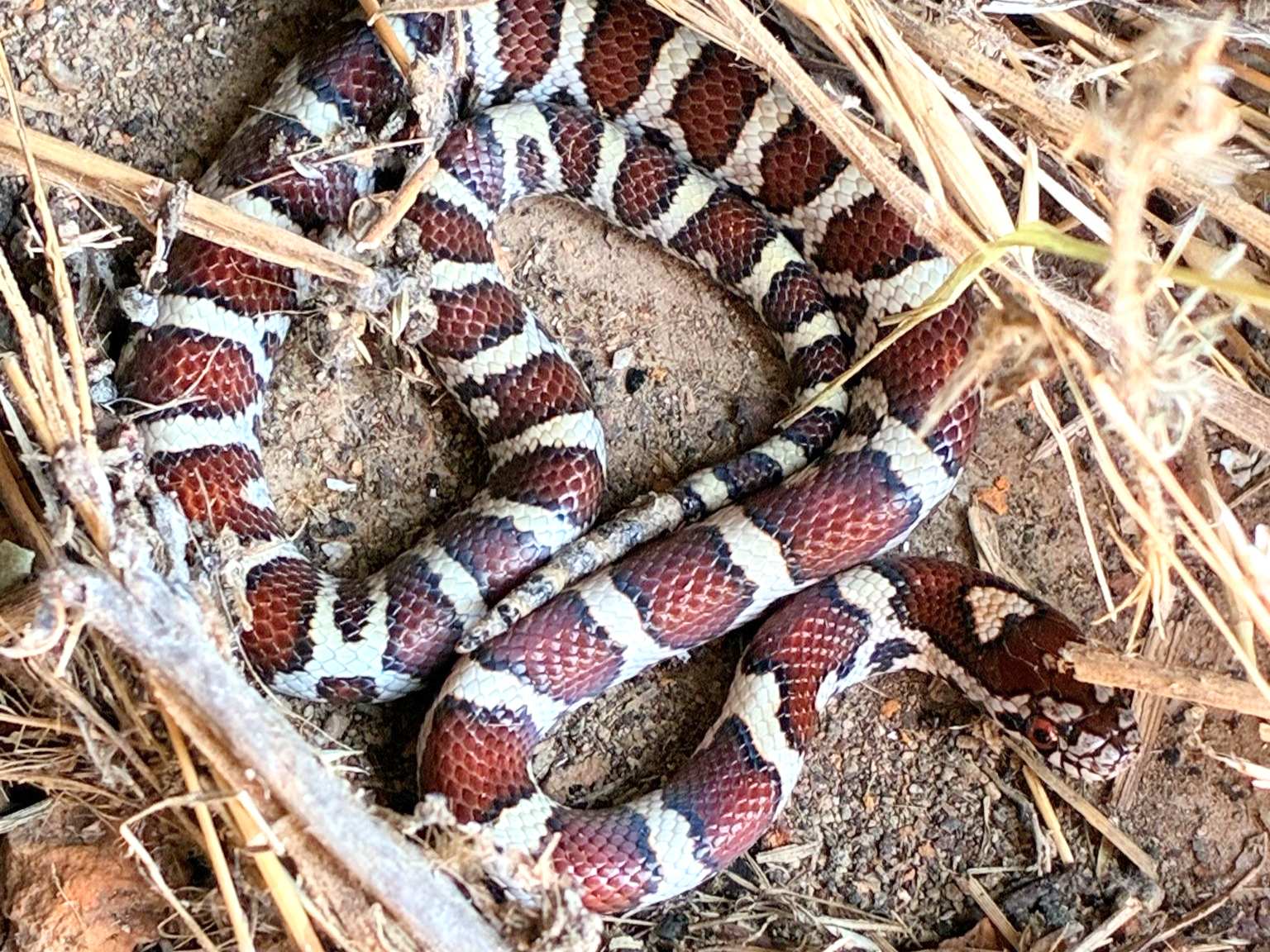
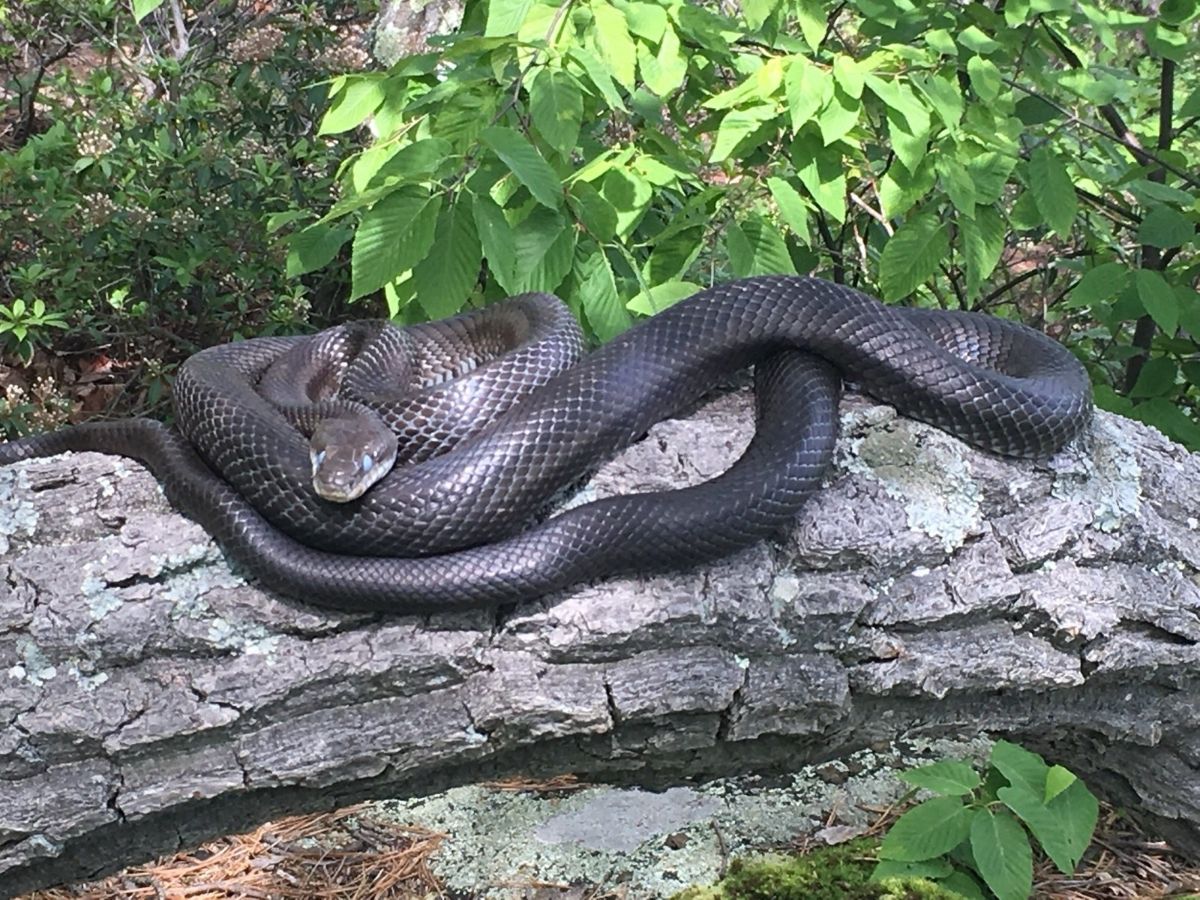
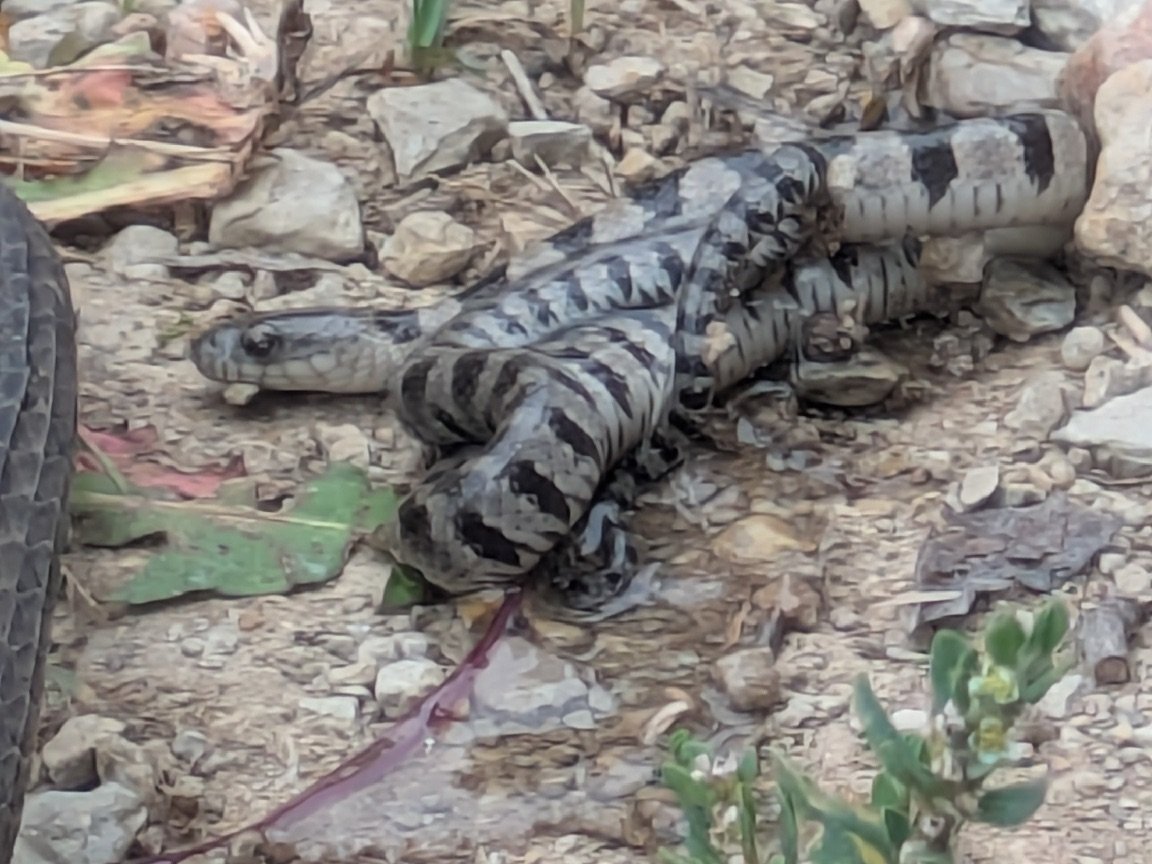
Northern Watersnake, Eastern Ratsnake and Eastern Milksnake are the usual mix-ups because of their bands or blotches, but they have round pupils and no rattle.
How to tell them apart
Timber Rattlesnake vs Eastern Milksnake›
The quick way to tellCheck the tail. The Timber Rattlesnake's tail is usually solid black and ends in a rattle. The Eastern Milksnake's tail is patterned and tapers to a point. It may buzz the tip in dry leaves, but there is no rattle.
Timber Rattlesnake: Solid black ahead of the rattle.
Eastern Milksnake: Tapers evenly; no rattle - but it vibrates the tip.
Timber Rattlesnake vs Eastern Ratsnake›
The quick way to tellLook at the tail. The Timber Rattlesnake has a rattle and vertical pupils. The ratsnake's tail tapers to a point, and its pupils are round.
Timber Rattlesnake: Solid black ahead of the rattle.
Eastern Ratsnake: Tapers evenly; no rattle.
Timber Rattlesnake vs Northern Watersnake›
The quick way to tellCheck the tail. The Timber Rattlesnake's tail is usually solid velvety black, ending in a rattle, and its back has dark V-shaped chevrons. The Northern Watersnake's tail is patterned and tapers to a point.
Timber Rattlesnake: Solid black ahead of the rattle.
Northern Watersnake: Tapers evenly; no rattle.
About the Timber Rattlesnake›
The rattlesnake of eastern forests and rocky mountain ridges, also found in swampy lowlands in the South. It relies on traditional winter dens in rock crevices, returning to the same ones for generations.
Famously reluctant to strike — most will lie still or rattle a warning long before anything else. Because the dens are shared and easy to find, local populations disappear quickly once disturbed.
The details
Size Usually 3–4.5 ft; occasionally near 6 ftWeight Commonly 2–5 lbLifespan 20–30 years
Typical range›
Eastern US from New Hampshire and New York south to northern Florida, west to Minnesota, Iowa, Kansas and east Texas.
Activity›
Active spring through fall, by day in cool weather and at night in summer. Winters in communal rock dens.
Diet›
Mice, chipmunks, squirrels, rabbits and birds; often ambushes along fallen logs.
Reproduction›
Gives birth to live young, usually 5–12, every second or third year in late summer.
Found in parts of 31 states›
Ranges are approximate. It may be found in only part of a state, or be rare there, and snakes can turn up outside of them.
More photos