Western Diamondback Rattlesnake
Crotalus atrox · Rattlesnakes
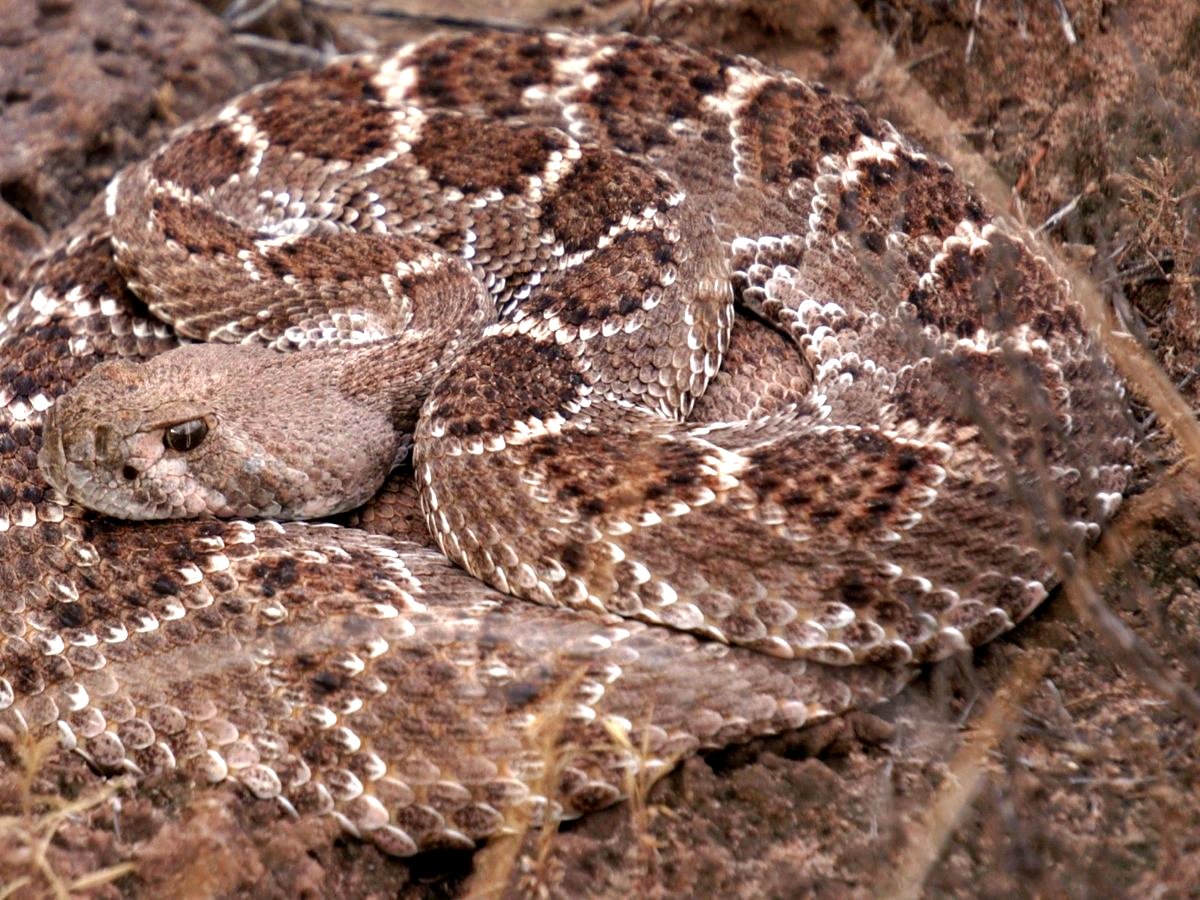
Tap a part to see what to look for. Tap it again to turn it off.
Venomous and quick to defend itself. Keep well back and never try to move it; a bite is a medical emergency.
How to identify
- Head
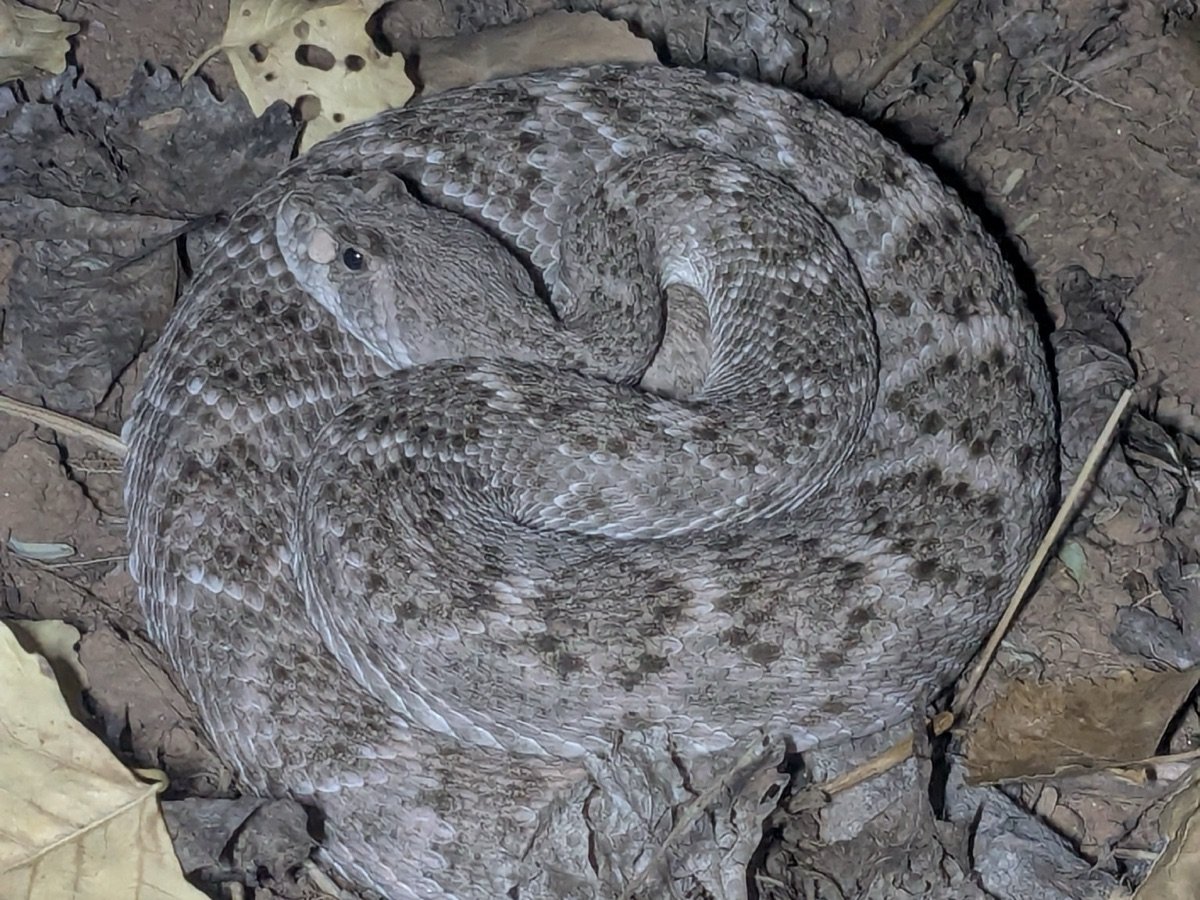
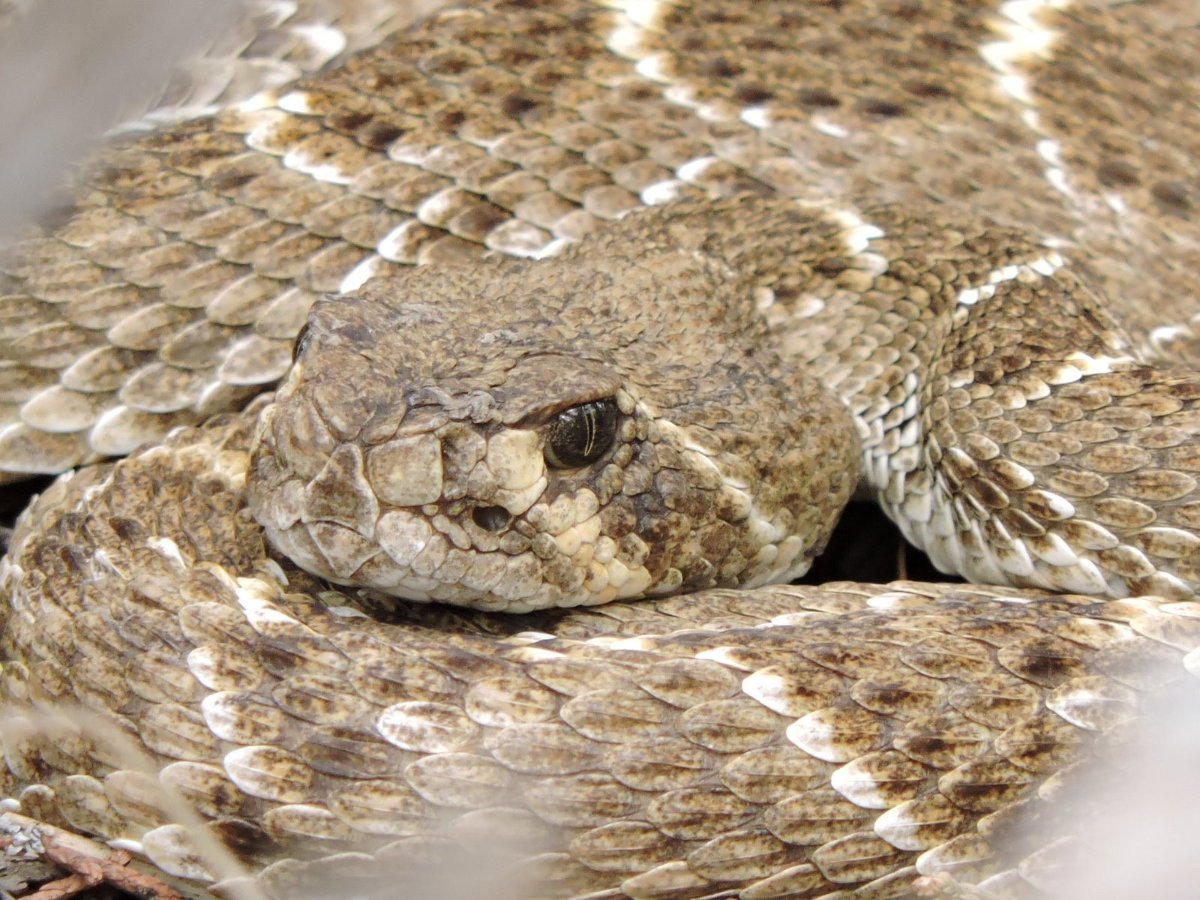
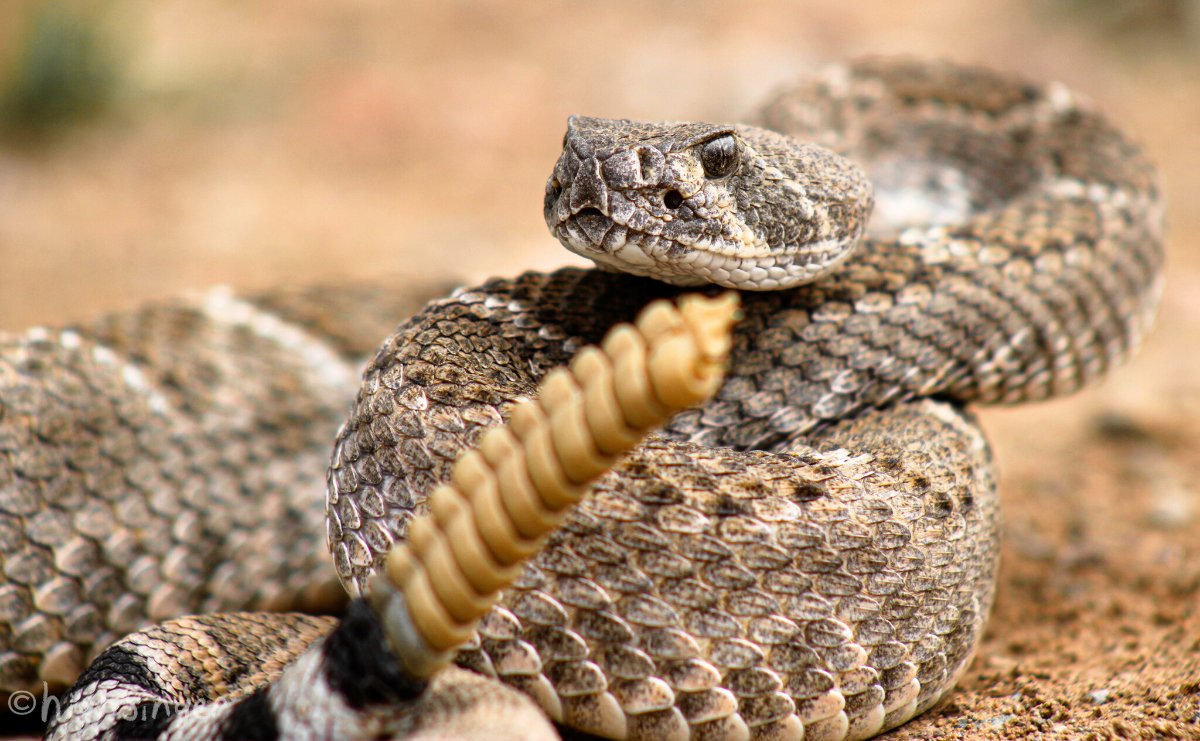
- Triangular head with a pale cheek stripe angling down to the mouth.
- Pattern
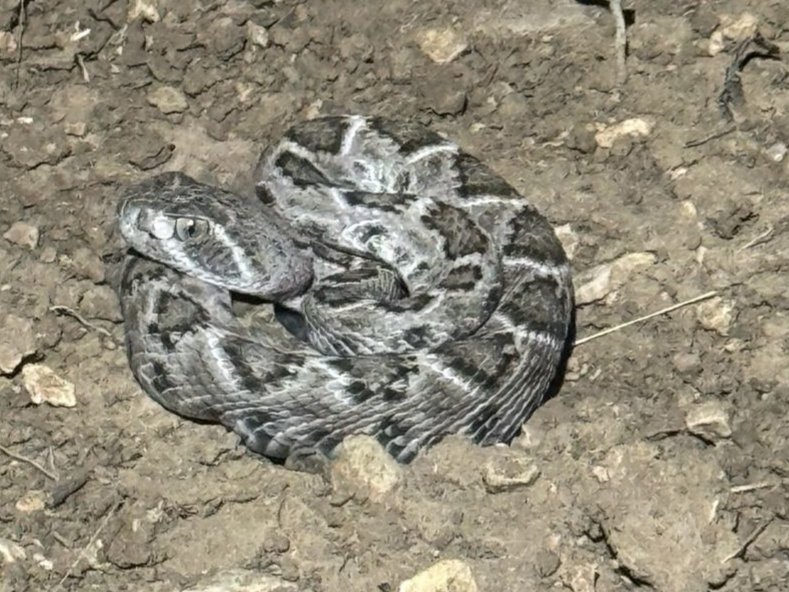
- Fuzzy-edged, speckled-looking diamonds on dusty gray-brown.
- Eyes
- Vertical slit pupil; heat-sensing pit between eye and nostril.
- Pits
- A deep heat-sensing pit on each side of the face, between the eye and the nostril.
- Tail
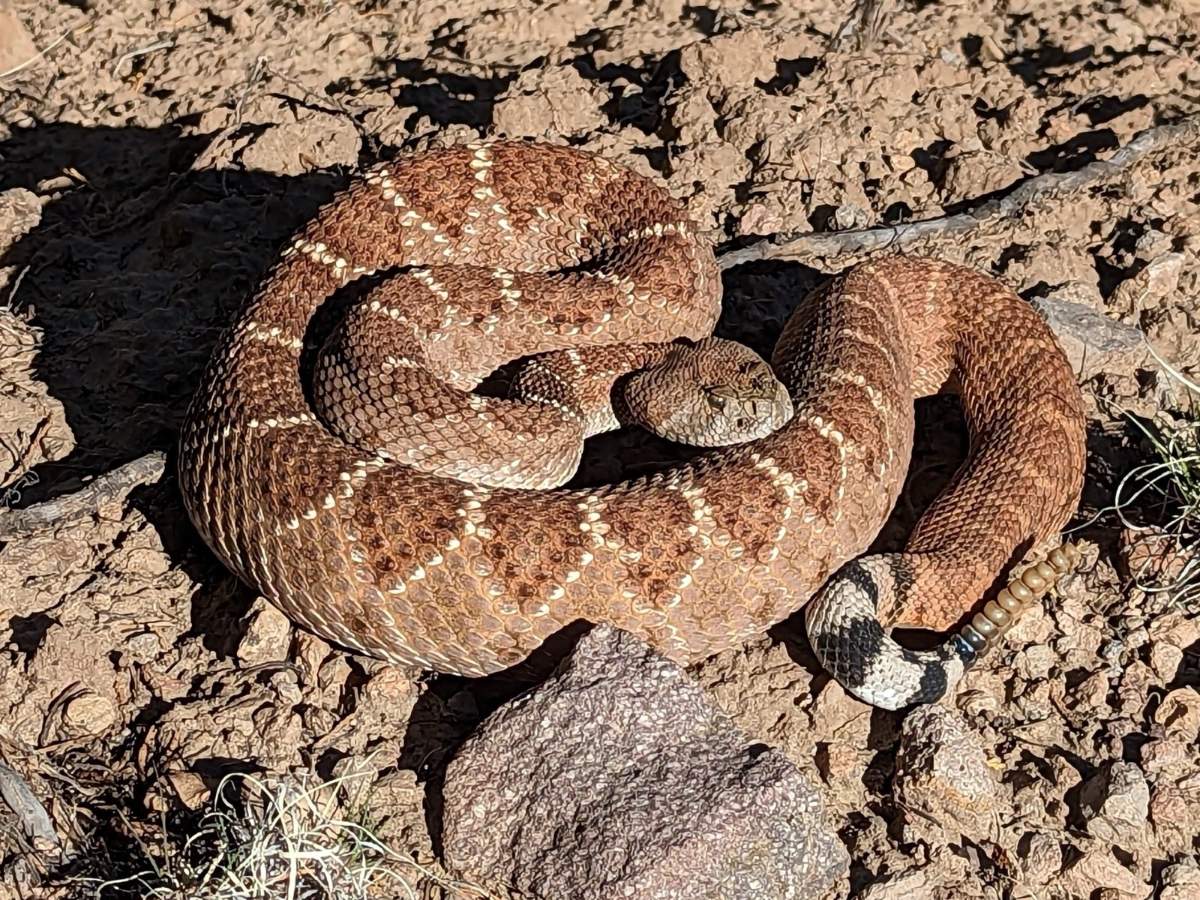
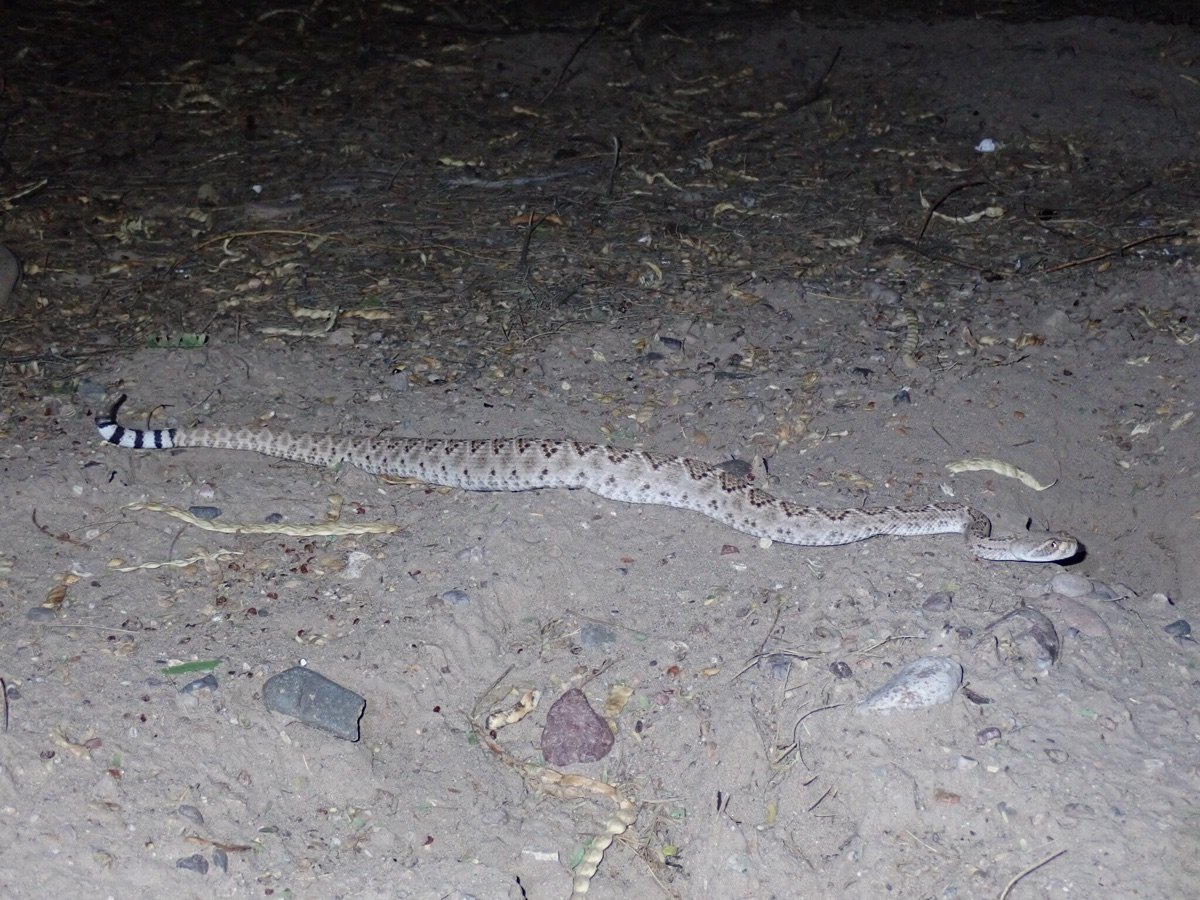
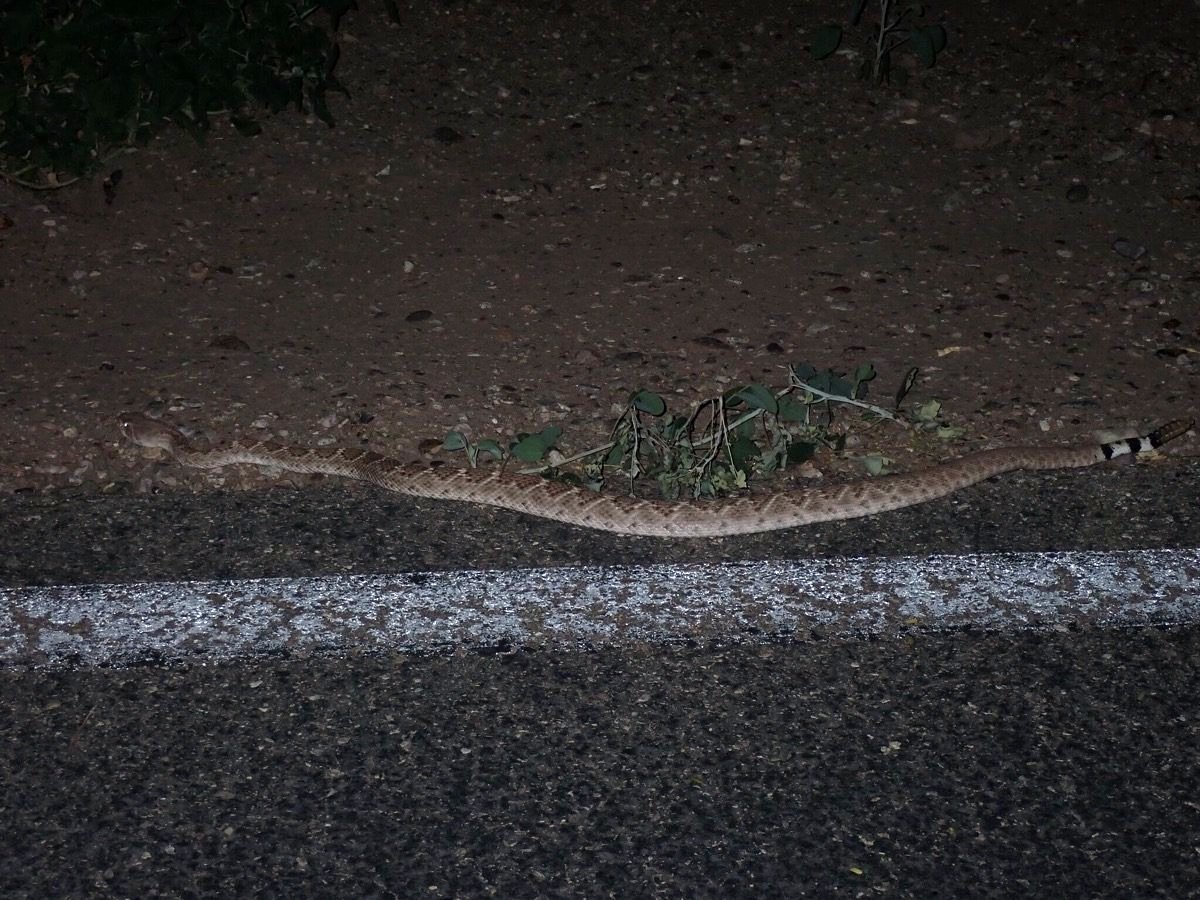
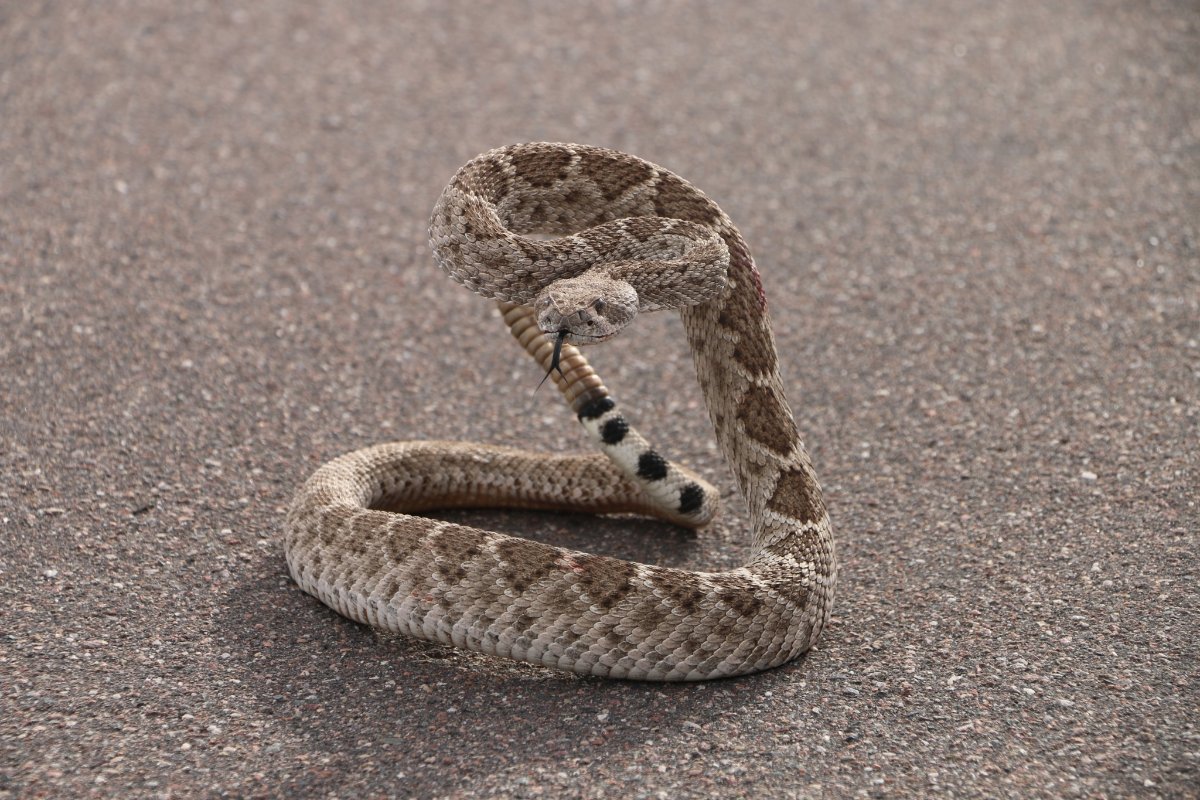
- Bold black and white rings, usually about equal width - the classic coon tail - ahead of the rattle.
- What it does
- Rears into an S-coil and rattles loudly; stands its ground more than most.
Often confused with
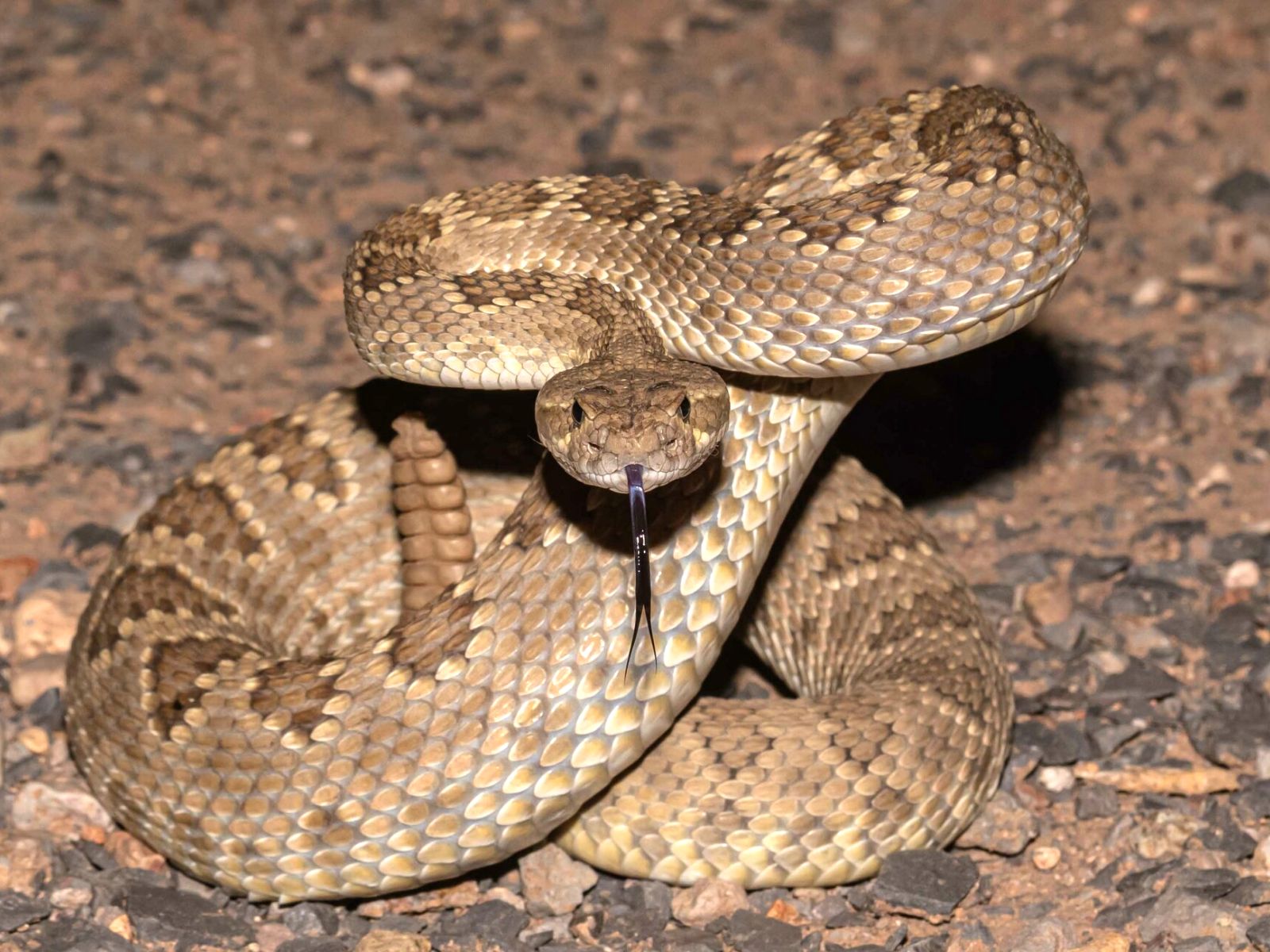
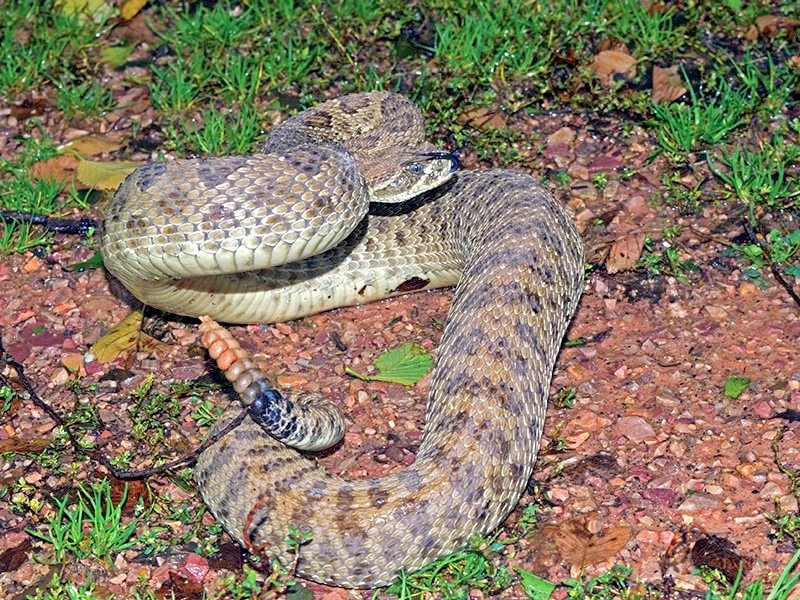
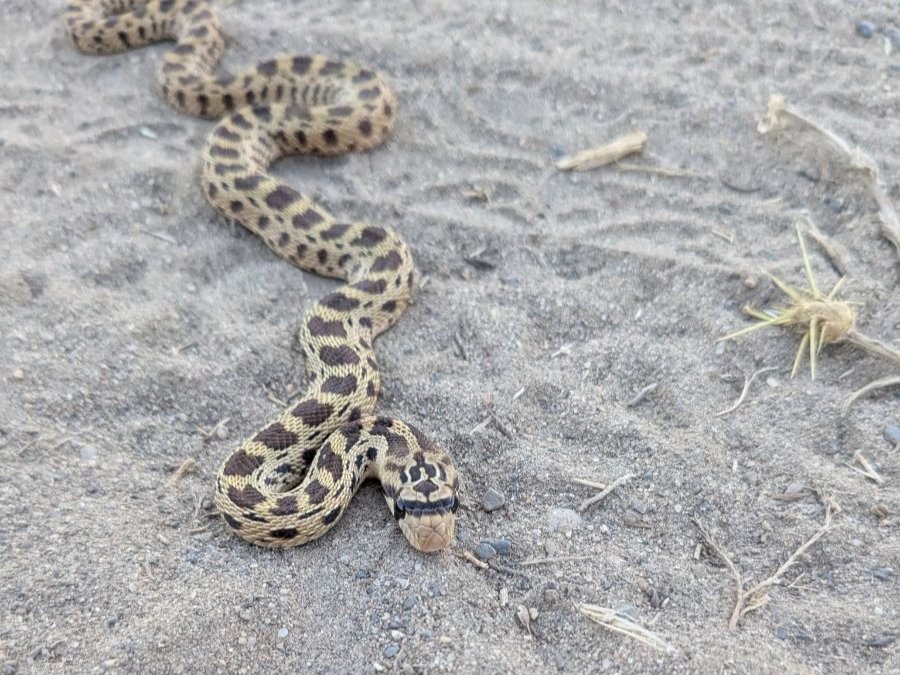
Mohave Rattlesnake has white tail rings much wider than the black ones, while the Western Diamondback's are about equal. Prairie Rattlesnake has similar blotches but lacks the bold black-and-white tail. Gophersnake hisses and shakes its tail but has round pupils and no rattle.
How to tell them apart
Western Diamondback Rattlesnake vs Mohave Rattlesnake›
The quick way to tellLook at the tail rings. On the Mohave the white rings are wider than the black. On the Western Diamondback they're about equal.
Western Diamondback Rattlesnake: Bold black and white rings, usually about equal width - the classic coon tail - ahead of the rattle.
Mohave Rattlesnake: White bands usually wider than the black ones, ahead of the rattle.
Western Diamondback Rattlesnake vs Prairie Rattlesnake›
The quick way to tellLook at the tail just before the rattle. The Western Diamondback has bold black-and-white 'coon-tail' rings. The Prairie's tail rings are dull and dark, without that strong black-and-white contrast.
Western Diamondback Rattlesnake: Bold black and white rings, usually about equal width - the classic coon tail - ahead of the rattle.
Prairie Rattlesnake: Thinner than the body; tail rings dull, not bold black and white, ahead of the rattle.
Western Diamondback Rattlesnake vs Gophersnake›
The quick way to tellCheck the tail tip. The Western Diamondback's tail has bold black-and-white rings and ends in a rattle. The Gophersnake's tail just tapers to a point with no rattle, even when it shakes it.
Western Diamondback Rattlesnake: Bold black and white rings, usually about equal width - the classic coon tail - ahead of the rattle.
Gophersnake: Tapers evenly; no rattle - but it shakes the tip hard in leaves.
About the Western Diamondback Rattlesnake›
The most commonly encountered large rattlesnake in the Southwest, at home in desert, grassland, mesquite brush and rocky canyons, and often around ranch buildings where rodents gather.
It stands its ground more readily than most rattlesnakes, rearing into an S-coil and rattling loudly, and is responsible for a large share of serious snakebites in the United States.
The details
Size Usually 3–4.5 ft; occasionally over 6 ftWeight Commonly 3–8 lbLifespan 15–20 years
Typical range›
Southwest and southern plains: southeastern California, southern Nevada, Arizona, New Mexico, Texas, Oklahoma and edges of Kansas and Arkansas, south into central Mexico.
Activity›
Day active in spring and fall, night active in summer heat. Shelters in burrows and rock piles.
Diet›
Rabbits, ground squirrels, wood rats, mice and birds.
Reproduction›
Gives birth to live young, usually 4–20, in late summer.
Found in parts of 8 states›
Ranges are approximate. It may be found in only part of a state, or be rare there, and snakes can turn up outside of them.
More photos