‹ Compare two snakes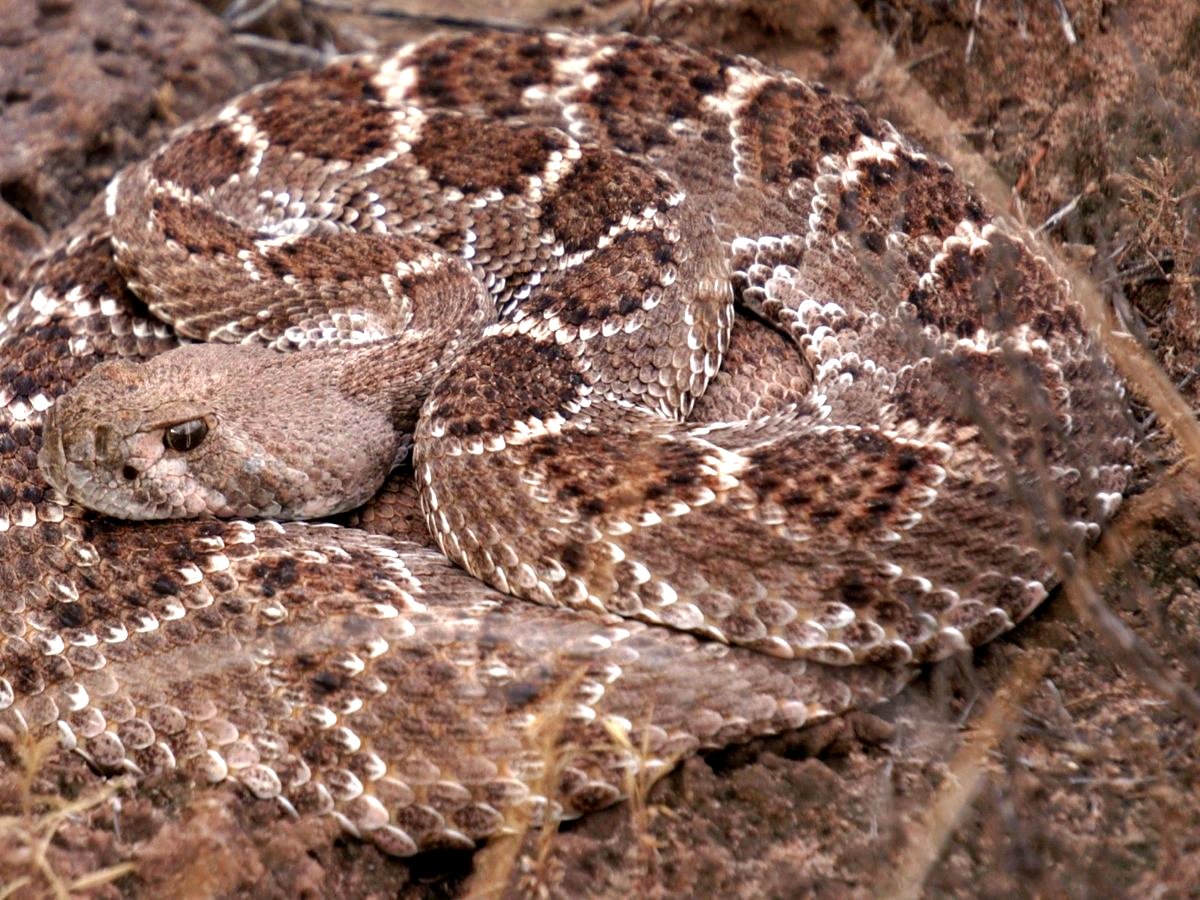
Western Diamondback Rattlesnake vs Gophersnake
Tap a part to see it on both. Tap it again to turn it off.
(c) Mike Lewinski, some rights reserved (CC BY)
Western Diamondback Rattlesnake
Crotalus atrox
VenomousAbby Benson, no rights reserved
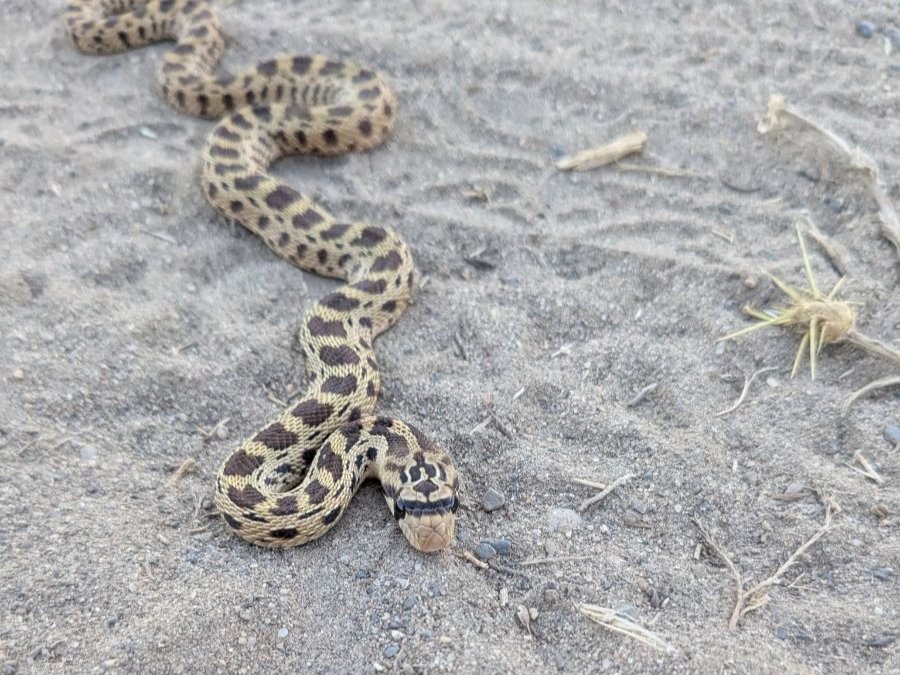
Gophersnake
Pituophis catenifer
Non-venomousThe quick way to tell
Check the tail tip. The Western Diamondback's tail has bold black-and-white rings and ends in a rattle. The Gophersnake's tail just tapers to a point with no rattle, even when it shakes it.
Tail ★ This settles it
Bold black and white rings, usually about equal width - the classic coon tail - ahead of the rattle.
Tapers evenly; no rattle - but it shakes the tip hard in leaves.
Head
Triangular head with a pale cheek stripe angling down to the mouth.
Narrow head with a pointed snout and a dark line through the eye; it can flatten it to look triangular.
Pattern
Fuzzy-edged, speckled-looking diamonds on dusty gray-brown.
Dark blotches on yellow to cream, turning into clean crossbands near the tail.
Eyes
Vertical slit pupil; heat-sensing pit between eye and nostril.
Round pupil, small dark eye; no heat-sensing pit.
Pits
A deep heat-sensing pit on each side of the face, between the eye and the nostril.
None. There is no pit between the eye and the nostril.
What it does
Rears into an S-coil and rattles loudly; stands its ground more than most.
Hisses very loudly, flattens its head and strikes with its mouth closed - all bluff.
Where it lives
Southwest and southern plains: southeastern California, southern Nevada, Arizona, New Mexico, Texas, Oklahoma and edges of Kansas and Arkansas, south into central Mexico.
Western and central US: Pacific coast east to Indiana and Wisconsin, south through Texas, into Canada and Mexico.