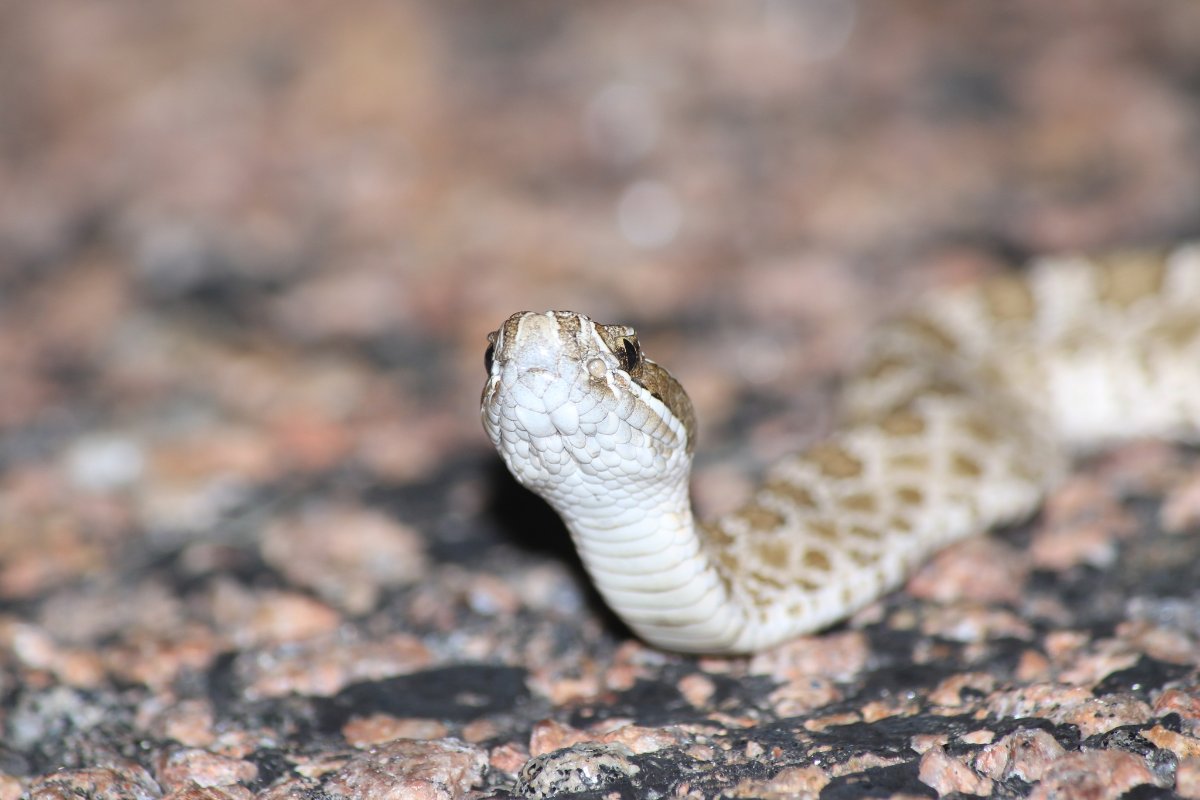
Western Massasauga
Sistrurus tergeminus · Rattlesnakes
Tap a part to see what to look for. Tap it again to turn it off.
Venomous. Usually lies still to avoid being seen, so it's easy to step near; keep well back — a bite is a medical emergency.
How to identify
- Head
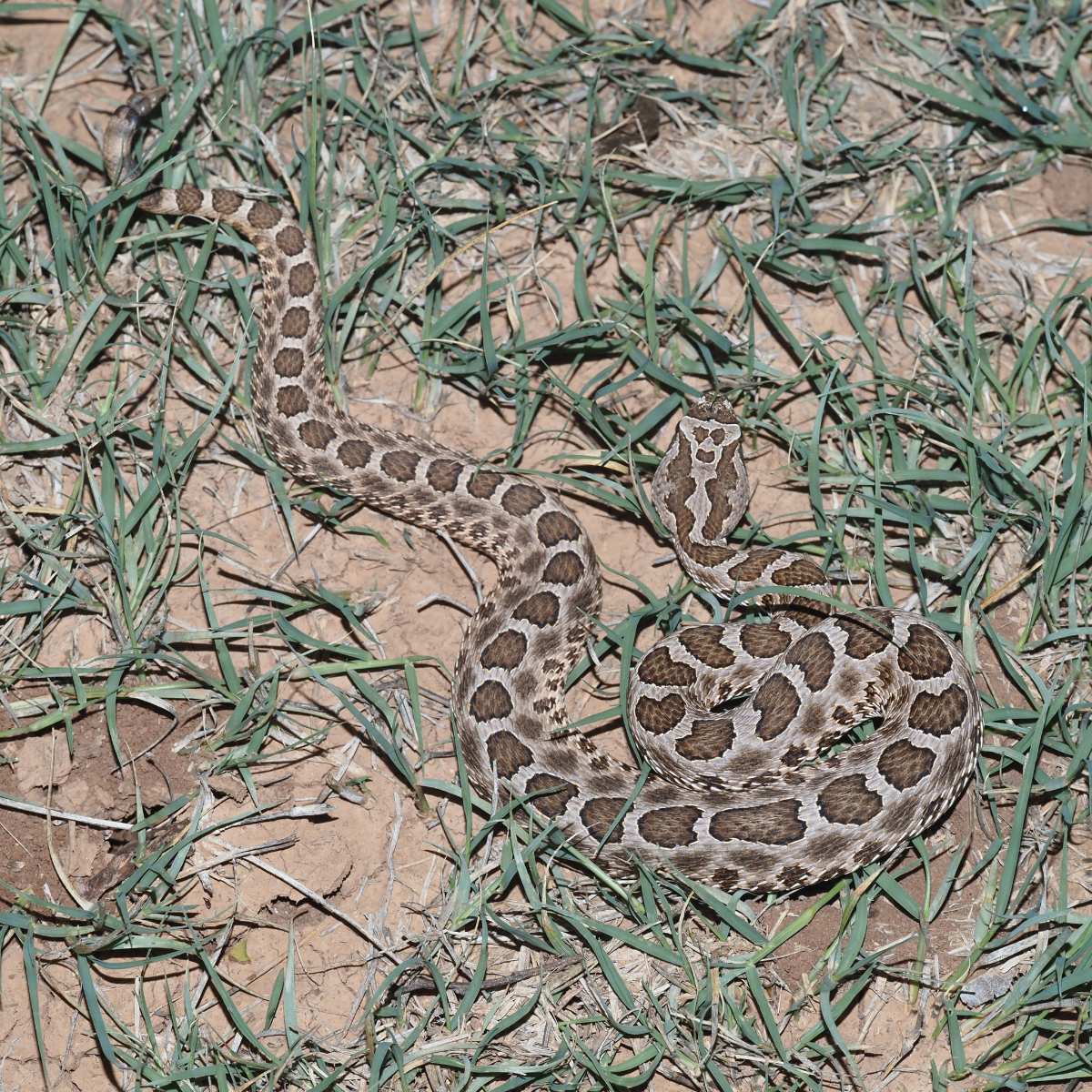
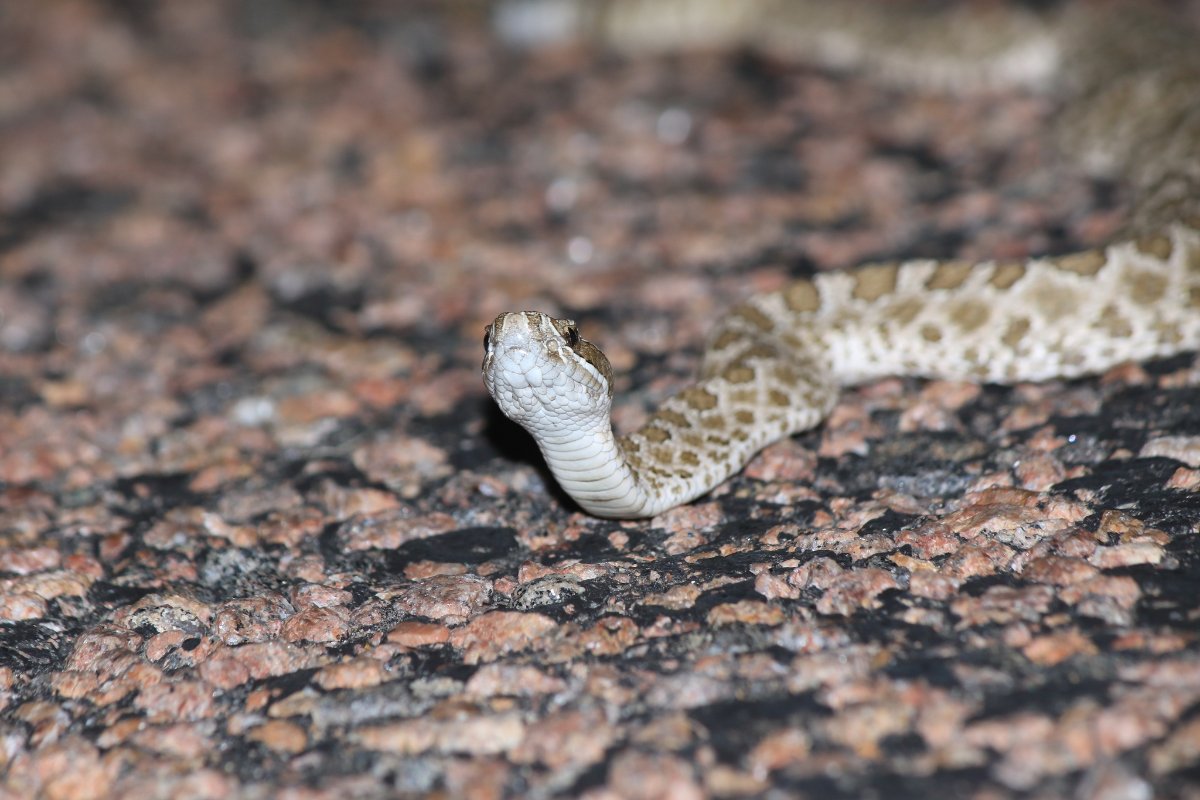
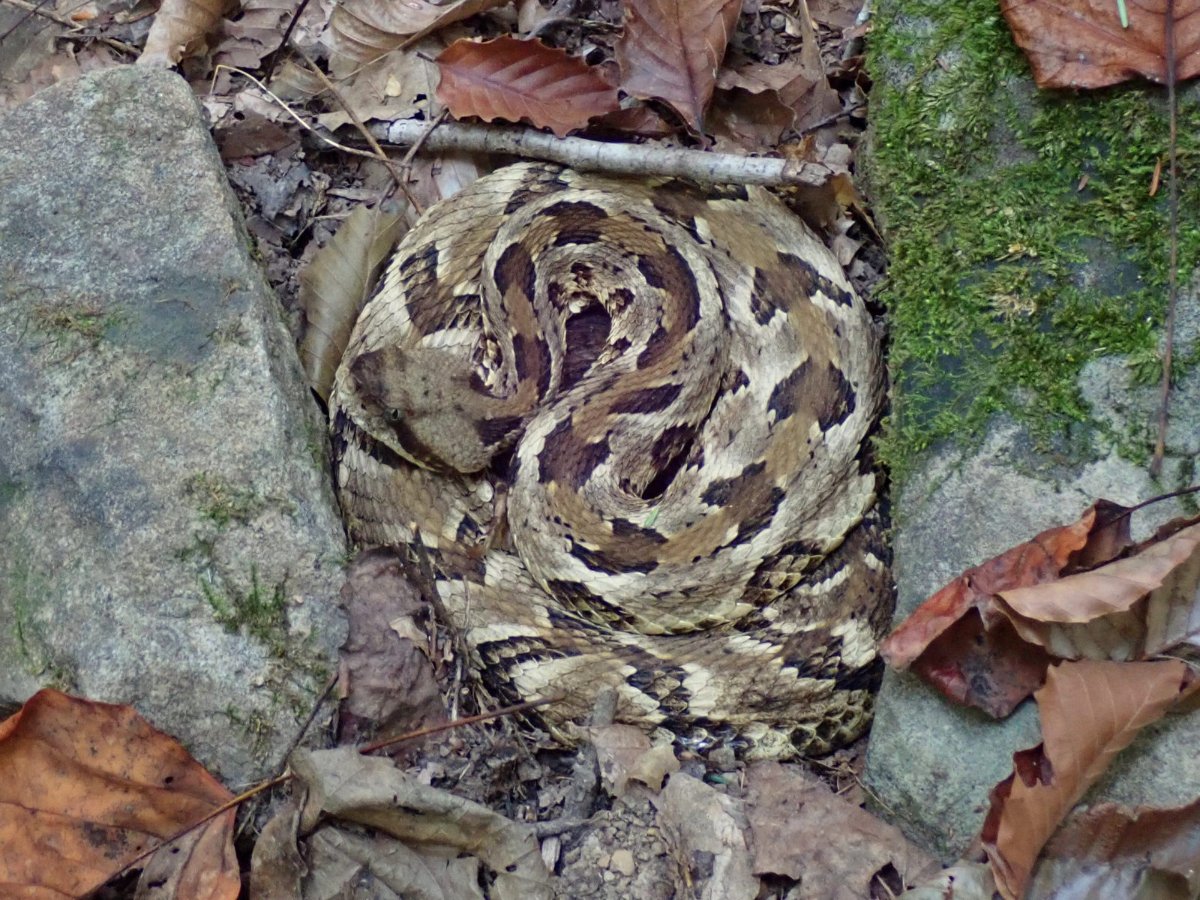
- Triangular head with nine large, plate-like scales on top — unlike most rattlesnakes, which have many small scales there. A white-edged dark stripe runs from the eye to the jaw.
- Pattern
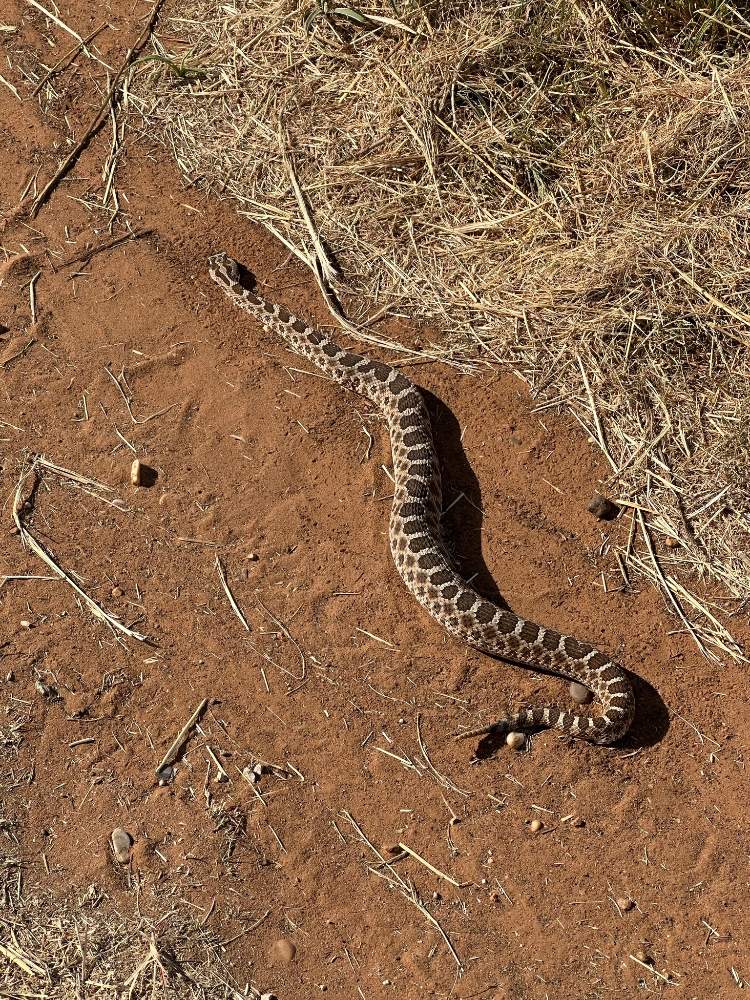
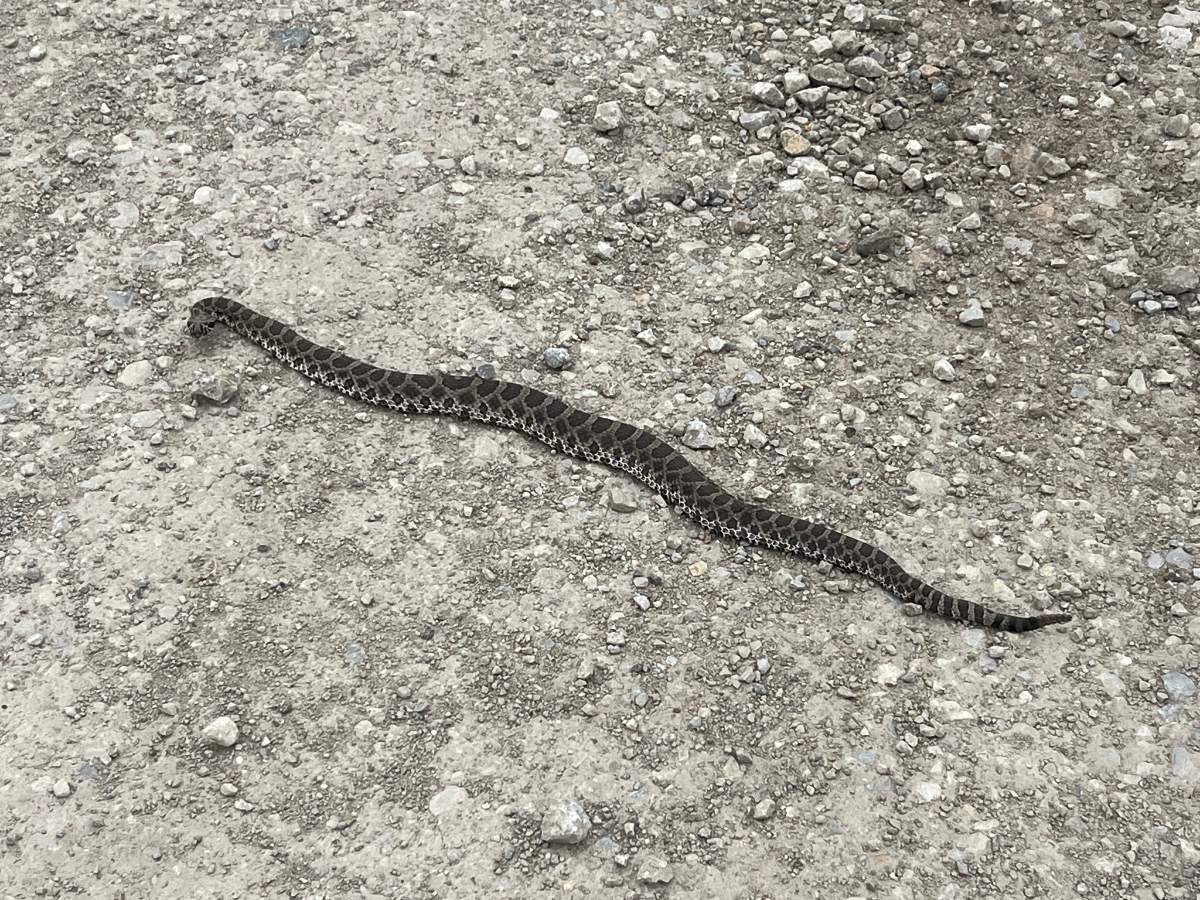
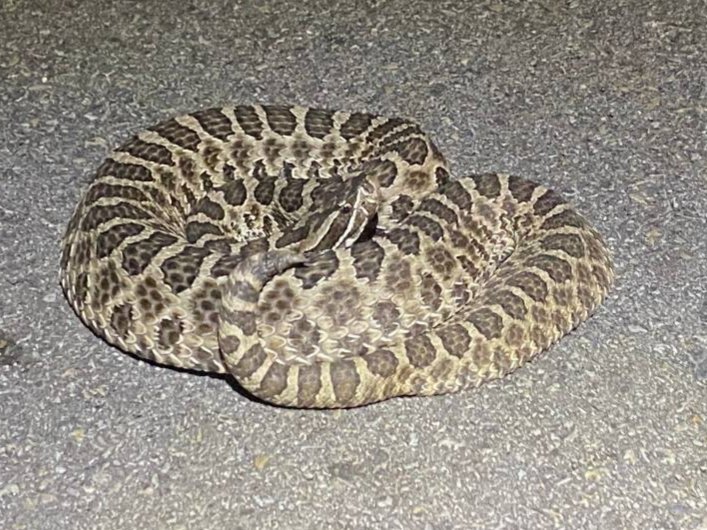
- Rows of dark brown blotches on gray or tan, with smaller spots along the sides.
- Eyes
- Vertical slit pupil; heat-sensing pit between eye and nostril.
- Pits
- A deep heat-sensing pit on each side of the face, between the eye and the nostril.
- Tail
- Banded light and dark ahead of a small rattle; babies have a yellowish tail tip.
- What it does
- Usually lies still when approached; some rattle at the least disturbance and strike.
Often confused with
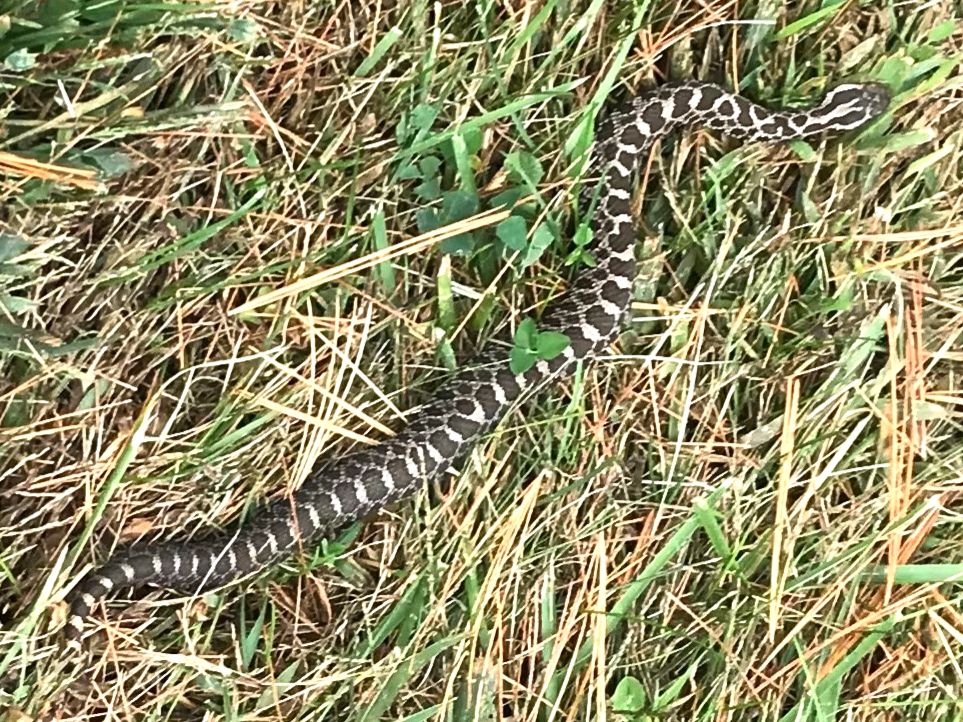
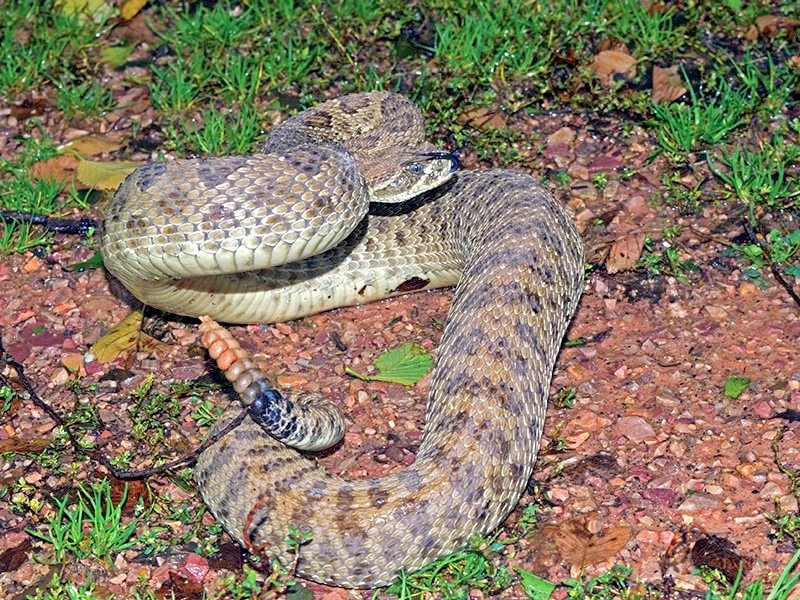
Eastern Massasauga is nearly identical and is told apart mostly by range. Timber Rattlesnake and Pygmy Rattlesnake are also mix-ups; the Timber is much larger with a rusty back stripe, and the Pygmy rarely tops 20 inches.
How to tell them apart
Western Massasauga vs Eastern Massasauga›
The quick way to tellLook at where you are first. The Western lives on the plains and in the Southwest; the Eastern lives from the Great Lakes region west to eastern Iowa and Missouri, and only in Iowa and Missouri do both occur. If you can see the belly safely, the Eastern's is mostly black with light marks, while the Western's is usually pale cream or gray with dark flecks.
Western Massasauga: Rows of dark brown blotches on gray or tan, with smaller spots along the sides.
Eastern Massasauga: Large dark brown squarish blotches down a gray back, smaller spots along the sides.
Western Massasauga vs Prairie Rattlesnake›
The quick way to tellLook at the top of the head. The Western Massasauga has nine big, plate-like scales there. A Prairie Rattlesnake's crown is covered in many small scales.
Western Massasauga: Triangular head with nine large, plate-like scales on top — unlike most rattlesnakes, which have many small scales there. A white-edged dark stripe runs from the eye to the jaw.
Prairie Rattlesnake: Broad triangular head, clearly wider than the neck, with two pale diagonal stripes on the cheek.
Western Massasauga vs Timber Rattlesnake›
The quick way to tellLook along the back. A Timber Rattlesnake has dark V-shaped chevrons and often a rusty stripe down the spine. The Western Massasauga has rounded dark blotches and no rusty stripe.
Western Massasauga: Rows of dark brown blotches on gray or tan, with smaller spots along the sides.
Timber Rattlesnake: Dark chevrons - V shapes pointing forward - and often a rusty spine stripe.
About the Western Massasauga›
A small rattlesnake of the central plains, living in wet prairies, marshes and river floodplains, with a desert form in dry grasslands of the Southwest. It often shelters and spends the winter in crayfish or rodent burrows.
Most lie still when approached and rely on camouflage, though some rattle and strike readily. It was once lumped with the Eastern Massasauga as one species; the two look very alike and are told apart mainly by where they live.
The details
Size Usually 1.5–2.5 ft; rarely over 3 ftLifespan Up to about 20 years
Typical range›
Central plains from southwestern Iowa, northwestern Missouri and southeastern Nebraska south through Kansas and Oklahoma into Texas, and west into Colorado, New Mexico and far southeastern Arizona.
Activity›
Mostly active by day in spring and fall, shifting to dusk and night in hot summer weather.
Diet›
Mainly mice and voles, plus lizards, frogs, birds and small snakes; desert snakes eat many lizards.
Reproduction›
Gives birth to a litter of live young, often about 5–8, in late summer, sometimes only every other year.
Found in parts of 9 states›
Ranges are approximate. It may be found in only part of a state, or be rare there, and snakes can turn up outside of them.