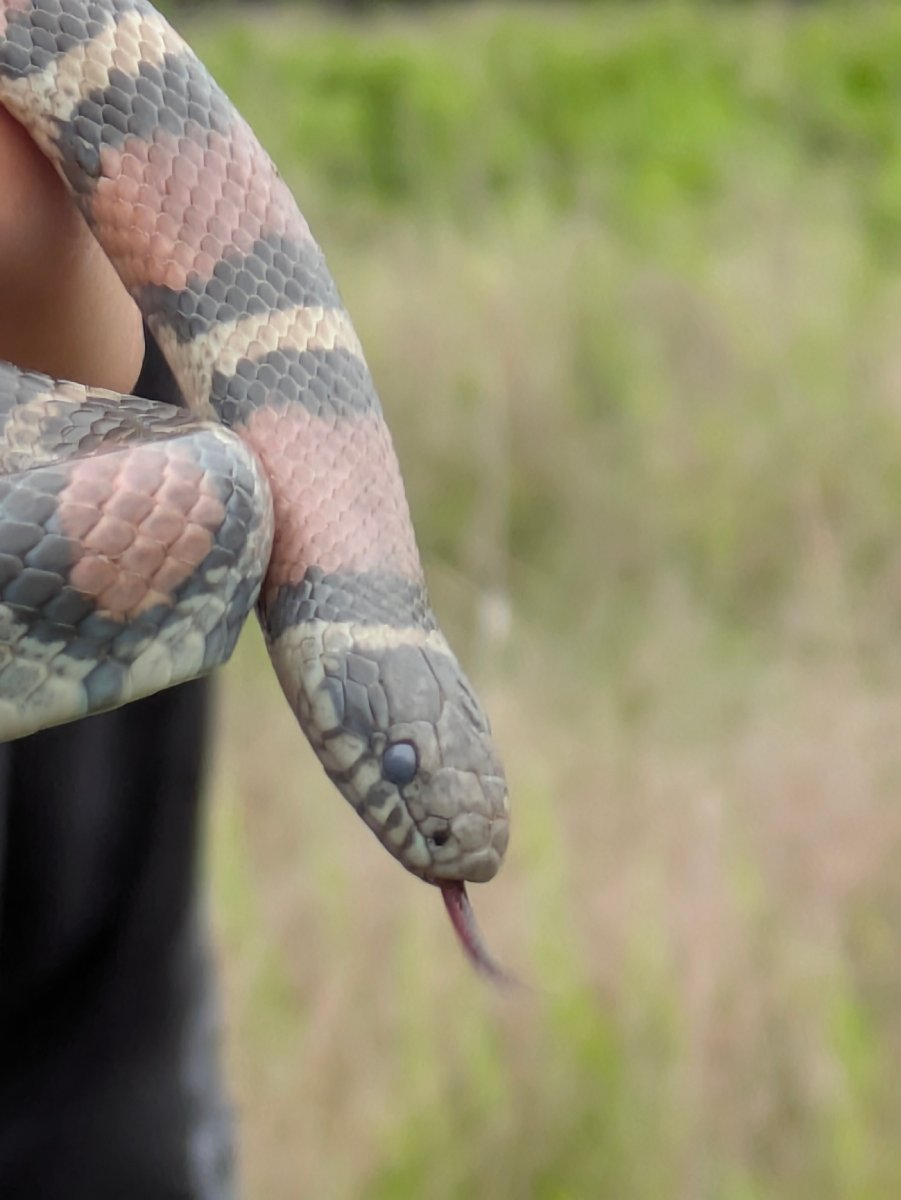
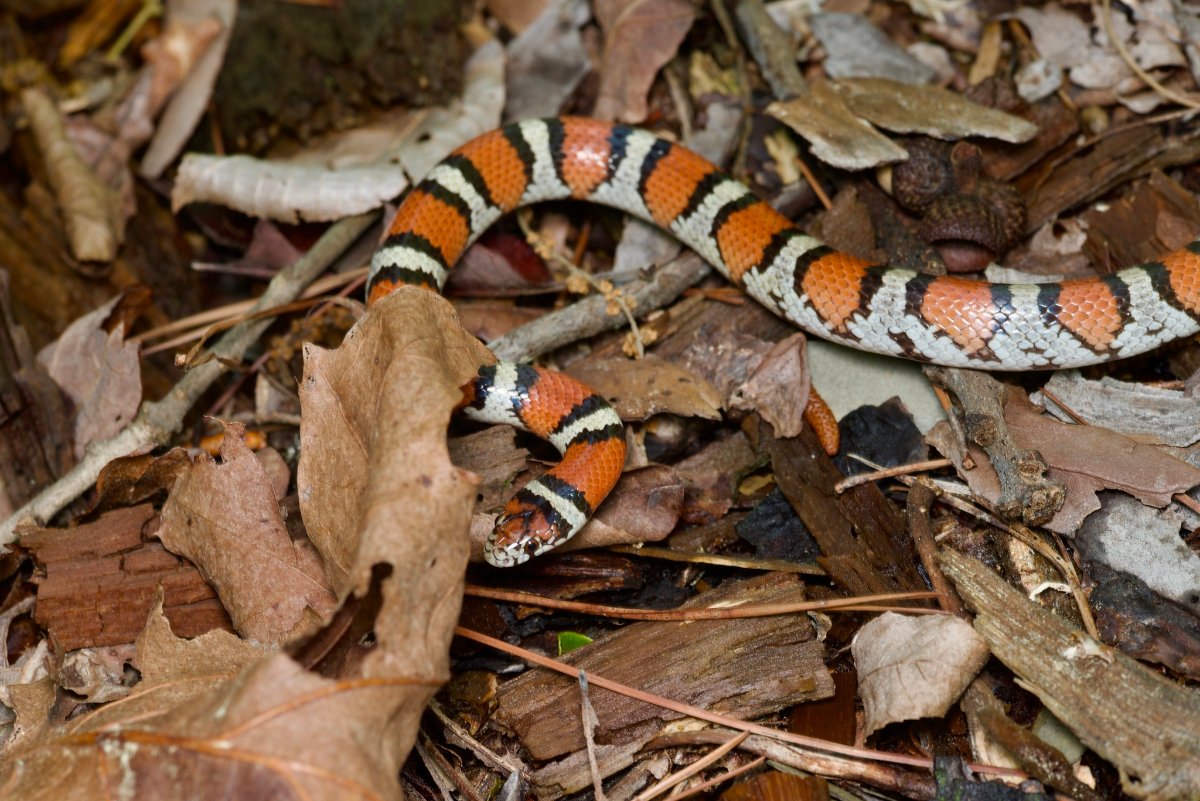
Western Milksnake
Lampropeltis gentilis · Kingsnakes & Milksnakes
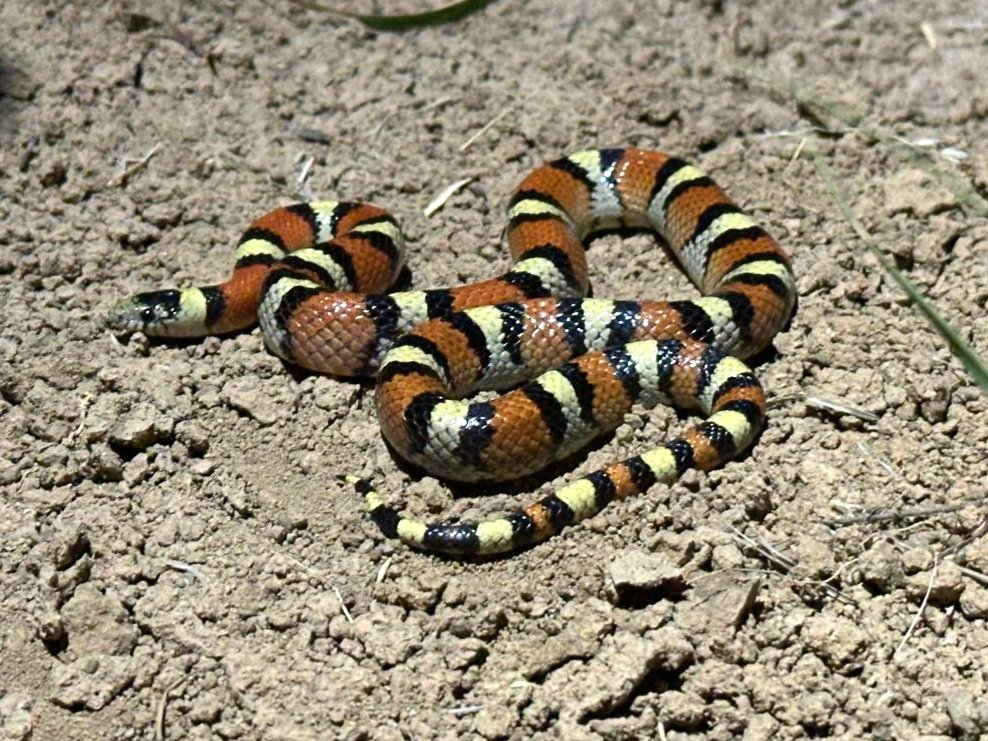
Tap a part to see what to look for. Tap it again to turn it off.
No venom. Usually calm, but may shake its tail or strike if bothered, and may bite if handled.
How to identify
- Head
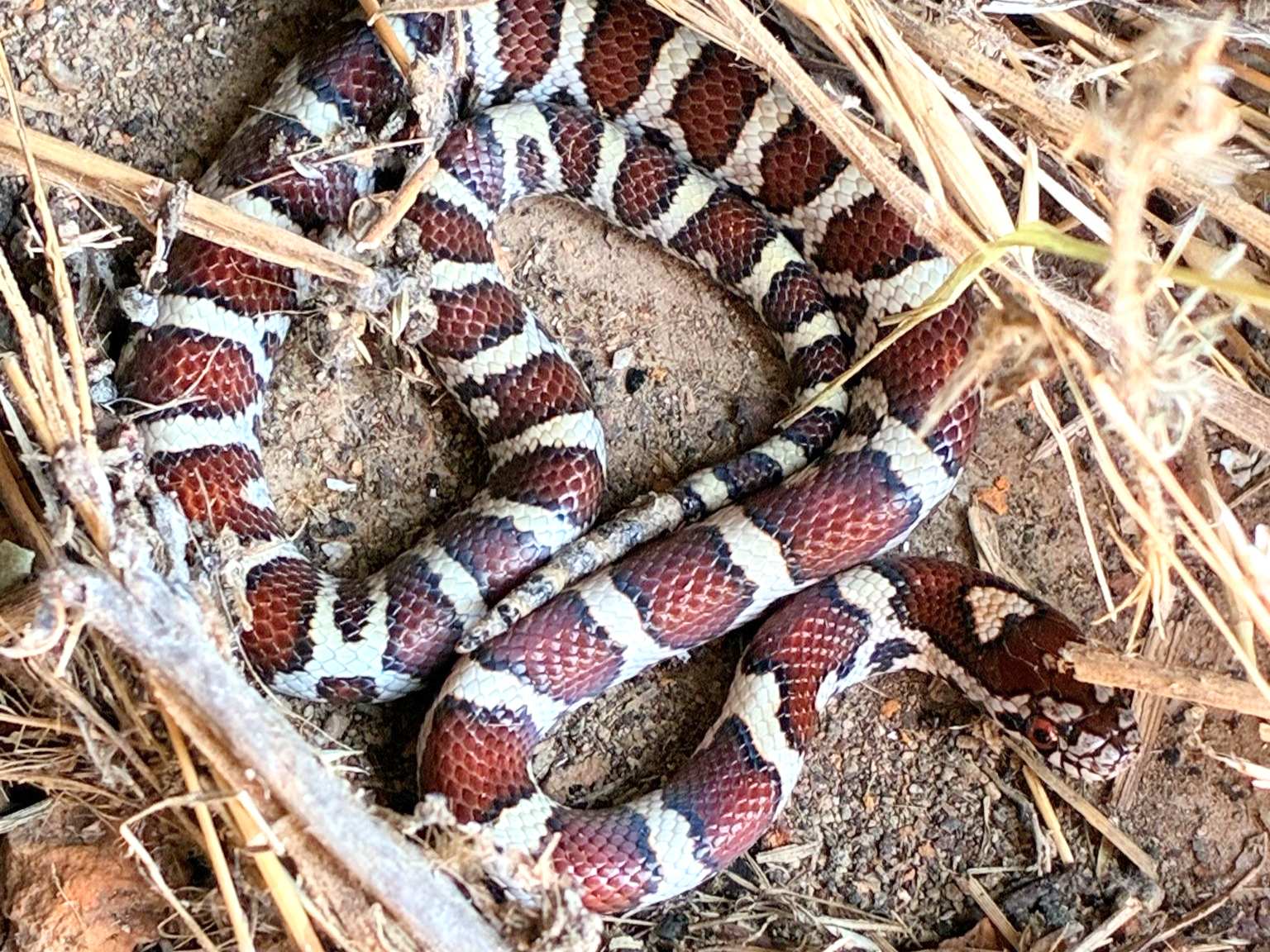
- Small head, not much wider than the neck. The head may be black with a whitish snout, or red with a few black marks and a white snout.
- Pattern
- Red or orange bands or saddles, each bordered by black, with white or pale bands in between. The bands may reach onto the belly, which is white with black marks.
- Eyes
- Small eyes with round pupils.
- Pits
- None. There is no pit between the eye and the nostril.
- Tail
- Short and thin, and keeps the same red, black and white banding as the body.
- What it does
- Usually calm when handled, but may shake its tail or strike when disturbed. Spends much of its time hidden under rocks or underground.
Often confused with
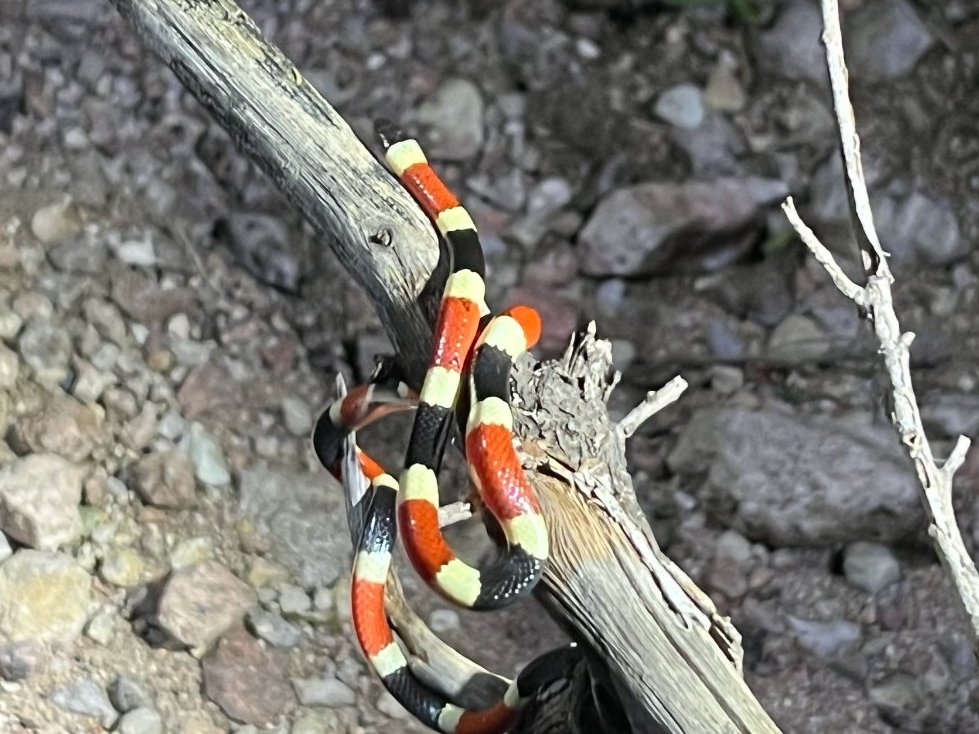
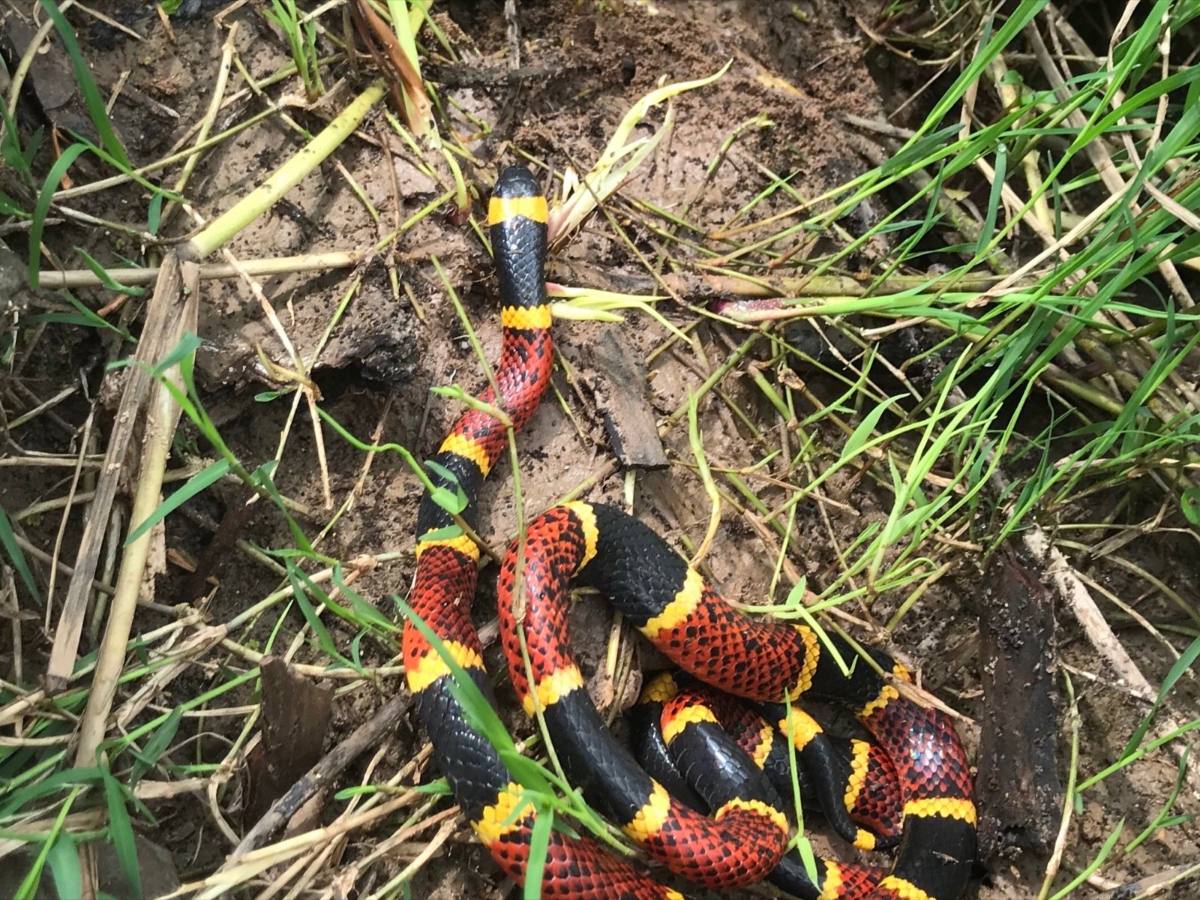
Coralsnakes also have red, black and yellow or white rings, but on a coralsnake the red touches yellow and the rings wrap all the way round, and the snout is black. The Long-nosed Snake has red-and-black saddles too, but its belly is mostly plain and its snout is long and pointed. The Eastern Milksnake, which meets it at the eastern edge of the Plains, has reddish-brown blotches on a gray or tan body instead of bright red bands.
How to tell them apart
Western Milksnake vs Sonoran Coralsnake›
The quick way to tellLook at which colors touch. On the Western Milksnake, each red band is edged in black, so red touches black. On the Sonoran Coralsnake, the red rings touch pale yellow or white rings, and the snout is black.
Western Milksnake: Red or orange bands or saddles, each bordered by black, with white or pale bands in between. The bands may reach onto the belly, which is white with black marks.
Sonoran Coralsnake: Complete rings of red, black and wide white or pale yellow, with the red touching the pale rings.
Western Milksnake vs Texas Coralsnake›
The quick way to tellLook at which colors touch. On the Western Milksnake, each red band is edged in black, so red touches black. On the Texas Coralsnake, red touches yellow, and the snout is black.
Western Milksnake: Red or orange bands or saddles, each bordered by black, with white or pale bands in between. The bands may reach onto the belly, which is white with black marks.
Texas Coralsnake: Rings around the body: red, yellow, black - red touches yellow, with black flecks.
Western Milksnake vs Eastern Milksnake›
The quick way to tellLook at the pattern on the back. The Western Milksnake has bright red or orange bands, each edged in black and separated by white or cream bands. The Eastern Milksnake has a gray or tan body with rows of reddish-brown blotches edged in black.
Western Milksnake: Red or orange bands or saddles, each bordered by black, with white or pale bands in between. The bands may reach onto the belly, which is white with black marks.
Eastern Milksnake: Reddish-brown saddles edged in black on gray; checkerboard belly.
About the Western Milksnake›
A banded snake of the Great Plains and the West, from Louisiana and Arkansas west to Arizona and north to Montana. It lives in prairies, sagebrush grassland, open pine woods, farmland and rocky hillsides, and is mostly out at dusk and at night.
It was long treated as part of the Milksnake (Lampropeltis triangulum), but was made its own species in 2014. It looks quite different from the Eastern Milksnake, with bright red bands instead of reddish-brown blotches on a gray or tan body.
The details
Size Usually 16–33 in (39–85 cm); up to about 36 in (91 cm). Hatchlings are about 6–12 in (16–30 cm).
Typical range›
The Great Plains and western US: from Louisiana, Arkansas and Oklahoma west to Arizona and Utah, and north to Montana, Wyoming and South Dakota. Also reaches northern Mexico.
Activity›
Mostly out at dusk and at night. In Montana it is recorded from late May to October.
Diet›
Mice and other small mammals, lizards, other snakes, reptile eggs, and sometimes birds and bird eggs.
Reproduction›
Lays eggs: about 2 to 20 eggs (often 4 to 6) in June or July. They hatch in about 6 to 9 weeks.
Found in parts of 13 states›
Ranges are approximate. It may be found in only part of a state, or be rare there, and snakes can turn up outside of them.