‹ Compare two snakes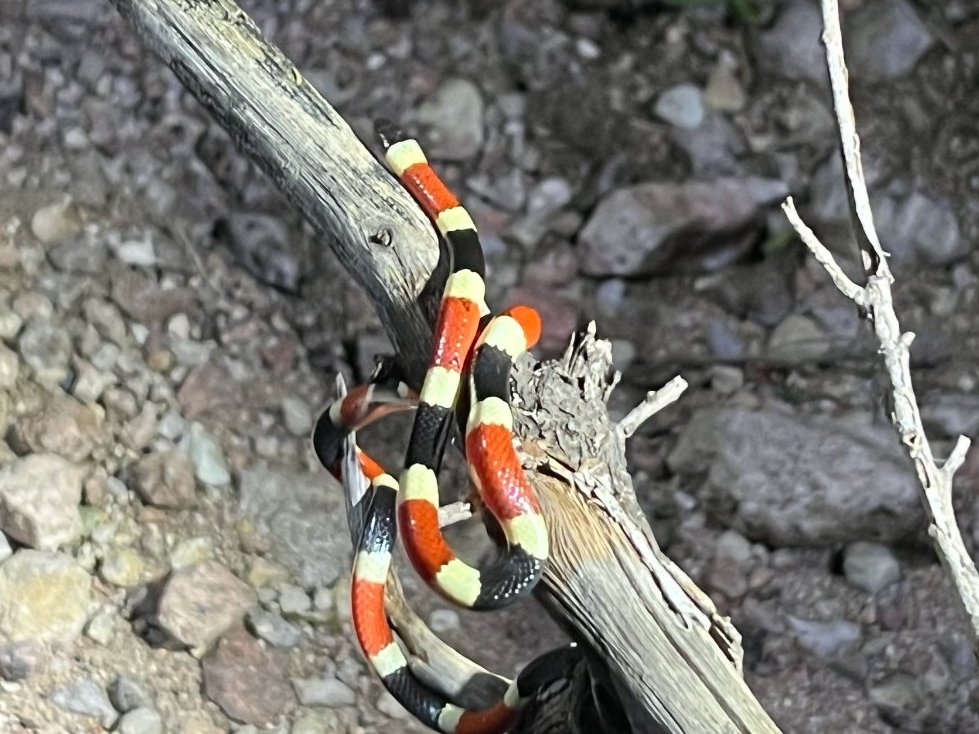
Sonoran Coralsnake vs Western Milksnake
Tap a part to see it on both. Tap it again to turn it off.
(c) Matthew Lumsden, some rights reserved (CC BY)
Sonoran Coralsnake
Micruroides euryxanthus
Venomous(c) Aiva Noringseth, some rights reserved (CC BY)
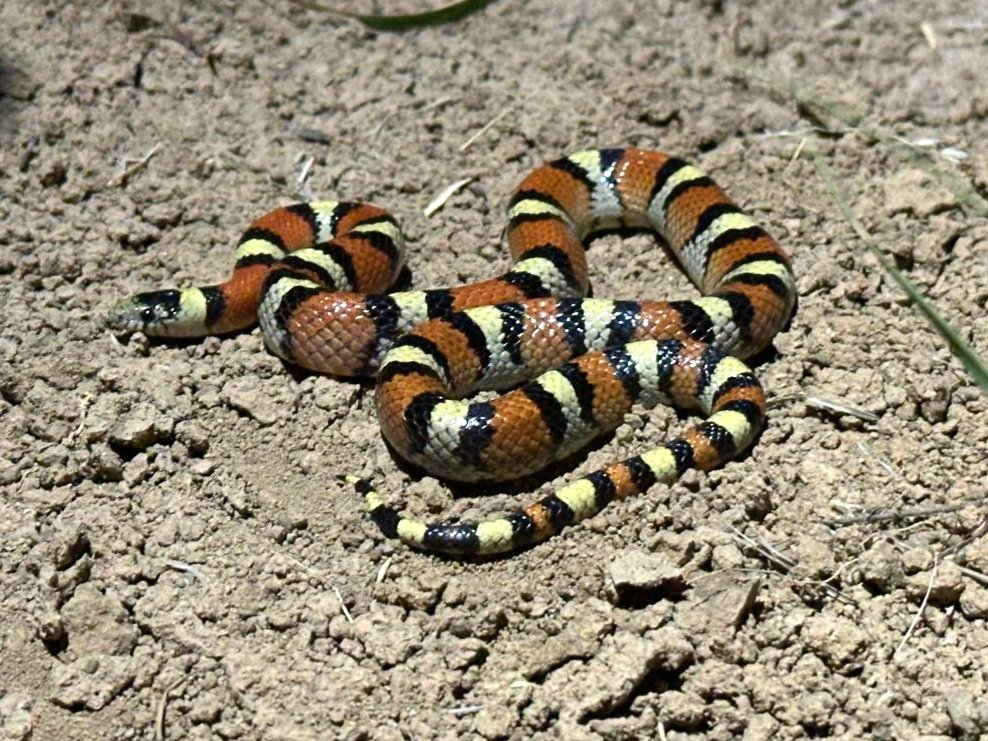
Western Milksnake
Lampropeltis gentilis
Non-venomousThe quick way to tell
Look at which colors touch. On the Western Milksnake, each red band is edged in black, so red touches black. On the Sonoran Coralsnake, the red rings touch pale yellow or white rings, and the snout is black.
Pattern ★ This settles it
Complete rings of red, black and wide white or pale yellow, with the red touching the pale rings.
Red or orange bands or saddles, each bordered by black, with white or pale bands in between. The bands may reach onto the belly, which is white with black marks.
Head
Small head with a black snout; a pale ring follows, then red.
Small head, not much wider than the neck. The head may be black with a whitish snout, or red with a few black marks and a white snout.
Eyes
Small dark eyes; no heat-sensing pit.
Small eyes with round pupils.
Pits
None. There is no pit between the eye and the nostril.
None. There is no pit between the eye and the nostril.
Tail
Ringed black and pale, usually with no red bands; the scale covering the vent is red in Arizona snakes.
Short and thin, and keeps the same red, black and white banding as the body.
What it does
Hides its head under its coils, curls and shows its tail, and may make a popping sound from its vent.
Usually calm when handled, but may shake its tail or strike when disturbed. Spends much of its time hidden under rocks or underground.
Where it lives
Southern Arizona below about 6,000 ft and southwestern New Mexico, south into western Mexico.
The Great Plains and western US: from Louisiana, Arkansas and Oklahoma west to Arizona and Utah, and north to Montana, Wyoming and South Dakota. Also reaches northern Mexico.