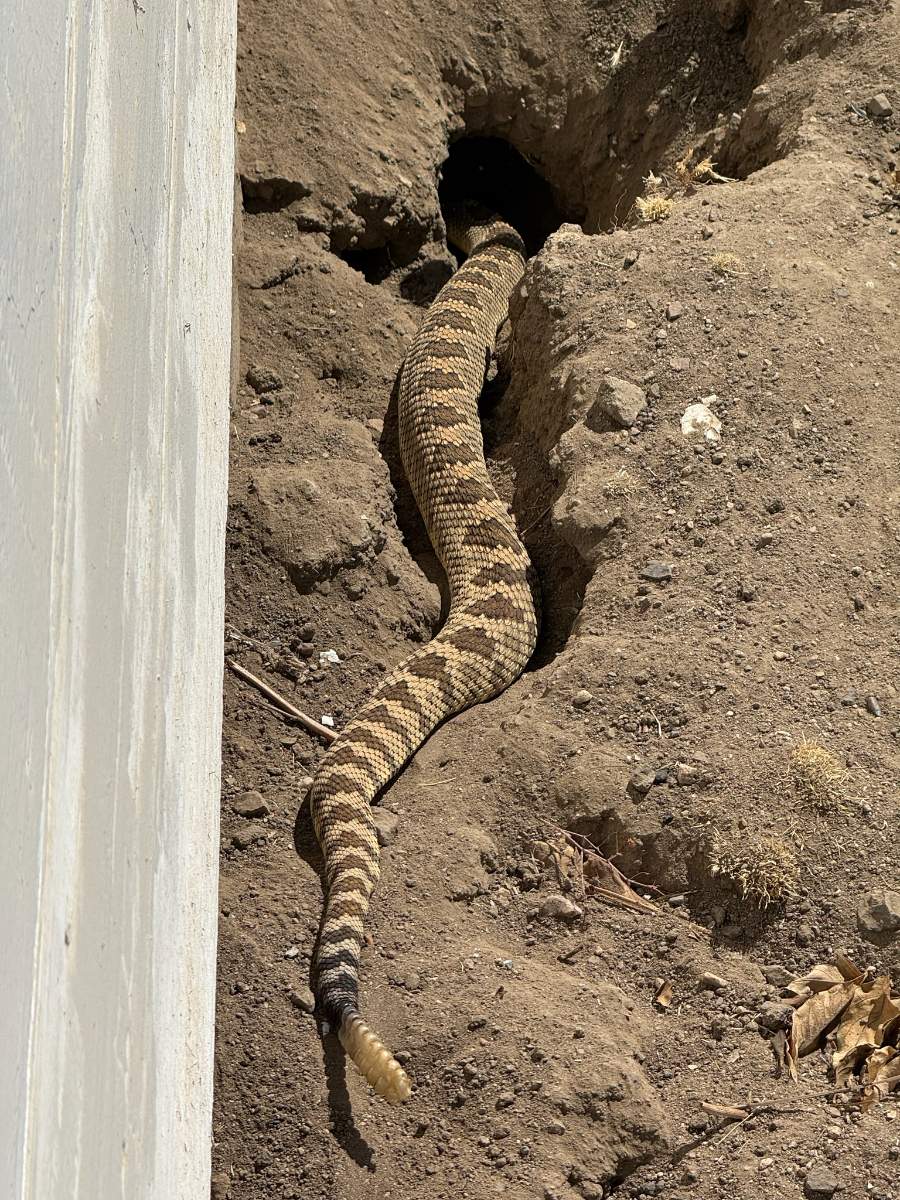
Western Rattlesnake
Crotalus oreganus · Rattlesnakes
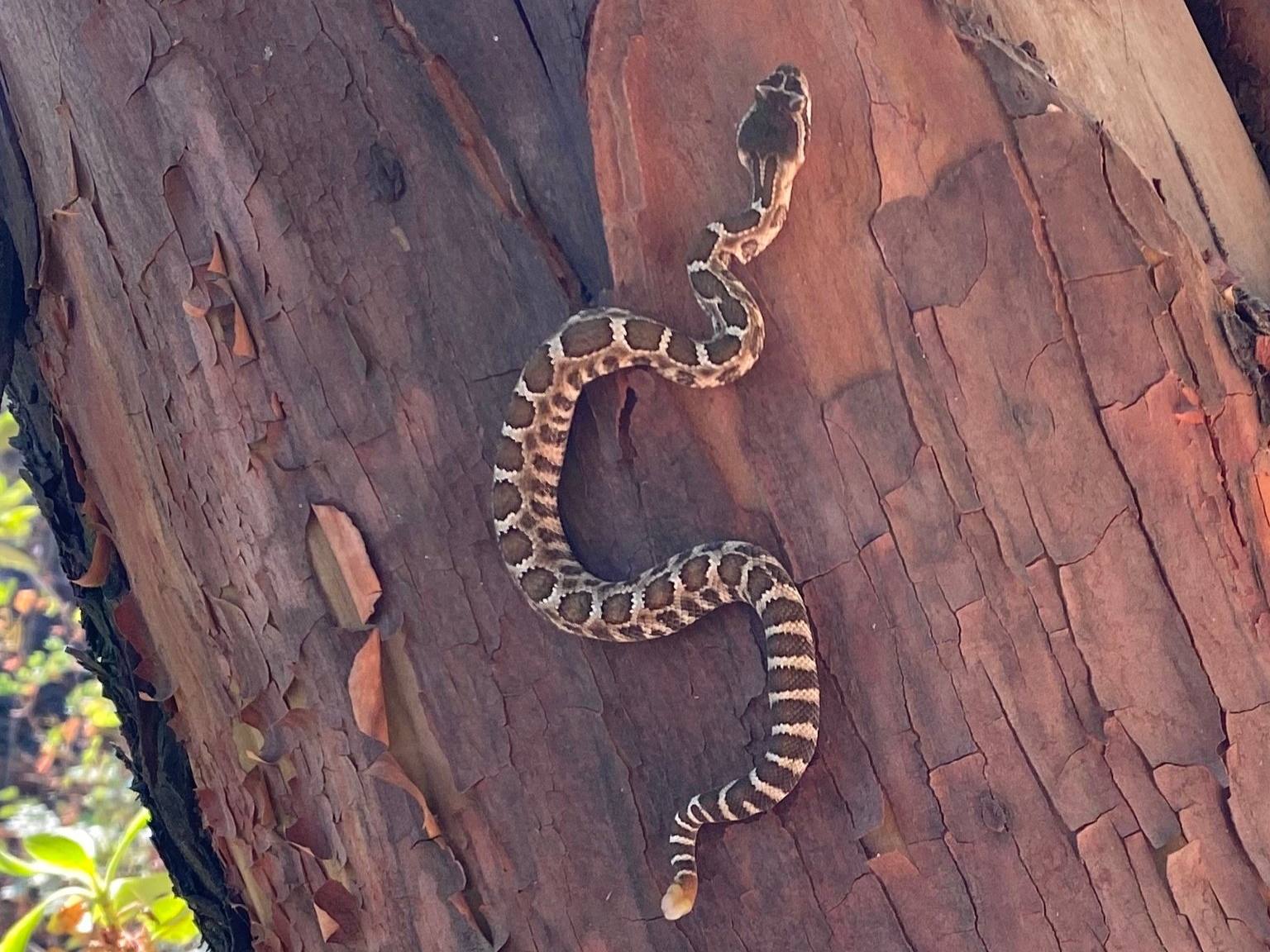
Tap a part to see what to look for. Tap it again to turn it off.
Venomous. Give it room and never try to move it; a bite is a medical emergency.
How to identify
- Head
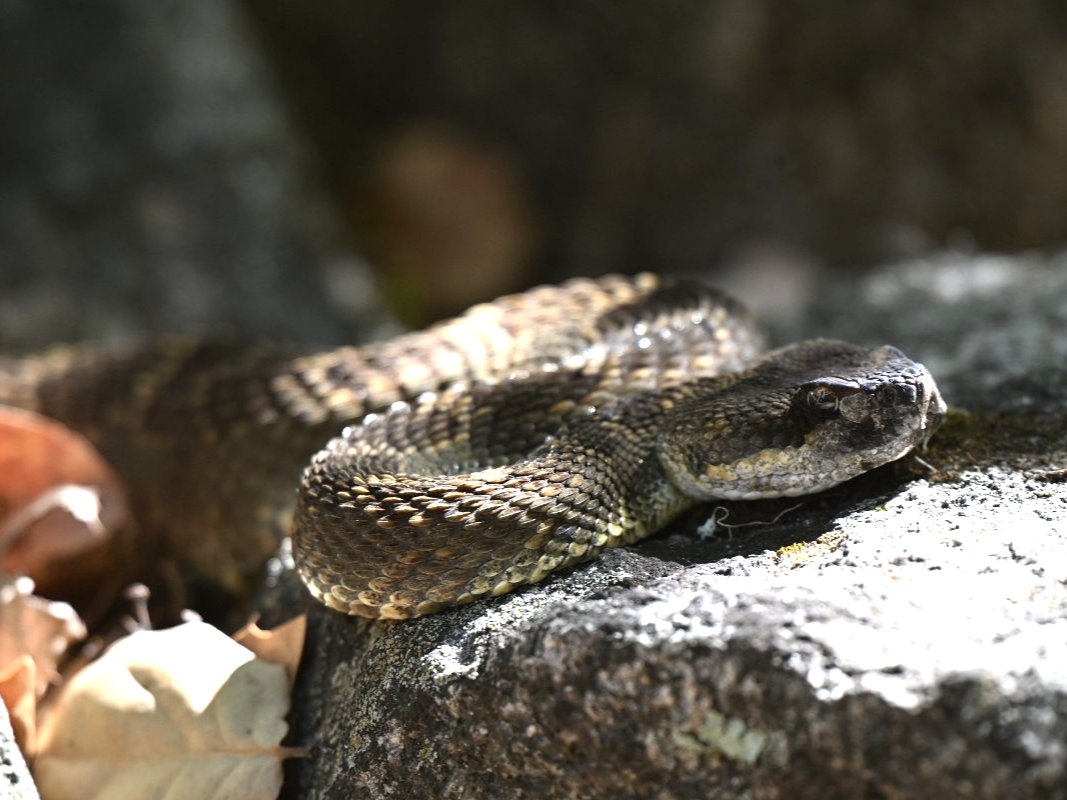
- Broad triangular head with a dark cheek stripe bordered by white.
- Pattern
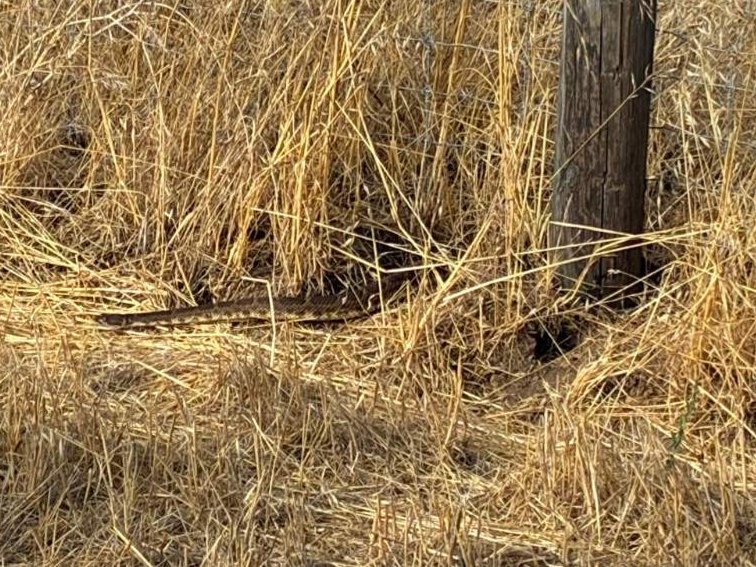
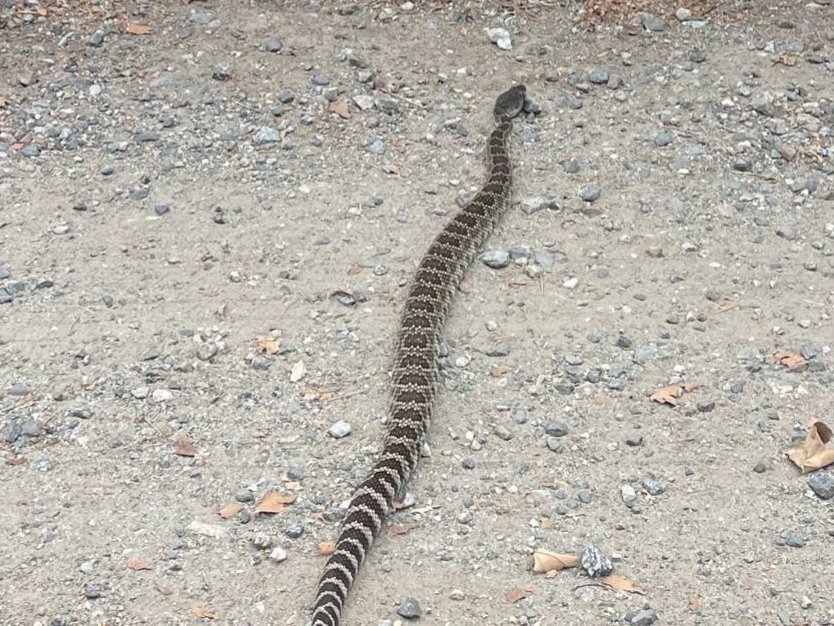
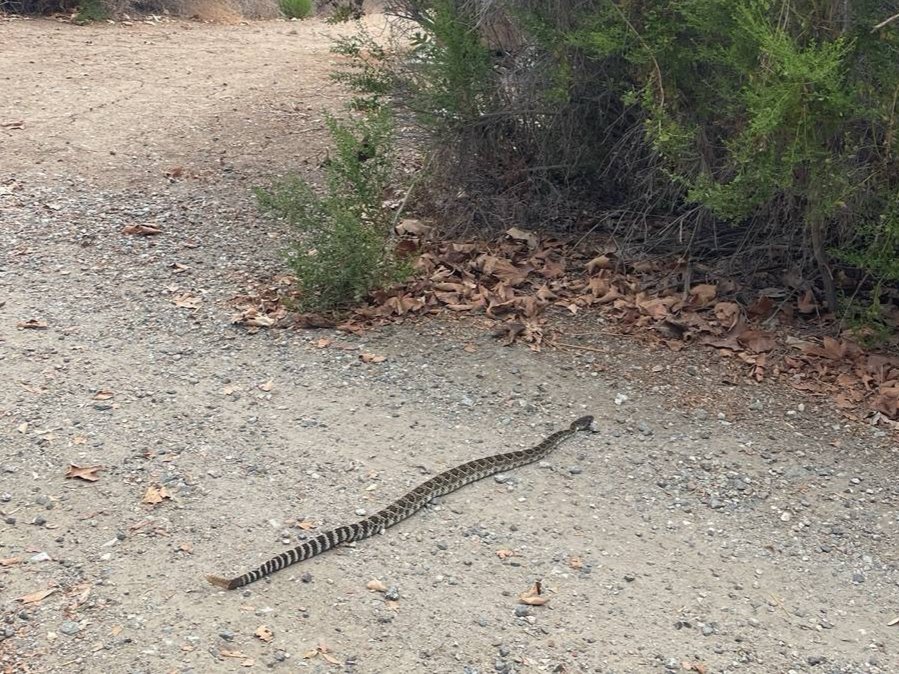
- Pale-edged blotches wider than long, banding near the tail; olive to nearly black.
- Eyes
- Vertical slit pupil; heat-sensing pit between eye and nostril.
- Pits
- A deep heat-sensing pit on each side of the face, between the eye and the nostril.
- Tail
- Thin ahead of the rattle.
- What it does
- Coils and rattles; retreats to rocks if given room.
Often confused with
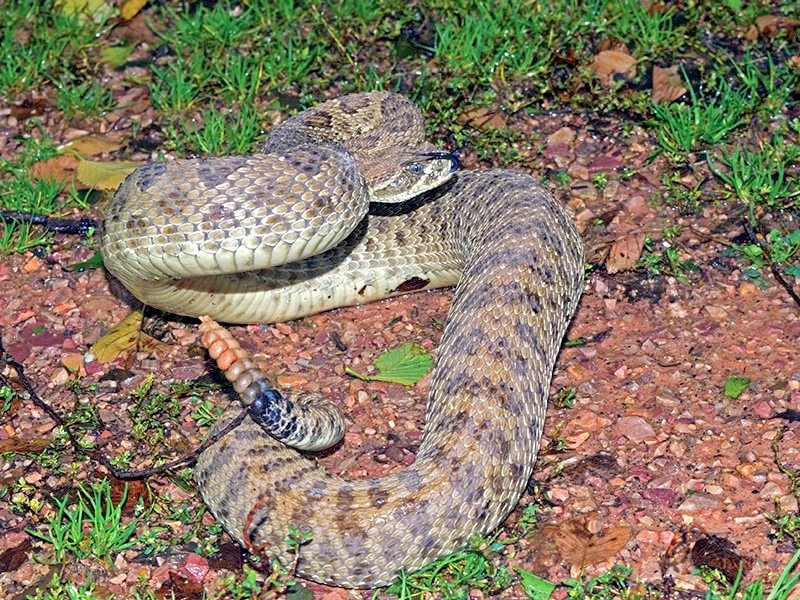
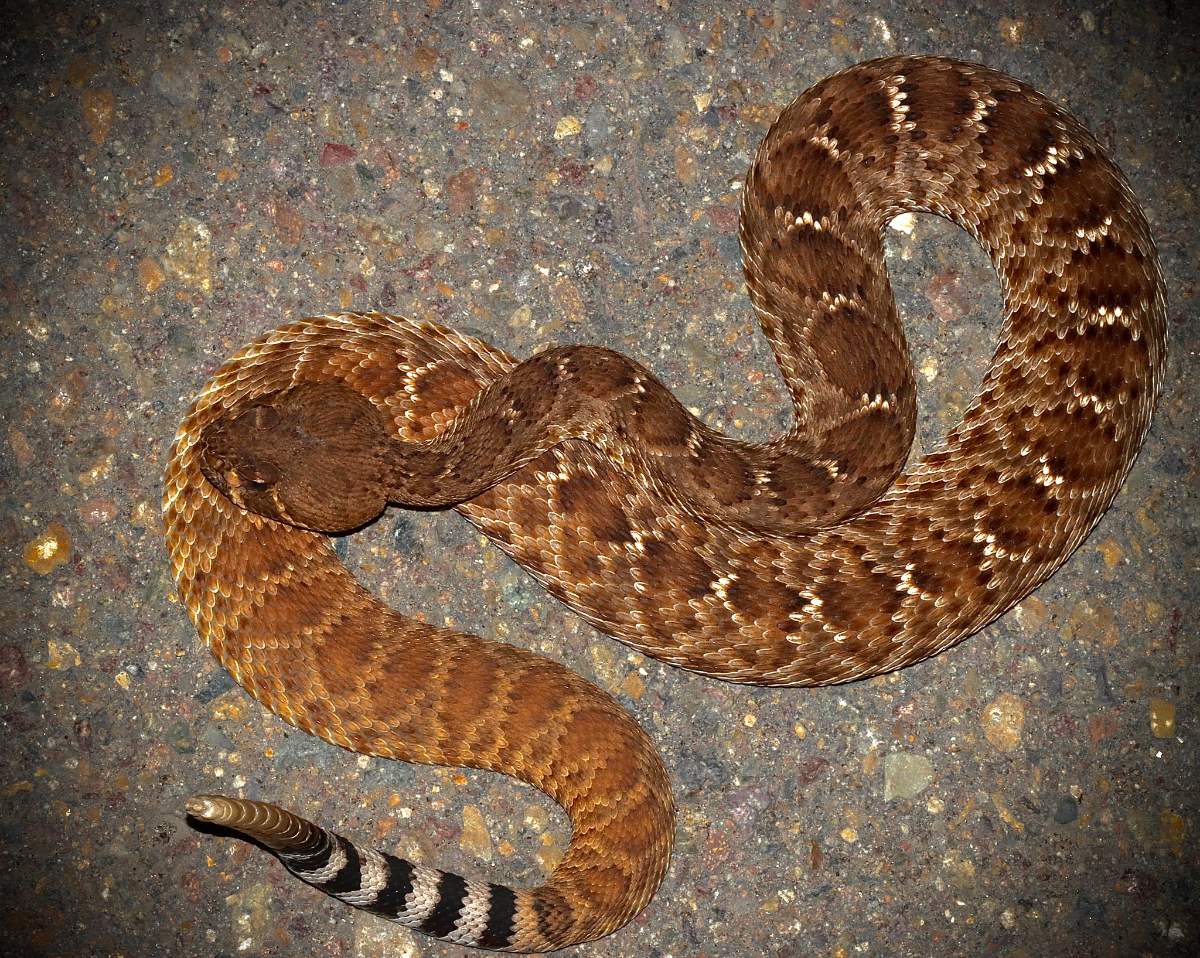
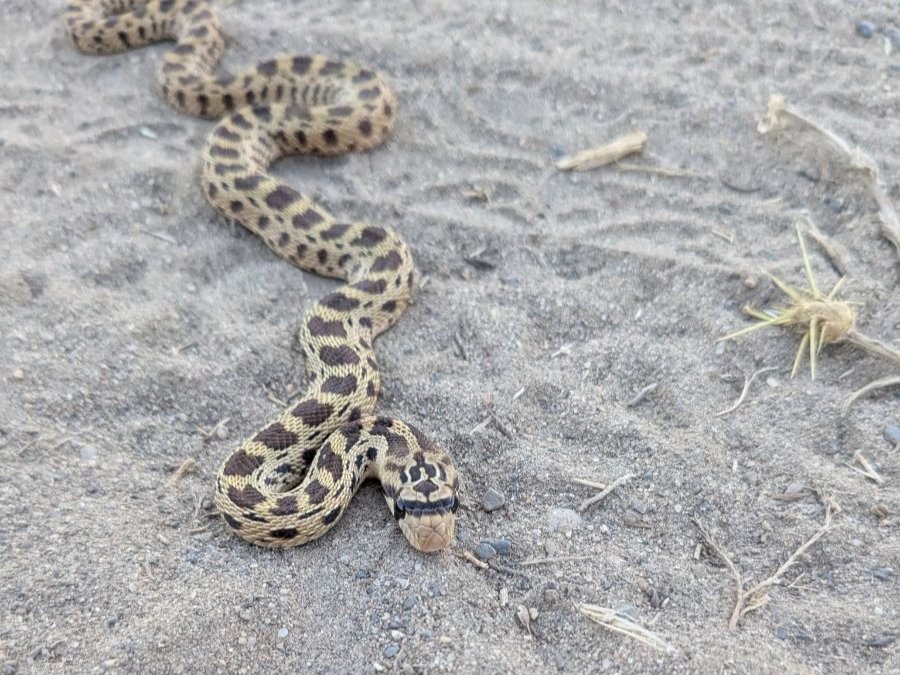
Gophersnake shakes its tail and hisses but has a narrow head, round pupils and no rattle. Prairie Rattlesnake looks very similar and the two overlap — range is often the best clue. Red Diamond Rattlesnake, in southern California, is brick-red with plain, light-edged diamonds.
How to tell them apart
Western Rattlesnake vs Prairie Rattlesnake›
The quick way to tellThese two look very alike and their ranges overlap. Where you found it is often the best clue.
Western Rattlesnake: Pacific states and the Great Basin: Washington, Oregon, Idaho, California, Nevada, Utah and Arizona, east into western Colorado and southwestern Wyoming, plus British Columbia and Baja California.
Prairie Rattlesnake: Great Plains from southern Canada through Montana, the Dakotas, Wyoming, Nebraska, Kansas, Colorado, western Oklahoma and west Texas, west into eastern Idaho, eastern Utah, New Mexico and northeastern Arizona.
Western Rattlesnake vs Red Diamond Rattlesnake›
The quick way to tellLook at the body color and markings. The Red Diamond is reddish with light-edged diamonds and a black-and-white ringed tail. The Western Rattlesnake in the same area is brown to olive-brown with dark brown blotches that turn into crossbars toward the tail.
Western Rattlesnake: Pale-edged blotches wider than long, banding near the tail; olive to nearly black.
Red Diamond Rattlesnake: Reddish-brown diamonds with pale edges, fairly plain inside, on a reddish or tan body.
Western Rattlesnake vs Gophersnake›
The quick way to tellLook at the tail. The rattlesnake has a rattle. The gophersnake's tail tapers to a point, even when it shakes it, and its head is narrow with round pupils.
Western Rattlesnake: Thin ahead of the rattle.
Gophersnake: Tapers evenly; no rattle - but it shakes the tip hard in leaves.
About the Western Rattlesnake›
The common rattlesnake of the far West, found from sea level to mountain slopes in brush, rocky canyons, oak woodland and grassland. Color varies a lot by region, from olive and brown to nearly black in some populations.
Several forms once treated as separate species are lumped here, so books and websites disagree about its name and subspecies.
The details
Size Usually 2.5–4 ftWeight About 1–3 lbLifespan 15–20 years
Typical range›
Pacific states and the Great Basin: Washington, Oregon, Idaho, California, Nevada, Utah and Arizona, east into western Colorado and southwestern Wyoming, plus British Columbia and Baja California.
Activity›
Active by day in spring and fall, at dusk and night in summer heat. Winters in rock crevices, sometimes in groups.
Diet›
Ground squirrels, mice, wood rats, rabbits, birds and lizards.
Reproduction›
Gives birth to live young, usually 4–12, in late summer.
Found in parts of 9 states›
Ranges are approximate. It may be found in only part of a state, or be rare there, and snakes can turn up outside of them.
More photos