Mohave Rattlesnake
Crotalus scutulatus · Rattlesnakes
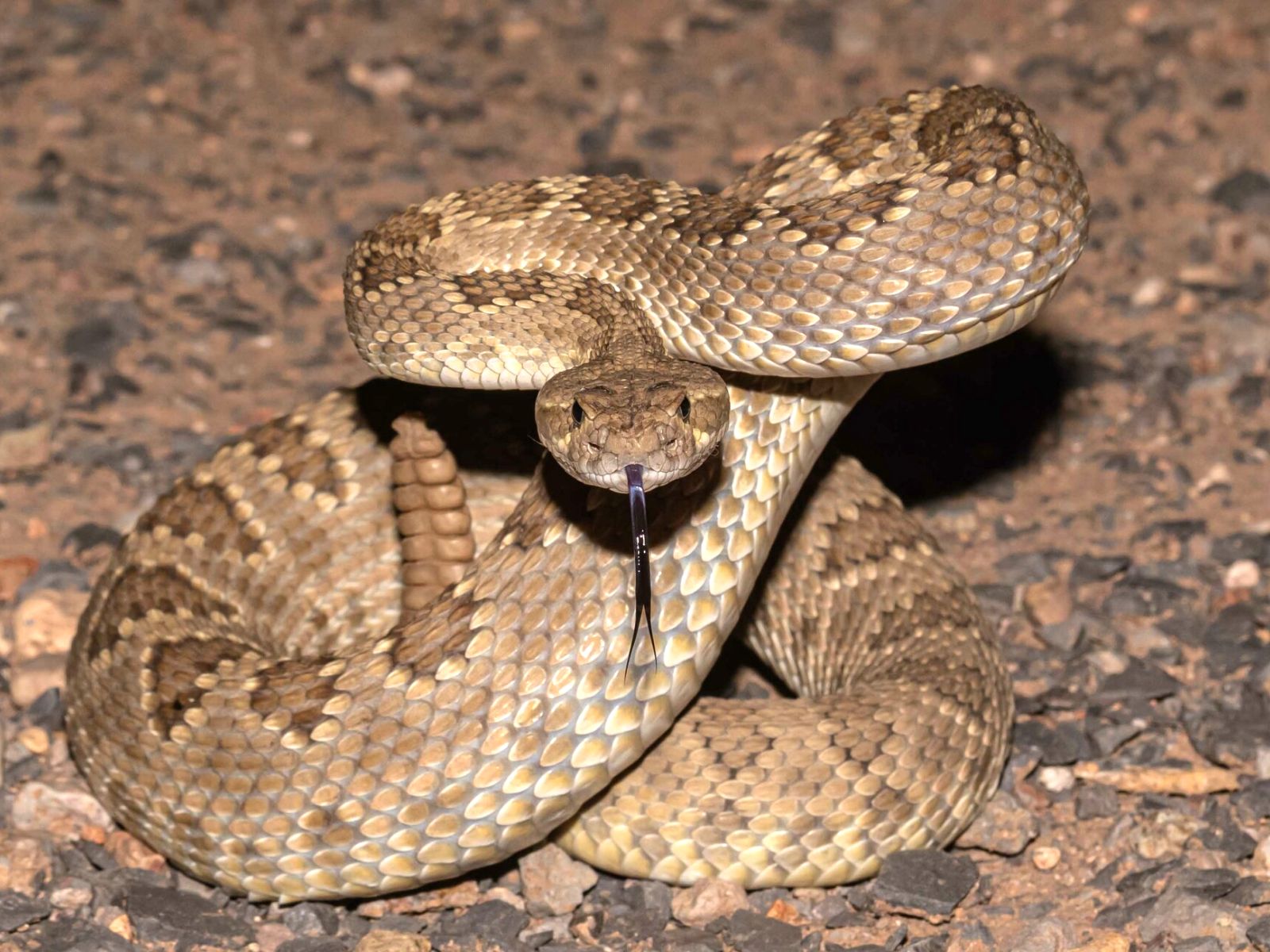
Tap a part to see what to look for. Tap it again to turn it off.
Venomous, with venom that can affect the nervous system. Keep well back; a bite is a medical emergency.
How to identify
- Head
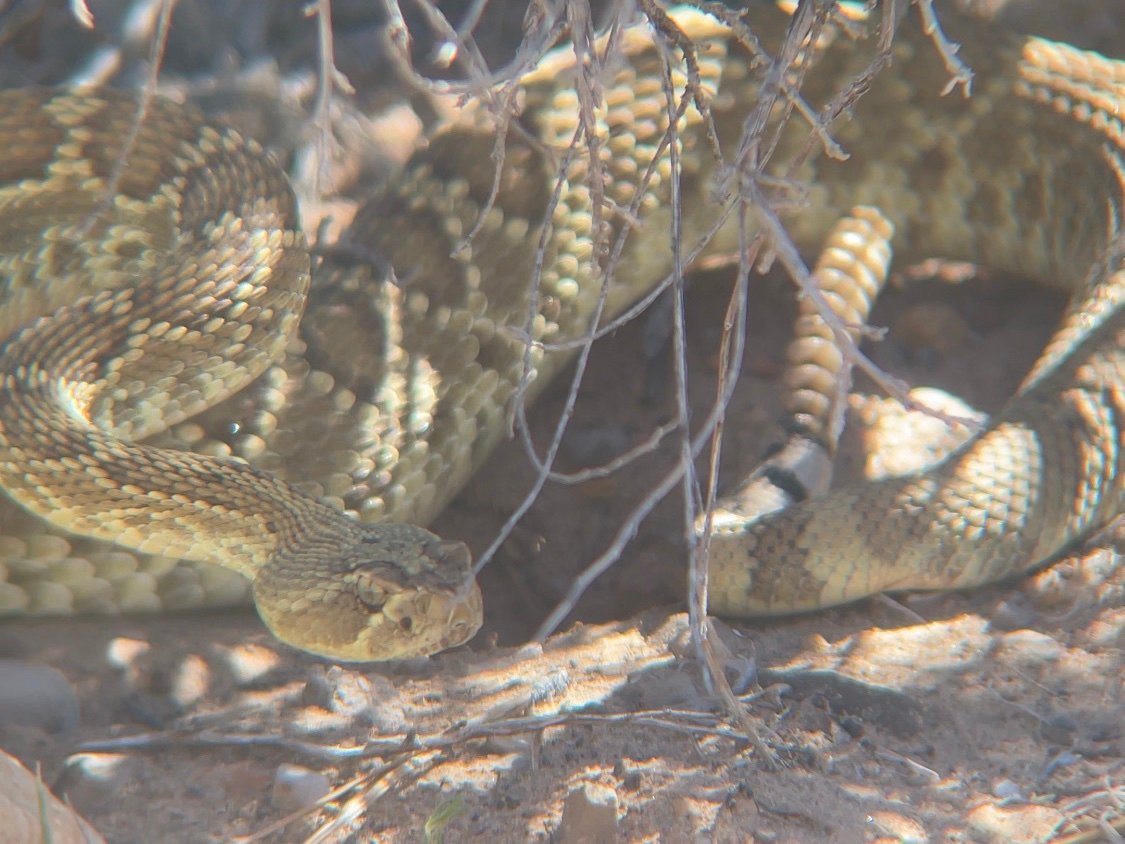
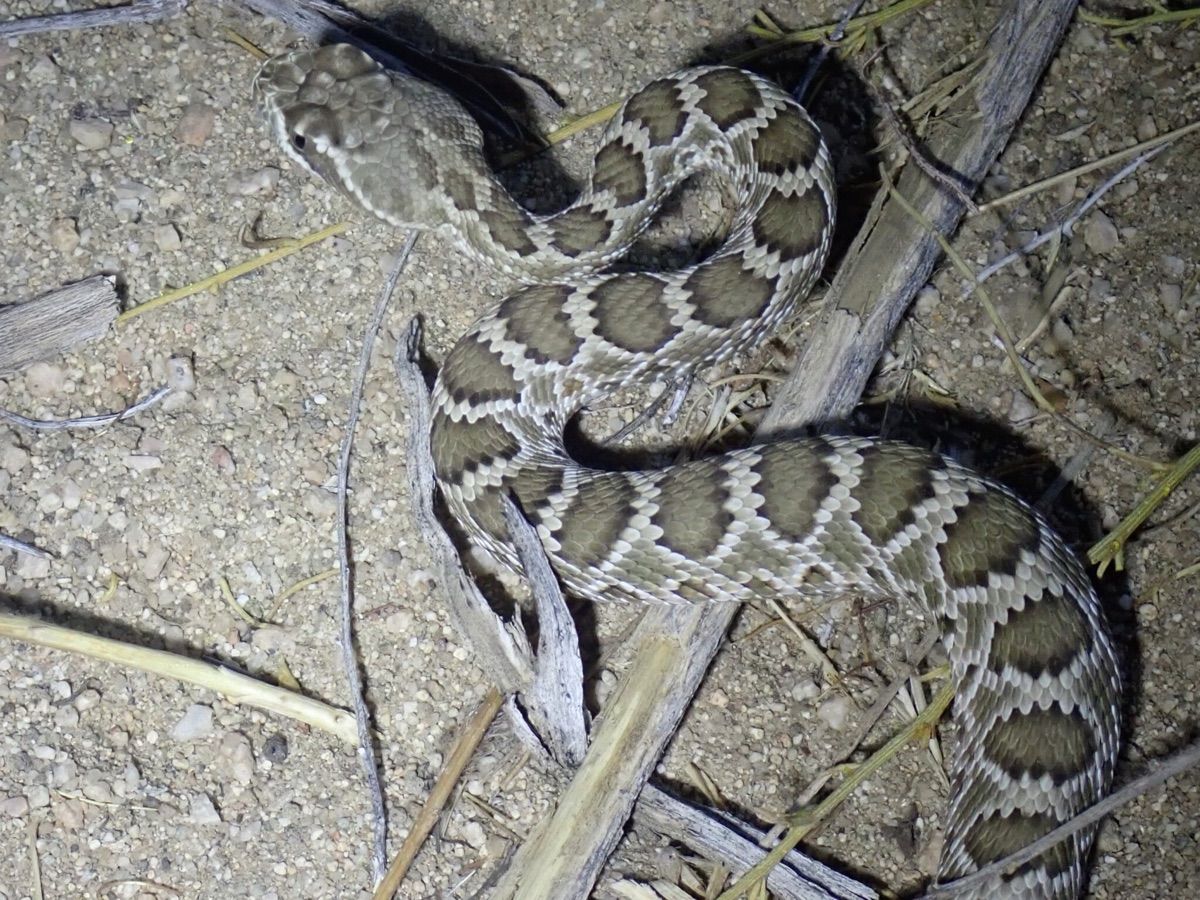
- Triangle; two big scales between the eyes, cheek stripe passes behind the mouth.
- Pattern
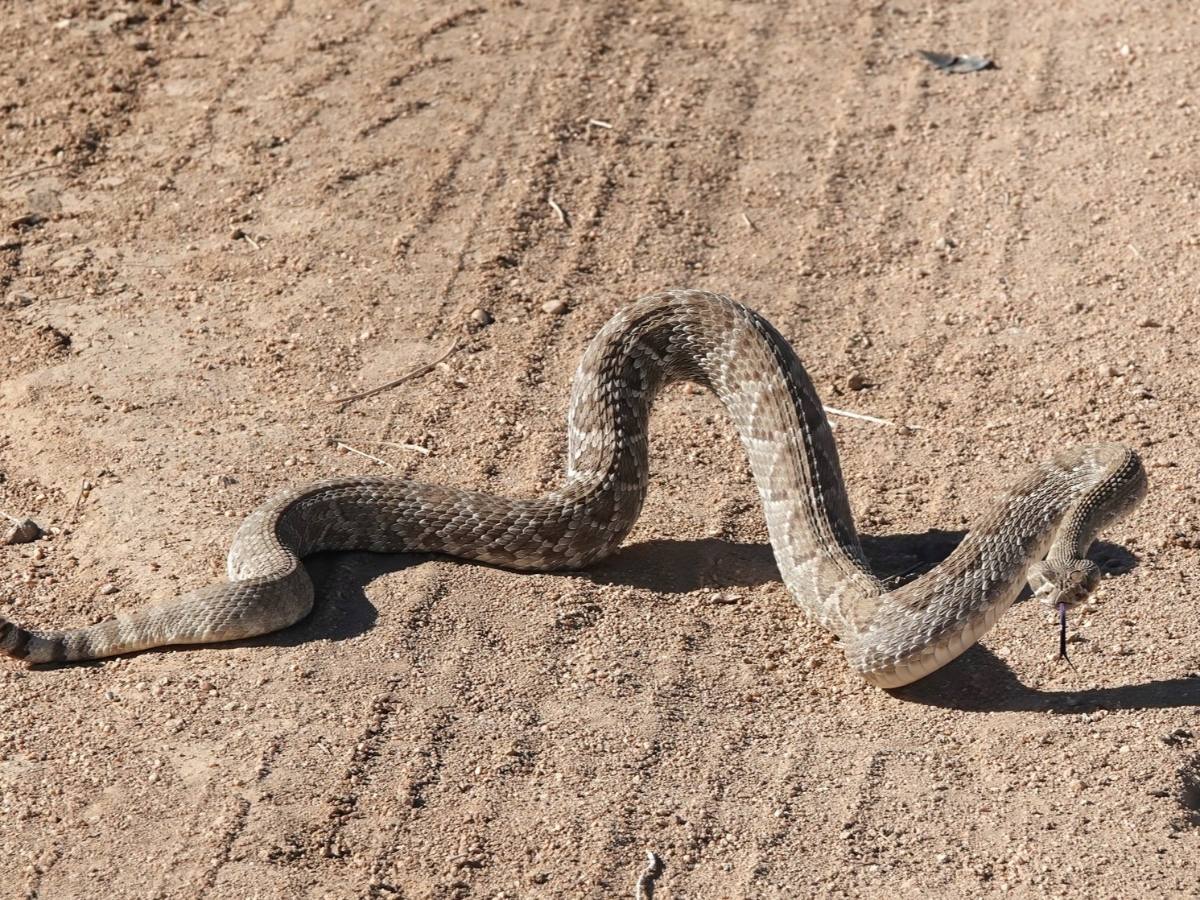
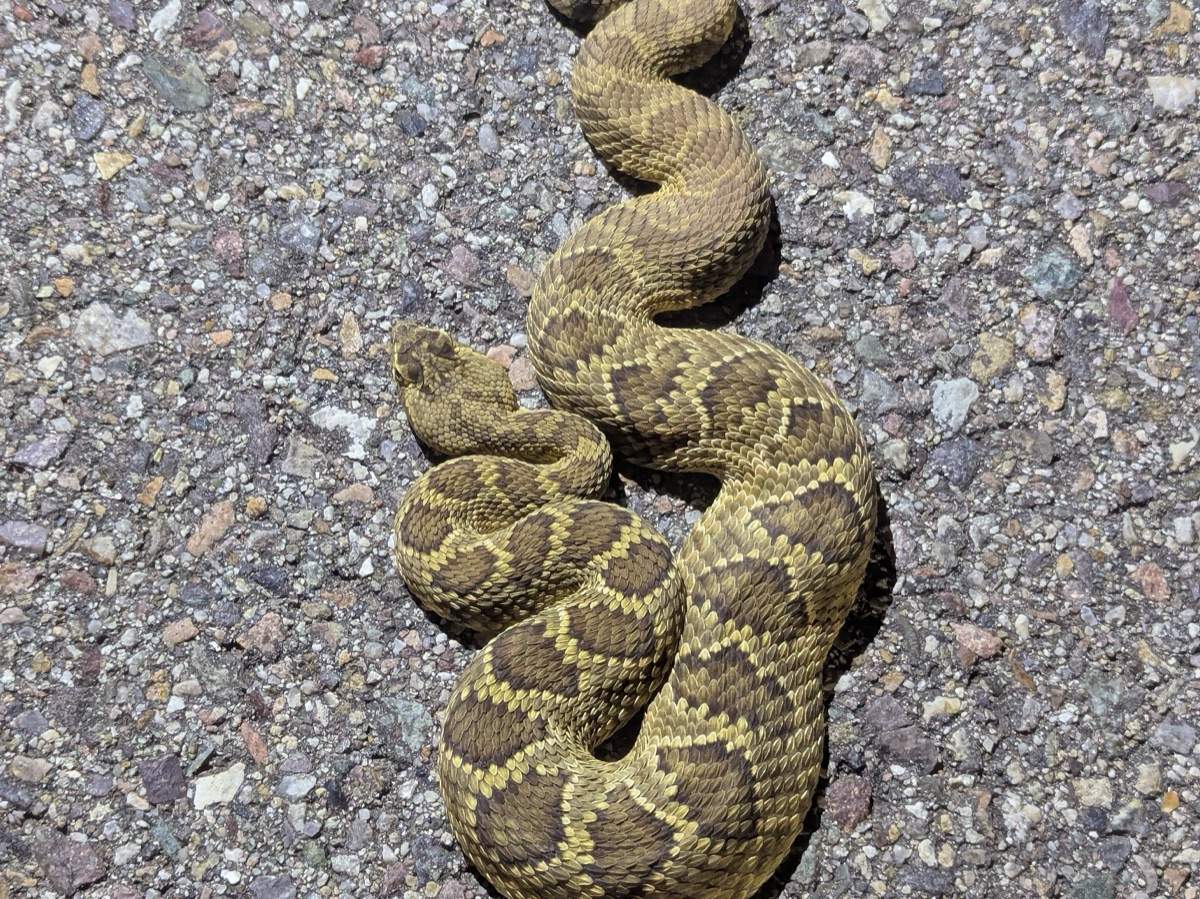
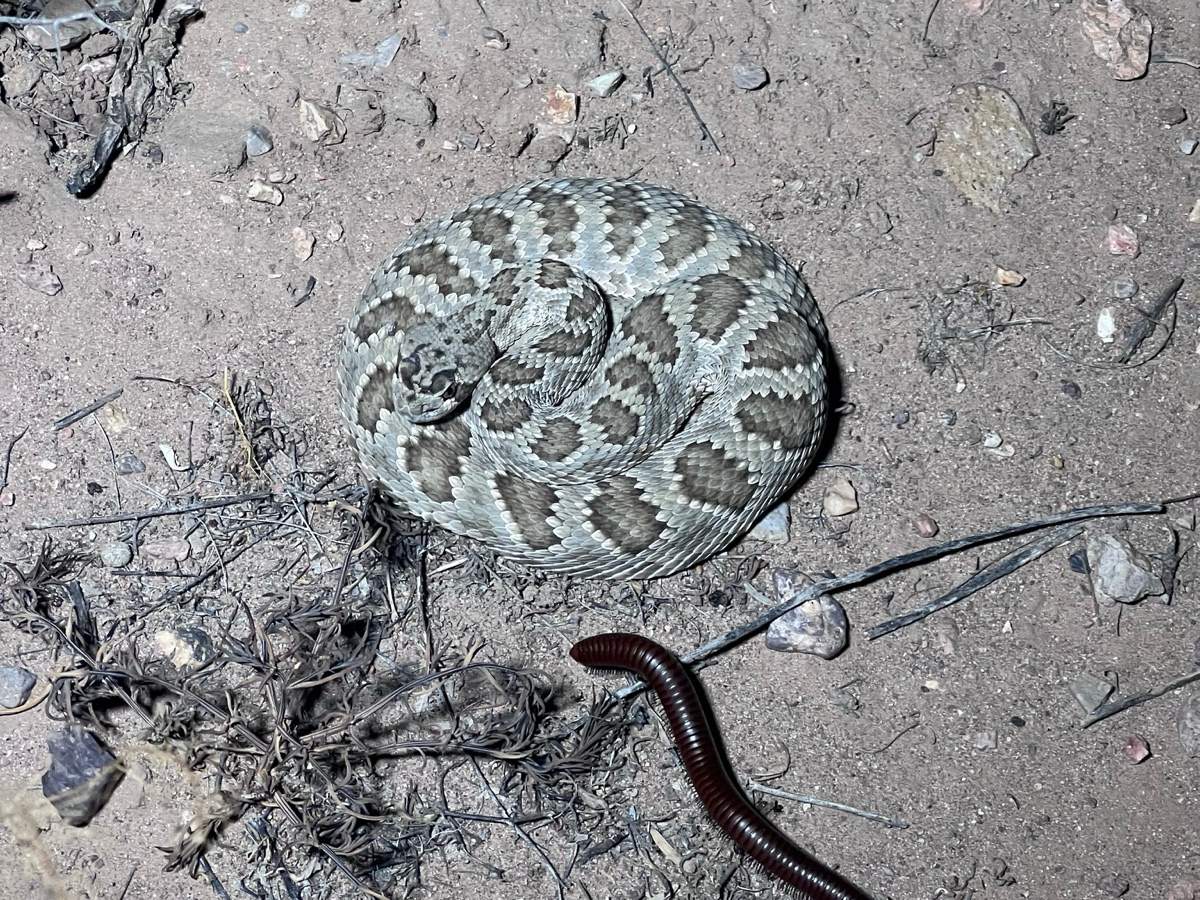
- Clean pale-edged diamonds on gray-green to brown.
- Eyes
- Vertical slit pupil; heat-sensing pit between eye and nostril.
- Pits
- A deep heat-sensing pit on each side of the face, between the eye and the nostril.
- Tail
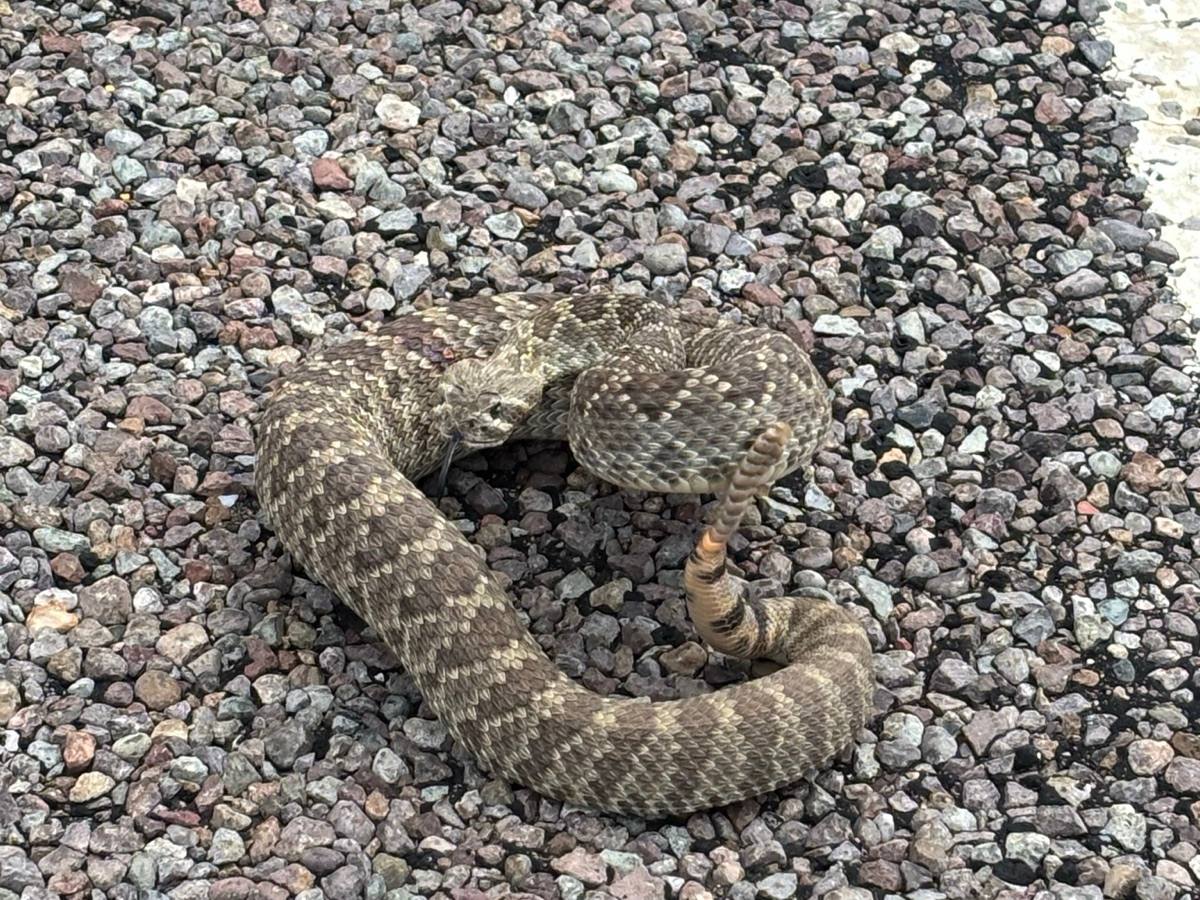
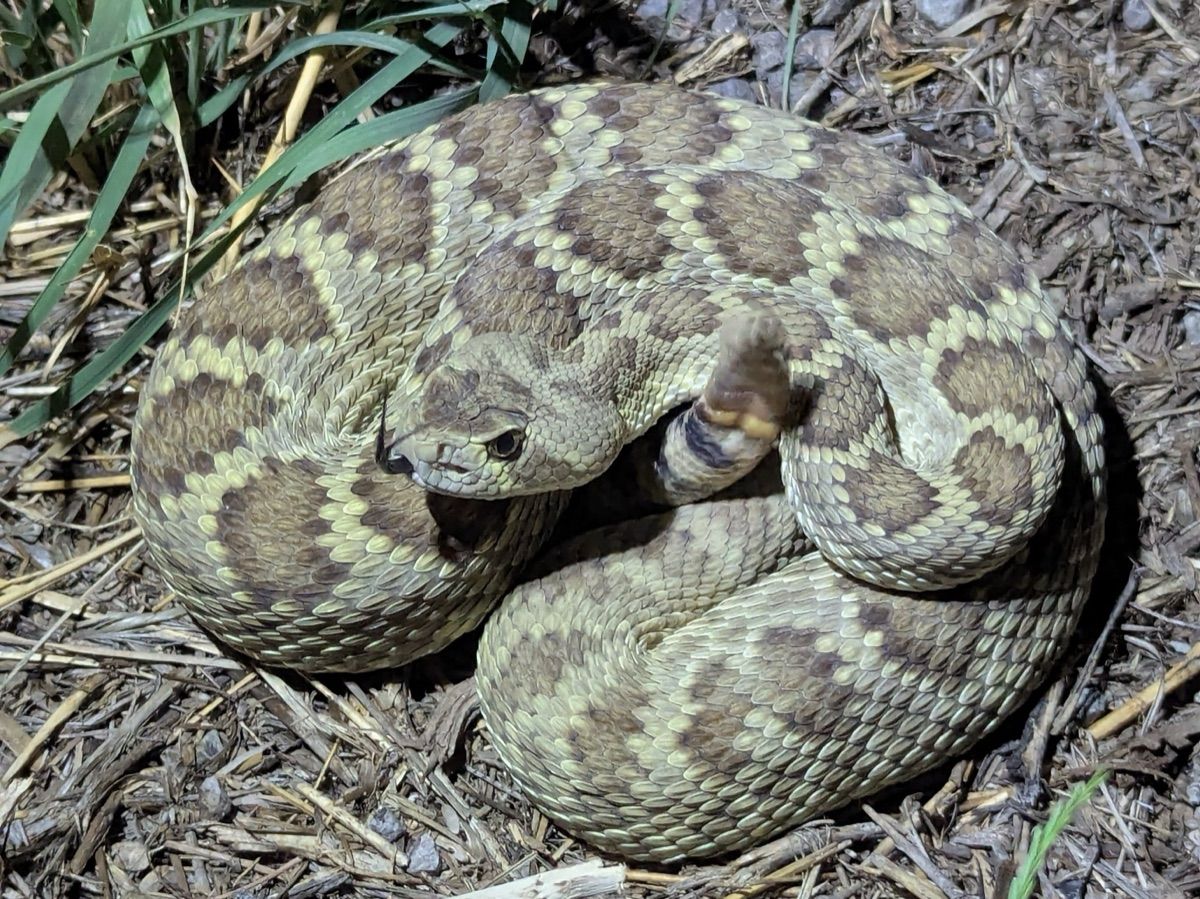
- White bands usually wider than the black ones, ahead of the rattle.
- What it does
- Rattles and holds ground; often found on roads at night.
Often confused with
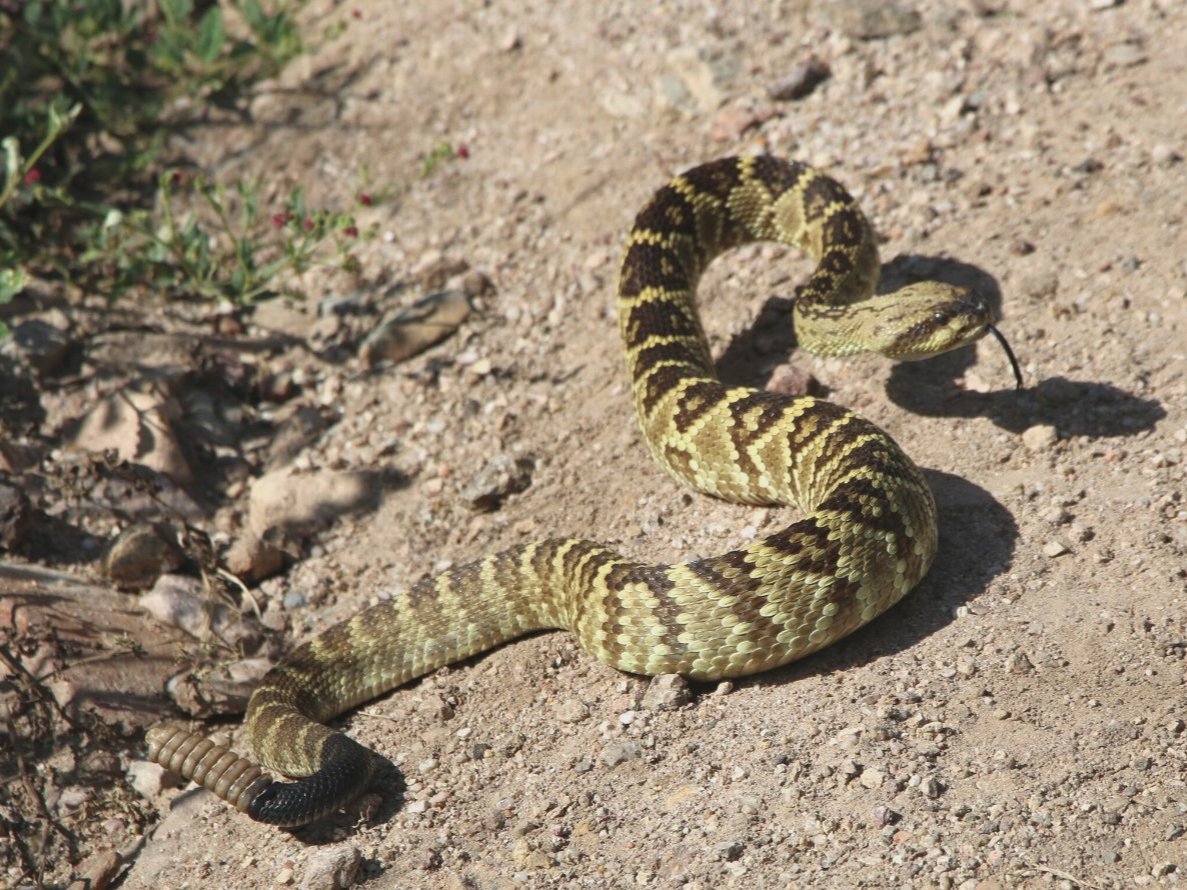
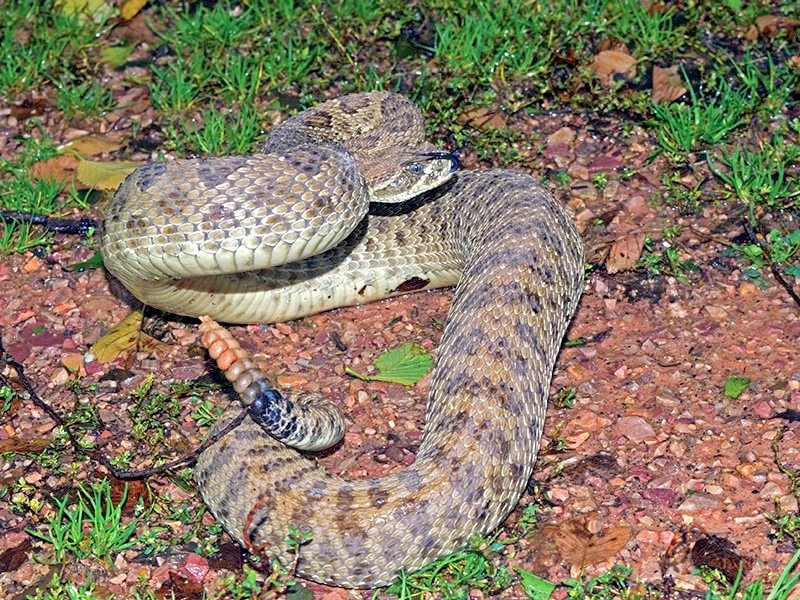
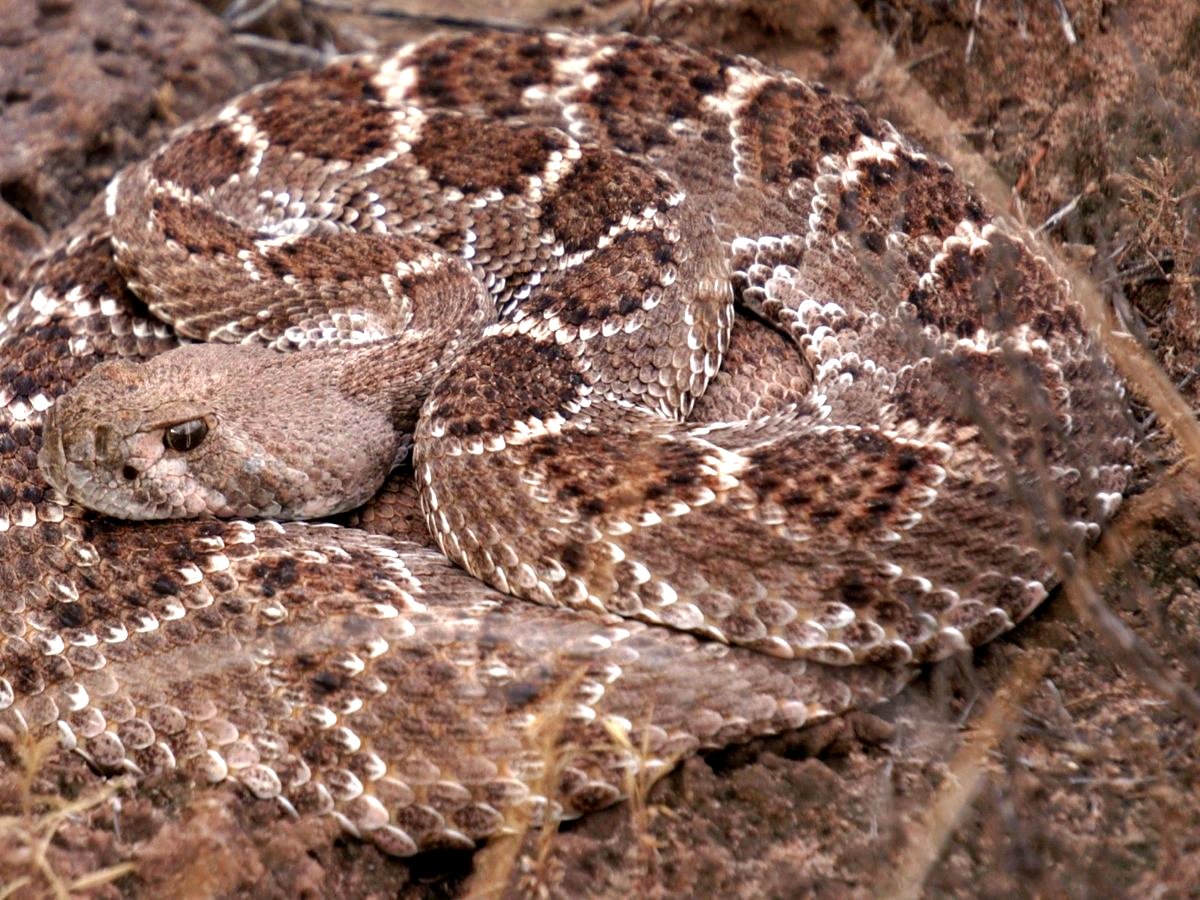
Western Diamondback is the big one — its tail rings are about equal in width and its cheek stripe reaches the mouth. Prairie Rattlesnake also overlaps. Black-tailed Rattlesnake has a solid black tail instead of rings.
How to tell them apart
Mohave Rattlesnake vs Black-tailed Rattlesnake›
The quick way to tellLook at the tail. The Black-tailed Rattlesnake's tail is solid black. The Mohave's tail has light and dark rings ahead of the rattle.
Mohave Rattlesnake: White bands usually wider than the black ones, ahead of the rattle.
Black-tailed Rattlesnake: Solid black or dark gray ahead of the rattle, with few or no bands.
Mohave Rattlesnake vs Prairie Rattlesnake›
The quick way to tellLook at the blotch shapes. The Prairie's are usually oval, rounded or bow-tie shaped and turn into bands toward the tail. The Mohave's are cleaner diamonds. No single mark is fully reliable, so check several features.
Mohave Rattlesnake: Clean pale-edged diamonds on gray-green to brown.
Prairie Rattlesnake: Pale-edged blotches tightening into bands near the tail; colour matches local soil.
Mohave Rattlesnake vs Western Diamondback Rattlesnake›
The quick way to tellLook at the tail rings. On the Mohave the white rings are wider than the black. On the Western Diamondback they're about equal.
Mohave Rattlesnake: White bands usually wider than the black ones, ahead of the rattle.
Western Diamondback Rattlesnake: Bold black and white rings, usually about equal width - the classic coon tail - ahead of the rattle.
About the Mohave Rattlesnake›
A desert and grassland rattlesnake of the Southwest, most common in creosote flats and mesquite grassland rather than rocky slopes.
Many populations carry a potent nerve-acting venom, which has given it a reputation as one of the more medically serious rattlesnakes in the country. Telling it from a Western Diamondback in the field is genuinely hard, which is a good argument for leaving both alone.
The details
Size Usually 2–3.5 ft; occasionally over 4 ftWeight About 1–4 lbLifespan 10–20 years
Typical range›
Southwest: southeastern California, southern Nevada, extreme southwestern Utah, Arizona, southern New Mexico and west Texas, south into central Mexico.
Activity›
Mostly night active in summer, day active in spring and fall. Shelters in rodent burrows.
Diet›
Kangaroo rats, mice, ground squirrels and lizards.
Reproduction›
Gives birth to live young, usually 4–12, in summer.
Found in parts of 6 states›
Ranges are approximate. It may be found in only part of a state, or be rare there, and snakes can turn up outside of them.
More photos