Western Ratsnake
Pantherophis obsoletus · Rat Snakes
Tap a part to see what to look for. Tap it again to turn it off.
No venom; it may musk or bite if grabbed, and is a useful rodent hunter around barns.
How to identify
- Head
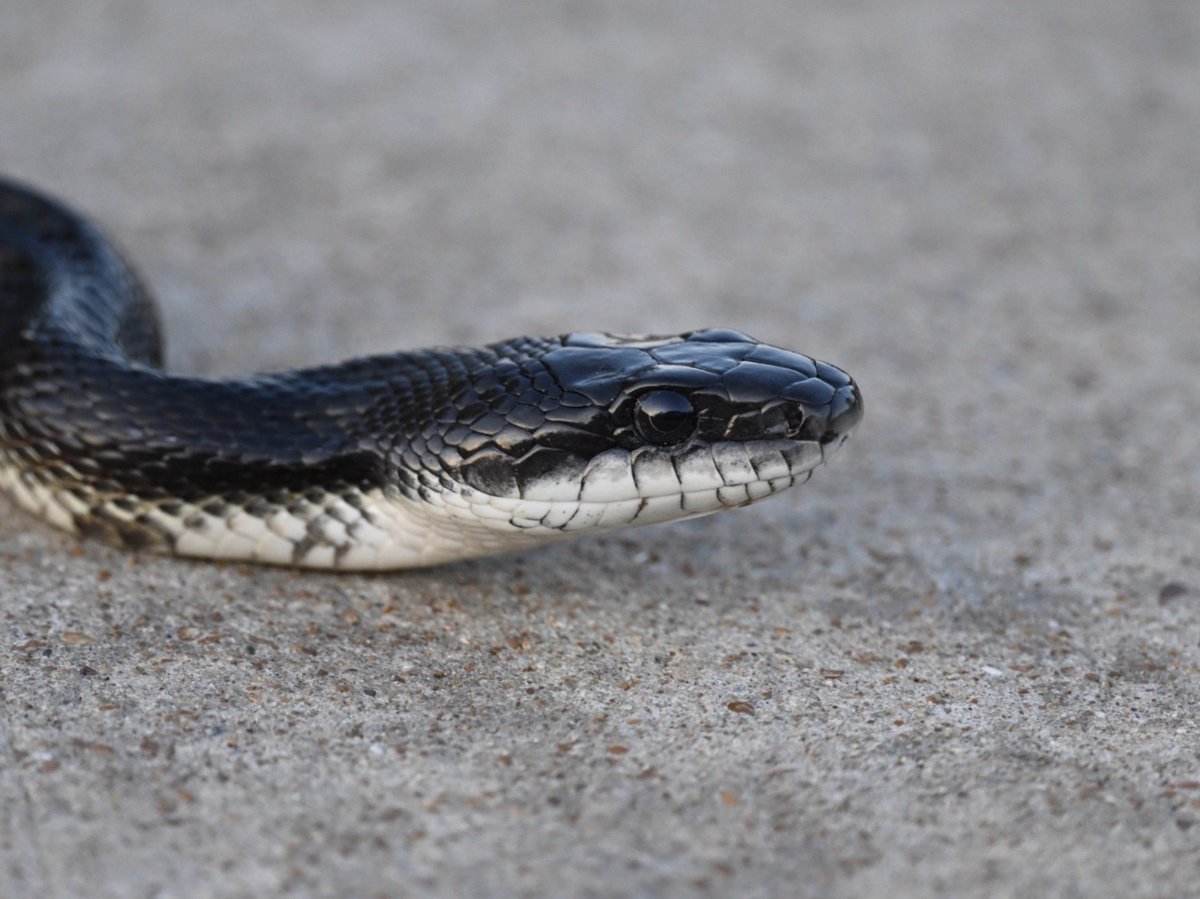
- Narrow head only a little wider than the neck; white to gray chin and throat.
- Pattern
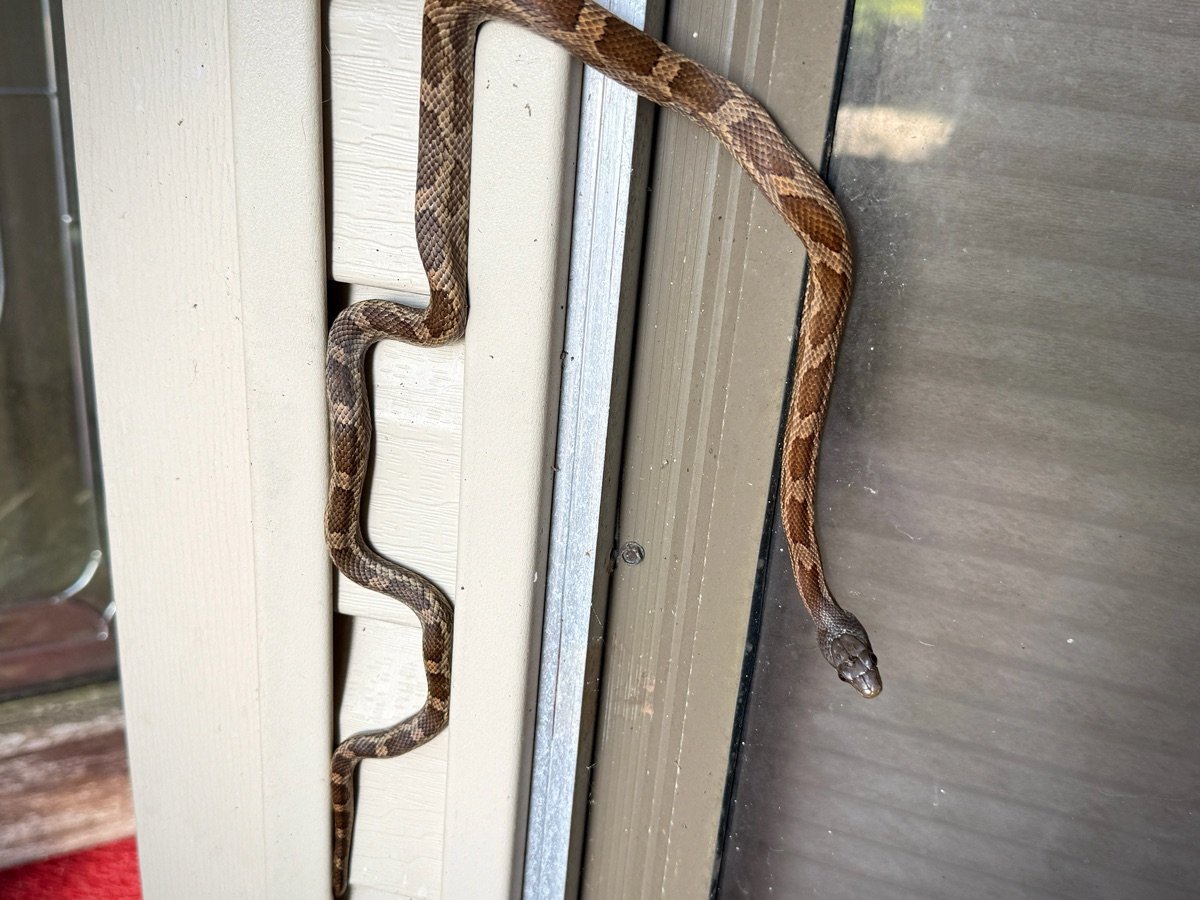
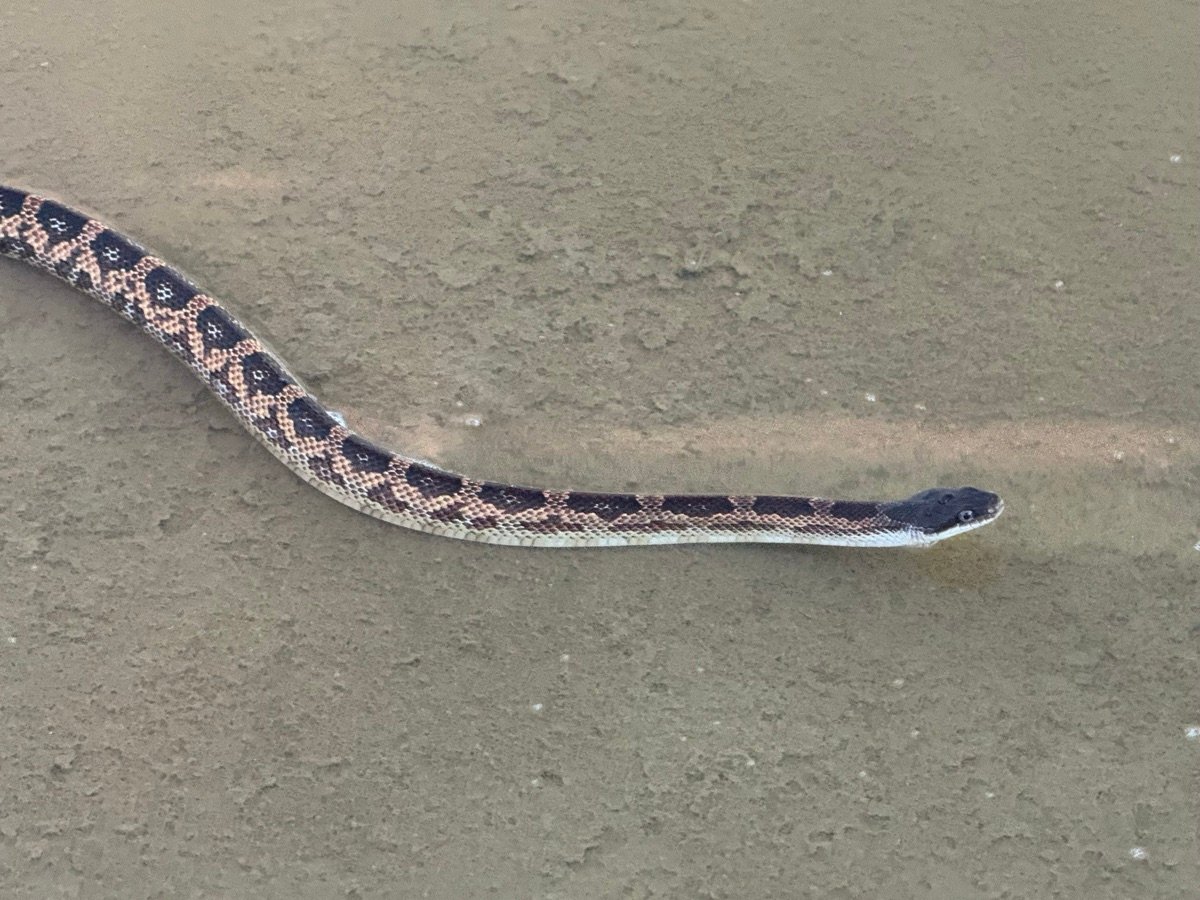
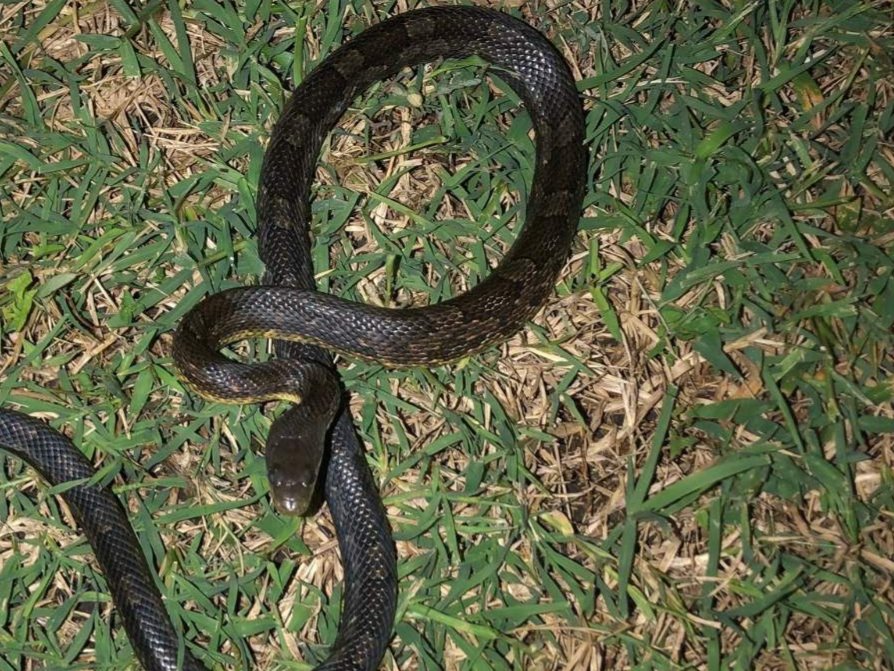
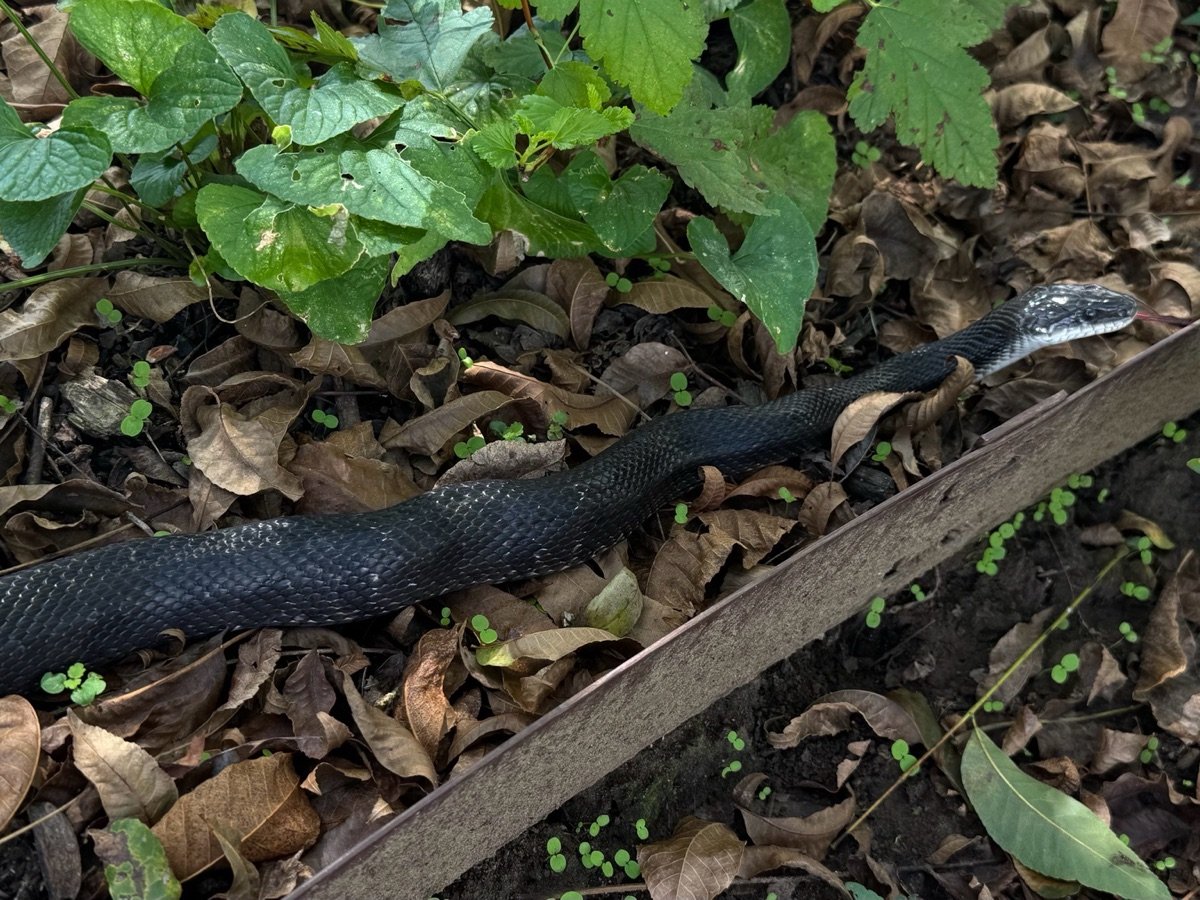
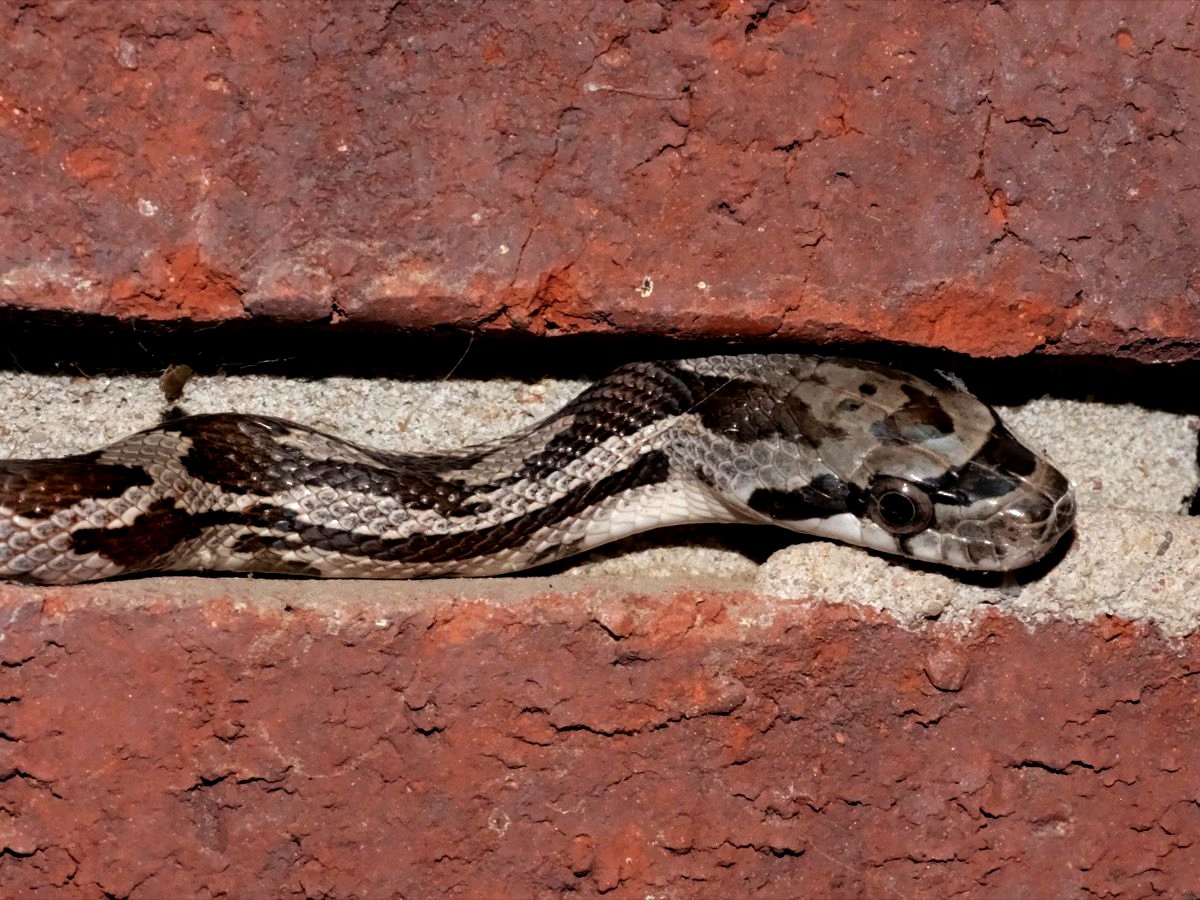
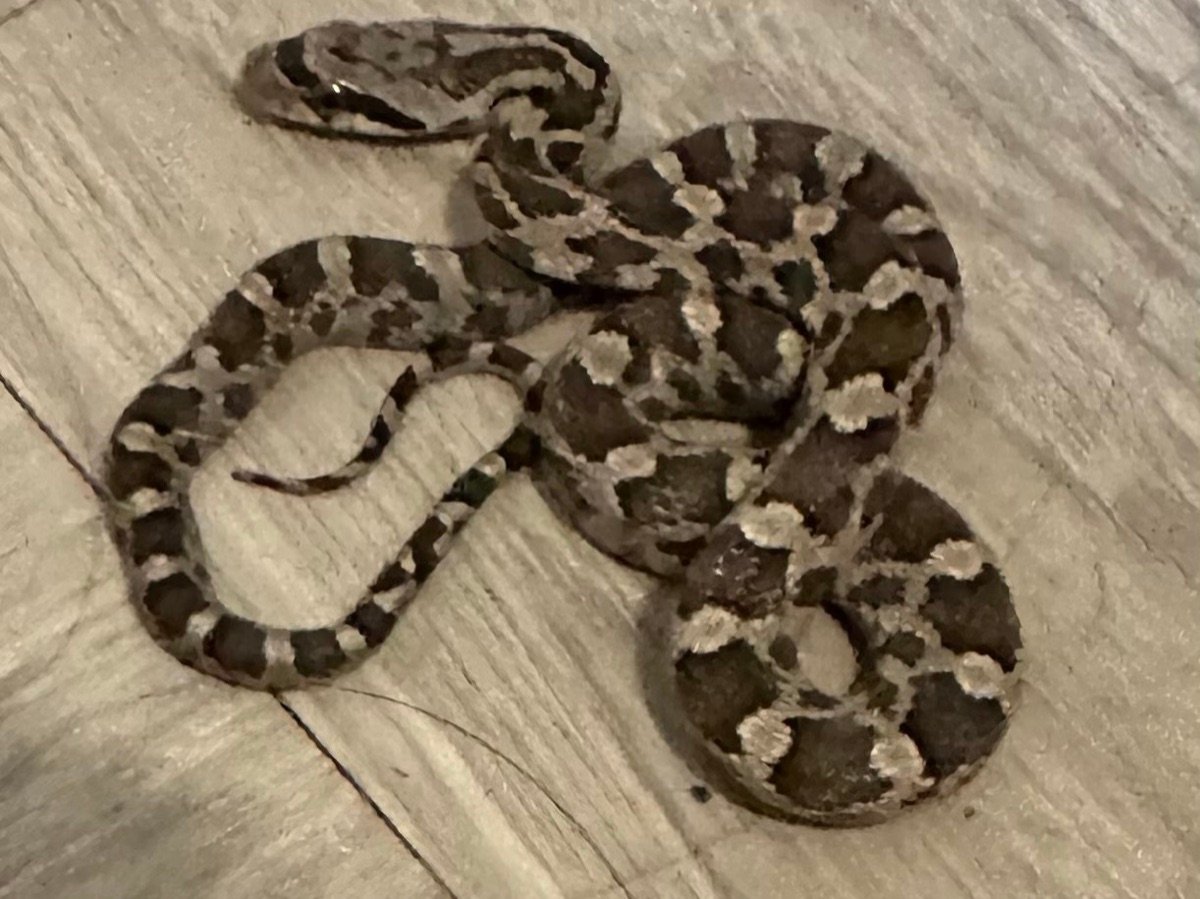
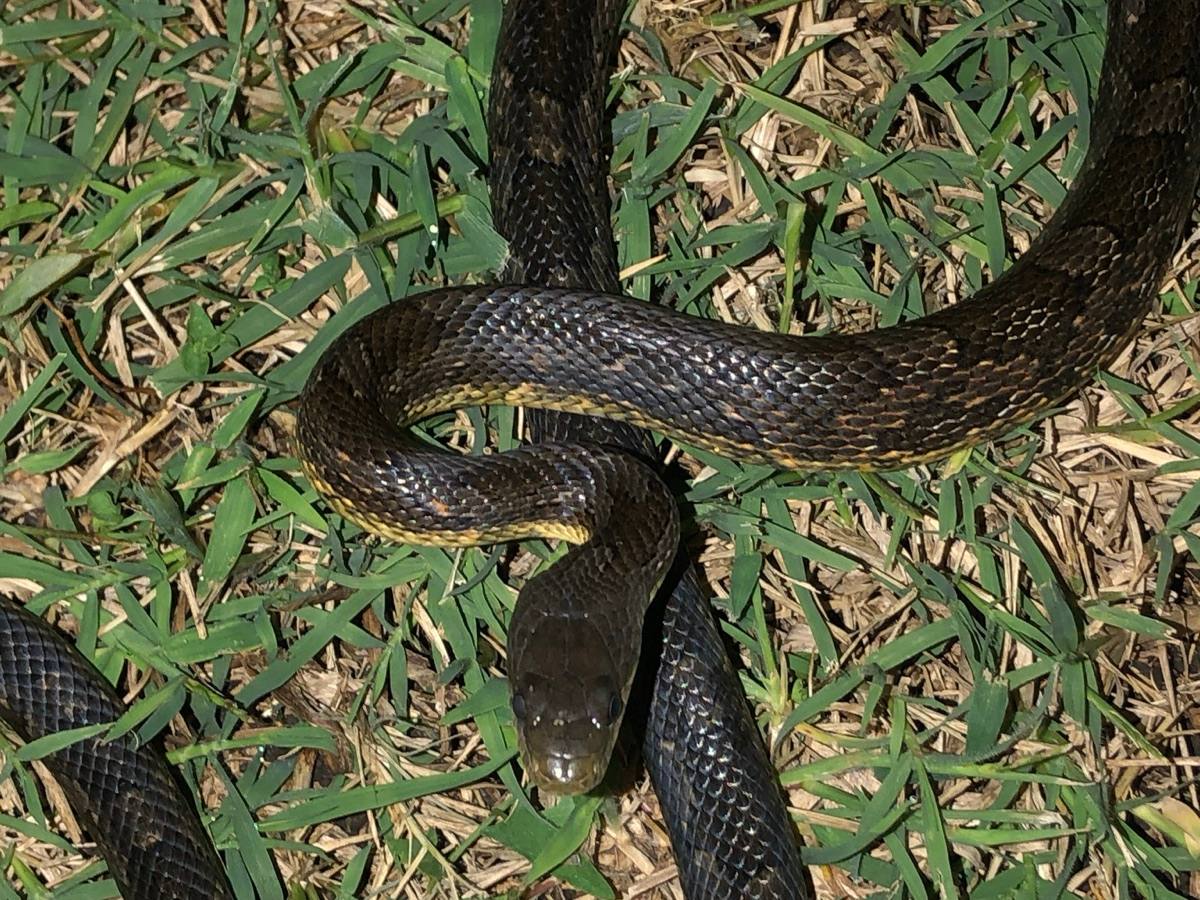
- Adults black in the north, blotched on yellowish or gray in Texas; young boldly blotched.
- Eyes
- Round pupil, fairly large dark eye; no heat-sensing pit.
- Pits
- None. There is no pit between the eye and the nostril.
- Tail
- Tapers evenly; no rattle - but it vibrates the tip in dry leaves.
- What it does
- Kinks its body and rattles its tail in leaves as a bluff; climbs to escape.
Often confused with
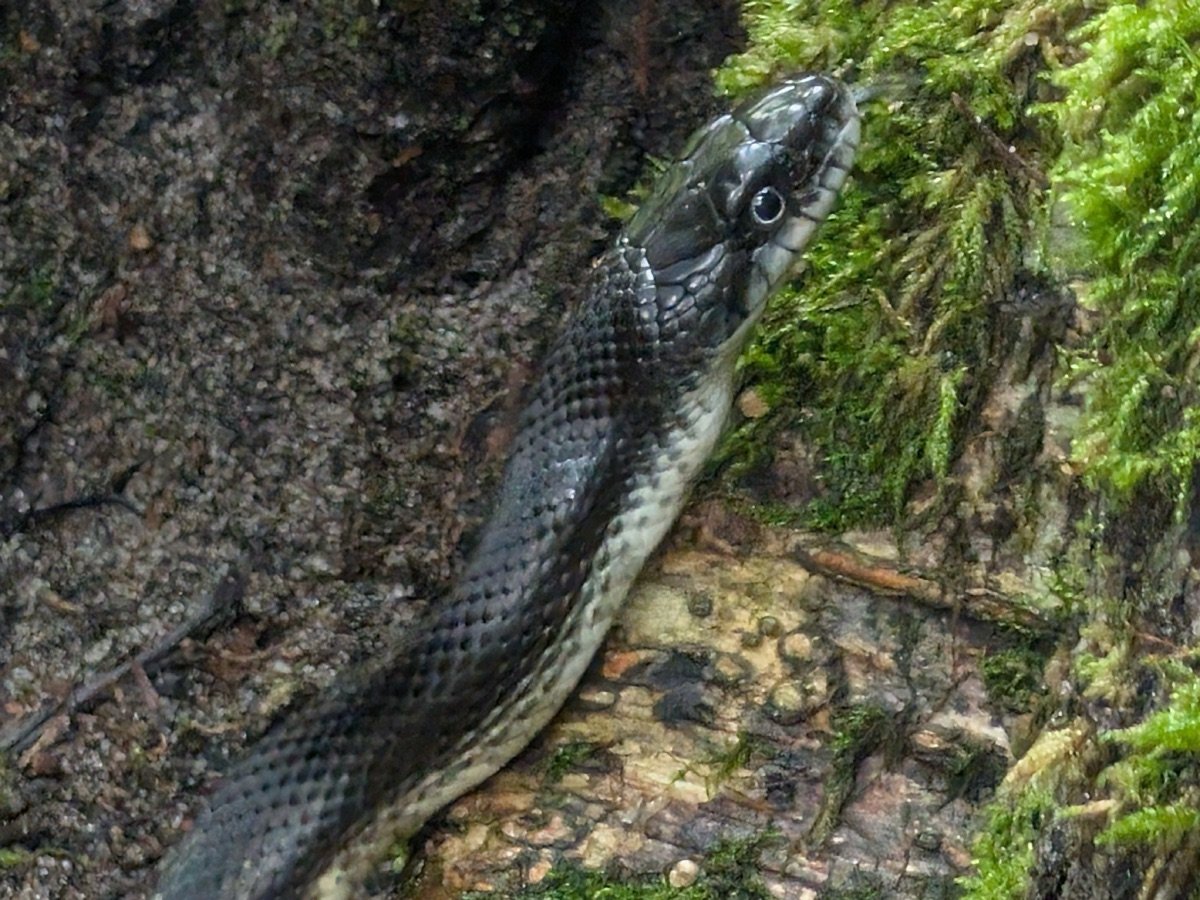
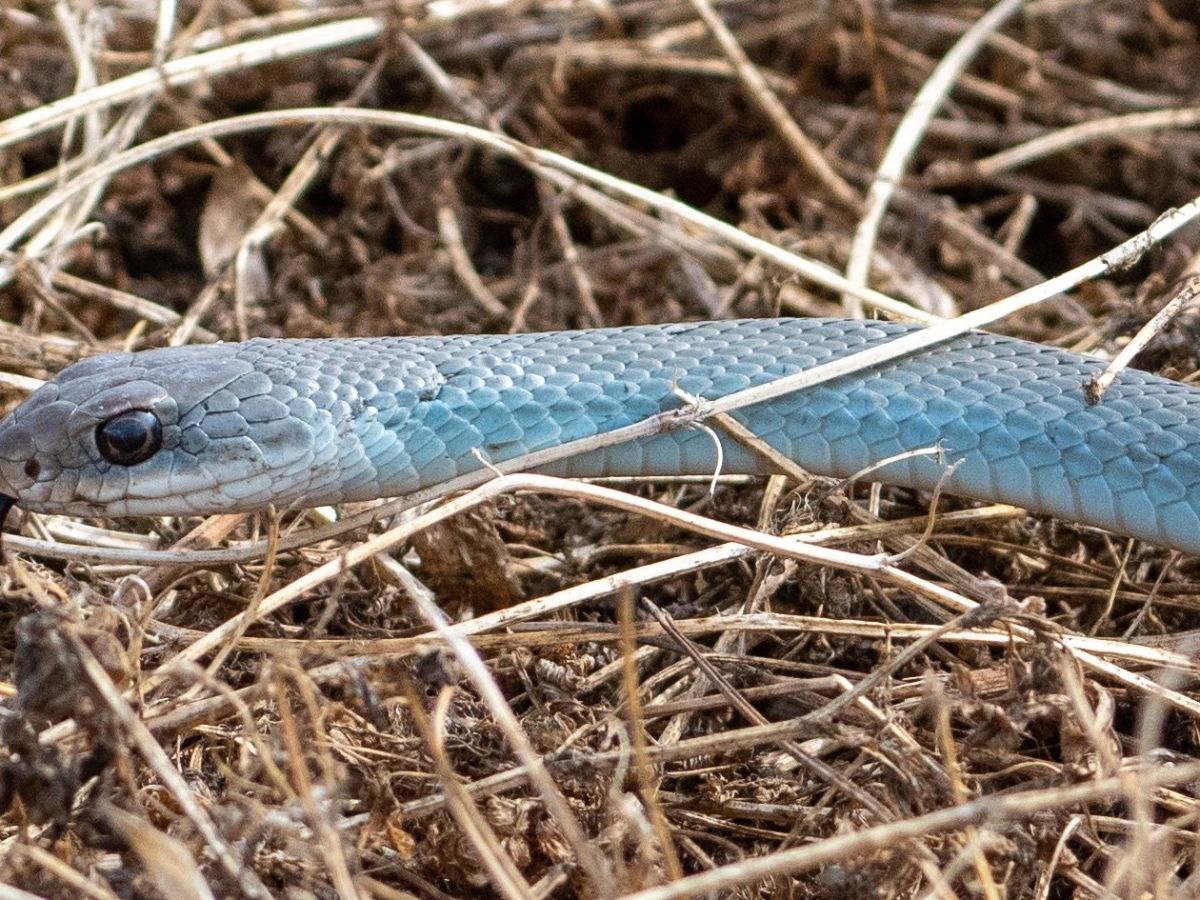
North American Racer is slimmer, smooth-scaled and round in cross-section. Young Western Ratsnakes look like Gray Ratsnakes, and the two interbreed where their ranges meet.
How to tell them apart
Western Ratsnake vs Gray Ratsnake›
The quick way to tellMostly go by where it was found. Western Ratsnakes live west of the Mississippi River, and Gray Ratsnakes live east of it. The young look very alike, and adults of both can be black or blotched.
Western Ratsnake: Central US west of the Mississippi River: southeastern Minnesota, Iowa, Nebraska and Kansas south through Missouri, Arkansas, Oklahoma, Louisiana and Texas.
Gray Ratsnake: Appalachians west to the Mississippi: Florida panhandle, Alabama and Mississippi north through Tennessee, Kentucky, Illinois, Indiana, Ohio and Michigan to Wisconsin and Ontario.
Western Ratsnake vs North American Racer›
The quick way to tellFor adults, look at the body and scales. The racer is slim, smooth and evenly colored all over. An adult Western Ratsnake is heavier and duller, and often shows pale specks between its scales or faint leftover blotches.
Western Ratsnake: Adults black in the north, blotched on yellowish or gray in Texas; young boldly blotched.
North American Racer: Plain black, blue-gray, olive or tan; belly pale to gray; young strongly blotched.
About the Western Ratsnake›
The big black climbing snake of the central states, equally at home in barns, hardwood forest and rocky bluffs. It climbs remarkably well, going straight up rough tree trunks and into attics after rodents.
Cornered, it may kink its body and vibrate its tail in leaves, a bluff that gets it mistaken for a rattlesnake.
The details
Size Usually 3.5–6 ftWeight Commonly 1–5 lbLifespan 15–20 years
Typical range›
Central US west of the Mississippi River: southeastern Minnesota, Iowa, Nebraska and Kansas south through Missouri, Arkansas, Oklahoma, Louisiana and Texas.
Activity›
Active by day in spring and fall, at night in summer. Climbs and basks; winters in rock crevices and burrows.
Diet›
Rodents, birds and eggs, killed by constriction.
Reproduction›
Lays eggs, usually 5–20, in early summer.
Found in parts of 9 states›
Ranges are approximate. It may be found in only part of a state, or be rare there, and snakes can turn up outside of them.
More photos