Western Ribbonsnake
Thamnophis proximus · Garter & Ribbon Snakes
Also called Orange-striped Ribbonsnake
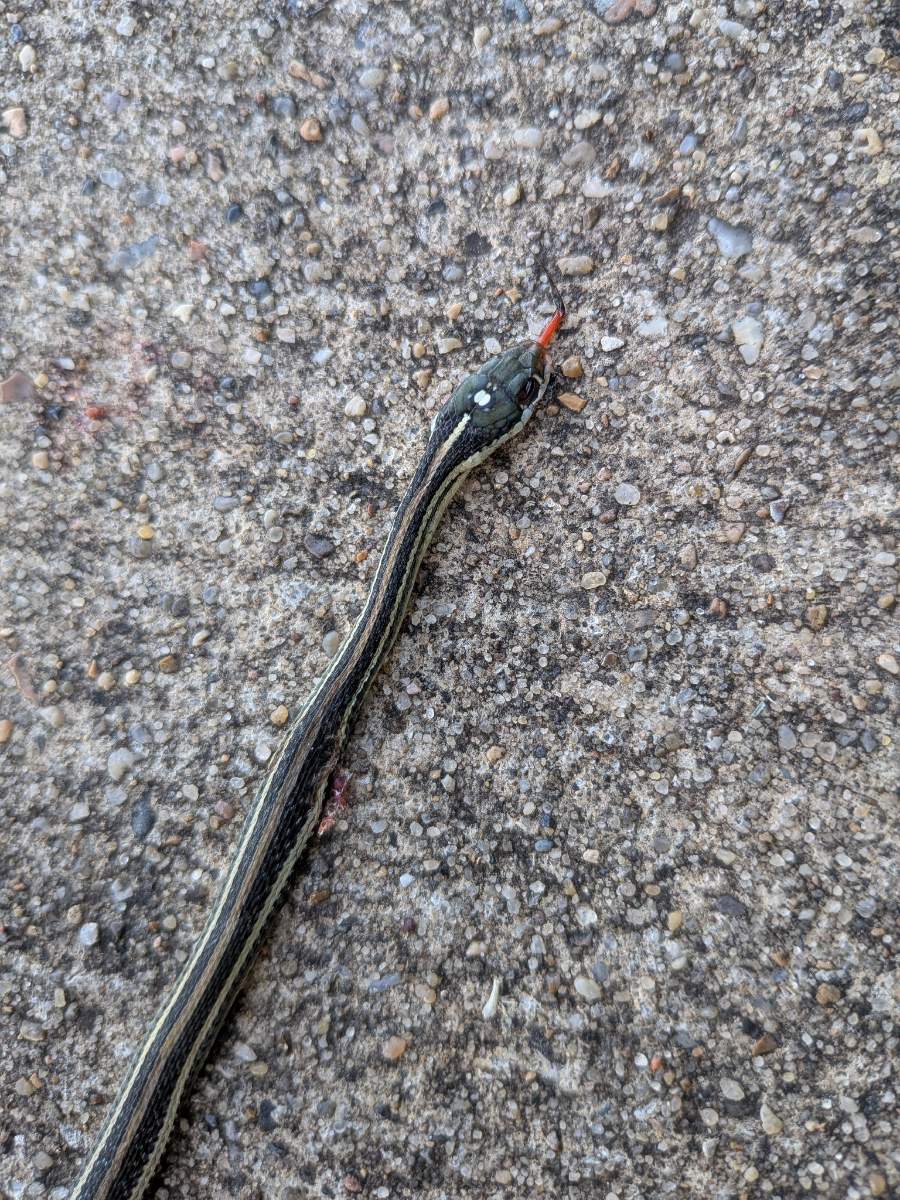
Tap a part to see what to look for. Tap it again to turn it off.
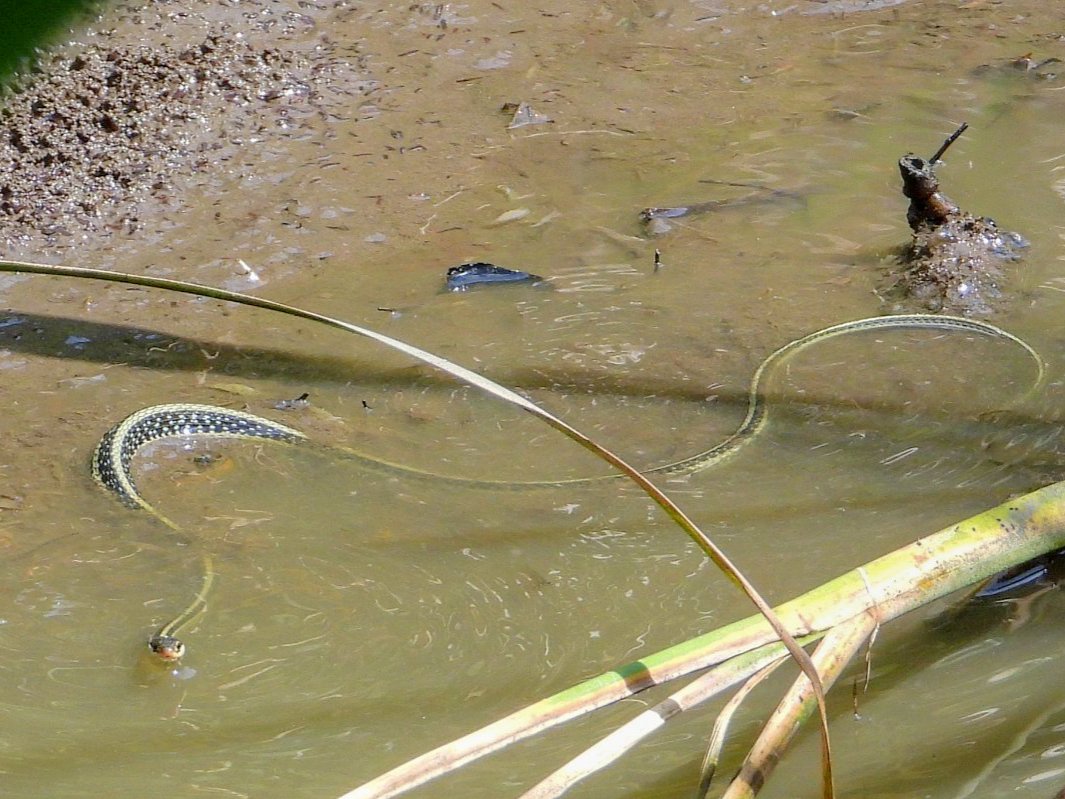
No venom. It is quick and nervous and usually escapes into the water or thick plants when approached.
How to identify
- Head
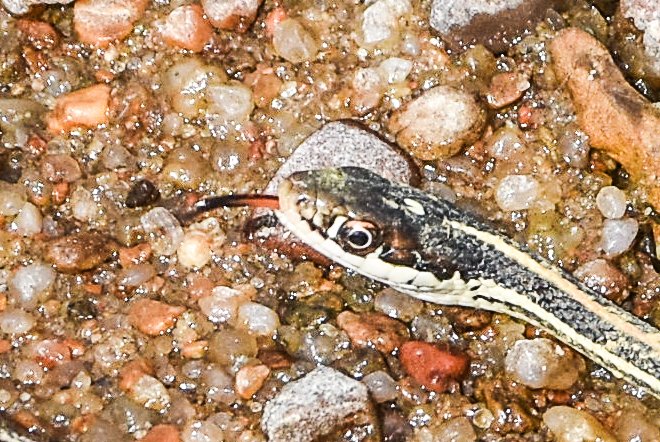
- Black or dark head with an orange, yellow or white spot (often two joined pale spots) on top. The upper lip scales are plain white or pale green with no black bars. There is a pale spot in front of the eye.
- Pattern
- Dark brown to black back with an orange or yellow stripe down the middle and a narrow yellow stripe low on each side (on the third and fourth rows of scales up from the belly). The belly is cream or light green with no markings.
- Pits
- None. There is no pit between the eye and the nostril.
- Tail
- Very long and thin, about a third of the total length.
- What it does
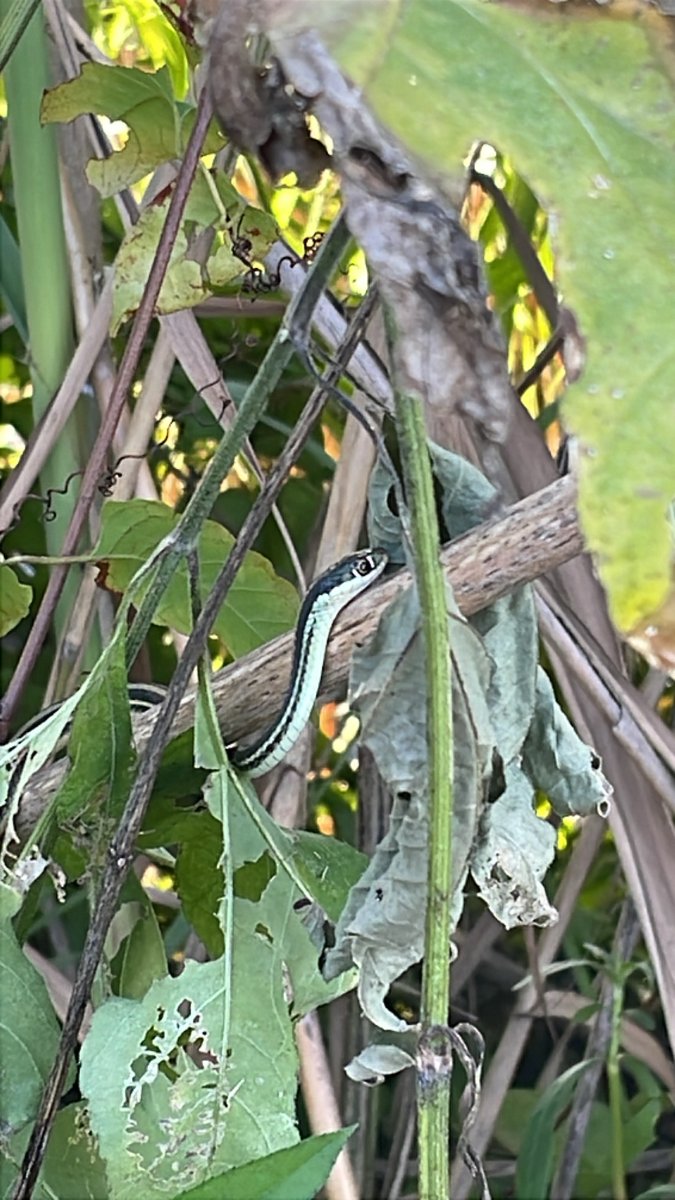
- Quick and agile. When disturbed it dives into water or hides in plants along the bank. Often climbs into low shrubs. Groups may spend the winter together in crevices, burrows and rotten stumps.
Often confused with
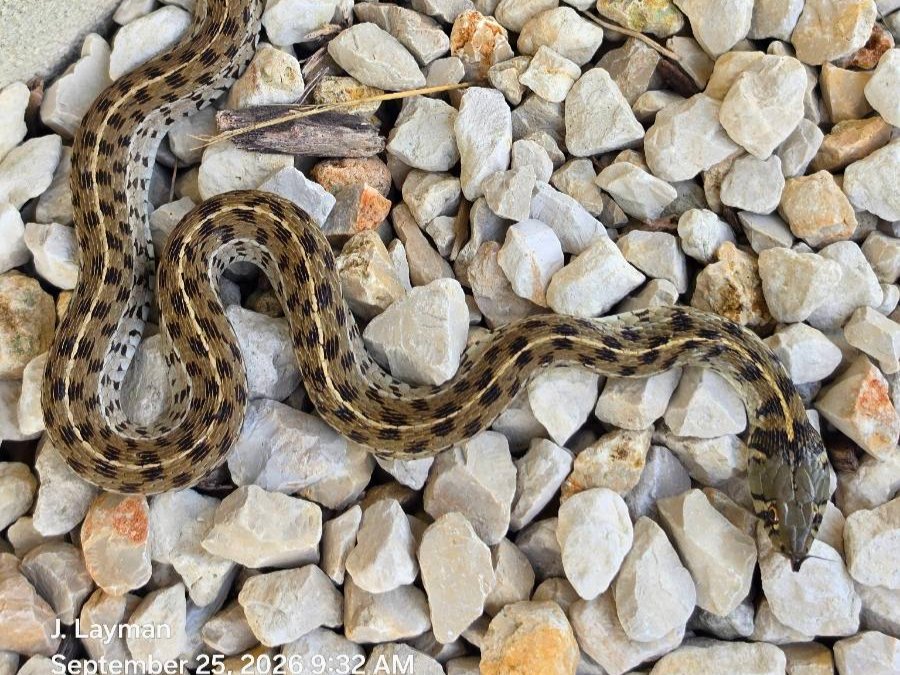
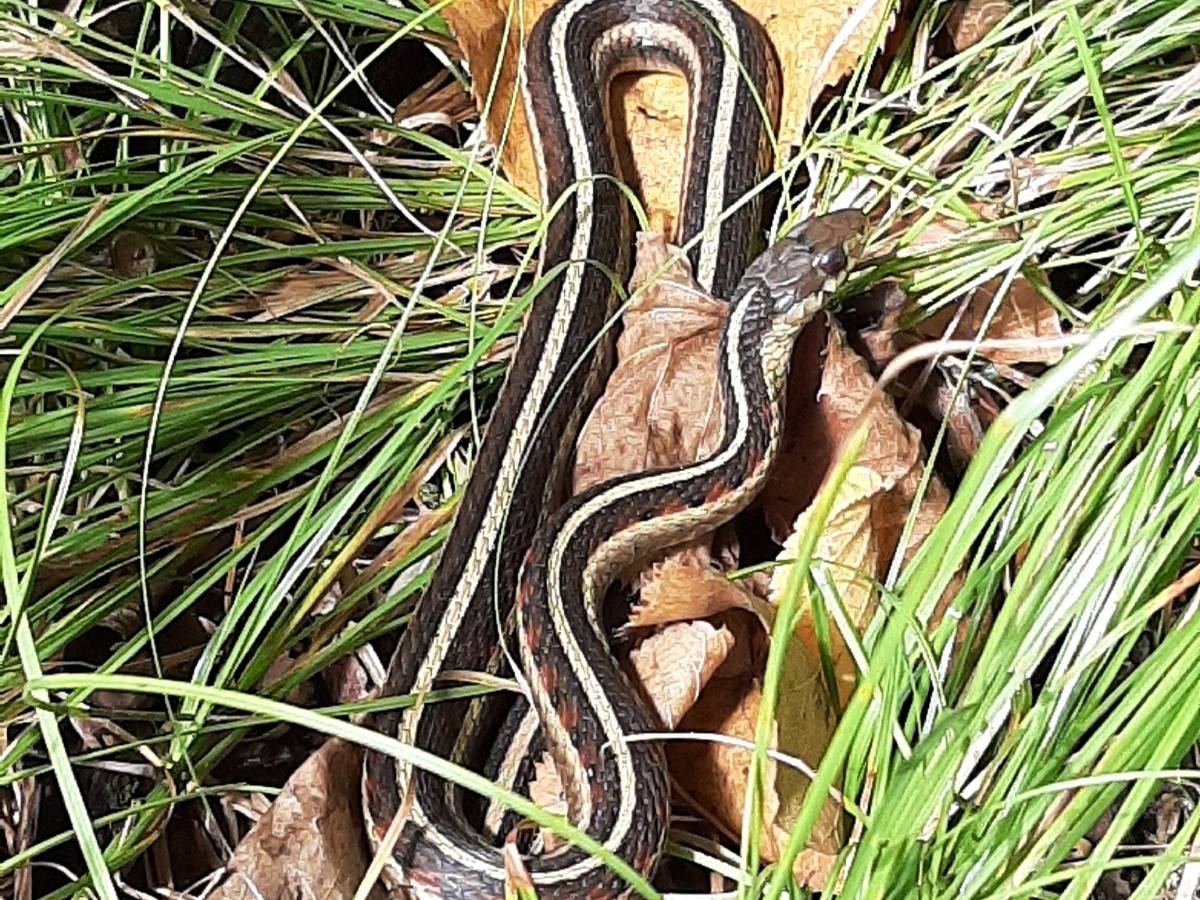
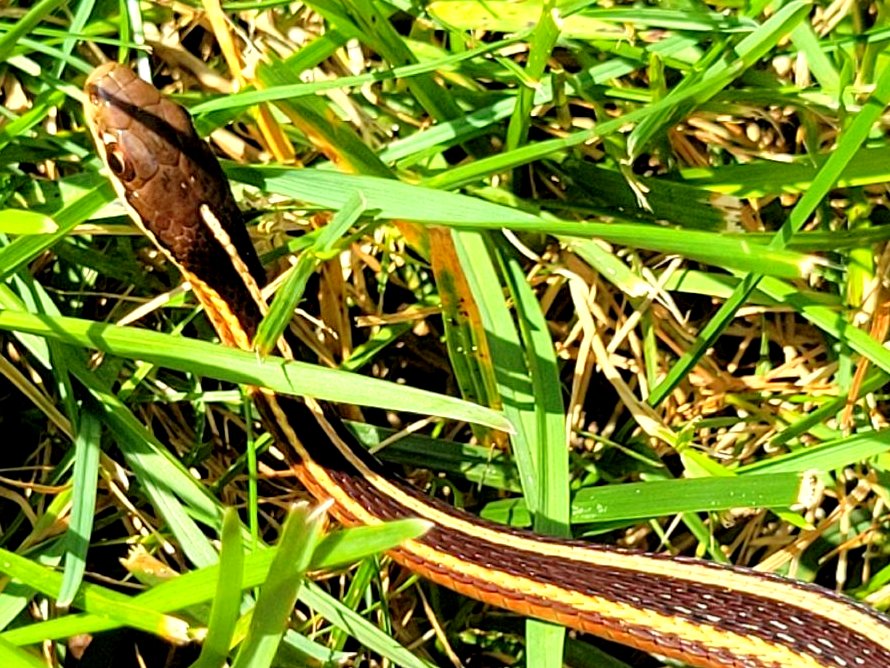
Gartersnakes have shorter tails, black bars on the rear upper lip scales, and side stripes lower down (on the second and third scale rows). The Eastern Ribbonsnake, where the two meet, has small or no pale spots on top of the head and brownish edges on the belly scales. The Checkered Gartersnake has barred lips and a checkerboard pattern on its sides.
How to tell them apart
Western Ribbonsnake vs Checkered Gartersnake›
The quick way to tellLook at the lips. The Checkered Gartersnake has light and dark vertical bars on its lips and a pale crescent with a black blotch behind the head. The Western Ribbonsnake has plain white or pale green upper lips with no black bars.
Western Ribbonsnake: Black or dark head with an orange, yellow or white spot (often two joined pale spots) on top. The upper lip scales are plain white or pale green with no black bars. There is a pale spot in front of the eye.
Checkered Gartersnake: A cream or yellow crescent at the back of each side of the head, with a dark blotch on the neck just behind it. The lips have light and dark vertical bars, and there is a small light spot on top of the head.
Western Ribbonsnake vs Common Gartersnake›
The quick way to tellLook at the upper lip. The Western Ribbonsnake's upper lip scales are plain white or pale green with no black bars, and its tail is very long. The Common Gartersnake usually has black bars on the rear upper lip scales and a shorter tail.
Western Ribbonsnake: Black or dark head with an orange, yellow or white spot (often two joined pale spots) on top. The upper lip scales are plain white or pale green with no black bars. There is a pale spot in front of the eye.
Common Gartersnake: Small head barely wider than the neck; often with pale jaw markings.
Western Ribbonsnake vs Eastern Ribbonsnake›
The quick way to tellLook at the top of the head. The Western Ribbonsnake usually has two bold pale spots there and a clean, unmarked belly. The Eastern Ribbonsnake has small or no spots on top of the head and a brownish tinge to the edges of its belly scales.
Western Ribbonsnake: Black or dark head with an orange, yellow or white spot (often two joined pale spots) on top. The upper lip scales are plain white or pale green with no black bars. There is a pale spot in front of the eye.
Eastern Ribbonsnake: Small narrow head with a white or yellow bar just in front of the eye.
About the Western Ribbonsnake›
The Western Ribbonsnake lives in the central US, from southern Wisconsin, Iowa and Nebraska south through Missouri, Kansas and Oklahoma to Texas, Louisiana and Mississippi, and west to eastern New Mexico; it also ranges through Mexico to Central America. It is seldom far from water and lives along streams, rivers, ponds, lakes, marshes, swamps and ditches, often in the plants at the water's edge.
It is a slender, very long-tailed striped snake: a dark body with an orange or yellow stripe down the back and a pale stripe on each side. The plain white upper lips and two bold pale spots on top of the head help tell it from gartersnakes and from the Eastern Ribbonsnake.
The details
Size Adults usually 20–30 in (51–76 cm); occasionally up to about 50 in (127 cm). Newborns about 6–11 in.Lifespan About 3–6 years in the wild and 12–20 in captivity (from Animal Diversity Web; only one source found).
Typical range›
Central and south-central US from southern Wisconsin and Indiana south to Texas, Louisiana and Mississippi and west to eastern New Mexico (and at least historically southeastern Colorado); also eastern Mexico and Central America to Costa Rica.
Activity›
Mostly active by day or during warm periods, from about mid-March to October (to mid-November in Wisconsin).
Diet›
Mostly frogs, toads and tadpoles; also salamanders, small fish and earthworms.
Reproduction›
Gives birth to live young. Mates in spring (April–May); about 3–36 young (average about 12–13) are born from July to September.
Found in parts of 15 states›
Ranges are approximate. It may be found in only part of a state, or be rare there, and snakes can turn up outside of them.
More photos