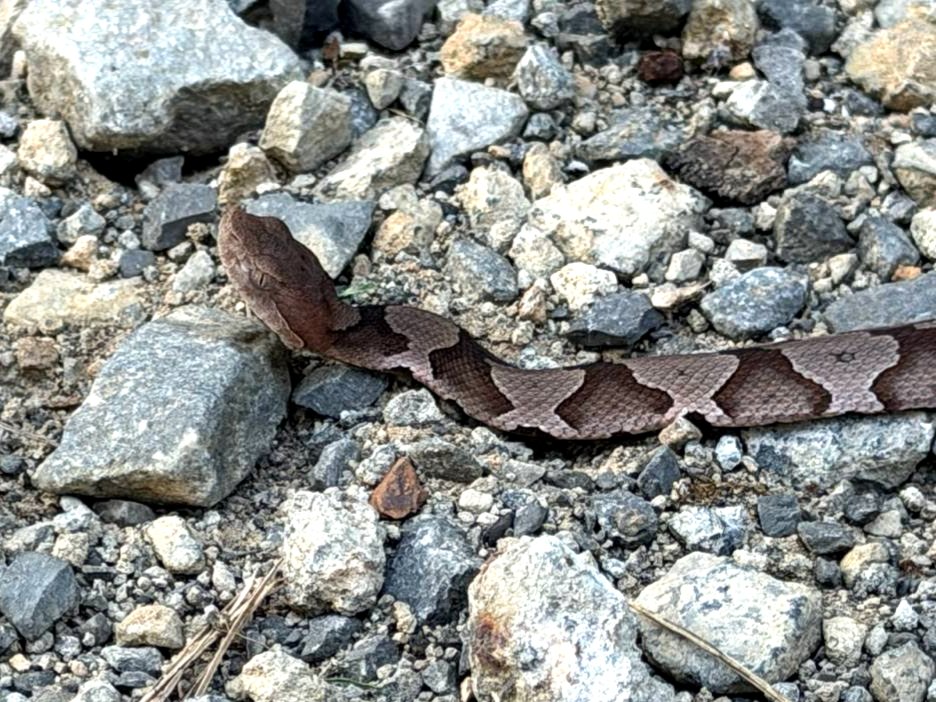
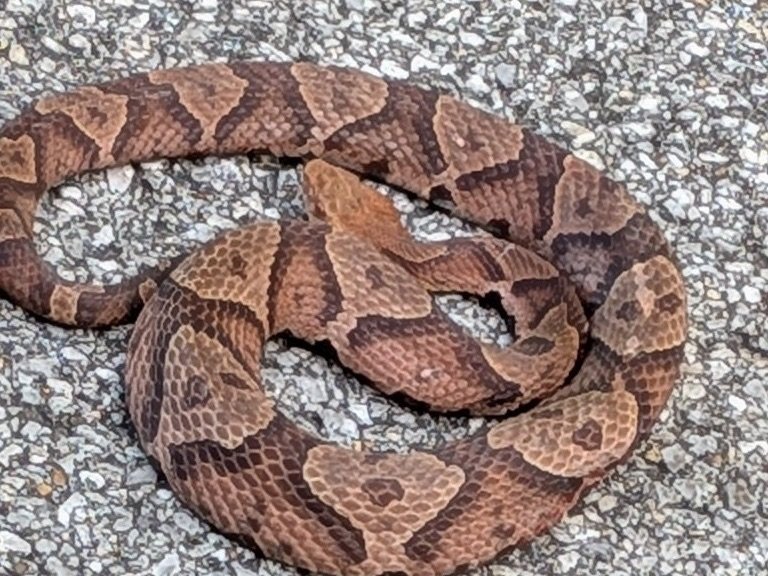
Eastern Copperhead
Agkistrodon contortrix · Copperheads & Cottonmouths
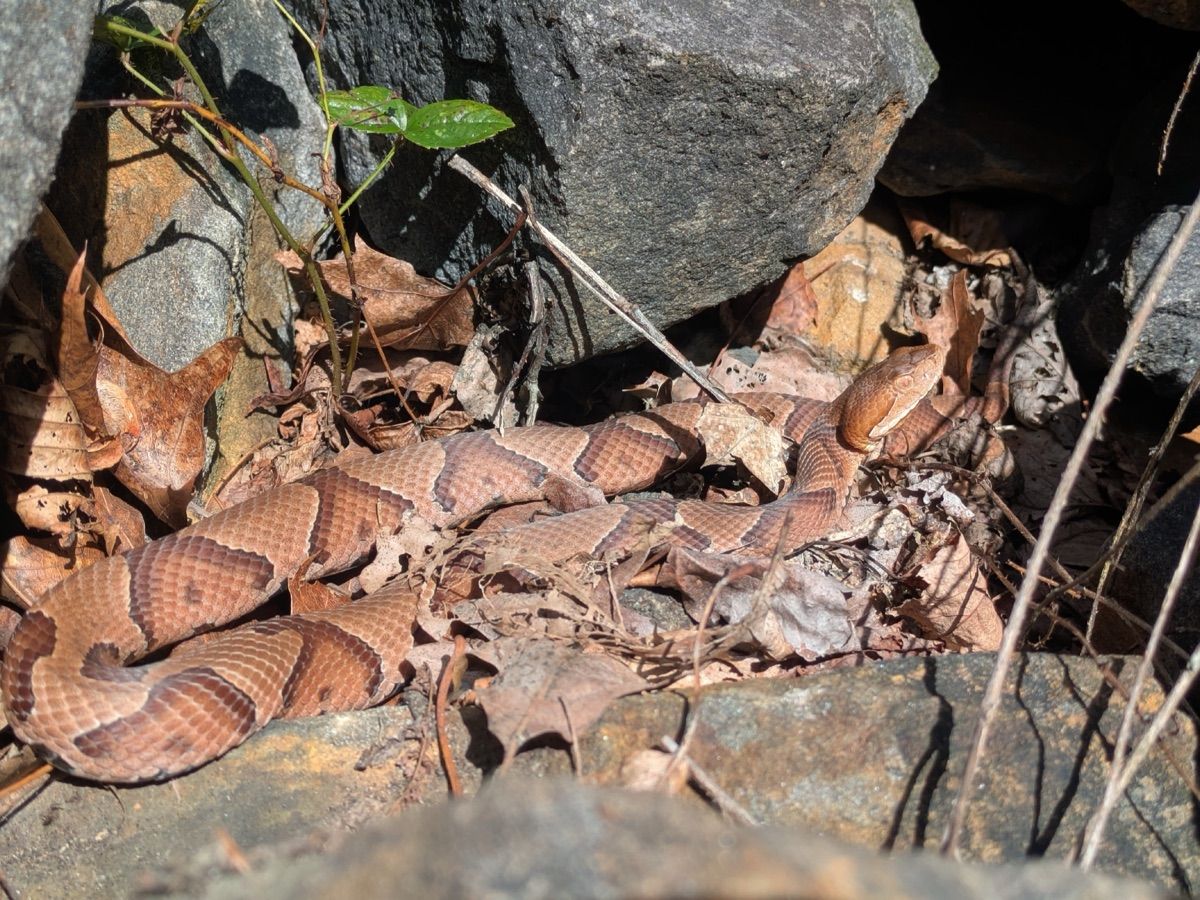
Tap a part to see what to look for. Tap it again to turn it off.
Venomous. Bites are painful and need emergency hospital care, though they are seldom life-threatening; give it room.
How to identify
- Head
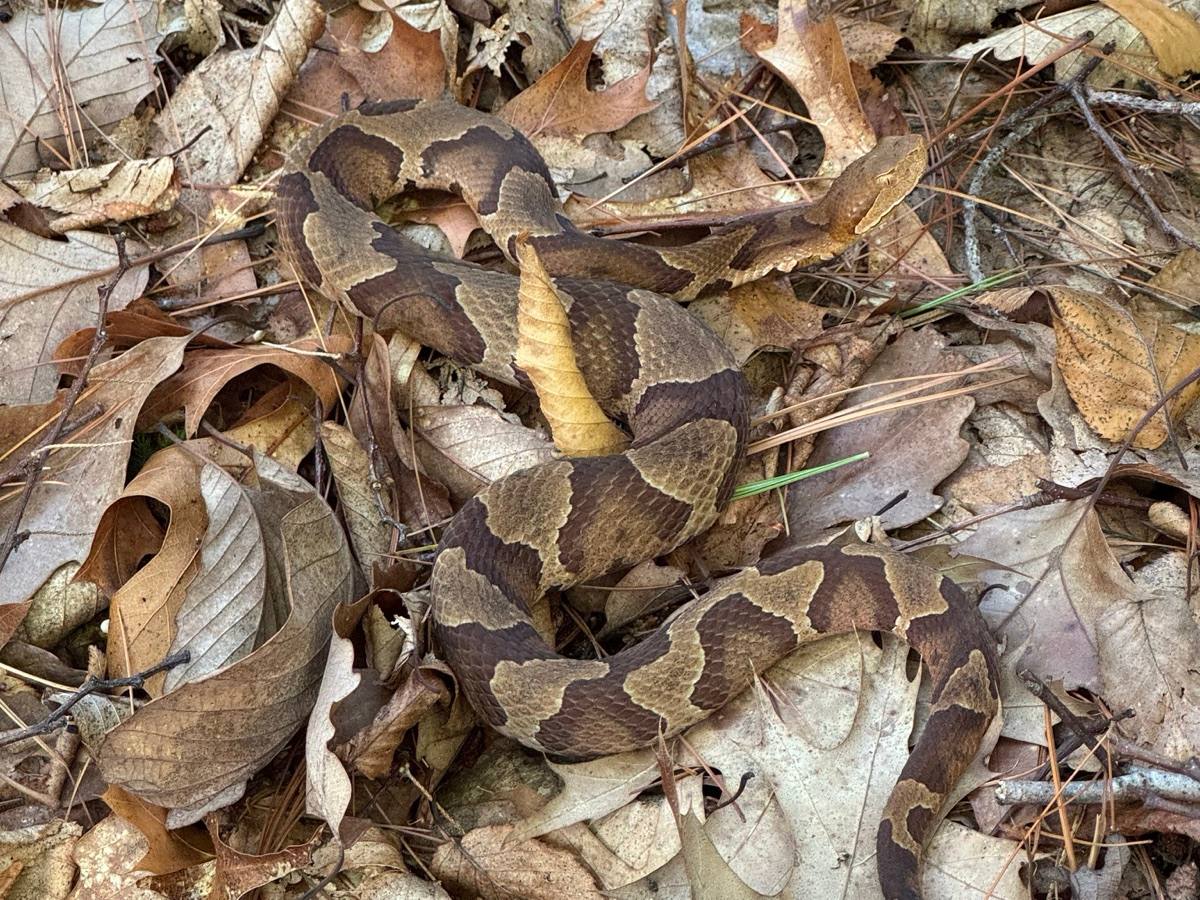
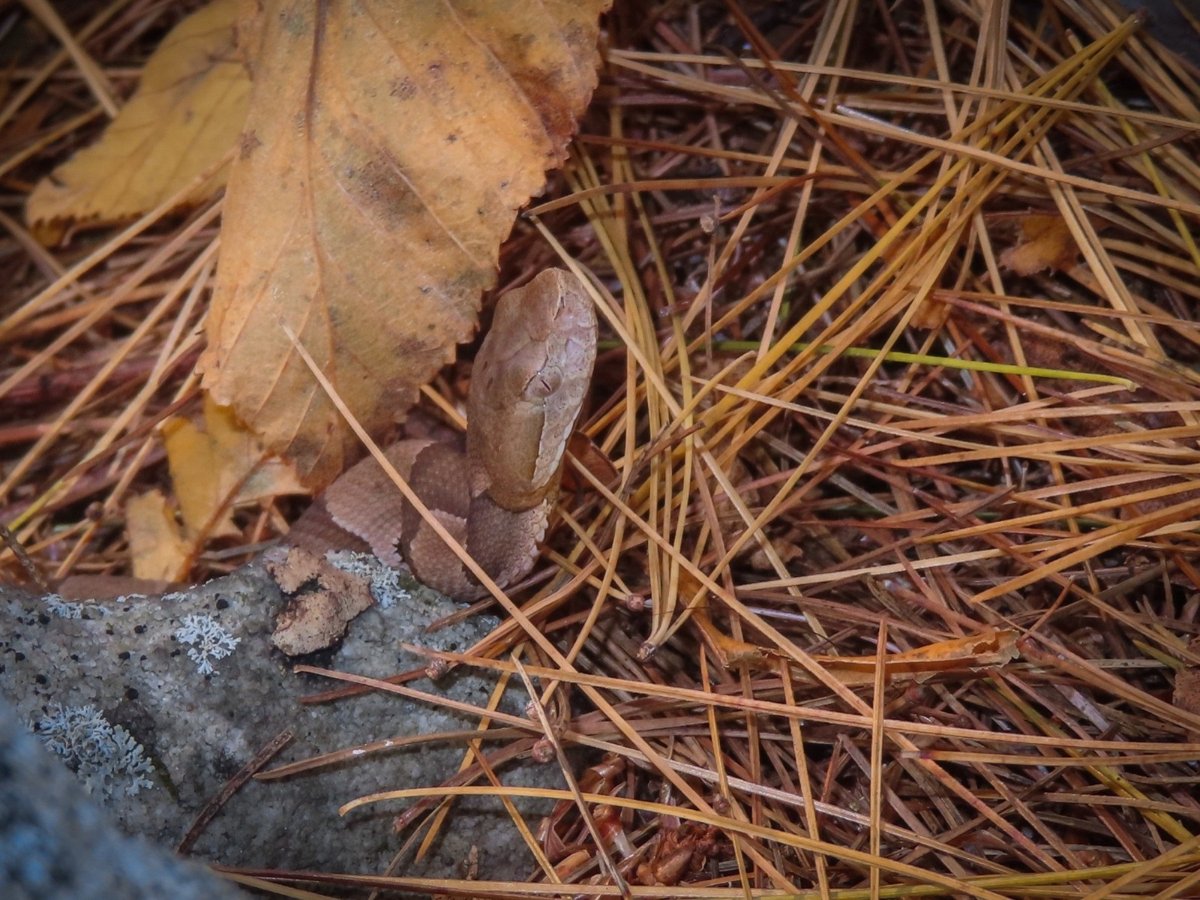
- Plain coppery triangular head with no stripes or blotches, clearly wider than the neck.
- Pattern
- Dark hourglass bands - wide at the sides, pinched to a narrow waist over the spine.
- Eyes
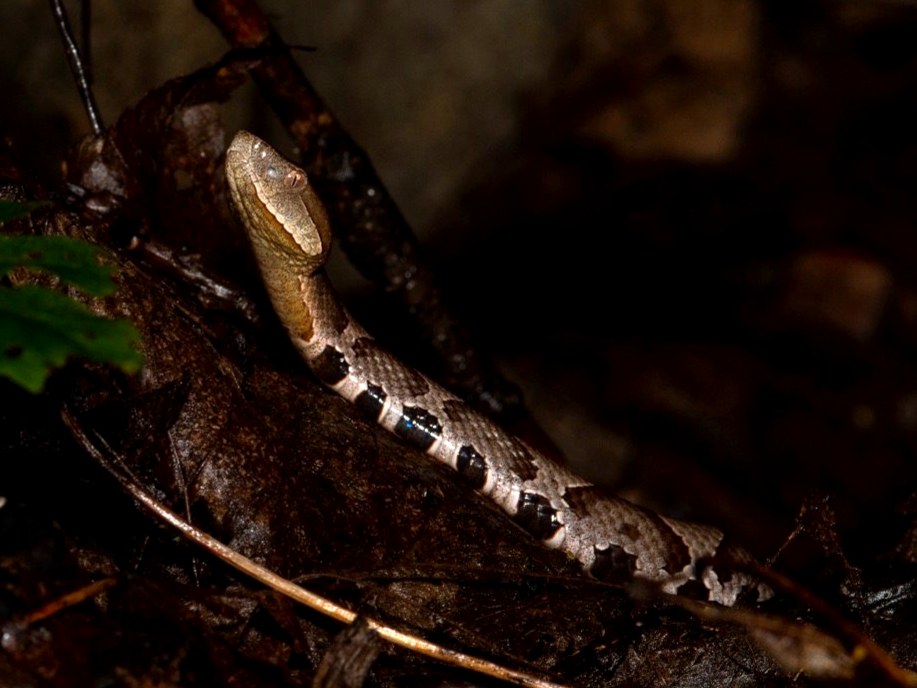
- Vertical slit pupil; heat-sensing pit between eye and nostril.
- Pits
- A deep heat-sensing pit on each side of the face, between the eye and the nostril.
- Tail
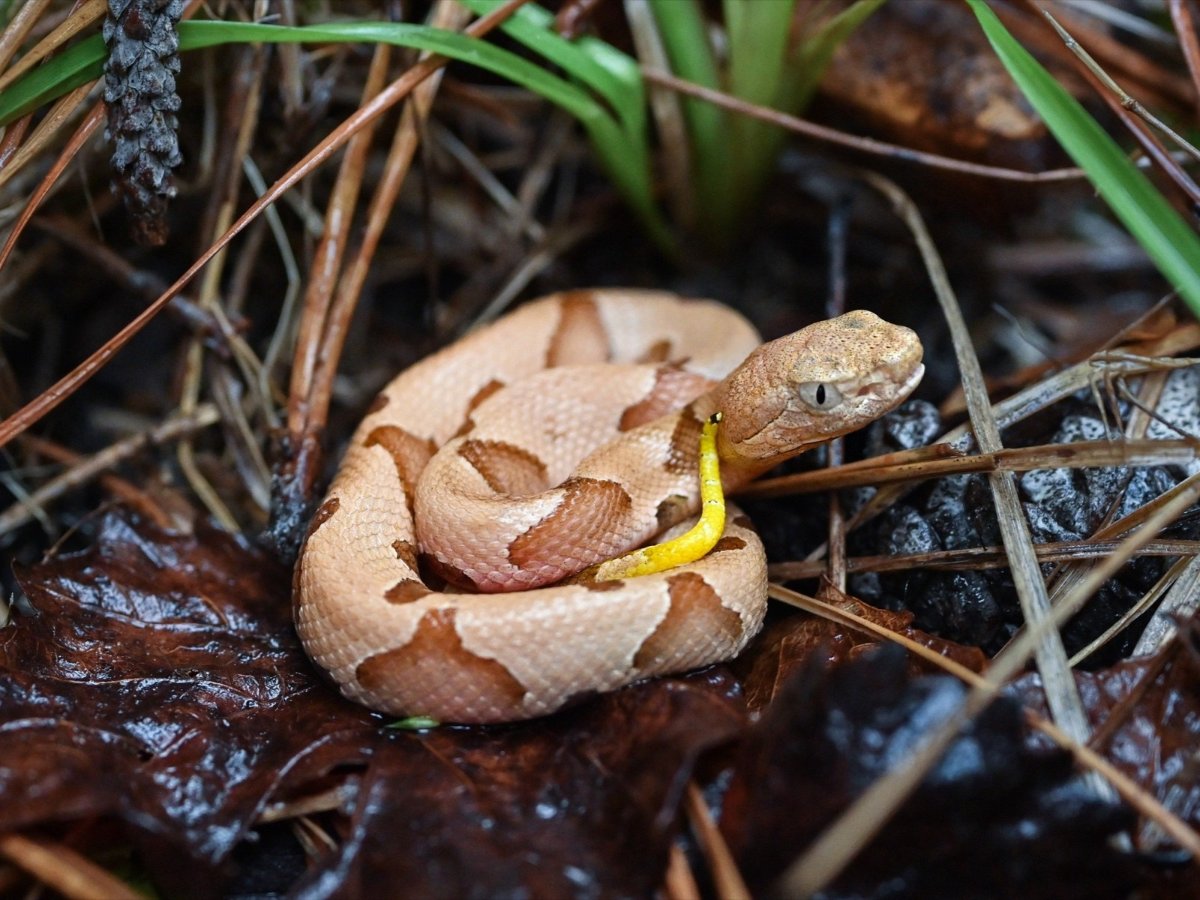
- Plain; young have a bright yellow tail tip.
- What it does
- Freezes rather than fleeing - which is why people step on them.
Often confused with
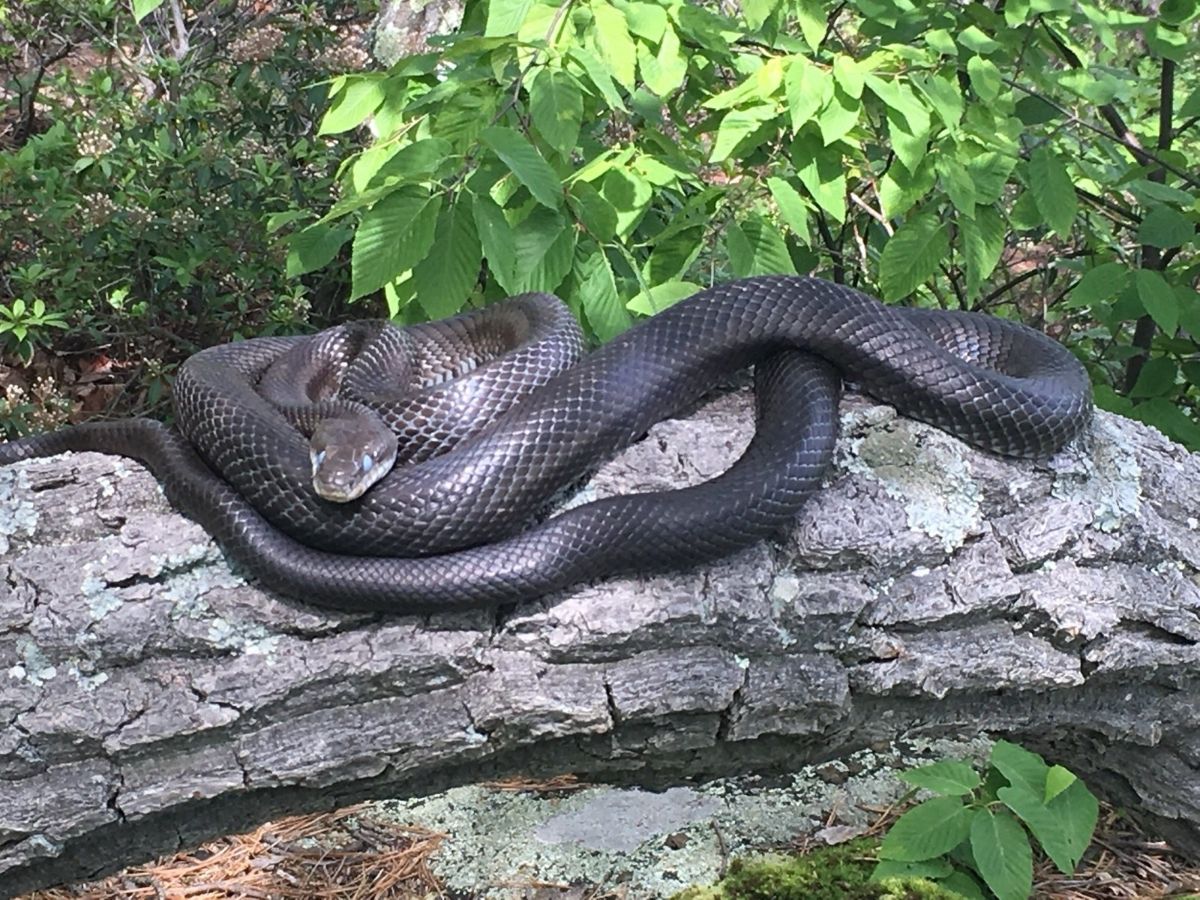
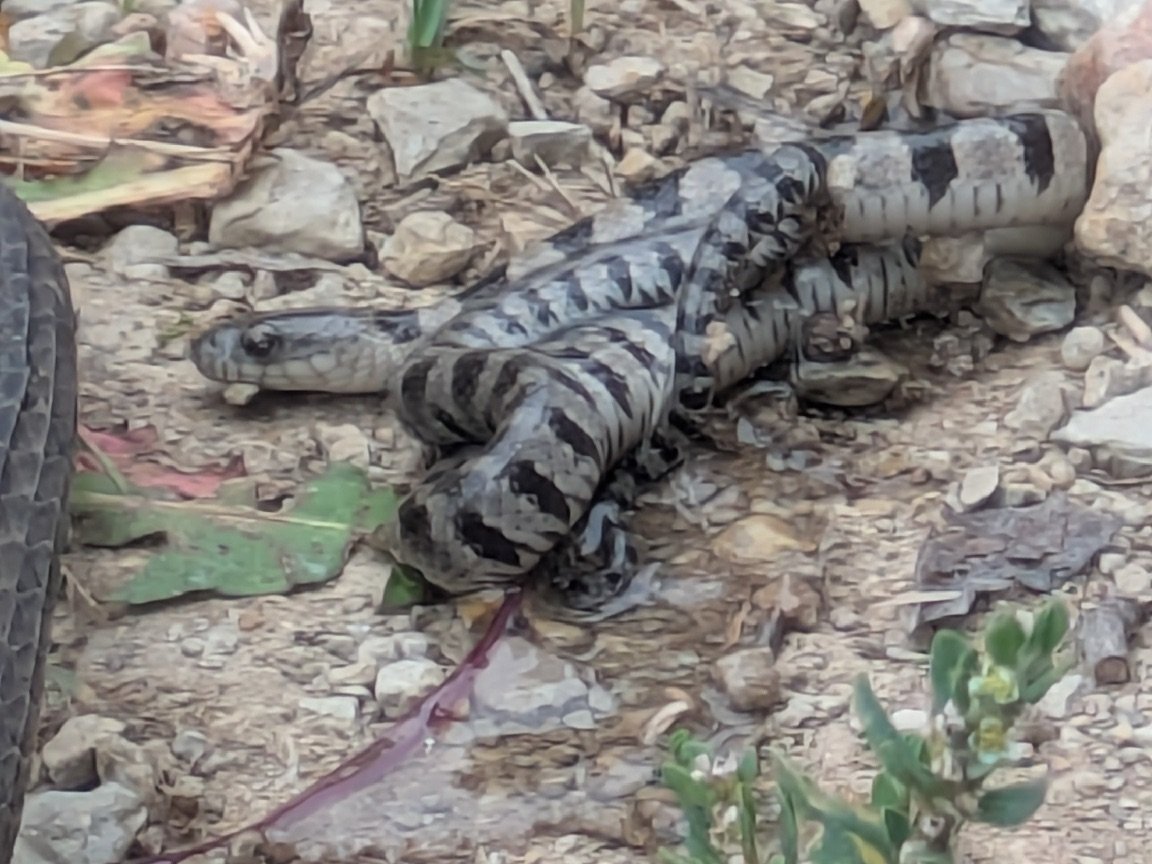
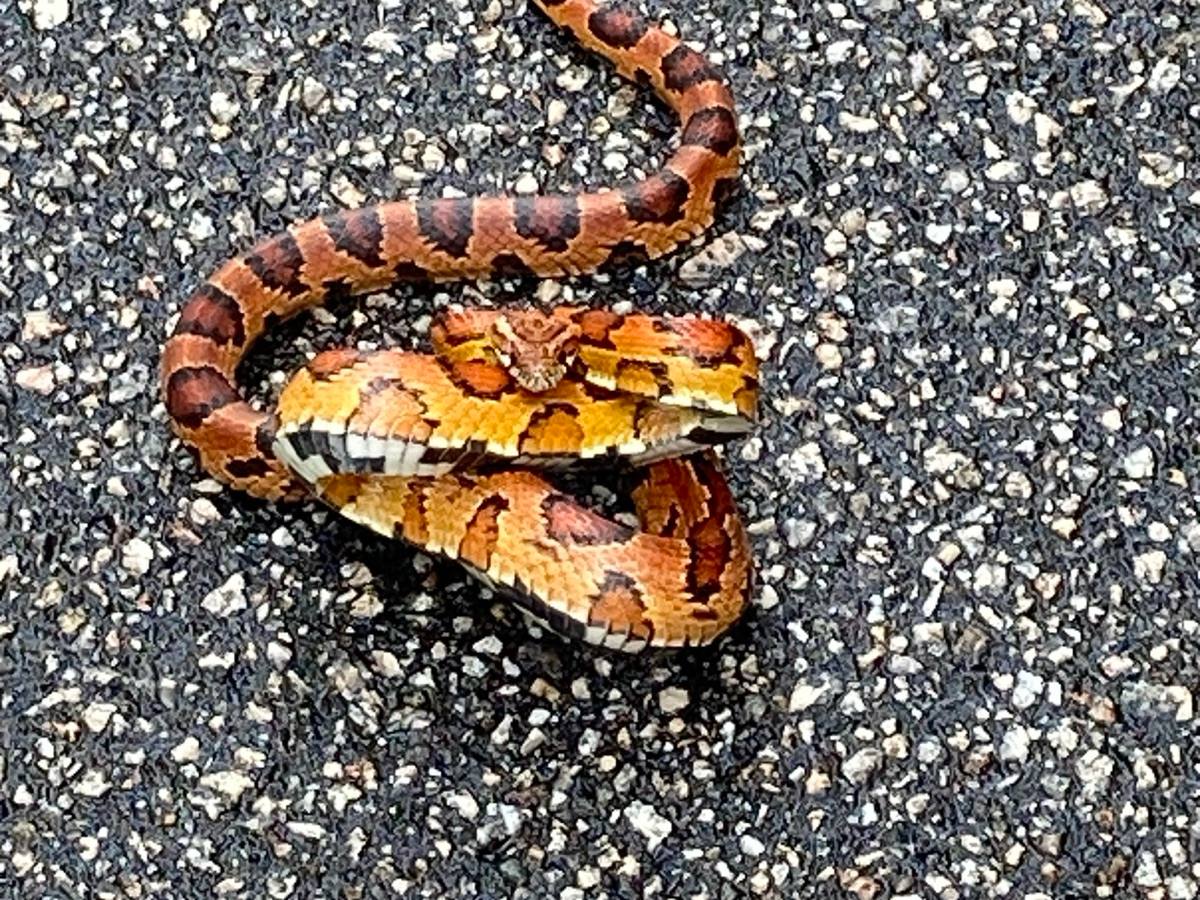
Young Eastern Ratsnakes, Northern Watersnakes and Red Cornsnakes are the usual false alarms. All three have round pupils and blotches that are widest over the back, not hourglass bands that are widest on the sides.
How to tell them apart
Eastern Copperhead vs Eastern Ratsnake›
The quick way to tellFor young ratsnakes, look at the shape of the marks. The Eastern Copperhead's hourglass bands are wide on the sides and pinched over the spine. A young Eastern Ratsnake's blotches sit on top of the back and don't reach down the sides.
Eastern Copperhead: Dark hourglass bands - wide at the sides, pinched to a narrow waist over the spine.
Eastern Ratsnake: Adults black, often with pale skin showing between scales; young gray and blotched.
Eastern Copperhead vs Northern Watersnake›
The quick way to tellLook at the bands from above. The copperhead's pinch to a narrow waist over the spine, like an hourglass. The watersnake's don't.
Eastern Copperhead: Dark hourglass bands - wide at the sides, pinched to a narrow waist over the spine.
Northern Watersnake: Crossbands up front breaking into blotches toward the tail; reddish half-moons on the belly.
Eastern Copperhead vs Red Cornsnake›
The quick way to tellLook at the top of the head. The cornsnake has a spear-shaped mark. The copperhead's head is plain copper with no markings.
Eastern Copperhead: Plain coppery triangular head with no stripes or blotches, clearly wider than the neck.
Red Cornsnake: Narrow head with a spear-point marking running forward between the eyes.
About the Eastern Copperhead›
The most widespread venomous snake in the eastern United States, common in wooded hillsides, rock outcrops, stream edges and suburban gardens — including areas with plenty of people around.
It freezes rather than fleeing and relies on camouflage, which is why most bites happen when someone steps on it or reaches into leaves without looking. Bites are common but rarely life-threatening.
The details
Size Usually 2–3 ft; occasionally 4 ftWeight About 0.5–2 lbLifespan 15–20 years
Typical range›
Eastern US from Massachusetts and New York south to the Florida panhandle, west to Iowa, eastern Kansas, Oklahoma and eastern Texas.
Activity›
Day active in spring and fall, night active in summer. Gathers at rock dens for winter.
Diet›
Mice, voles, frogs, lizards, small birds and cicadas.
Reproduction›
Gives birth to live young, usually 3–10, in late summer.
Found in parts of 28 states›
Ranges are approximate. It may be found in only part of a state, or be rare there, and snakes can turn up outside of them.
More photos