‹ Compare two snakes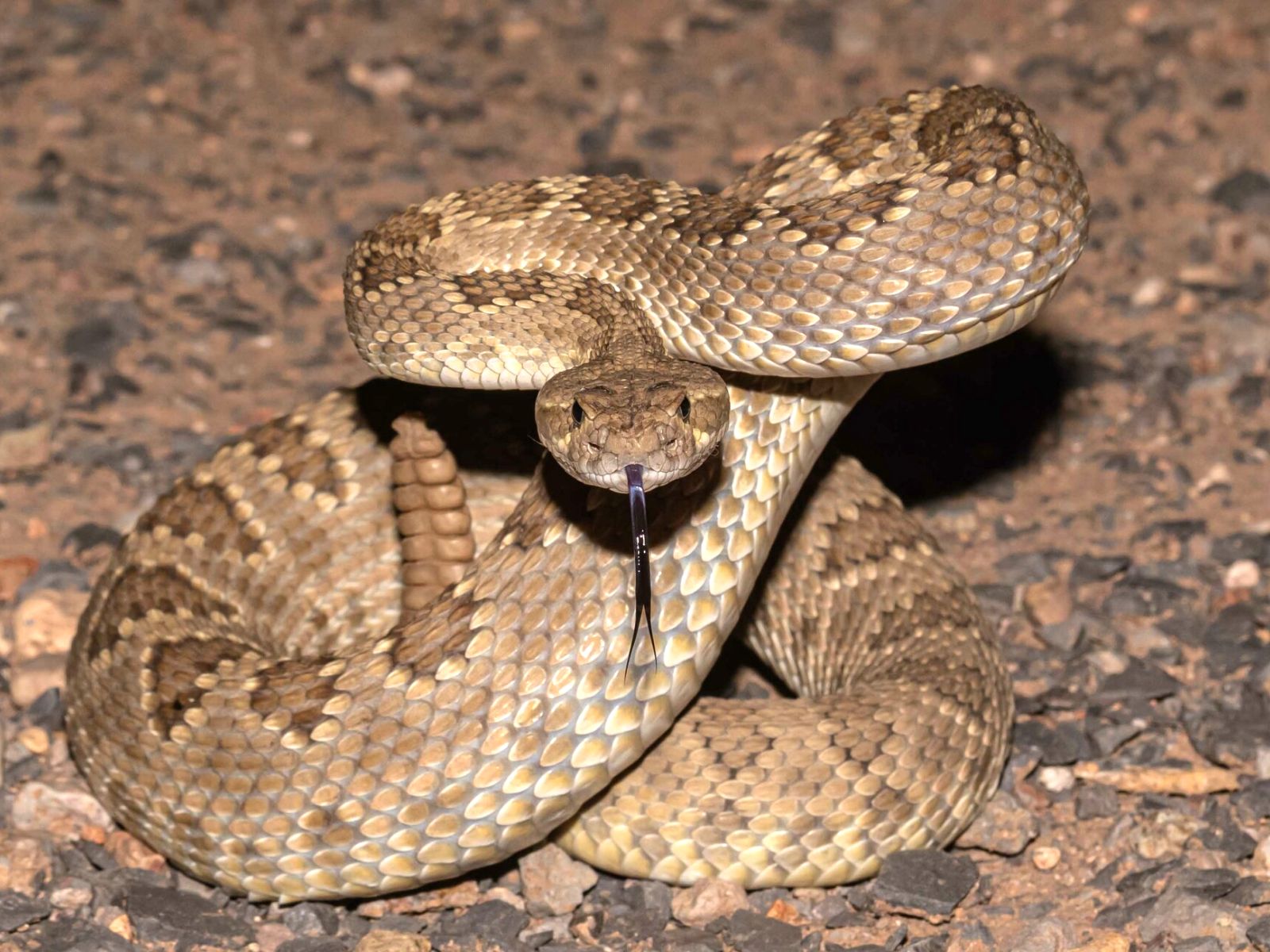
Mohave Rattlesnake vs Prairie Rattlesnake
Tap a part to see it on both. Tap it again to turn it off.
(c) Jeremiah Degenhardt, some rights reserved (CC BY)
Mohave Rattlesnake
Crotalus scutulatus
VenomousScott Shupe, no rights reserved
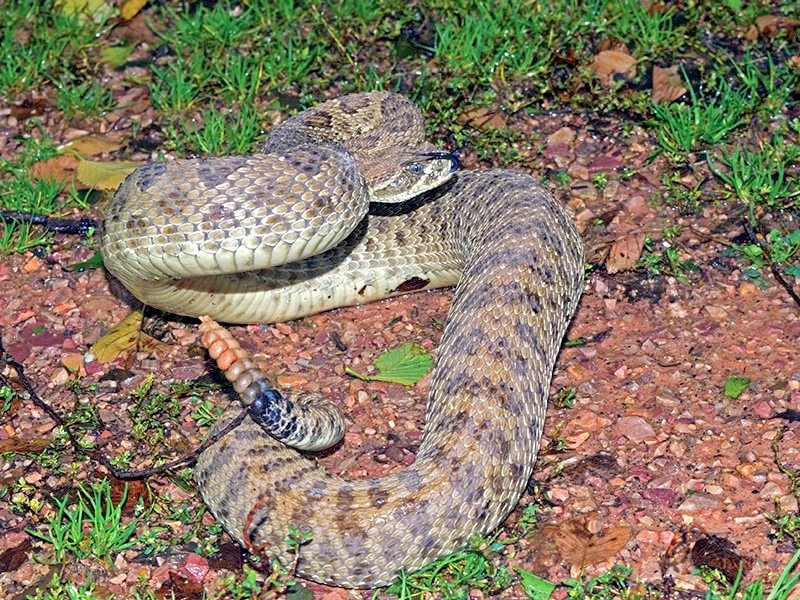
Prairie Rattlesnake
Crotalus viridis
VenomousThe quick way to tell
Look at the blotch shapes. The Prairie's are usually oval, rounded or bow-tie shaped and turn into bands toward the tail. The Mohave's are cleaner diamonds. No single mark is fully reliable, so check several features.
Pattern ★ This settles it
Clean pale-edged diamonds on gray-green to brown.
Pale-edged blotches tightening into bands near the tail; colour matches local soil.
Head
Triangle; two big scales between the eyes, cheek stripe passes behind the mouth.
Broad triangular head, clearly wider than the neck, with two pale diagonal stripes on the cheek.
Eyes
Vertical slit pupil; heat-sensing pit between eye and nostril.
Vertical slit pupil; heat-sensing pit between eye and nostril.
Pits
A deep heat-sensing pit on each side of the face, between the eye and the nostril.
A deep heat-sensing pit on each side of the face, between the eye and the nostril.
Tail
White bands usually wider than the black ones, ahead of the rattle.
Thinner than the body; tail rings dull, not bold black and white, ahead of the rattle.
What it does
Rattles and holds ground; often found on roads at night.
Coils and rattles loudly; holds ground rather than fleeing.
Where it lives
Southwest: southeastern California, southern Nevada, extreme southwestern Utah, Arizona, southern New Mexico and west Texas, south into central Mexico.
Great Plains from southern Canada through Montana, the Dakotas, Wyoming, Nebraska, Kansas, Colorado, western Oklahoma and west Texas, west into eastern Idaho, eastern Utah, New Mexico and northeastern Arizona.