Mud Snake
Farancia abacura · Mudsnakes & Rainbow Snakes
Also called Red-bellied Mudsnake, Hoop Snake
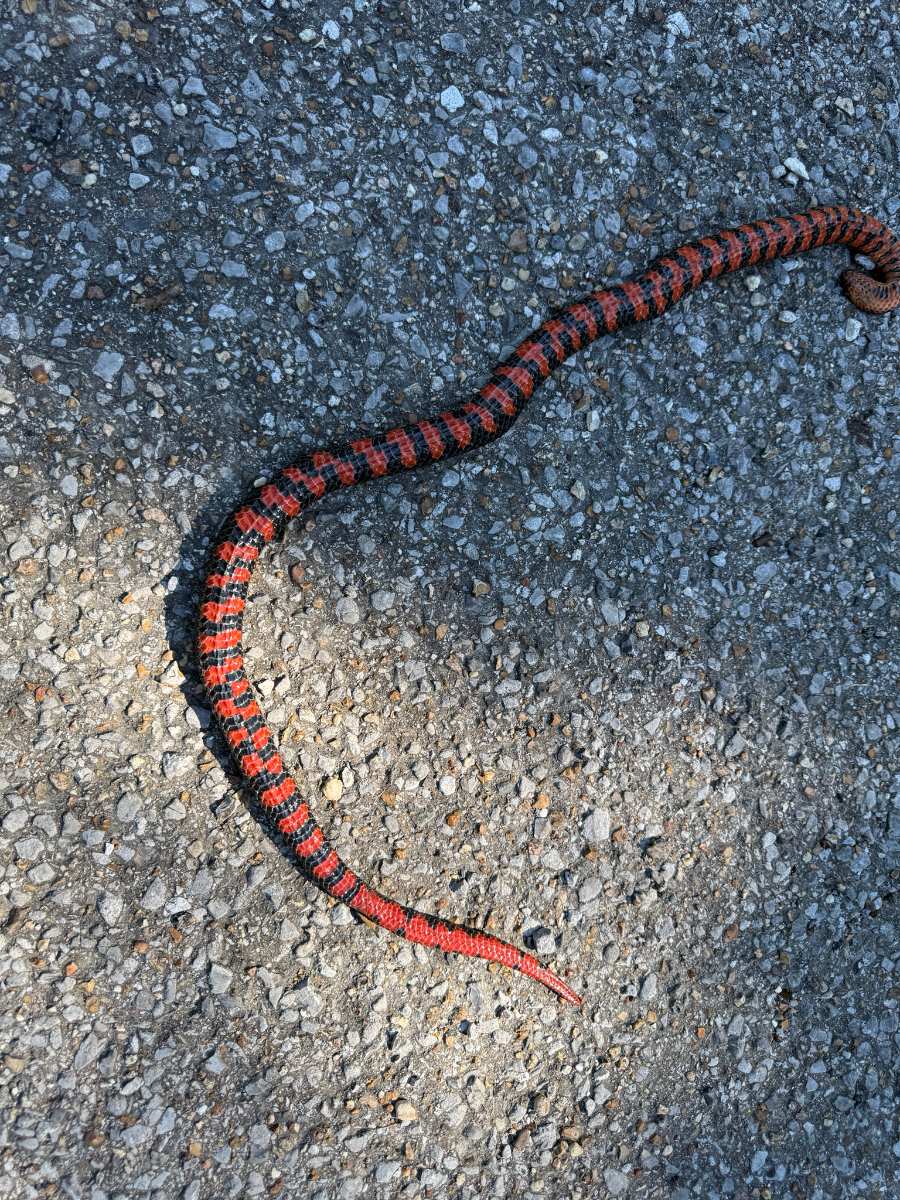
Tap a part to see what to look for. Tap it again to turn it off.
No venom. It almost never bites, but if handled it may release musk and press its hard tail tip against your hand; the tip cannot break skin.
How to identify
- Head
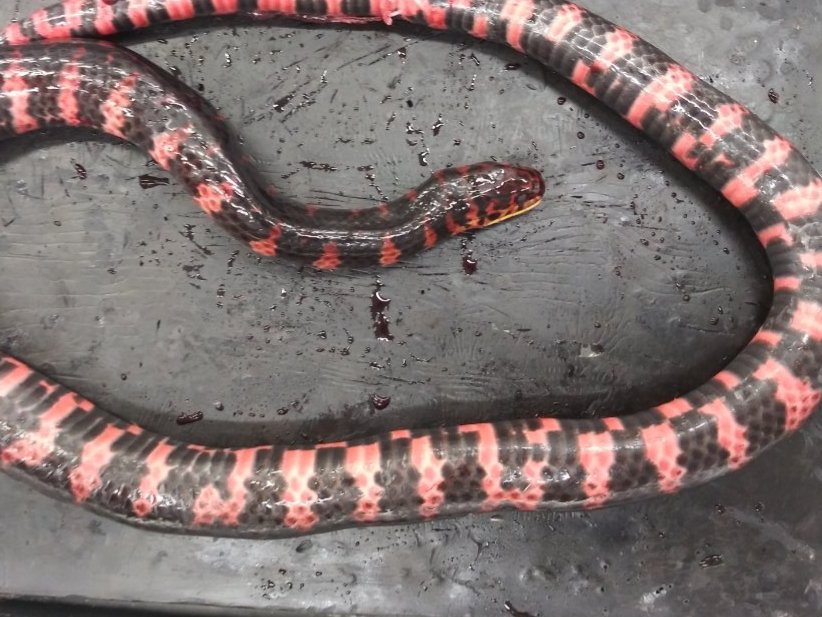
- Rounded and about as wide as the neck, black on top, with yellowish to red lip scales marked with black spots.
- Pattern
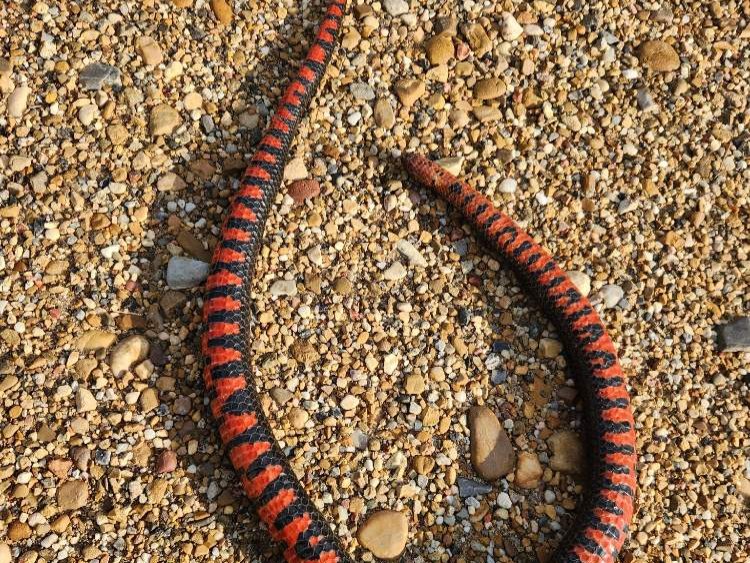
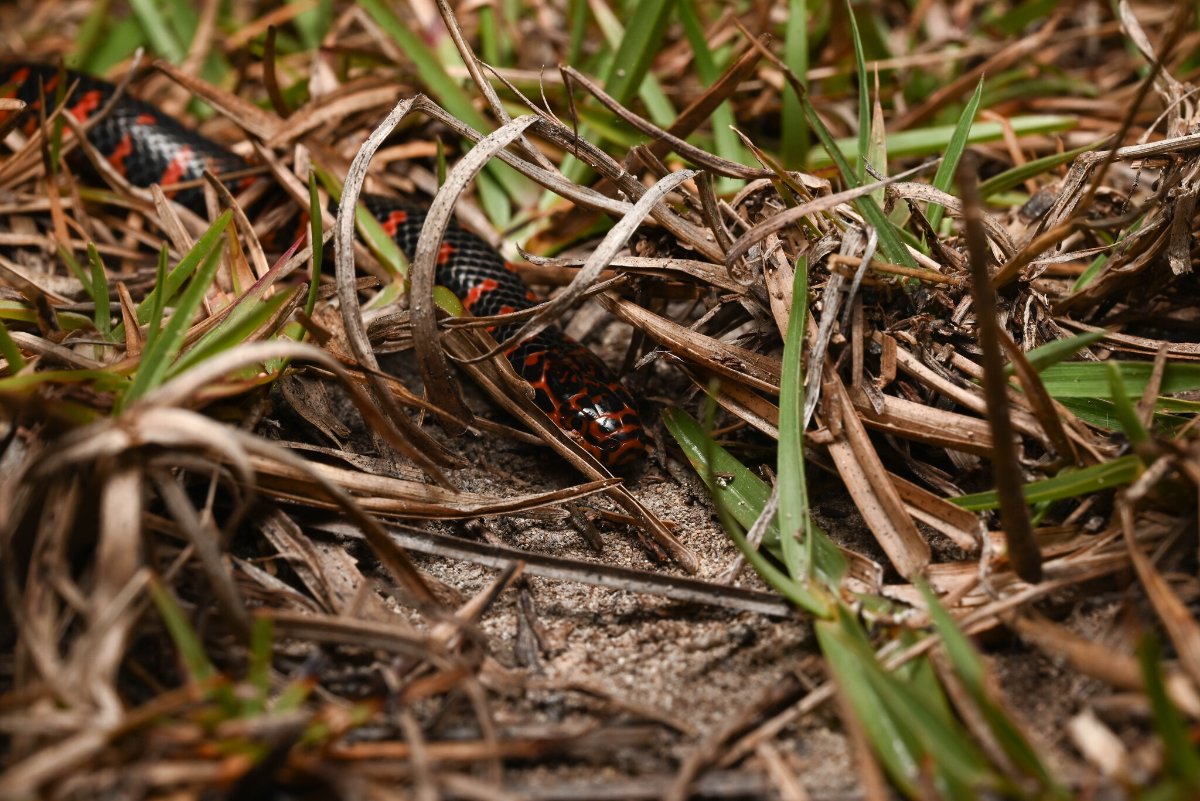
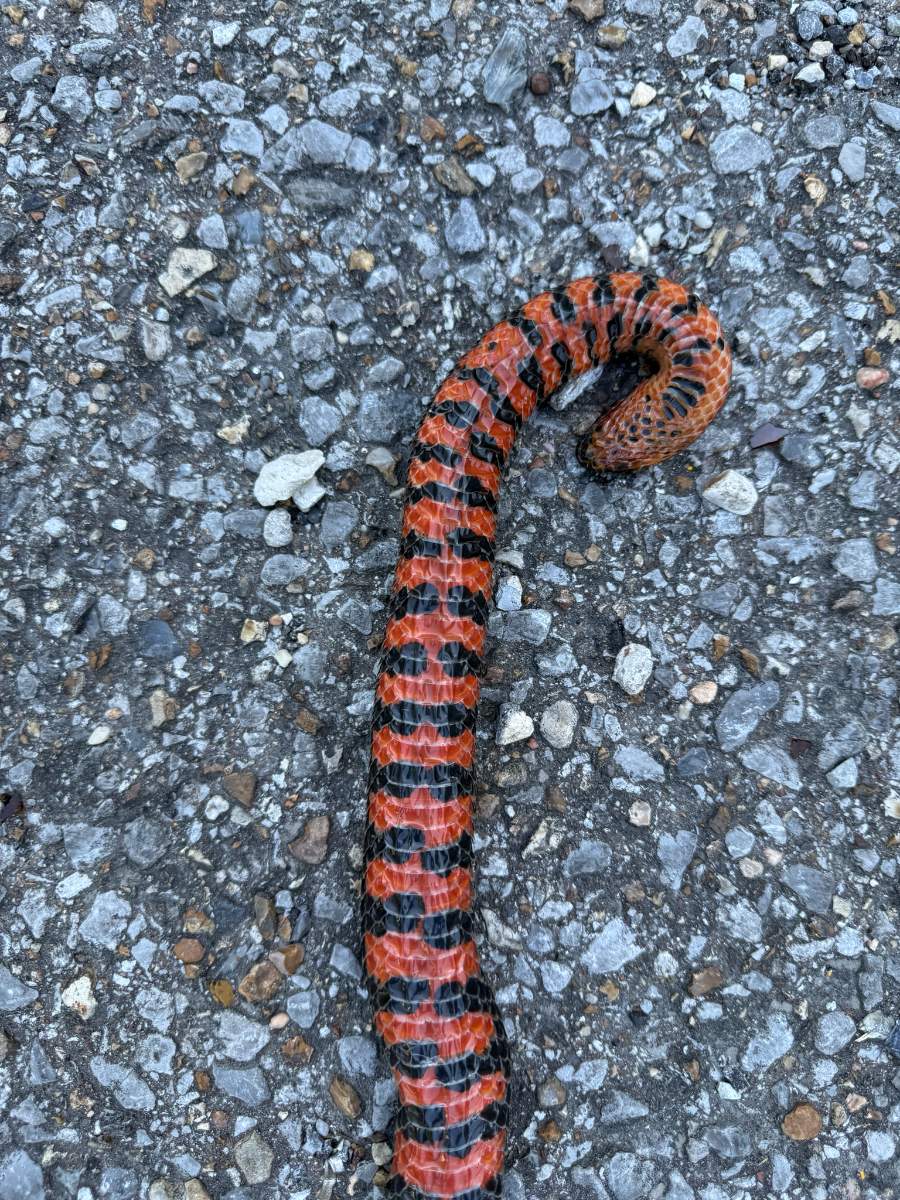
- Glossy black or bluish-gray above with smooth, shiny scales. Red to pink bars rise up from the belly onto the lower sides. The belly is red or pink checkered with black blocks. A few individuals lack red and show white instead of red.
- Eyes
- Small.
- Pits
- None. There is no pit between the eye and the nostril.
- Tail
- Short and ends in a hard, pointed spine; it may press this against a hand but it cannot break skin.
- What it does
- Very secretive and mostly hidden in mud, wet debris or water. When resting it often lies in tight, stacked loops. When disturbed it may thrash, show its red belly, release musk and poke with its tail tip, but it almost never bites. Females often stay coiled with their eggs.
Often confused with
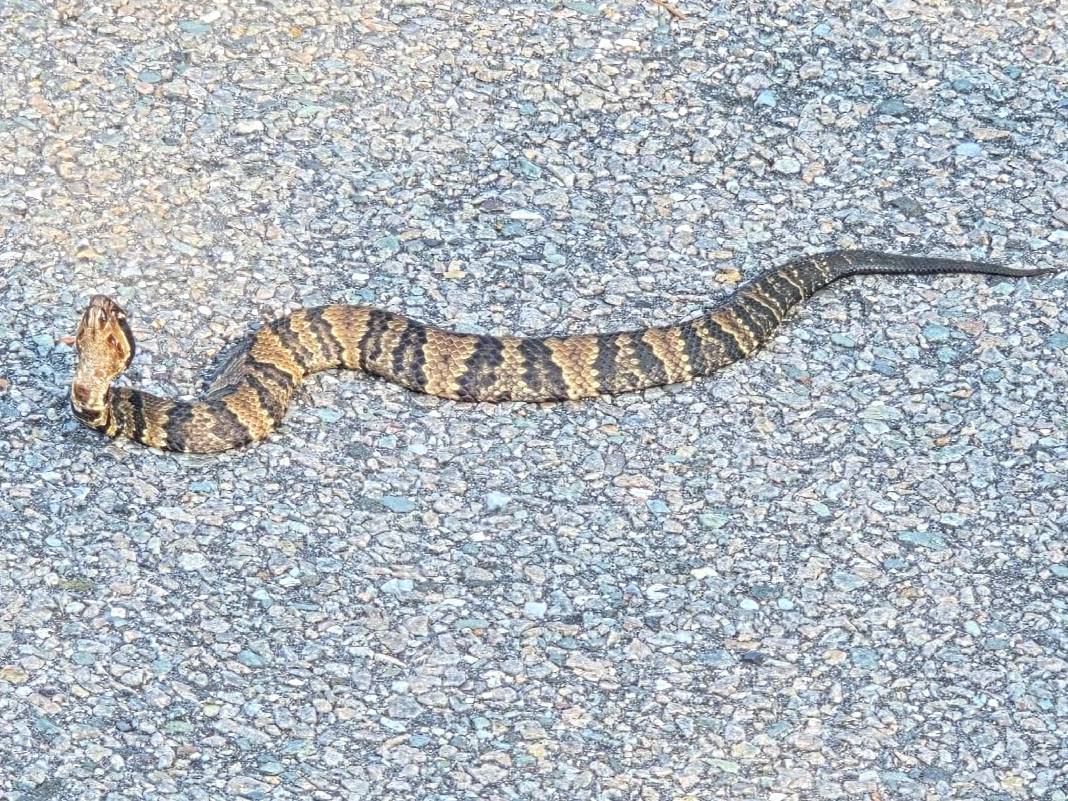
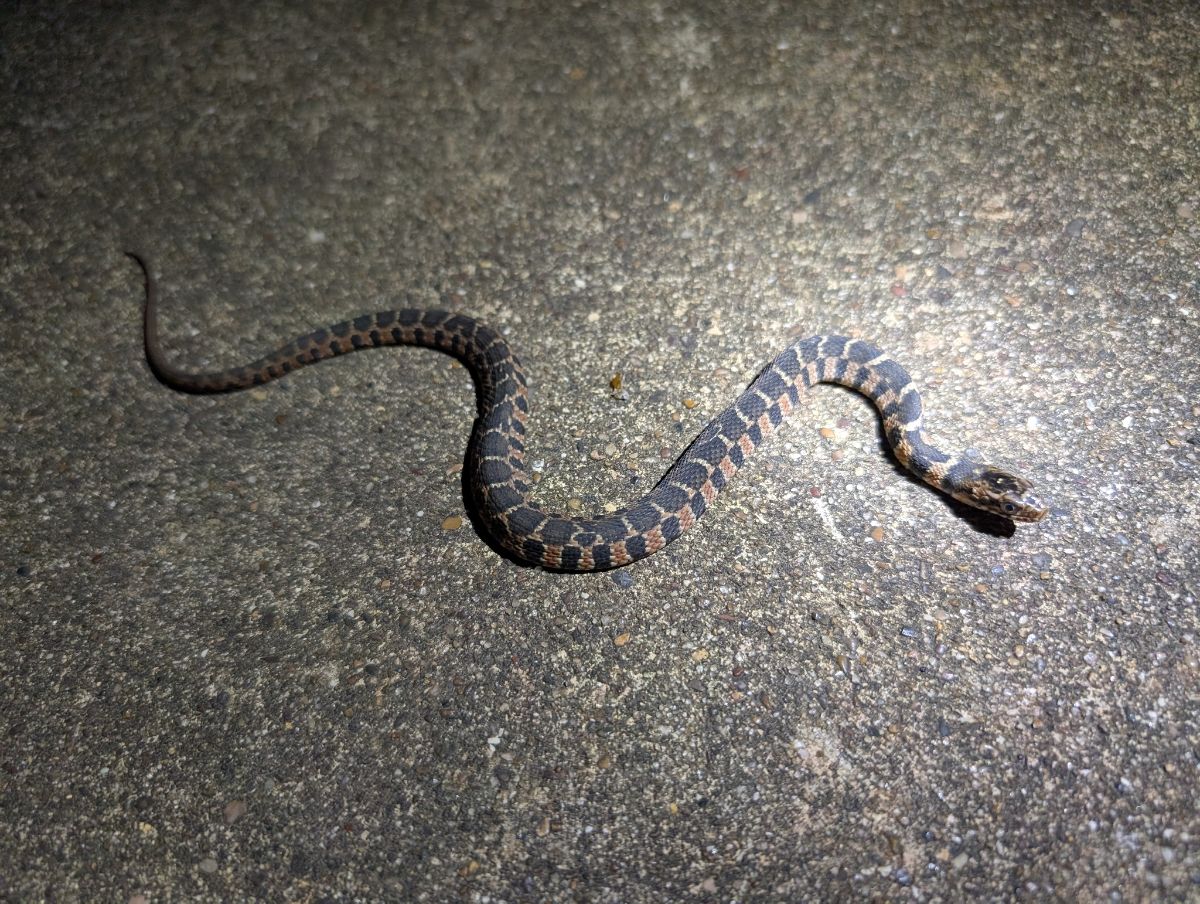
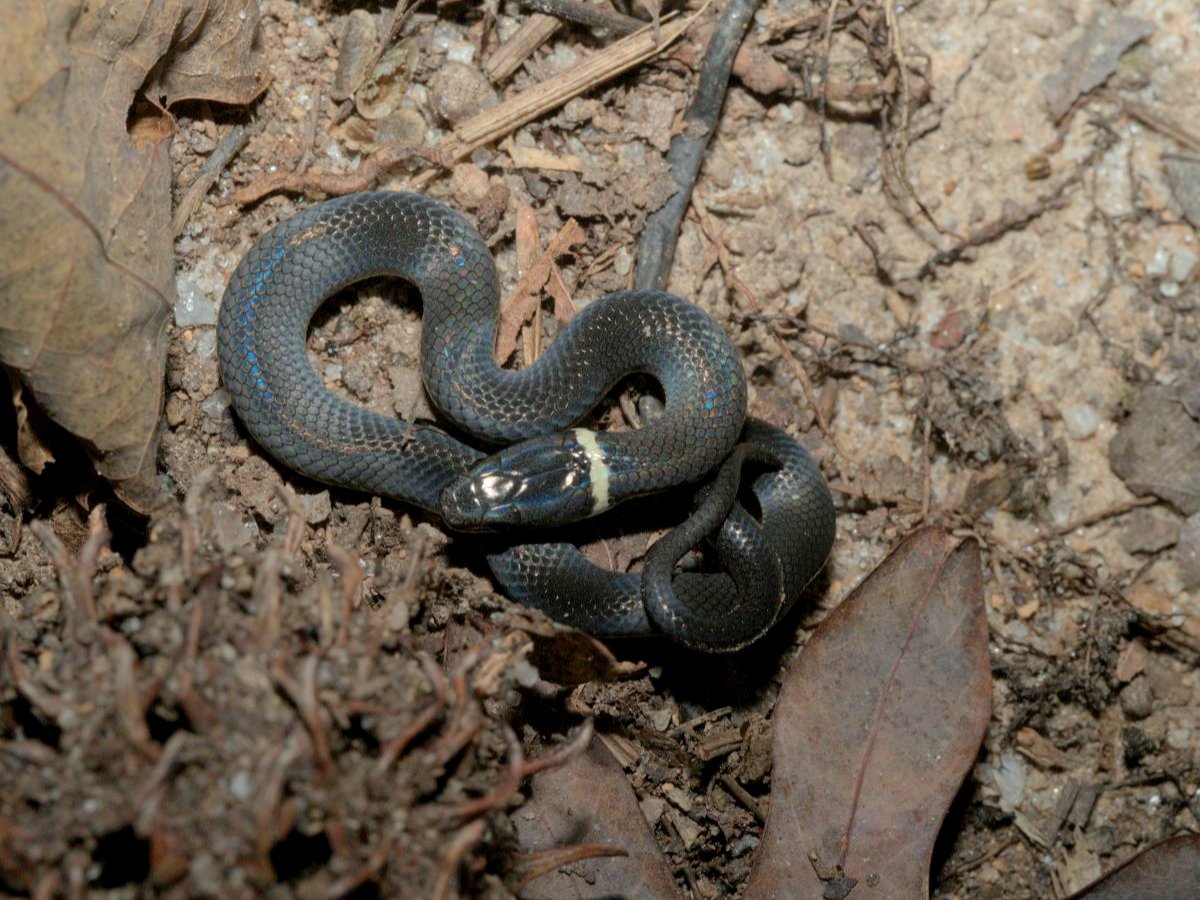
Its closest relative, the Rainbow Snake (not on this site), is also glossy with a red belly but has red stripes along the back. The Plain-bellied Watersnake can have a red-orange belly but it is plain, not checkered, and its back scales are ridged, not glossy. Dark cottonmouths share the same swamps but have a pit between the eye and nostril and a broad, flat head.
How to tell them apart
Mud Snake vs Northern Cottonmouth›
The quick way to tellLook between the eye and the nostril. The Mud Snake has no pit there and a small, rounded head. The Northern Cottonmouth has a deep pit there and a broad, flat head much wider than its neck.
Mud Snake: None. There is no pit between the eye and the nostril.
Northern Cottonmouth: A deep heat-sensing pit on each side of the face, between the eye and the nostril.
Mud Snake vs Plain-bellied Watersnake›
The quick way to tellLook at the belly and the shine of the back. The Mud Snake's belly is a red-and-black checkerboard and its back is glossy black. The Plain-bellied Watersnake's belly is plain yellow to orange-red with no black blocks, and its back is dull with ridged scales.
Mud Snake: Glossy black or bluish-gray above with smooth, shiny scales. Red to pink bars rise up from the belly onto the lower sides. The belly is red or pink checkered with black blocks. A few individuals lack red and show white instead of red.
Plain-bellied Watersnake: Adults mostly plain above; young have dark crossbands near the head that turn into blotches down the body.
Mud Snake vs Ring-necked Snake›
The quick way to tellLook at the neck and sides. The Mud Snake has no neck ring but has red bars rising up its lower sides. The Ring-necked Snake is much smaller and has a yellow or orange ring around the neck with no red bars on the sides.
Mud Snake: Glossy black or bluish-gray above with smooth, shiny scales. Red to pink bars rise up from the belly onto the lower sides. The belly is red or pink checkered with black blocks. A few individuals lack red and show white instead of red.
Ring-necked Snake: Plain slate gray with a bright yellow to red neck ring and matching belly.
About the Mud Snake›
A large, glossy black snake of swamps, marshes, ditches and slow, muddy water across the Southeast. It spends much of its time hidden in mud, wet debris or under water, and hunts large eel-like salamanders called sirens and amphiumas, mostly at night. It is often seen crossing roads on rainy nights.
It is easy to recognize: shiny black above, with red or pink bars coming up the lower sides and a red-and-black checkerboard belly. Its standard name in the main naming lists is Red-bellied Mudsnake. The hard spine on its tail tip gave rise to old 'hoop snake' and 'stinging snake' myths; it cannot roll like a hoop or sting.
The details
Size Usually about 3–4 feet (90–120 cm); up to about 6.8 feet (207 cm). Hatchlings are about 7–9.5 inches (18–24 cm).
Typical range›
Southeastern US: the Coastal Plain from southeastern Virginia to southern Florida, west to eastern Texas, and north up the Mississippi River valley to southern Illinois, western Kentucky, southeastern Missouri and Oklahoma. Not found in Canada or Mexico.
Activity›
Mostly active at night, though sometimes seen crossing roads by day, especially after rain or when wetlands dry out. Active about March to November in Texas; in North Carolina it has been found in every month except November.
Diet›
Mainly large aquatic salamanders (sirens and amphiumas); also other salamanders, frogs, tadpoles and fish.
Reproduction›
Lays eggs, often in a nest chamber, usually in July or early August. Clutches are large, from about 4 to 104 eggs (usually fewer than 50). The female often stays coiled around the eggs, which hatch from August to October.
Found in parts of 15 states›
Ranges are approximate. It may be found in only part of a state, or be rare there, and snakes can turn up outside of them.
More photos