‹ Compare two snakes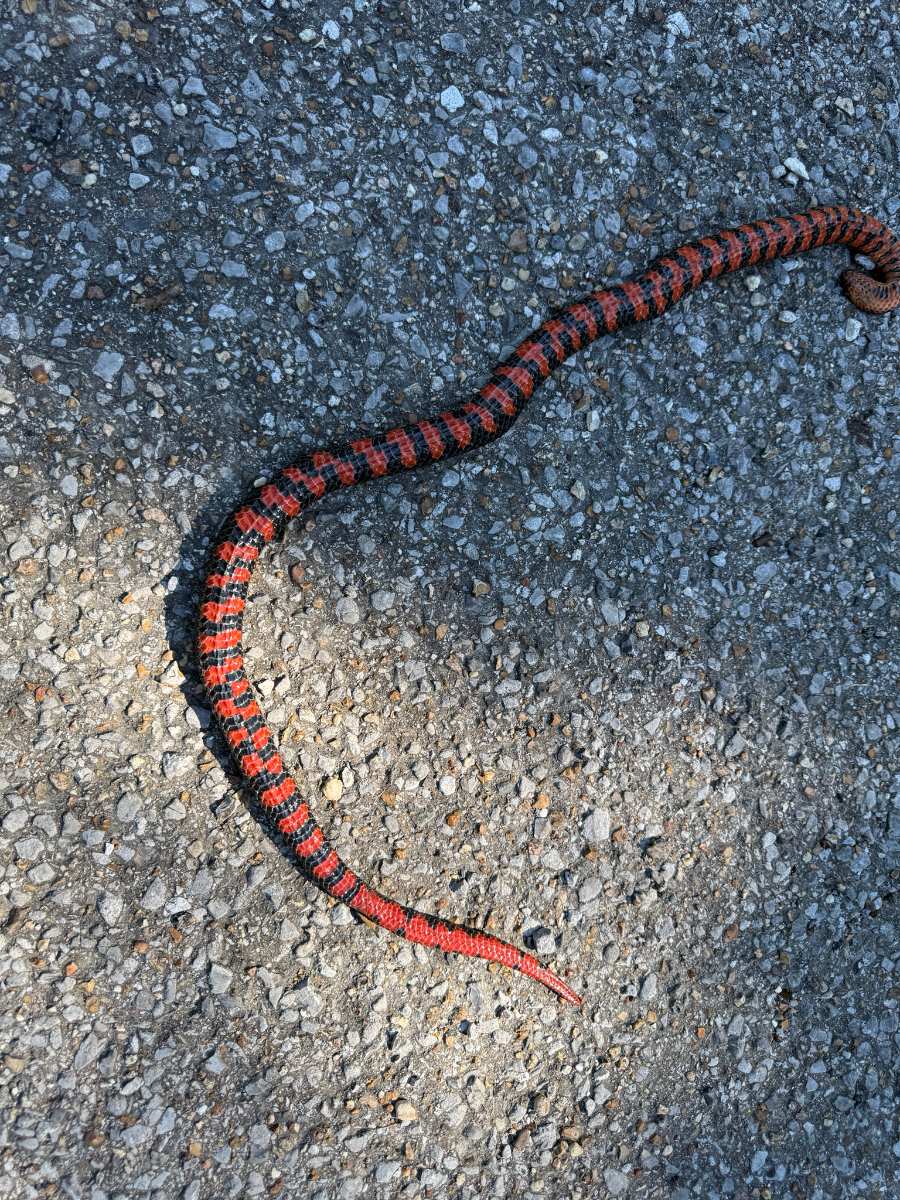
Mud Snake vs Plain-bellied Watersnake
Tap a part to see it on both. Tap it again to turn it off.
Jessica McDaniel, no rights reserved
Mud Snake
Farancia abacura
Non-venomous(c) dhasdf, some rights reserved (CC BY)
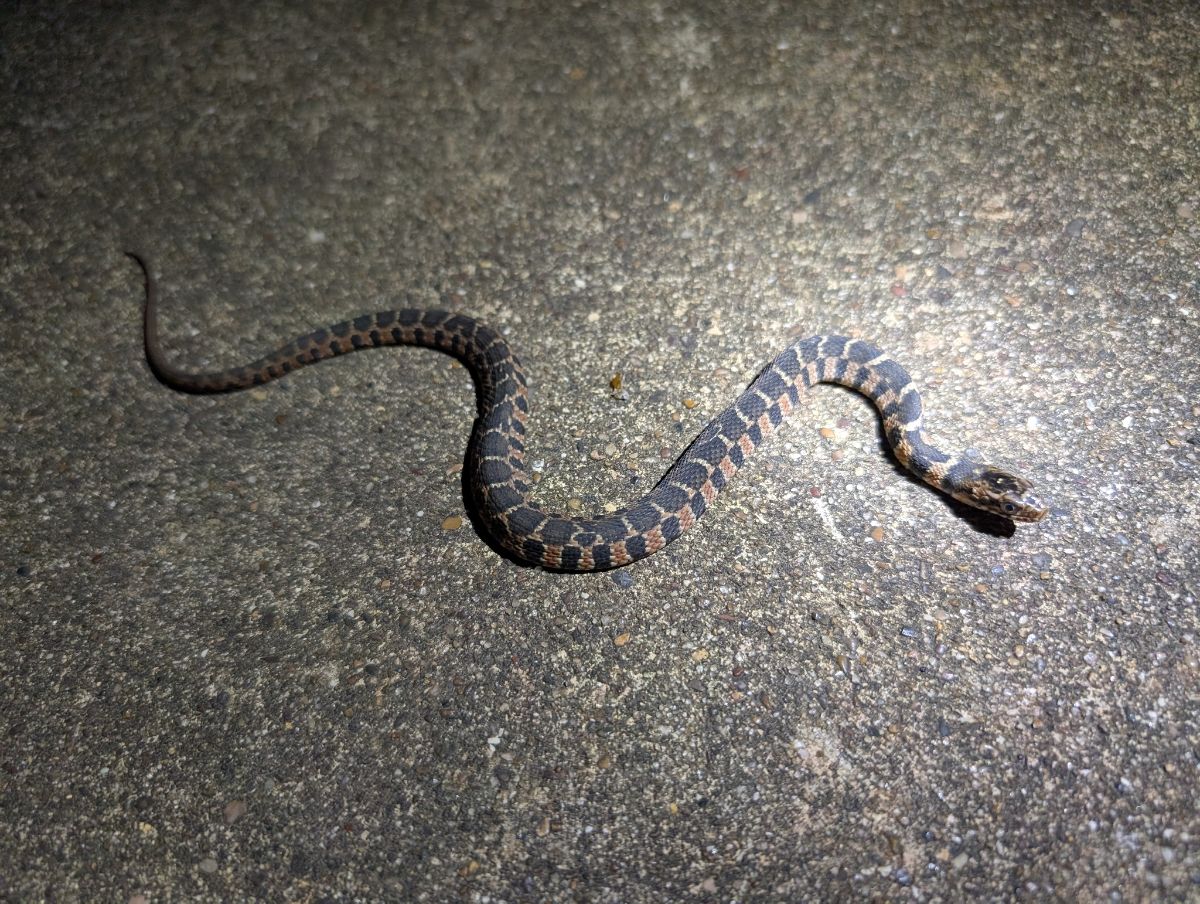
Plain-bellied Watersnake
Nerodia erythrogaster
Non-venomousThe quick way to tell
Look at the belly and the shine of the back. The Mud Snake's belly is a red-and-black checkerboard and its back is glossy black. The Plain-bellied Watersnake's belly is plain yellow to orange-red with no black blocks, and its back is dull with ridged scales.
Pattern ★ This settles it
Glossy black or bluish-gray above with smooth, shiny scales. Red to pink bars rise up from the belly onto the lower sides. The belly is red or pink checkered with black blocks. A few individuals lack red and show white instead of red.
Adults mostly plain above; young have dark crossbands near the head that turn into blotches down the body.
Head
Rounded and about as wide as the neck, black on top, with yellowish to red lip scales marked with black spots.
Fairly large eyes, easy to see from above; lips often yellowish or orange like the belly.
Eyes
Small.
Round pupils; eyes clearly visible when you look down on the head.
Pits
None. There is no pit between the eye and the nostril.
None. There is no pit between the eye and the nostril.
Tail
Short and ends in a hard, pointed spine; it may press this against a hand but it cannot break skin.
Plain tapering tail with no rattle; the underside is unmarked like the belly.
What it does
Very secretive and mostly hidden in mud, wet debris or water. When resting it often lies in tight, stacked loops. When disturbed it may thrash, show its red belly, release musk and poke with its tail tip, but it almost never bites. Females often stay coiled with their eggs.
Flees if it can; bites hard and releases musk if cornered or grabbed.
Where it lives
Southeastern US: the Coastal Plain from southeastern Virginia to southern Florida, west to eastern Texas, and north up the Mississippi River valley to southern Illinois, western Kentucky, southeastern Missouri and Oklahoma. Not found in Canada or Mexico.
Southeastern and central US from Delaware and southeastern Virginia south to the Florida Panhandle, west through the Mississippi Valley to Kansas, Oklahoma, Texas and the Pecos River in New Mexico; small scattered northern populations in Iowa, Illinois, Indiana, Ohio, Kentucky and southern Michigan. Also northern Mexico.