‹ Compare two snakes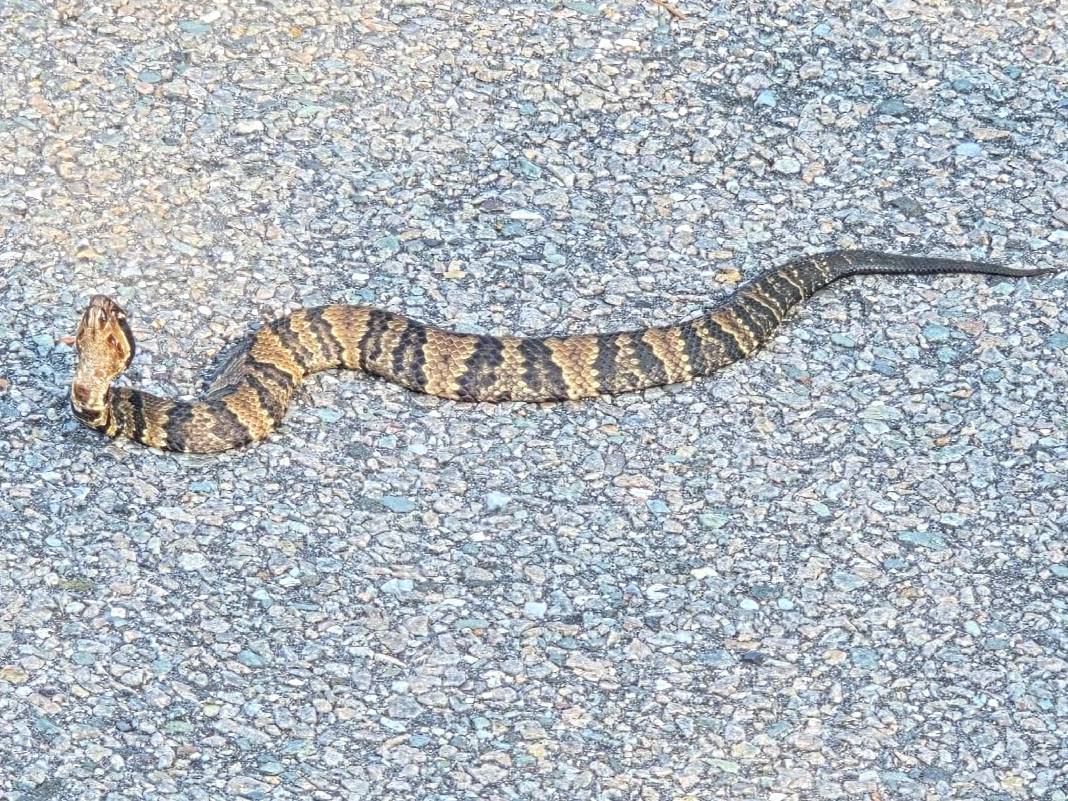
Northern Cottonmouth vs Mud Snake
Tap a part to see it on both. Tap it again to turn it off.
Melanie Gaddy, no rights reserved
Northern Cottonmouth
Agkistrodon piscivorus
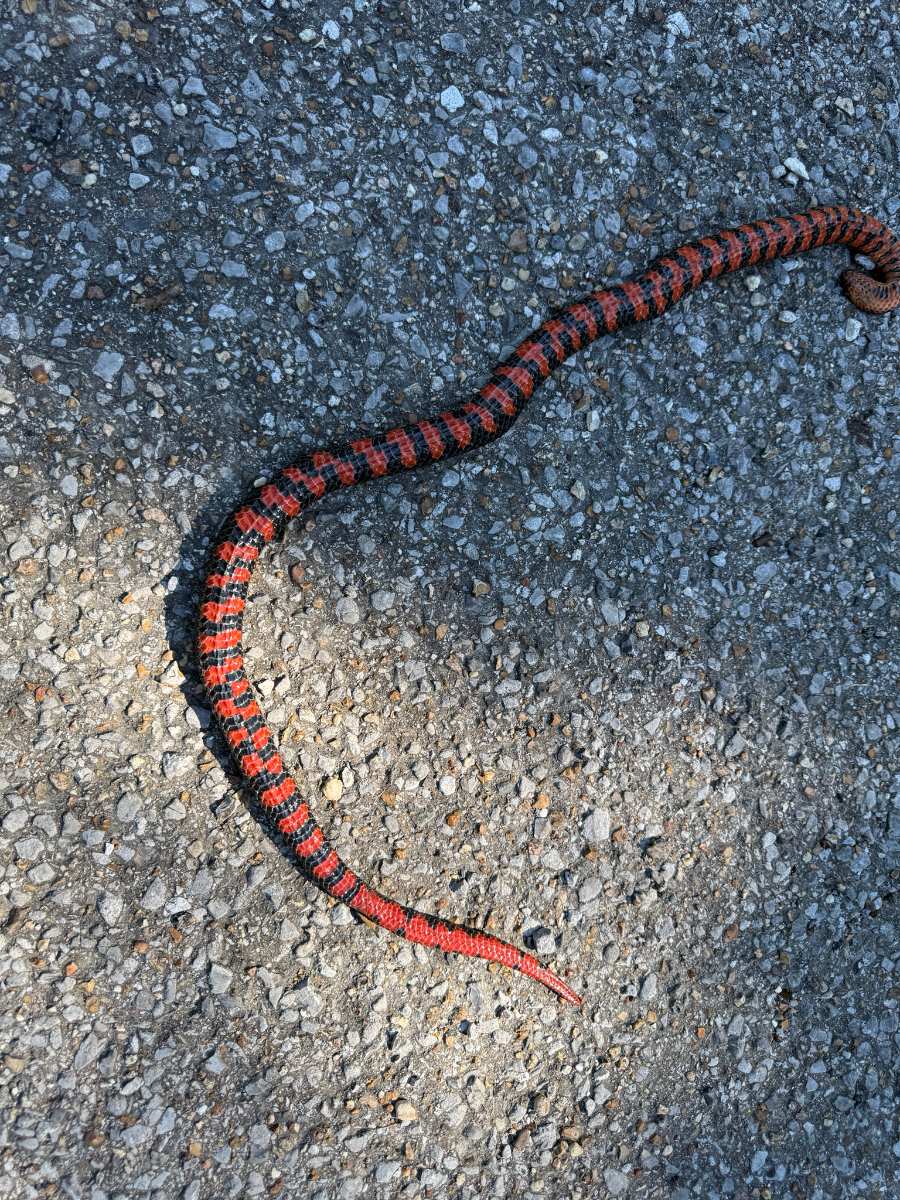
VenomousJessica McDaniel, no rights reserved
Mud Snake
Farancia abacura
Non-venomousThe quick way to tell
Look between the eye and the nostril. The Mud Snake has no pit there and a small, rounded head. The Northern Cottonmouth has a deep pit there and a broad, flat head much wider than its neck.
Pits ★ This settles it
A deep heat-sensing pit on each side of the face, between the eye and the nostril.
None. There is no pit between the eye and the nostril.
Head
Blocky, heavy brow, dark mask through each eye, pale snout.
Rounded and about as wide as the neck, black on top, with yellowish to red lip scales marked with black spots.
Pattern
Dark olive to nearly black, with faint wide bands clearest on young snakes.
Glossy black or bluish-gray above with smooth, shiny scales. Red to pink bars rise up from the belly onto the lower sides. The belly is red or pink checkered with black blocks. A few individuals lack red and show white instead of red.
Eyes
Vertical slit pupil; heat-sensing pit between eye and nostril.
Small.
Tail
Thick-based; young have a yellow tail tip.
Short and ends in a hard, pointed spine; it may press this against a hand but it cannot break skin.
What it does
Coils, vibrates its tail and gapes to show a white mouth lining.
Very secretive and mostly hidden in mud, wet debris or water. When resting it often lies in tight, stacked loops. When disturbed it may thrash, show its red belly, release musk and poke with its tail tip, but it almost never bites. Females often stay coiled with their eggs.
Where it lives
Southeast from southeastern Virginia through the Carolinas, northern Georgia and Alabama, west to central Texas and Oklahoma, and up the Mississippi valley to southern Illinois, Missouri and southeastern Kansas.
Southeastern US: the Coastal Plain from southeastern Virginia to southern Florida, west to eastern Texas, and north up the Mississippi River valley to southern Illinois, western Kentucky, southeastern Missouri and Oklahoma. Not found in Canada or Mexico.