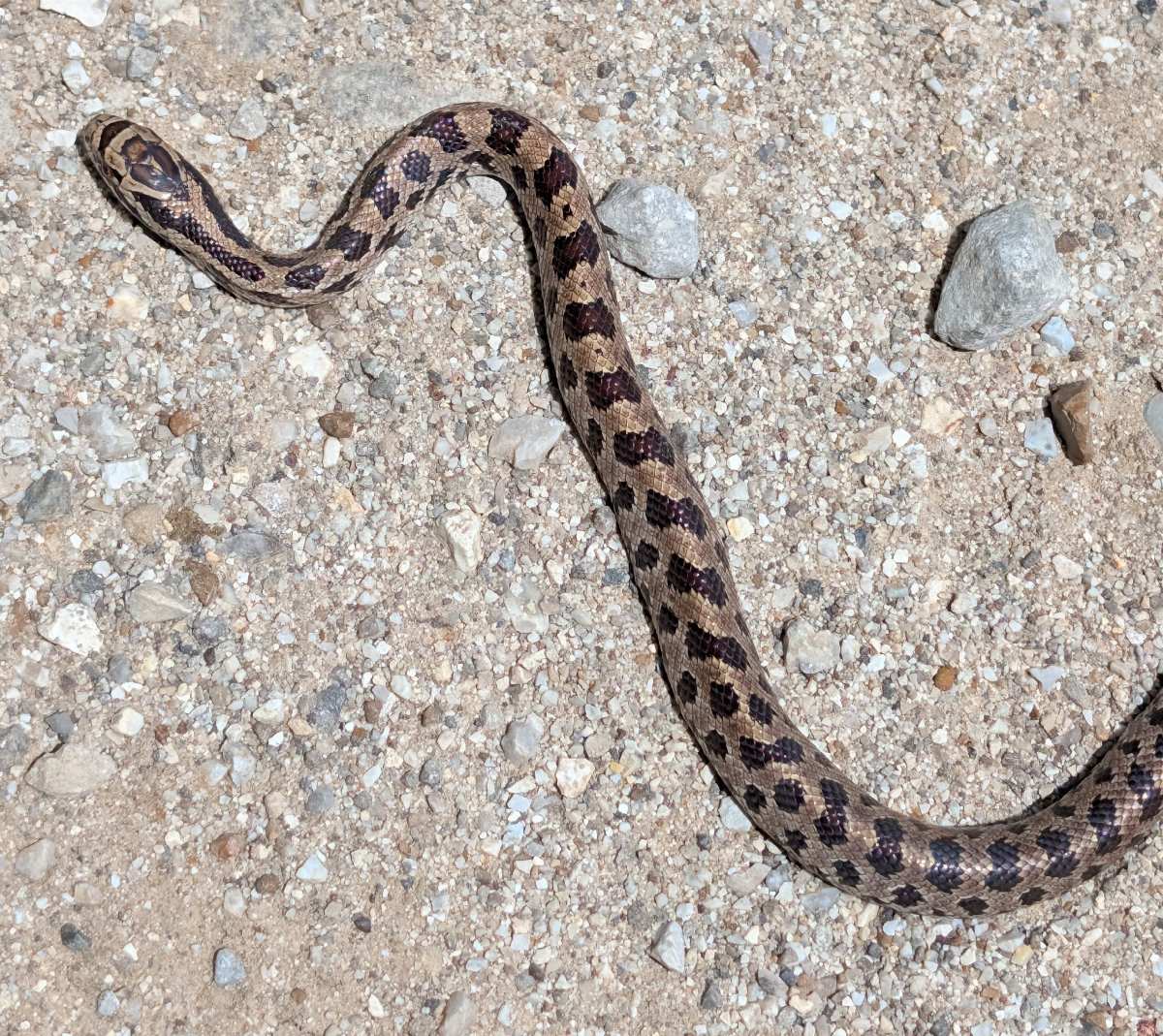
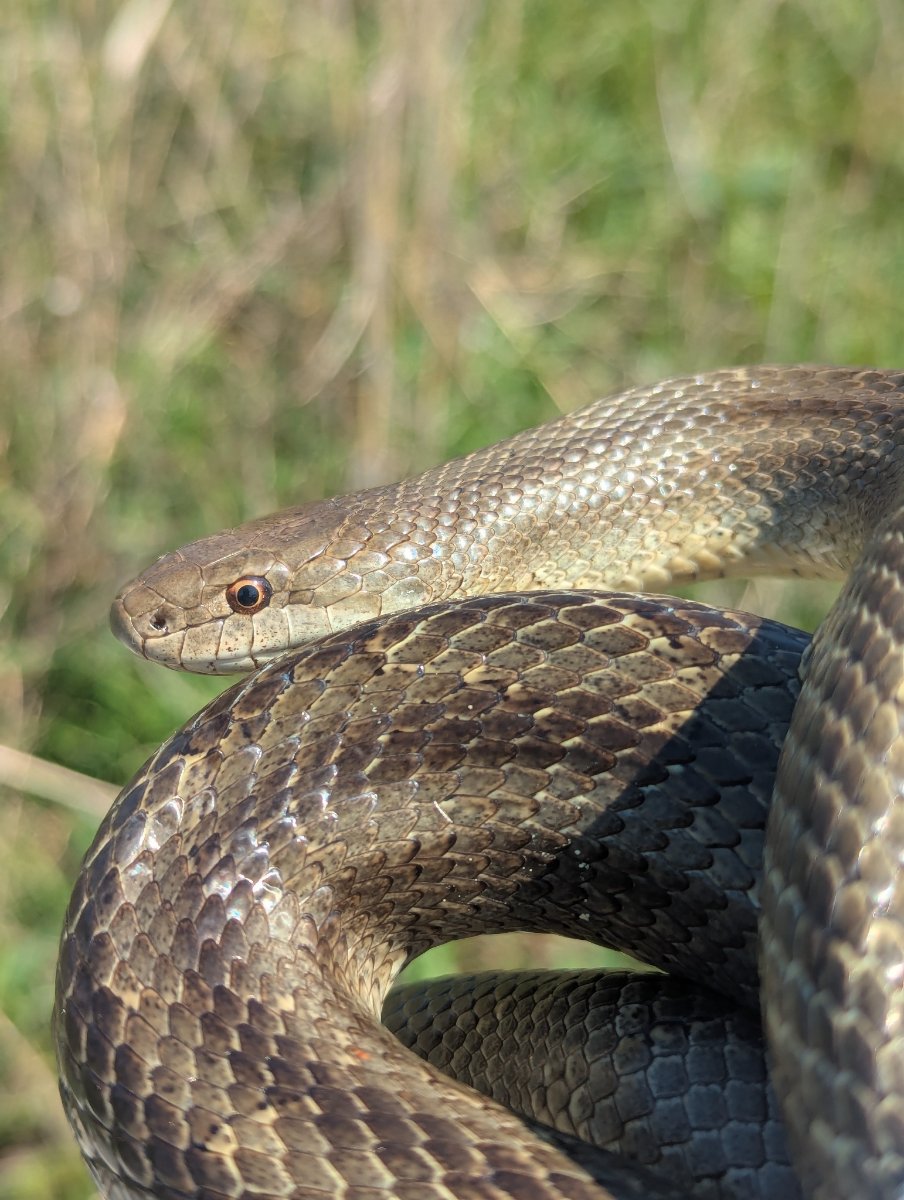
Prairie Kingsnake
Lampropeltis calligaster · Kingsnakes & Milksnakes
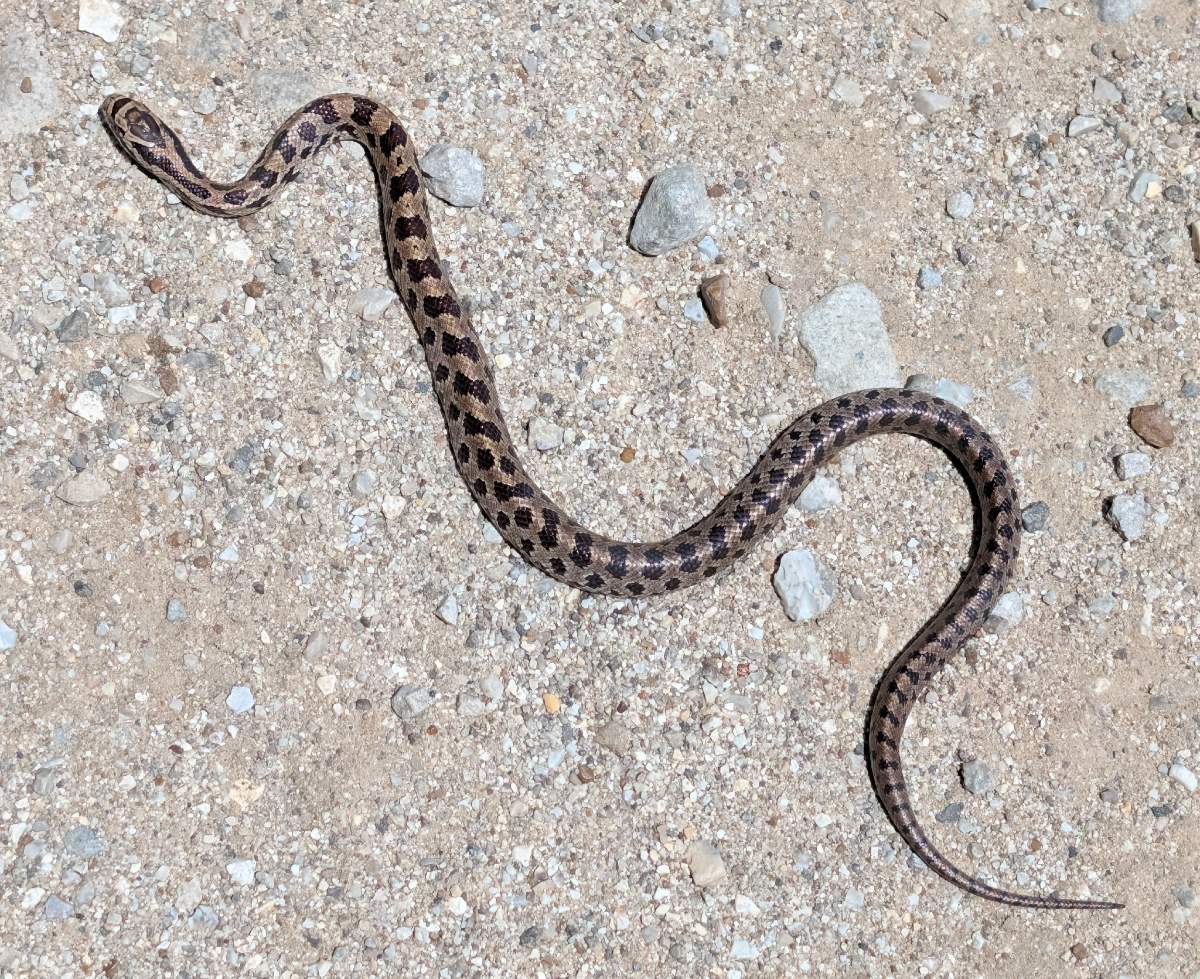
Tap a part to see what to look for. Tap it again to turn it off.
No venom, but it may buzz its tail, bite and release musk if handled.
How to identify
- Head
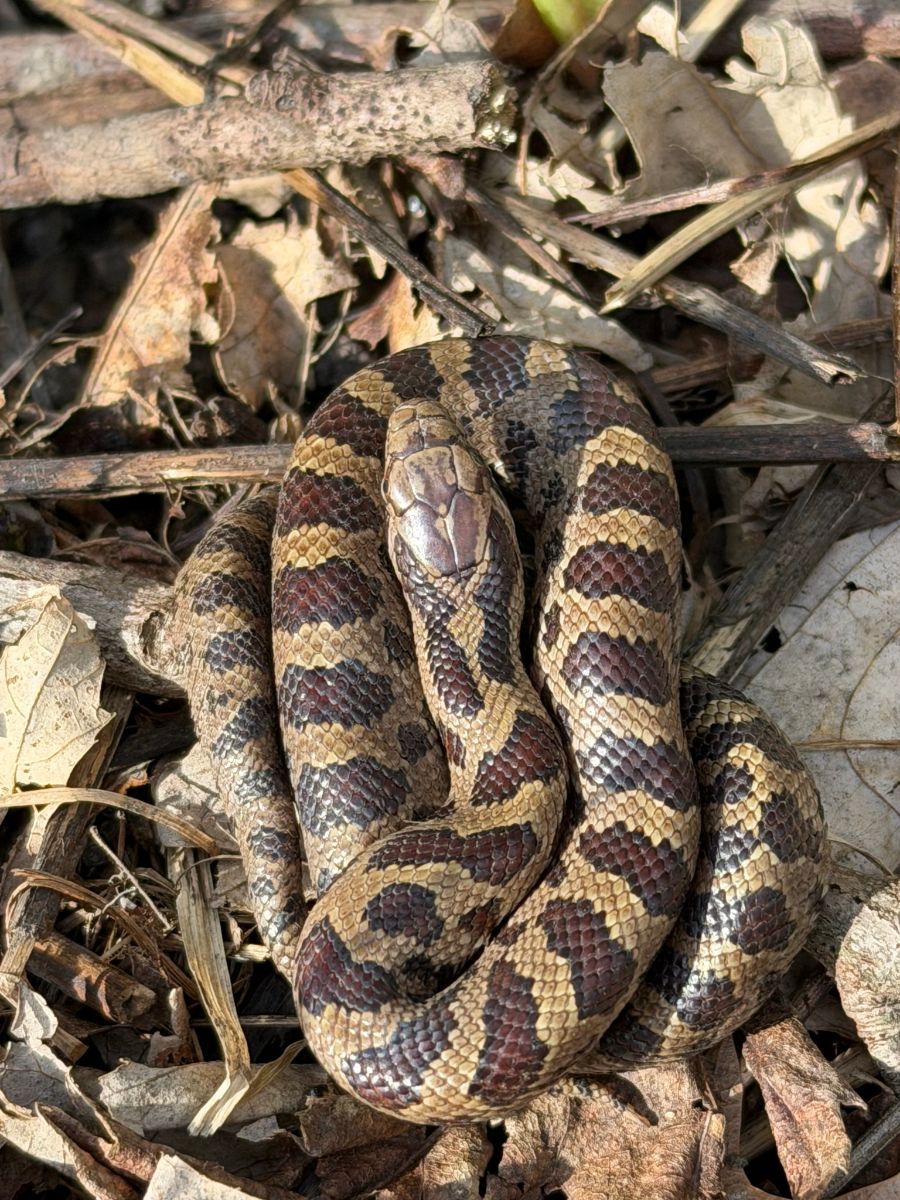
- Head barely wider than the neck, often with an arrowhead-shaped mark on top.
- Pattern
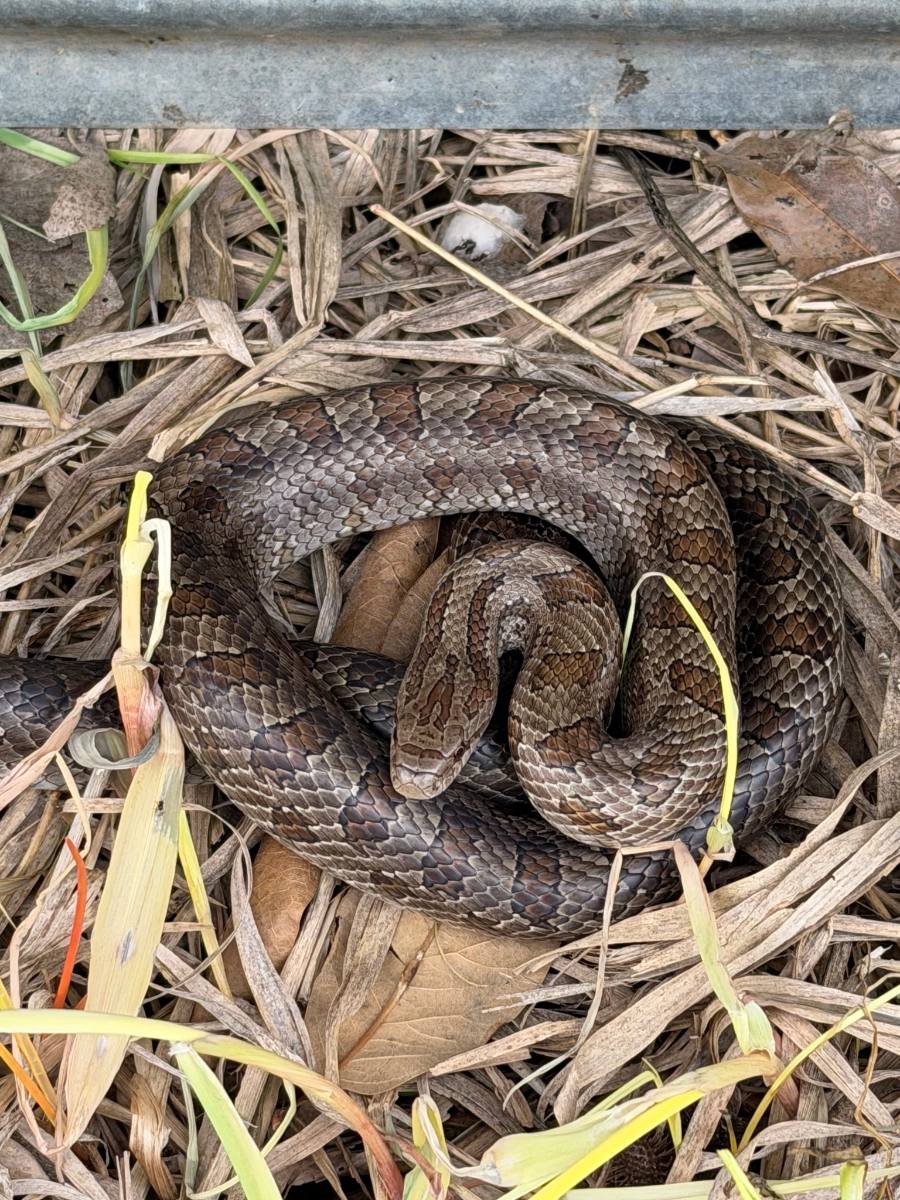
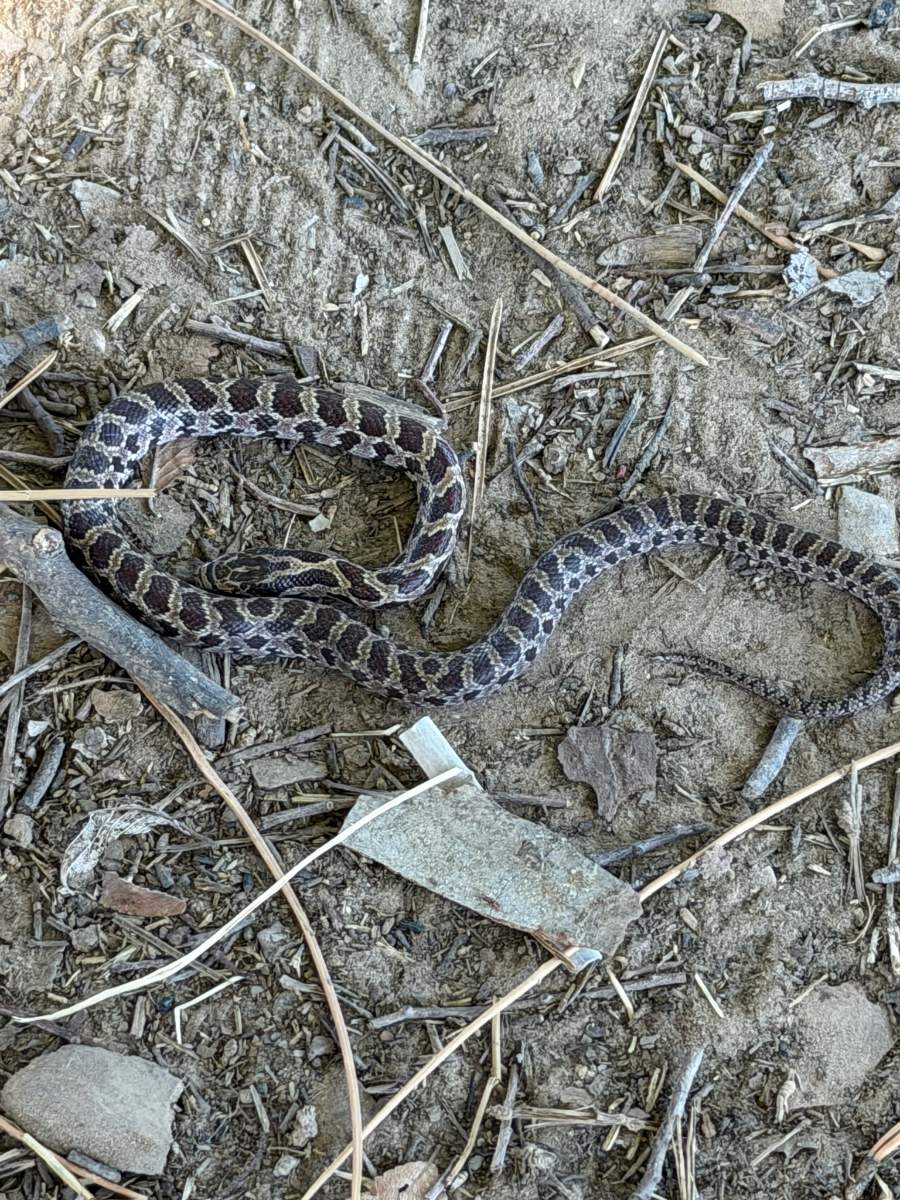
- Many small, dark-edged brown or reddish blotches down the back, with smaller alternating spots on the sides; may fade with age.
- Eyes
- Round pupils.
- Pits
- None. There is no pit between the eye and the nostril.
- Tail
- Plain, pointed tail with no rattle; it may vibrate it when alarmed.
- What it does
- Very secretive; often vibrates its tail and may bite or musk when grabbed.
Often confused with
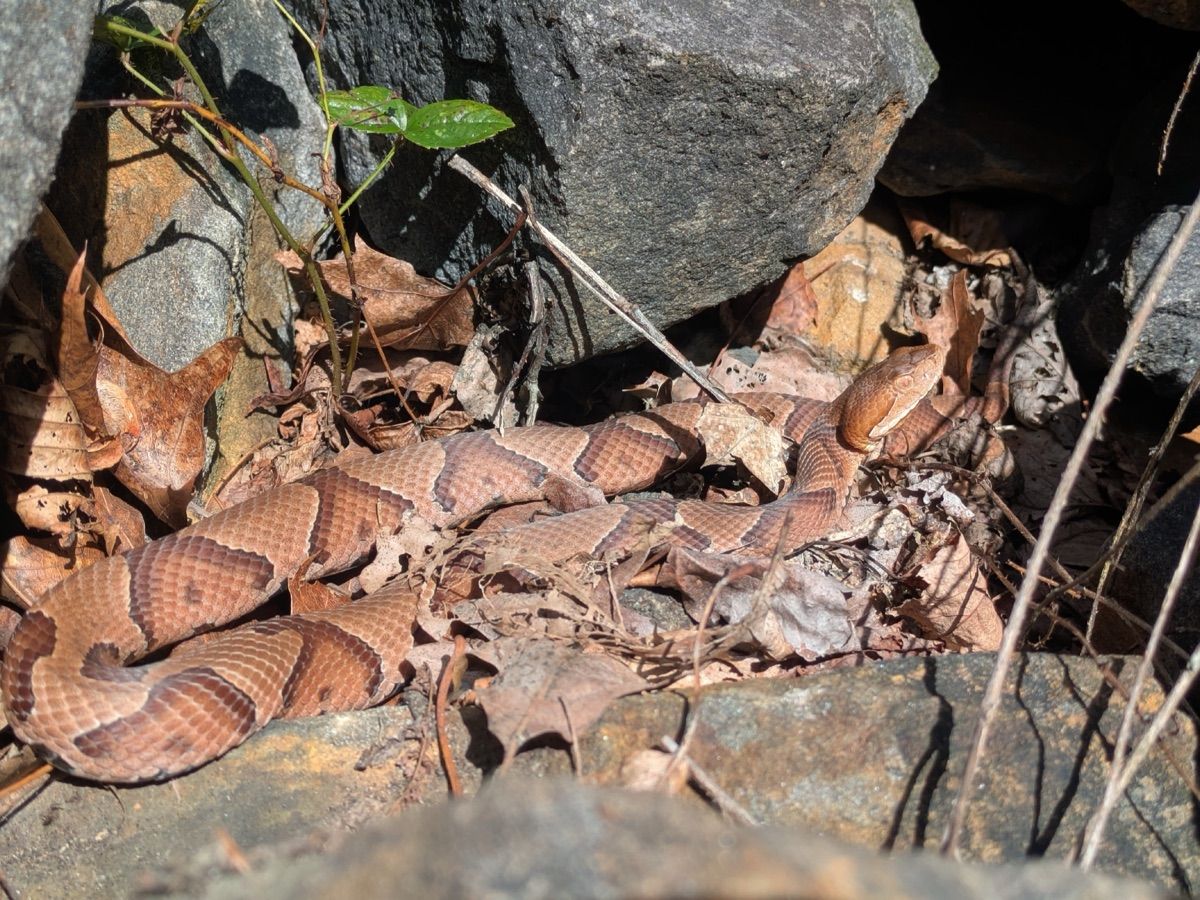
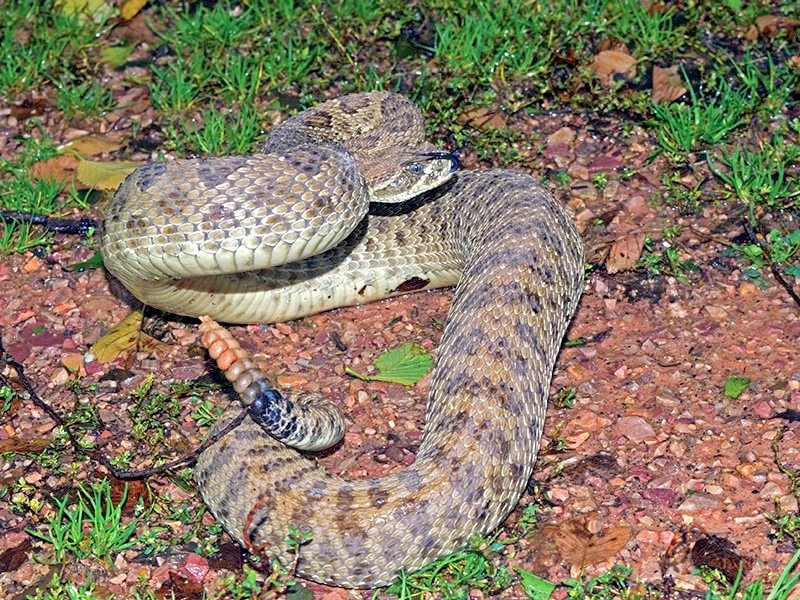
Eastern Copperhead is the usual mix-up because of the brown blotches; the kingsnake has small spots instead of hourglass bands, round pupils and no pit. It may buzz its tail like a Prairie Rattlesnake but has no rattle.
How to tell them apart
Prairie Kingsnake vs Eastern Copperhead›
The quick way to tellLook at the shape of the markings. The Prairie Kingsnake has many small, round or saddle-shaped blotches down the back. The Eastern Copperhead has hourglass-shaped bands — wide on the sides and narrow across the spine.
Prairie Kingsnake: Many small, dark-edged brown or reddish blotches down the back, with smaller alternating spots on the sides; may fade with age.
Eastern Copperhead: Dark hourglass bands - wide at the sides, pinched to a narrow waist over the spine.
Prairie Kingsnake vs Prairie Rattlesnake›
The quick way to tellLook at the tail tip. The Prairie Kingsnake may buzz its tail in dry leaves, but the tail is plain and pointed. A Prairie Rattlesnake has a rattle.
Prairie Kingsnake: Plain, pointed tail with no rattle; it may vibrate it when alarmed.
Prairie Rattlesnake: Thinner than the body; tail rings dull, not bold black and white, ahead of the rattle.
About the Prairie Kingsnake›
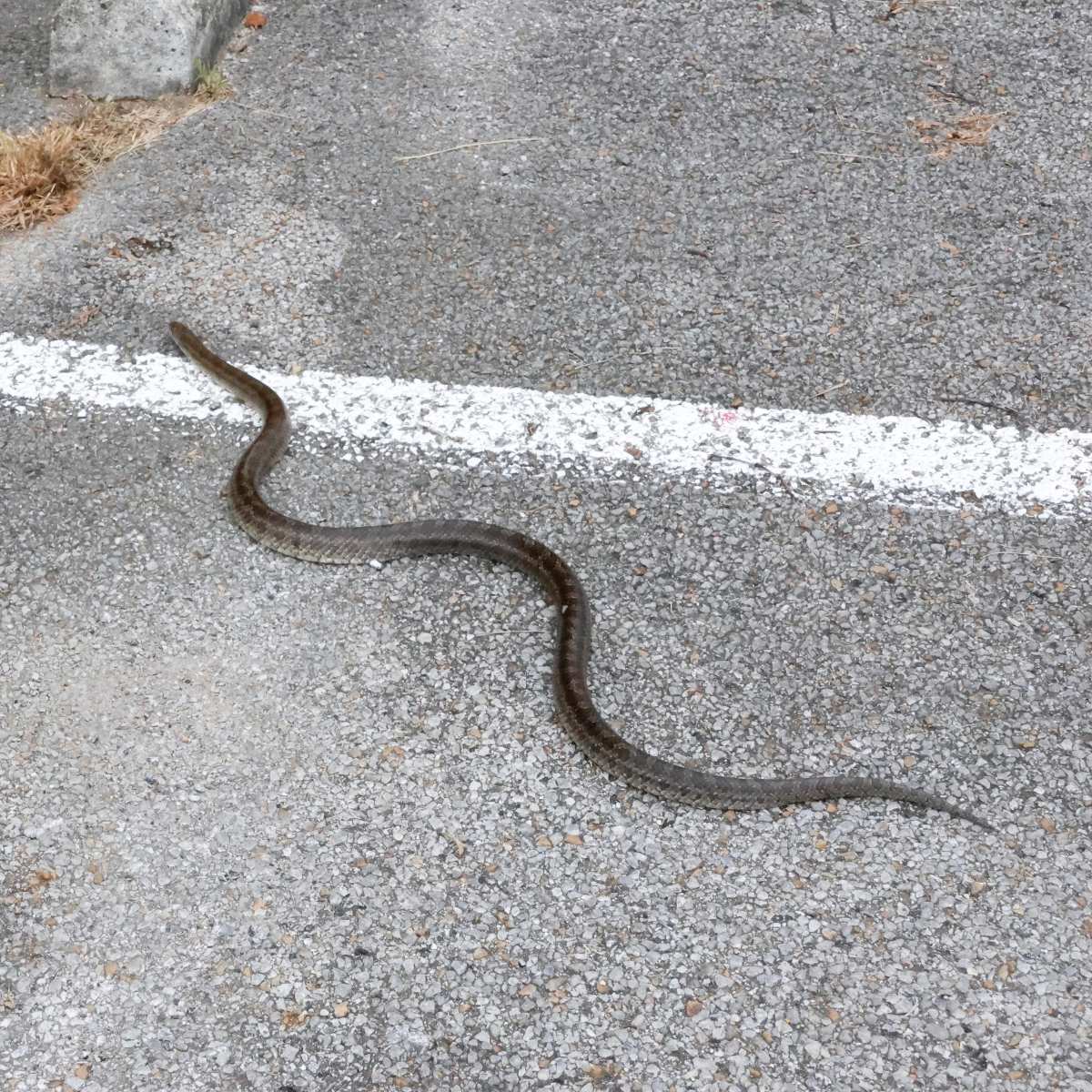
A secretive, medium-sized kingsnake of prairies, hayfields, crop fields and rocky open woods in the central US. It spends much of its time underground in burrows and is most often seen crossing roads in spring.
Its rows of brown blotches lead many people to mistake it for a copperhead. Older adults can fade to plain brown. Snakes east of the Mississippi River in forested areas, once treated as the same species, are now the Mole Kingsnake (Lampropeltis rhombomaculata).
The details
Size Usually 2.5–3.5 ft; occasionally up to about 4.5 ftWeight Commonly 6–8 oz; up to about 14 ozLifespan 10+ years in the wild; over 23 years in captivity
Typical range›
Central US from southern Iowa, southeastern Nebraska and Kansas south to eastern Texas and Louisiana, east through Missouri, Arkansas, Illinois, Indiana, Kentucky and western Tennessee; just reaches northern Mississippi and far northern Alabama.
Activity›
Active April to early November, out in the morning and evening in spring and fall and mostly at night in summer.
Diet›
Mainly small mammals such as voles and mice, plus lizards, small snakes, frogs and bird eggs; it kills by constriction.
Reproduction›
Mates in spring and lays about 3–21 eggs in early summer that hatch in late summer.
Found in parts of 14 states›
Ranges are approximate. It may be found in only part of a state, or be rare there, and snakes can turn up outside of them.
More photos