‹ Compare two snakes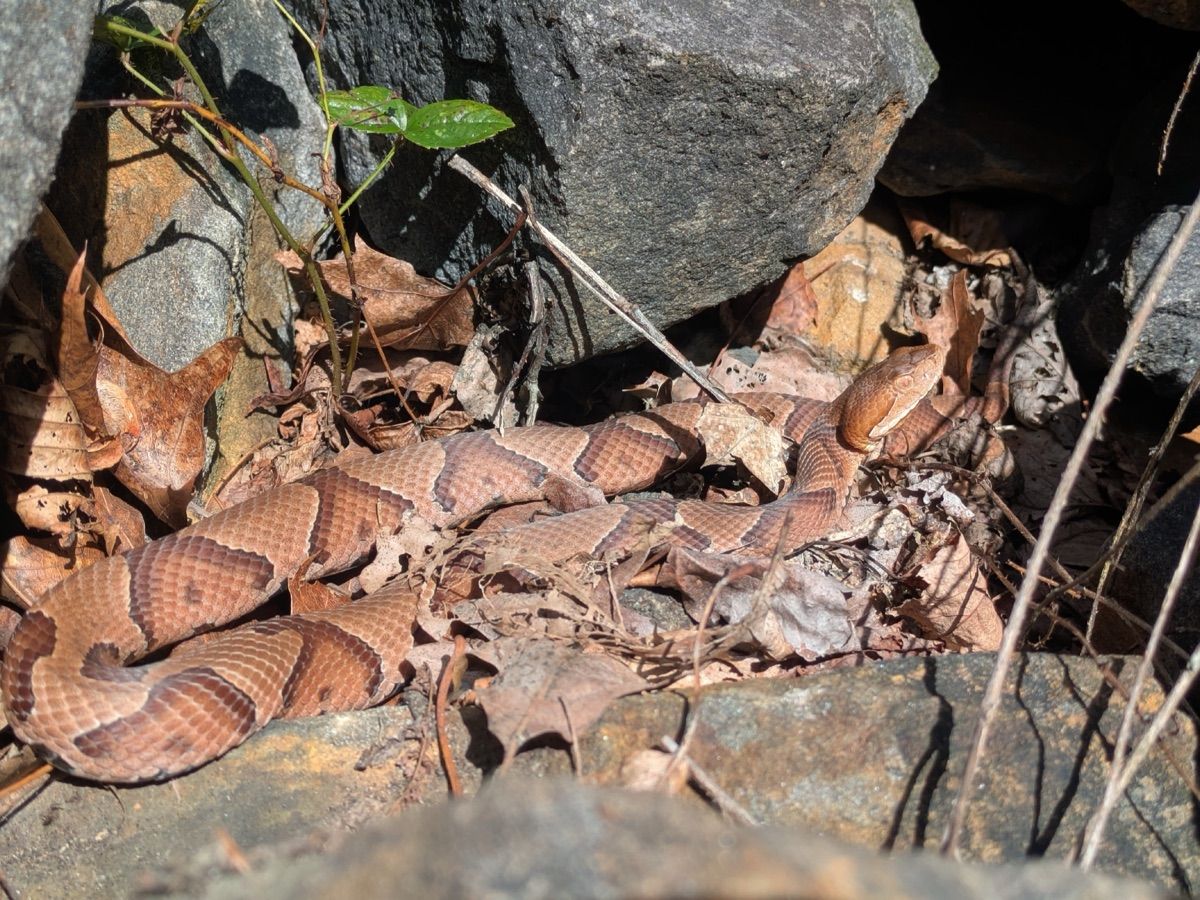
Eastern Copperhead vs Prairie Kingsnake
Tap a part to see it on both. Tap it again to turn it off.
(c) Court Harding, some rights reserved (CC BY)
Eastern Copperhead
Agkistrodon contortrix
VenomousAlex, no rights reserved
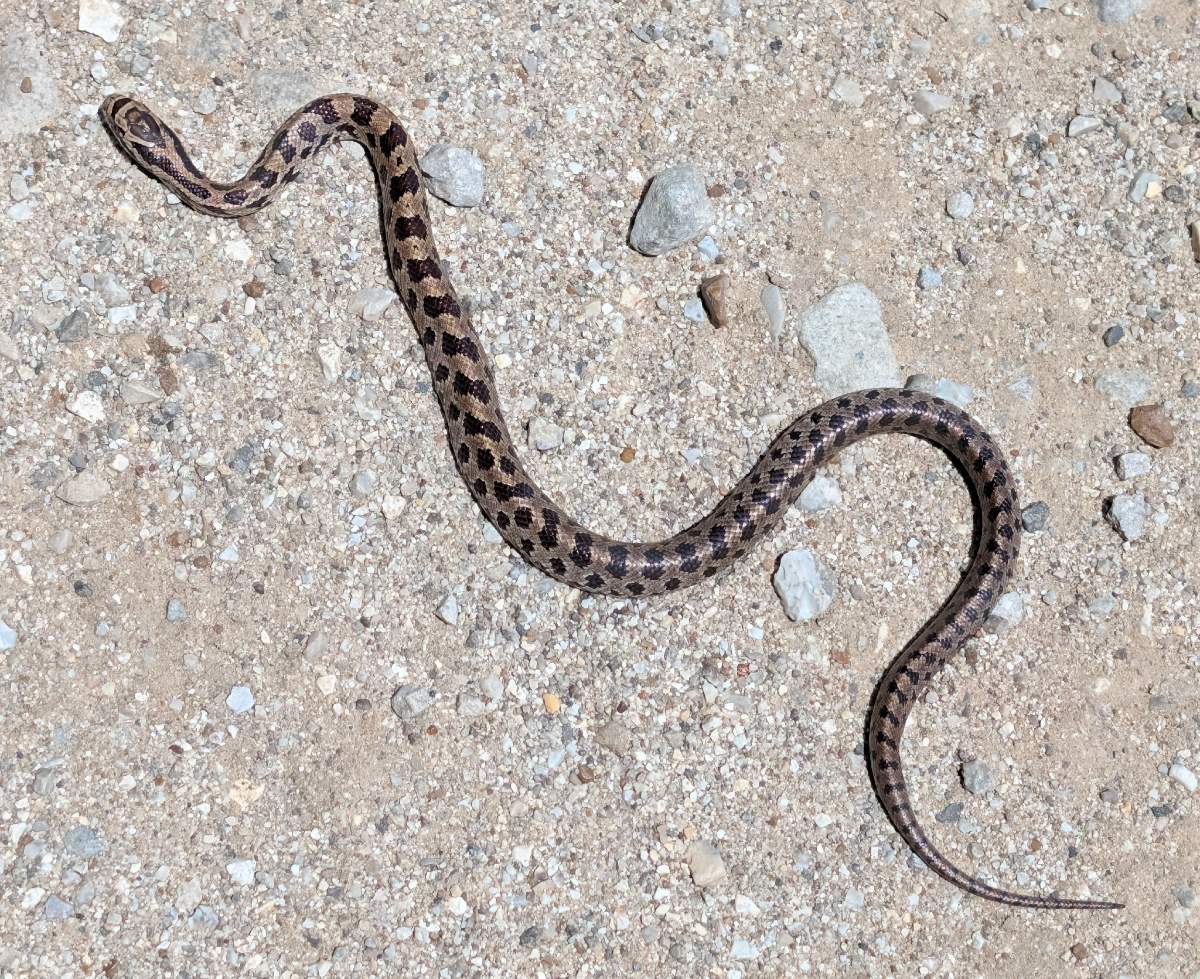
Prairie Kingsnake
Lampropeltis calligaster
Non-venomousThe quick way to tell
Look at the shape of the markings. The Prairie Kingsnake has many small, round or saddle-shaped blotches down the back. The Eastern Copperhead has hourglass-shaped bands — wide on the sides and narrow across the spine.
Pattern ★ This settles it
Dark hourglass bands - wide at the sides, pinched to a narrow waist over the spine.
Many small, dark-edged brown or reddish blotches down the back, with smaller alternating spots on the sides; may fade with age.
Head
Plain coppery triangular head with no stripes or blotches, clearly wider than the neck.
Head barely wider than the neck, often with an arrowhead-shaped mark on top.
Eyes
Vertical slit pupil; heat-sensing pit between eye and nostril.
Round pupils.
Pits
A deep heat-sensing pit on each side of the face, between the eye and the nostril.
None. There is no pit between the eye and the nostril.
Tail
Plain; young have a bright yellow tail tip.
Plain, pointed tail with no rattle; it may vibrate it when alarmed.
What it does
Freezes rather than fleeing - which is why people step on them.
Very secretive; often vibrates its tail and may bite or musk when grabbed.
Where it lives
Eastern US from Massachusetts and New York south to the Florida panhandle, west to Iowa, eastern Kansas, Oklahoma and eastern Texas.
Central US from southern Iowa, southeastern Nebraska and Kansas south to eastern Texas and Louisiana, east through Missouri, Arkansas, Illinois, Indiana, Kentucky and western Tennessee; just reaches northern Mississippi and far northern Alabama.