Prairie Rattlesnake
Crotalus viridis · Rattlesnakes
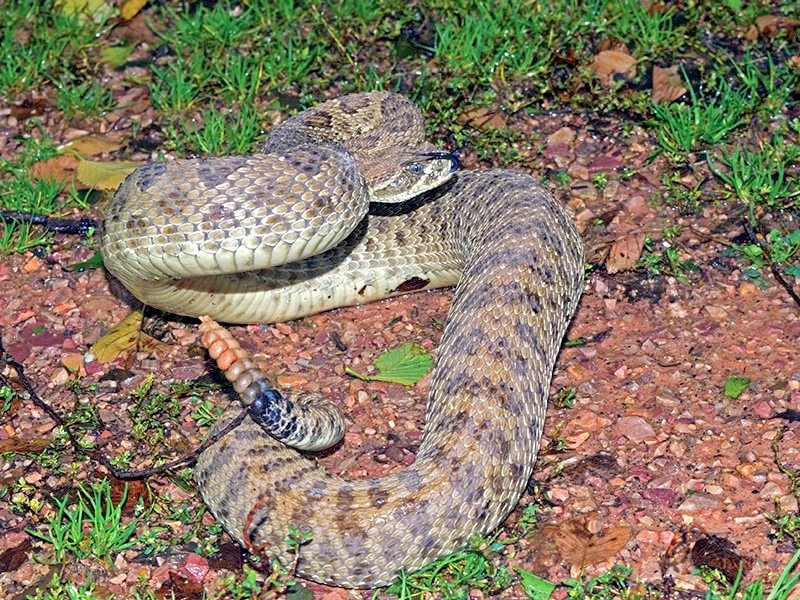
Tap a part to see what to look for. Tap it again to turn it off.
Venomous. Give it room and never try to move or handle it; a bite is a medical emergency.
How to identify
- Head
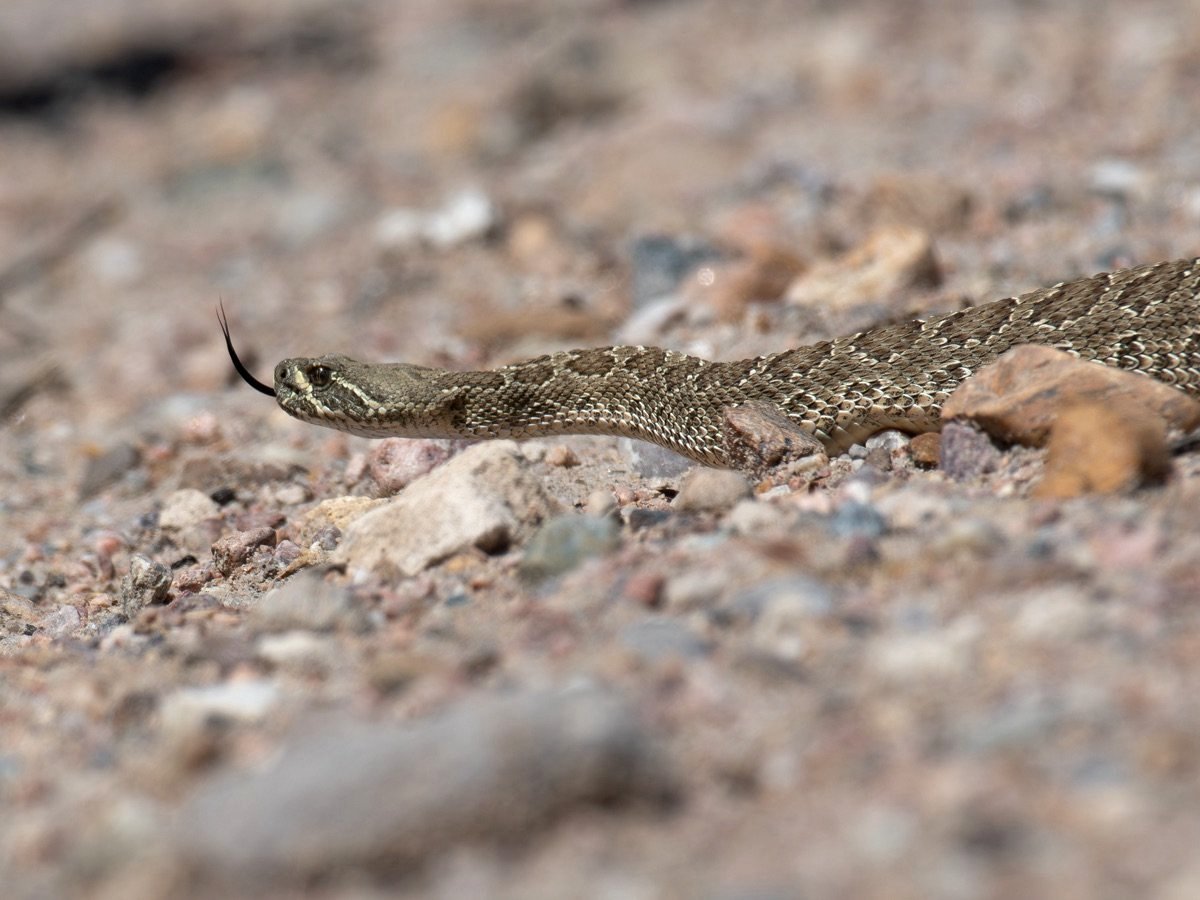
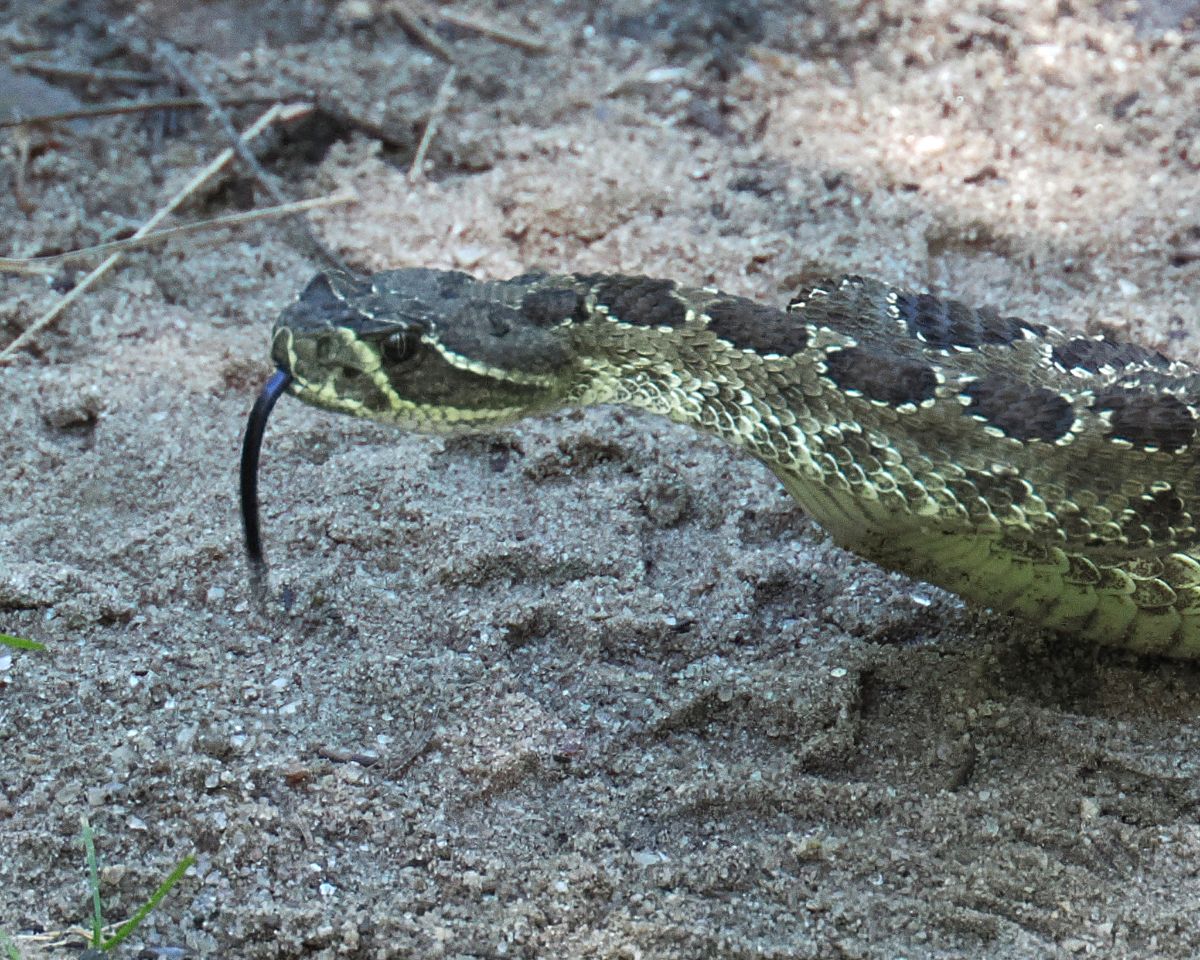
- Broad triangular head, clearly wider than the neck, with two pale diagonal stripes on the cheek.
- Pattern
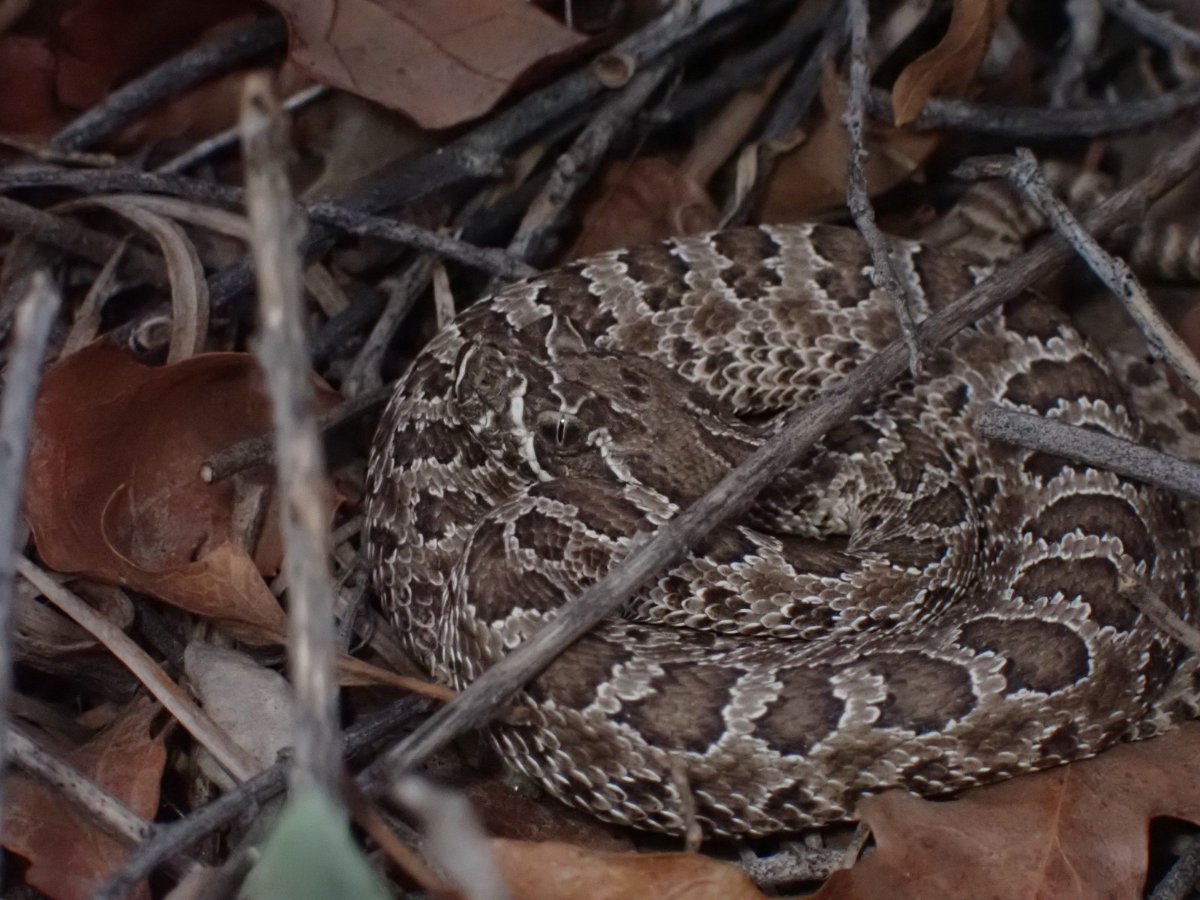
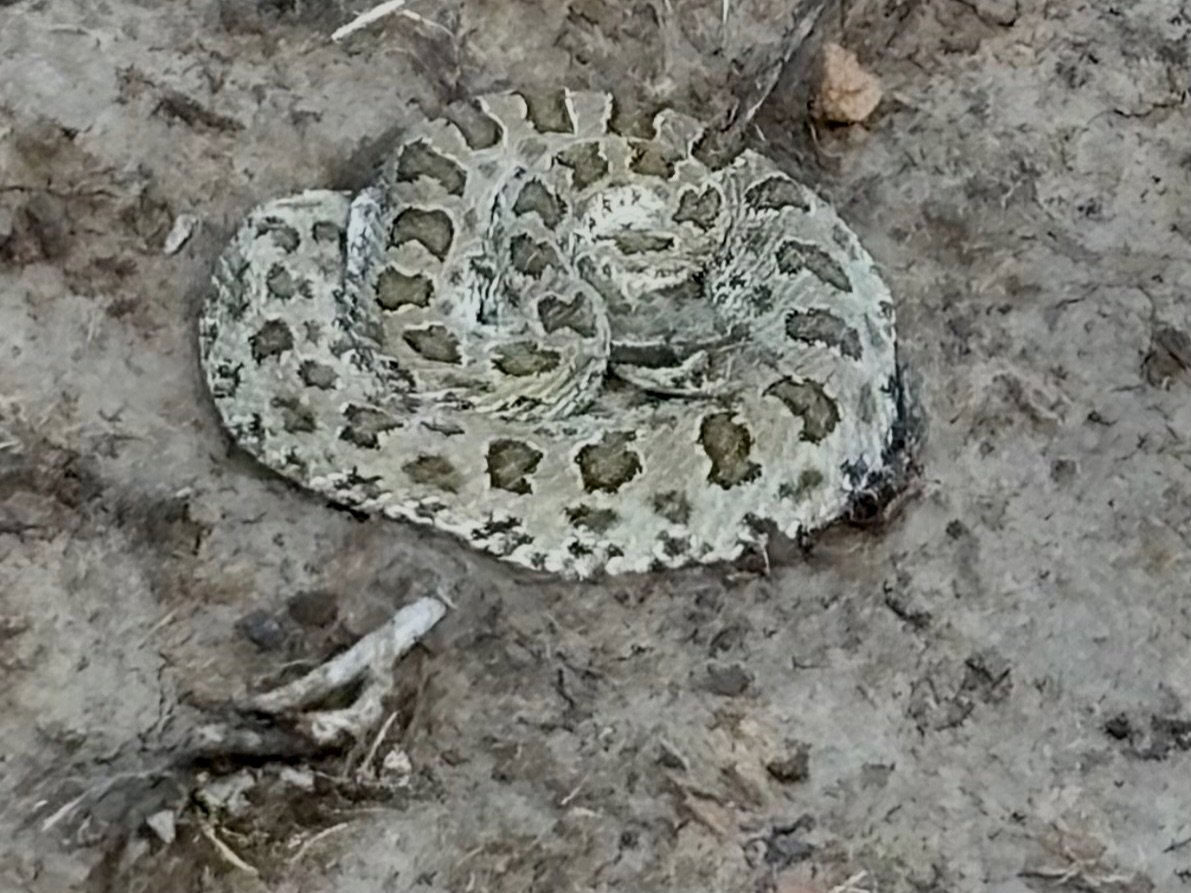
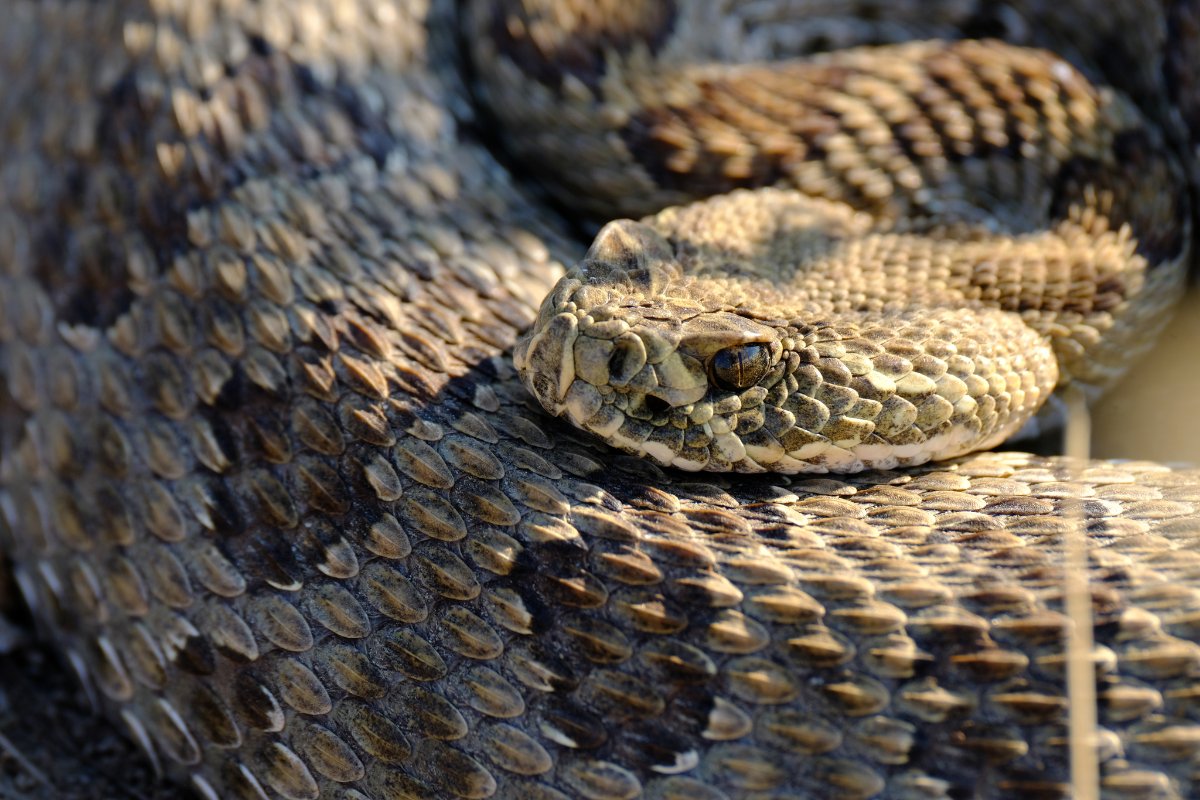
- Pale-edged blotches tightening into bands near the tail; colour matches local soil.
- Eyes
- Vertical slit pupil; heat-sensing pit between eye and nostril.
- Pits
- A deep heat-sensing pit on each side of the face, between the eye and the nostril.
- Tail
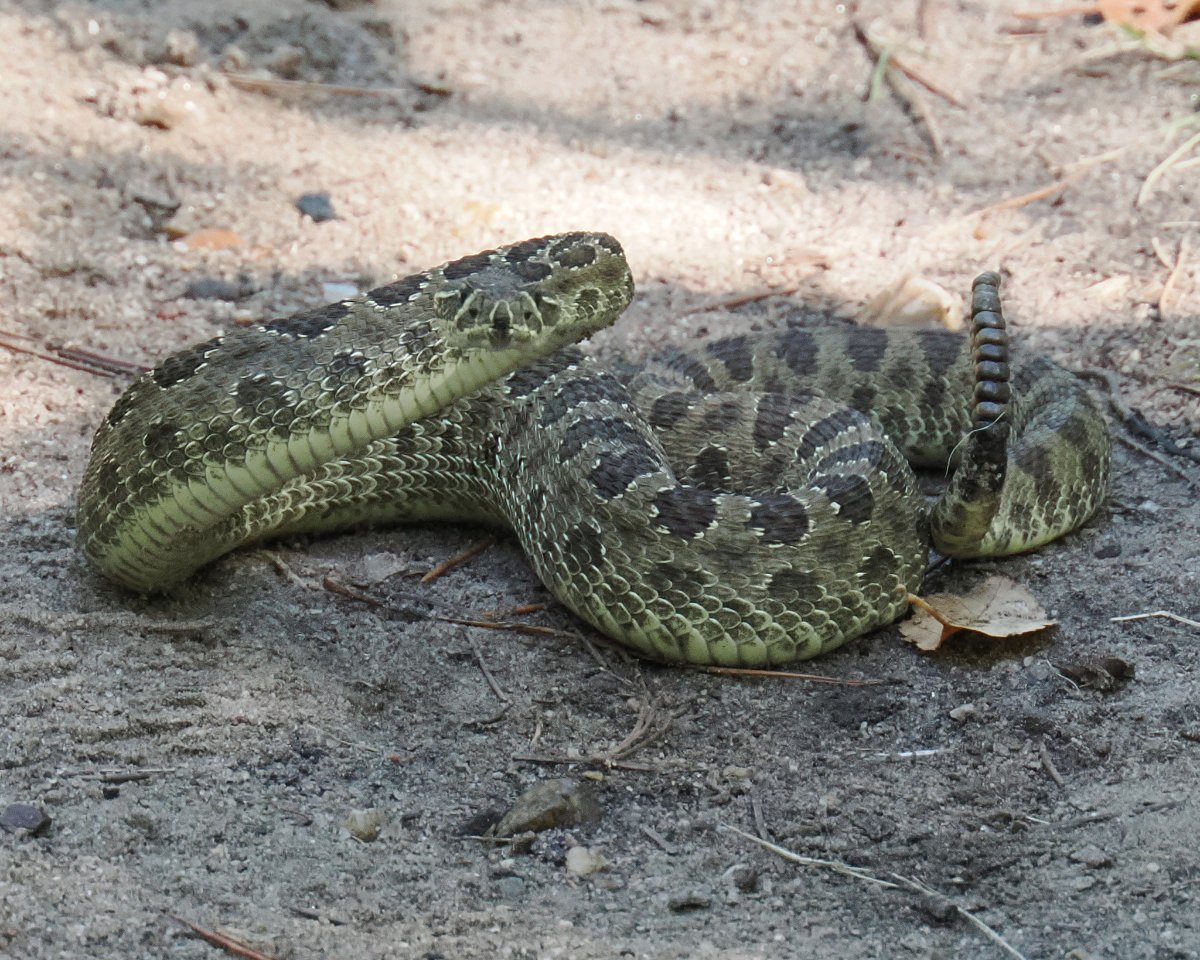
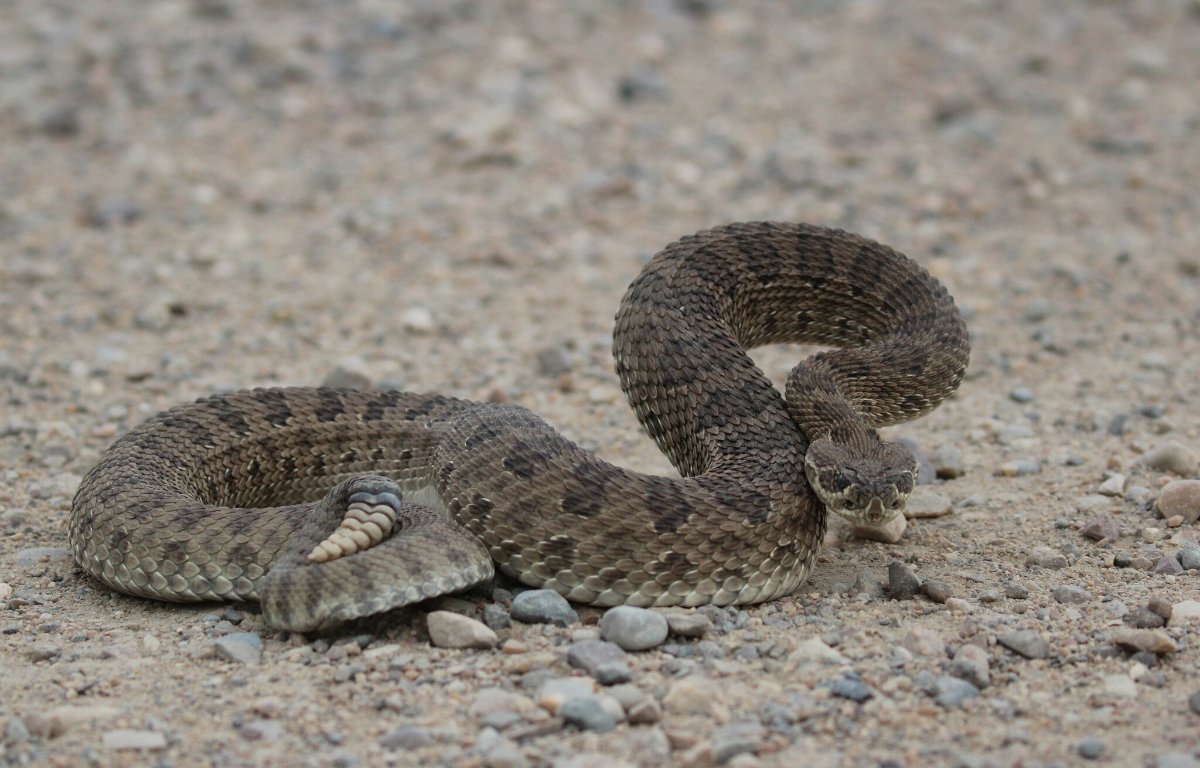
- Thinner than the body; tail rings dull, not bold black and white, ahead of the rattle.
- What it does
- Coils and rattles loudly; holds ground rather than fleeing.
Often confused with
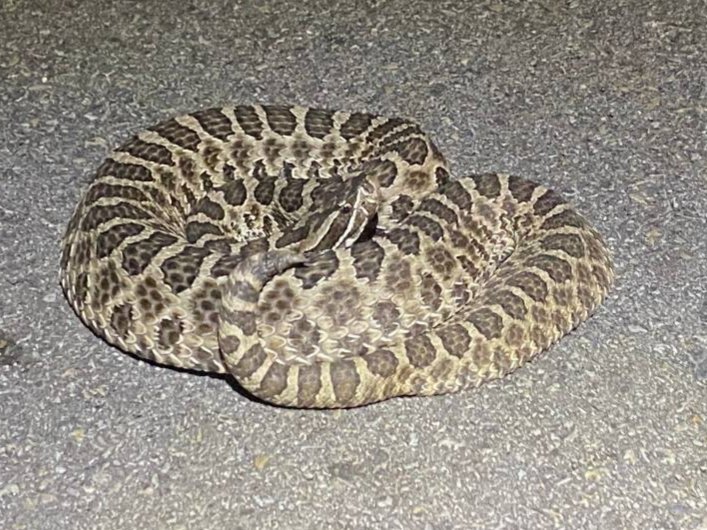
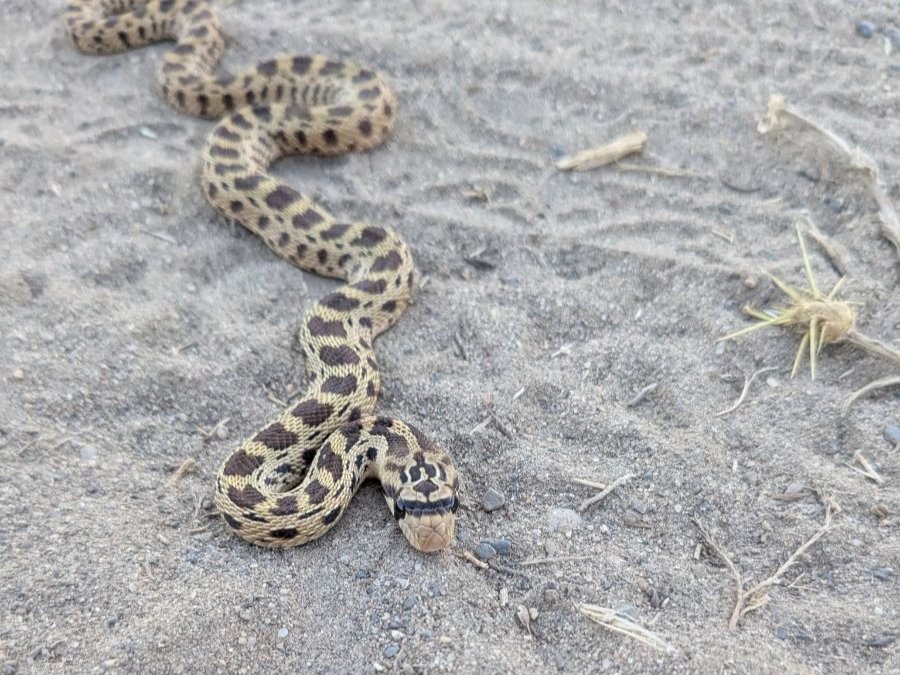
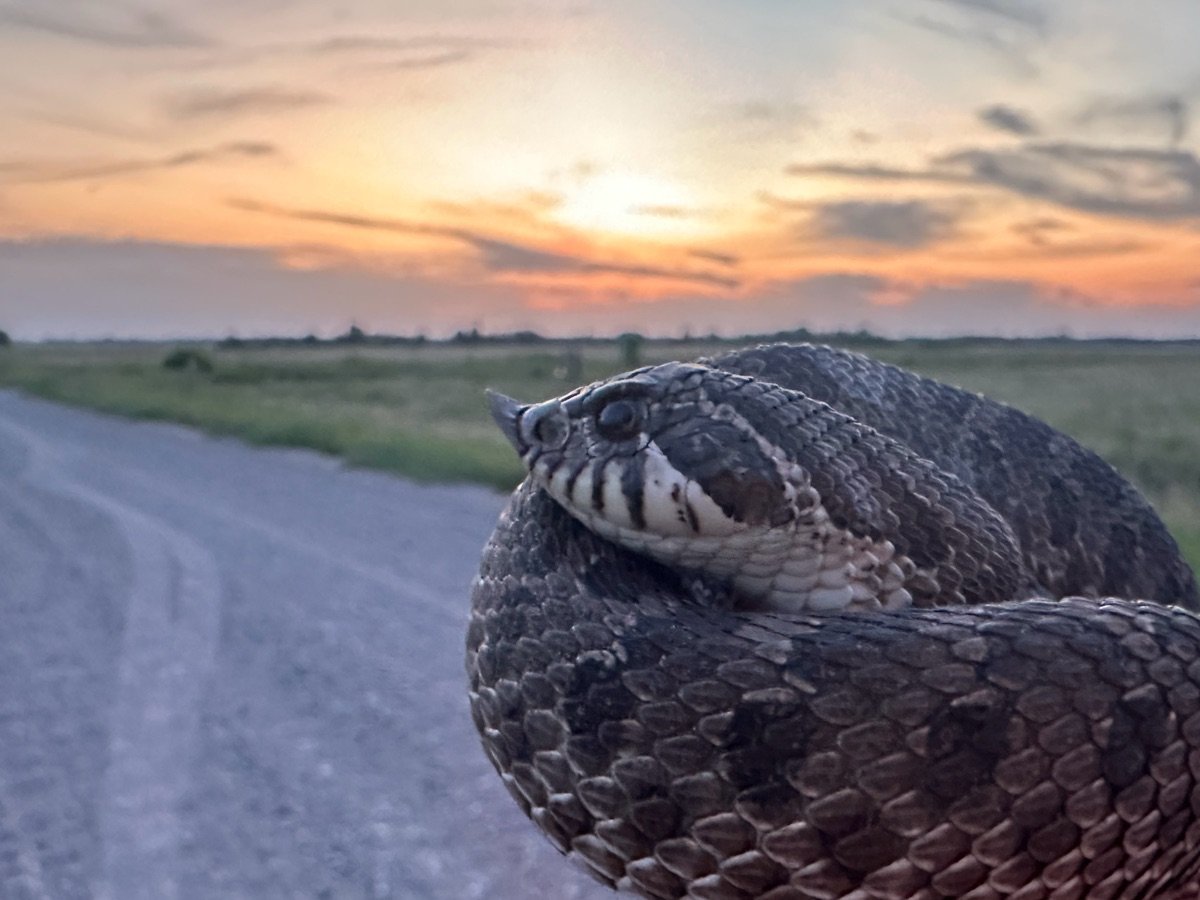
Gophersnake (bullsnake) is the big one: it hisses and shakes its tail but has a narrow head, round pupils and no rattle. Western Hog-nosed Snake shares the dark eye mask but has an upturned snout and round pupils. Western Massasauga is smaller, with nine large plate-like scales on top of its head.
How to tell them apart
Prairie Rattlesnake vs Western Massasauga›
The quick way to tellLook at the top of the head. The Western Massasauga has nine big, plate-like scales there. A Prairie Rattlesnake's crown is covered in many small scales.
Prairie Rattlesnake: Broad triangular head, clearly wider than the neck, with two pale diagonal stripes on the cheek.
Western Massasauga: Triangular head with nine large, plate-like scales on top — unlike most rattlesnakes, which have many small scales there. A white-edged dark stripe runs from the eye to the jaw.
Prairie Rattlesnake vs Gophersnake›
The quick way to tellLook at the tail. The rattlesnake has a rattle. The gophersnake's tail tapers to a point, even when it shakes it, and its head is narrow with round pupils.
Prairie Rattlesnake: Thinner than the body; tail rings dull, not bold black and white, ahead of the rattle.
Gophersnake: Tapers evenly; no rattle - but it shakes the tip hard in leaves.
Prairie Rattlesnake vs Western Hog-nosed Snake›
The quick way to tellLook at the snout. The hog-nosed snake's is upturned like a shovel. The rattlesnake has a normal snout, vertical pupils and a rattle.
Prairie Rattlesnake: Broad triangular head, clearly wider than the neck, with two pale diagonal stripes on the cheek.
Western Hog-nosed Snake: Sharply upturned, shovel-like snout; flattens its head and neck when alarmed.
About the Prairie Rattlesnake›
The rattlesnake of the open plains and prairie, usually found where there are rodent burrows to hunt and shelter in. Its color often matches the local soil, so the same species can look sandy in one state and olive in another.
In cold country it gathers in communal dens for the winter, sometimes by the dozen, which is why local people often know one hillside as "the rattlesnake place."
The details
Size Usually 3–4 ft; occasionally close to 5 ftWeight About 1–3 lbLifespan 15–20 years in the wild
Typical range›
Great Plains from southern Canada through Montana, the Dakotas, Wyoming, Nebraska, Kansas, Colorado, western Oklahoma and west Texas, west into eastern Idaho, eastern Utah, New Mexico and northeastern Arizona.
Activity›
Out from spring through fall. Active by day in mild weather, switching to evening and night in summer heat; winters underground in dens.
Diet›
Rodents, ground squirrels, young prairie dogs, rabbits, and sometimes birds and lizards.
Reproduction›
Gives birth to live young, usually 4–12, in late summer.
Found in parts of 14 states›
Ranges are approximate. It may be found in only part of a state, or be rare there, and snakes can turn up outside of them.
More photos