‹ Compare two snakes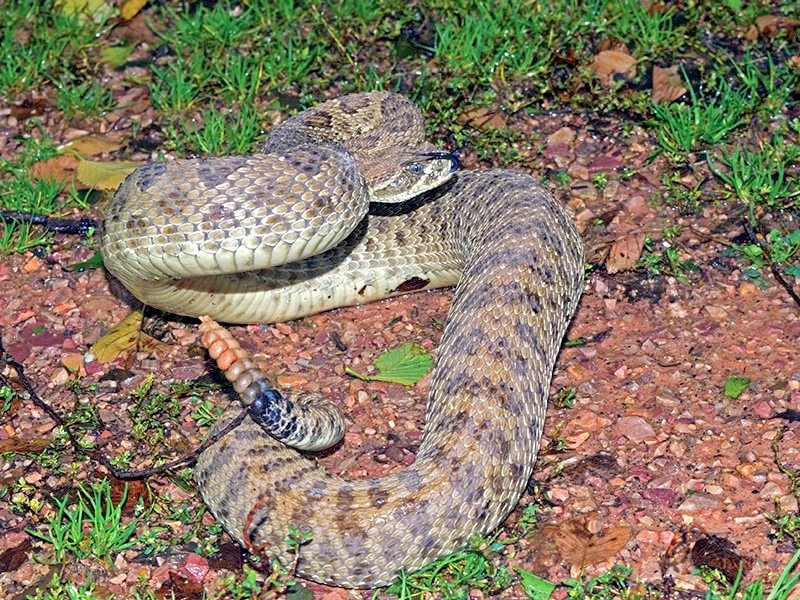
Prairie Rattlesnake vs Western Hog-nosed Snake
Tap a part to see it on both. Tap it again to turn it off.
Scott Shupe, no rights reserved
Prairie Rattlesnake
Crotalus viridis
Venomous(c) Meghan Cassidy, some rights reserved (CC BY-SA)
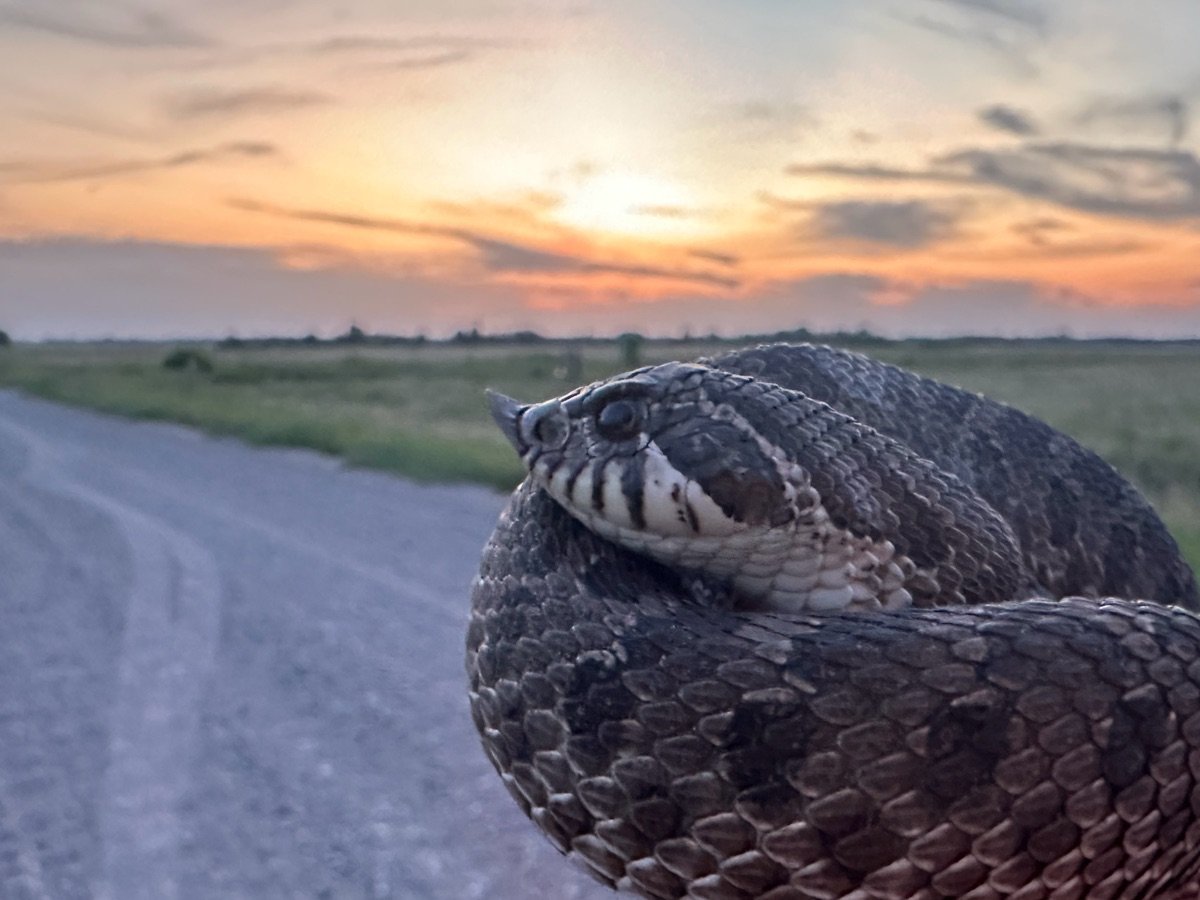
Western Hog-nosed Snake
Heterodon nasicus
Mildly venomousThe quick way to tell
Look at the snout. The hog-nosed snake's is upturned like a shovel. The rattlesnake has a normal snout, vertical pupils and a rattle.
Head ★ This settles it
Broad triangular head, clearly wider than the neck, with two pale diagonal stripes on the cheek.
Sharply upturned, shovel-like snout; flattens its head and neck when alarmed.
Pattern
Pale-edged blotches tightening into bands near the tail; colour matches local soil.
Dark brown blotches down a sandy-tan back; belly mostly black with pale patches.
Eyes
Vertical slit pupil; heat-sensing pit between eye and nostril.
Round pupil, with the upturned snout above; no heat-sensing pit.
Pits
A deep heat-sensing pit on each side of the face, between the eye and the nostril.
None. There is no pit between the eye and the nostril.
Tail
Thinner than the body; tail rings dull, not bold black and white, ahead of the rattle.
Short; underside black like the belly; no rattle.
What it does
Coils and rattles loudly; holds ground rather than fleeing.
Flattens, hisses and strikes with its mouth closed; may play dead.
Where it lives
Great Plains from southern Canada through Montana, the Dakotas, Wyoming, Nebraska, Kansas, Colorado, western Oklahoma and west Texas, west into eastern Idaho, eastern Utah, New Mexico and northeastern Arizona.
Great Plains: southern Canada south through Montana, the Dakotas, Nebraska, Kansas, Oklahoma and Texas, west to eastern Wyoming, Colorado and New Mexico, east to Minnesota, Iowa, Missouri and Illinois.