Speckled Kingsnake
Lampropeltis holbrooki · Kingsnakes & Milksnakes
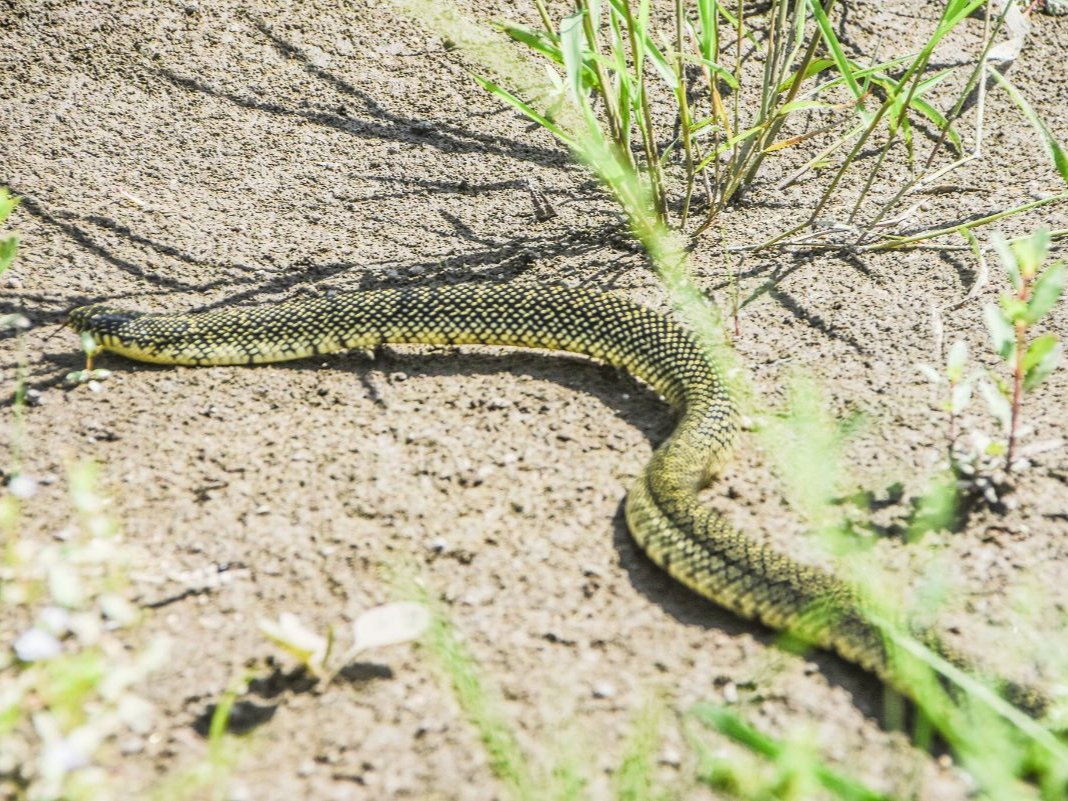
Tap a part to see what to look for. Tap it again to turn it off.
No venom, but it may bite and smear foul-smelling musk if handled.
How to identify
- Head
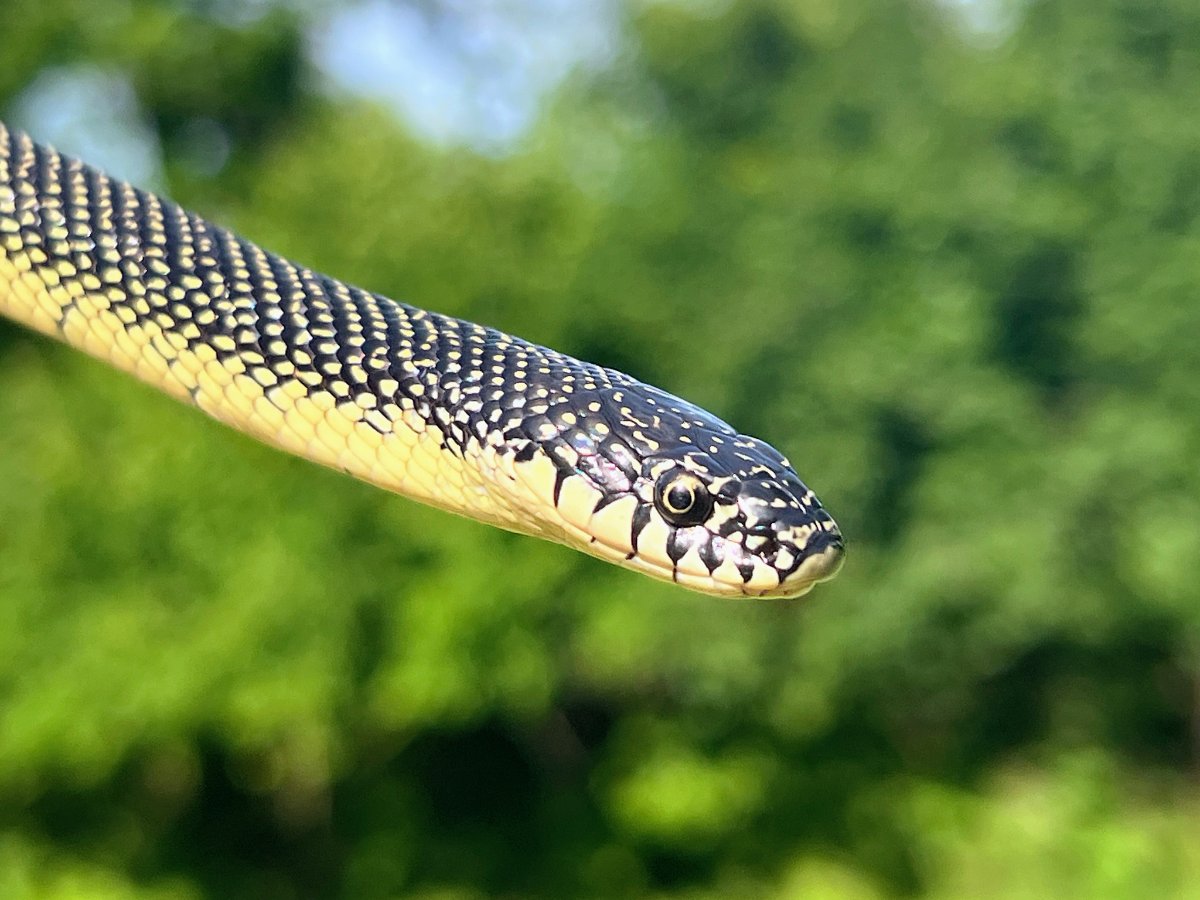
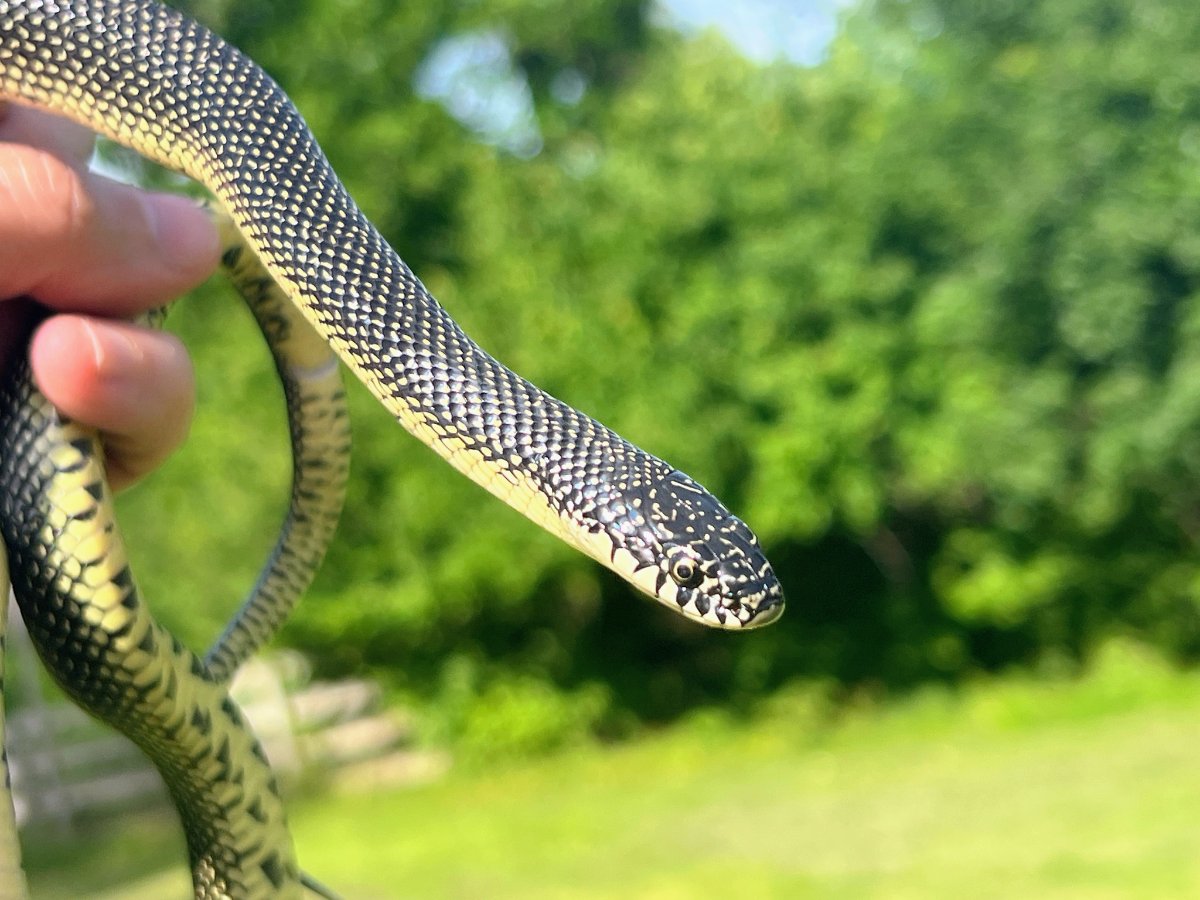
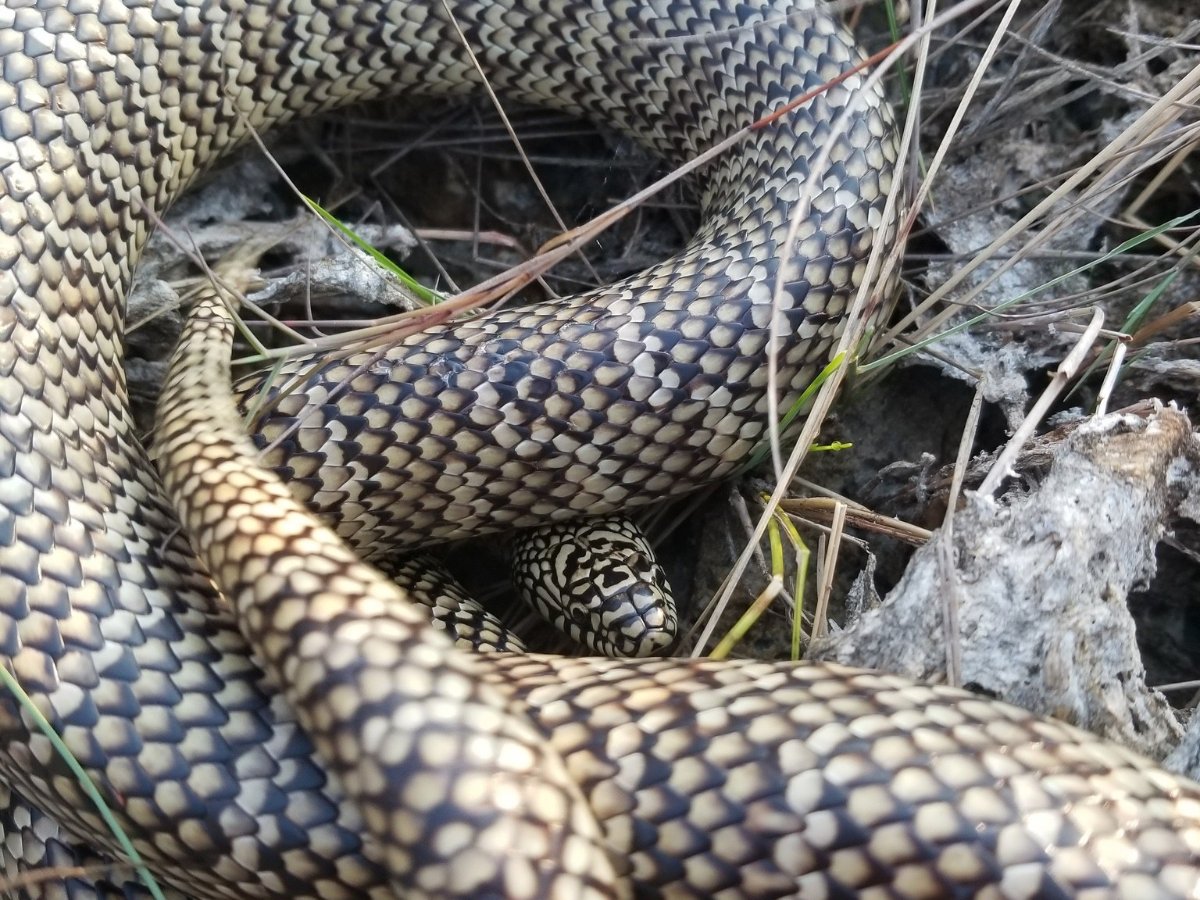
- Black head with light specks on the head scales. The lip scales are yellow with bold dark bars.
- Pattern
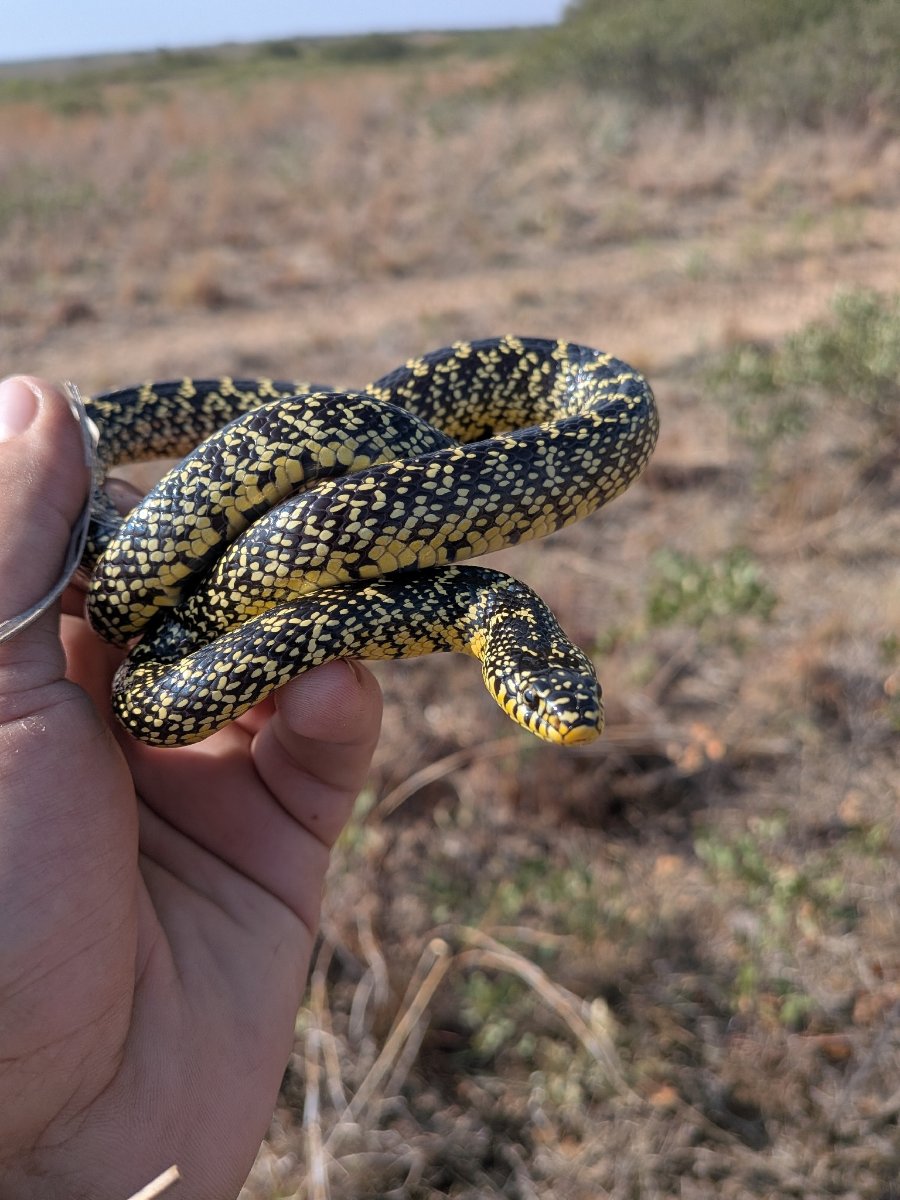
- Black with a light speck on nearly every scale, giving a salt-and-pepper look. Young snakes show narrow light crossbars like a chain that fade as they grow. Some adults in the west have large yellow specks that cover more than half of each scale.
- Pits
- None. There is no pit between the eye and the nostril.
- Tail
- Black with light specks like the body. It may shake its tail when alarmed.
- What it does
- Secretive; it hides under rocks, logs and in burrows. When alarmed it may shake its tail. If picked up it may bite and smear strong-smelling musk, then often calms down.
Often confused with
The Eastern Kingsnake, farther east, has bold white or yellow chain-like crossbands rather than all-over speckles. The Black Kingsnake (east of the Mississippi River) can look speckled too but usually has chain-like marks on the sides and a mostly black head. Young Speckled Kingsnakes can show chain-like crossbars, so check for specks on the scales between the bars.
How to tell them apart
Speckled Kingsnake vs Eastern Kingsnake›
The quick way to tellLook at the back. The Speckled Kingsnake has a small light speck on almost every scale, so it looks evenly sprinkled. The Eastern Kingsnake has bold white or yellow crossbands or chain-like lines on a black body.
Speckled Kingsnake: Black with a light speck on nearly every scale, giving a salt-and-pepper look. Young snakes show narrow light crossbars like a chain that fade as they grow. Some adults in the west have large yellow specks that cover more than half of each scale.
Eastern Kingsnake: Thin white or cream chain-link bands linking along the sides of a blue-black body.
About the Speckled Kingsnake›
The Speckled Kingsnake lives in the middle of the US, from Iowa and Illinois south to the Gulf Coast and west into the Great Plains. It uses prairies, open woods, woodland edges, rocky hillsides and the edges of swamps, and often hides under rocks, logs or in animal burrows. It squeezes its prey and eats many other snakes, including venomous ones.
The key sign is in the name: a shiny black snake with a small yellow or white speck on almost every scale, so it looks sprinkled with salt and pepper. It was once treated as part of one big 'Common Kingsnake' species, so older books may call it Lampropeltis getula holbrooki.
The details
Size Most adults are 35–48 inches (90–122 cm) long; the largest reach about 72 inches (183 cm).
Typical range›
Central US: Iowa and Illinois south through Missouri, Arkansas and Louisiana to the Gulf Coast, and from Alabama and Mississippi west to Nebraska, Kansas, Oklahoma, Texas and a small area of southeastern Colorado.
Activity›
Active from about April to October. It is mostly out in the day in spring, then more at dusk and at night in hot weather.
Diet›
Small mammals such as mice and shrews, birds and bird eggs, lizards, reptile eggs, frogs and other snakes, including venomous ones. It kills prey by squeezing.
Reproduction›
Lays eggs. Mating is in spring; females lay about 2–23 eggs (often around 10) in early summer in rotting logs or burrows, and the young hatch in late summer or fall.
Found in parts of 12 states›
Ranges are approximate. It may be found in only part of a state, or be rare there, and snakes can turn up outside of them.