‹ Compare two snakes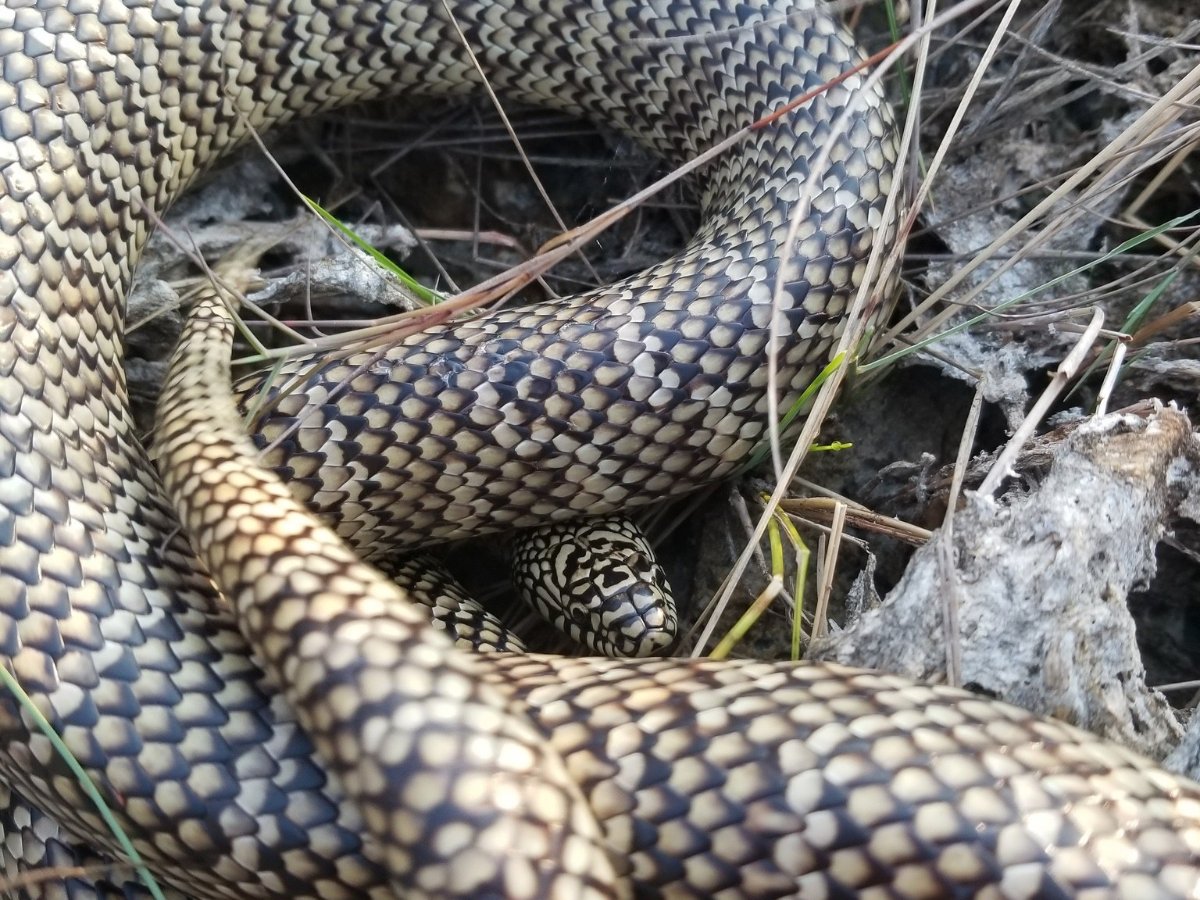
Eastern Kingsnake vs Speckled Kingsnake
(c) Court Harding, some rights reserved (CC BY)
Eastern Kingsnake
Lampropeltis getula
Non-venomous(c) Jay Pruett, some rights reserved (CC BY)
Speckled Kingsnake
Lampropeltis holbrooki
Non-venomousThe quick way to tell
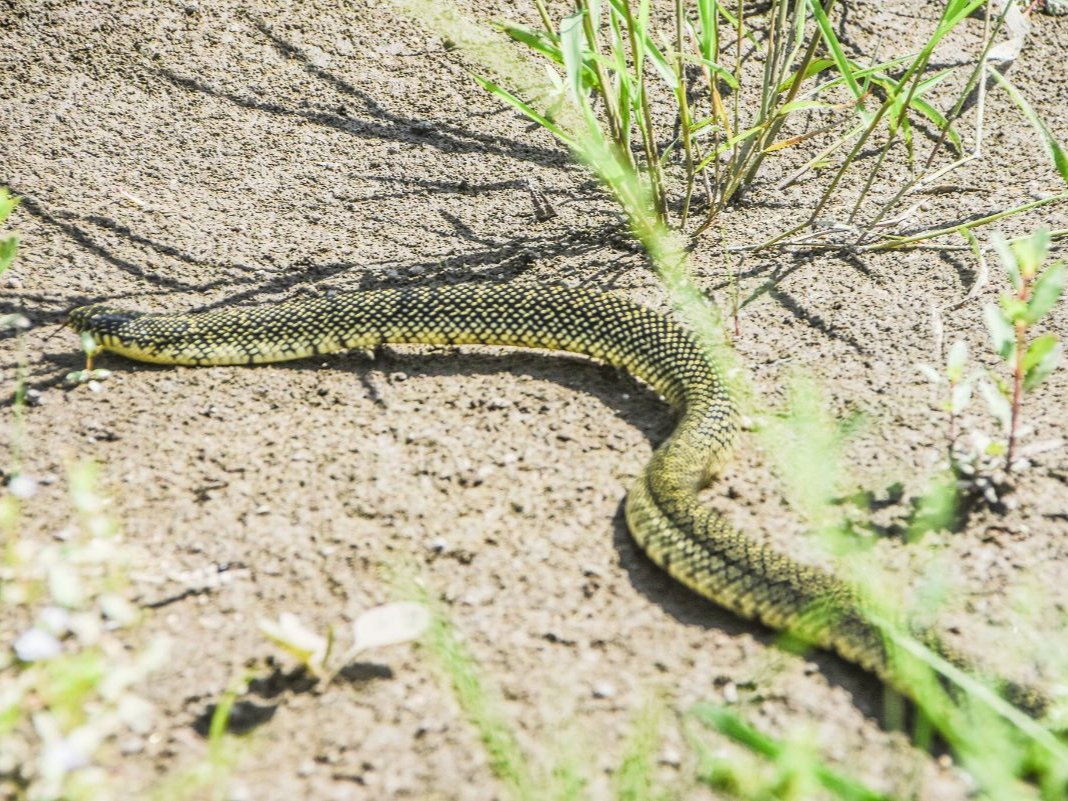
Look at the back. The Speckled Kingsnake has a small light speck on almost every scale, so it looks evenly sprinkled. The Eastern Kingsnake has bold white or yellow crossbands or chain-like lines on a black body.
Pattern ★ This settles it
Thin white or cream chain-link bands linking along the sides of a blue-black body.
Black with a light speck on nearly every scale, giving a salt-and-pepper look. Young snakes show narrow light crossbars like a chain that fade as they grow. Some adults in the west have large yellow specks that cover more than half of each scale.
Head
Small glossy head barely wider than the neck.
Black head with light specks on the head scales. The lip scales are yellow with bold dark bars.
Eyes
Round pupil, small dark eye; no heat-sensing pit.
—
Pits
None. There is no pit between the eye and the nostril.
None. There is no pit between the eye and the nostril.
Tail
Tapers evenly, chain pattern continuing; no rattle.
Black with light specks like the body. It may shake its tail when alarmed.
What it does
Musks and may vibrate its tail; hunts other snakes.
Secretive; it hides under rocks, logs and in burrows. When alarmed it may shake its tail. If picked up it may bite and smear strong-smelling musk, then often calms down.
Where it lives
Southeast: southern New Jersey south through northern Florida, west across Georgia into Alabama.
Central US: Iowa and Illinois south through Missouri, Arkansas and Louisiana to the Gulf Coast, and from Alabama and Mississippi west to Nebraska, Kansas, Oklahoma, Texas and a small area of southeastern Colorado.