‹ Compare two snakes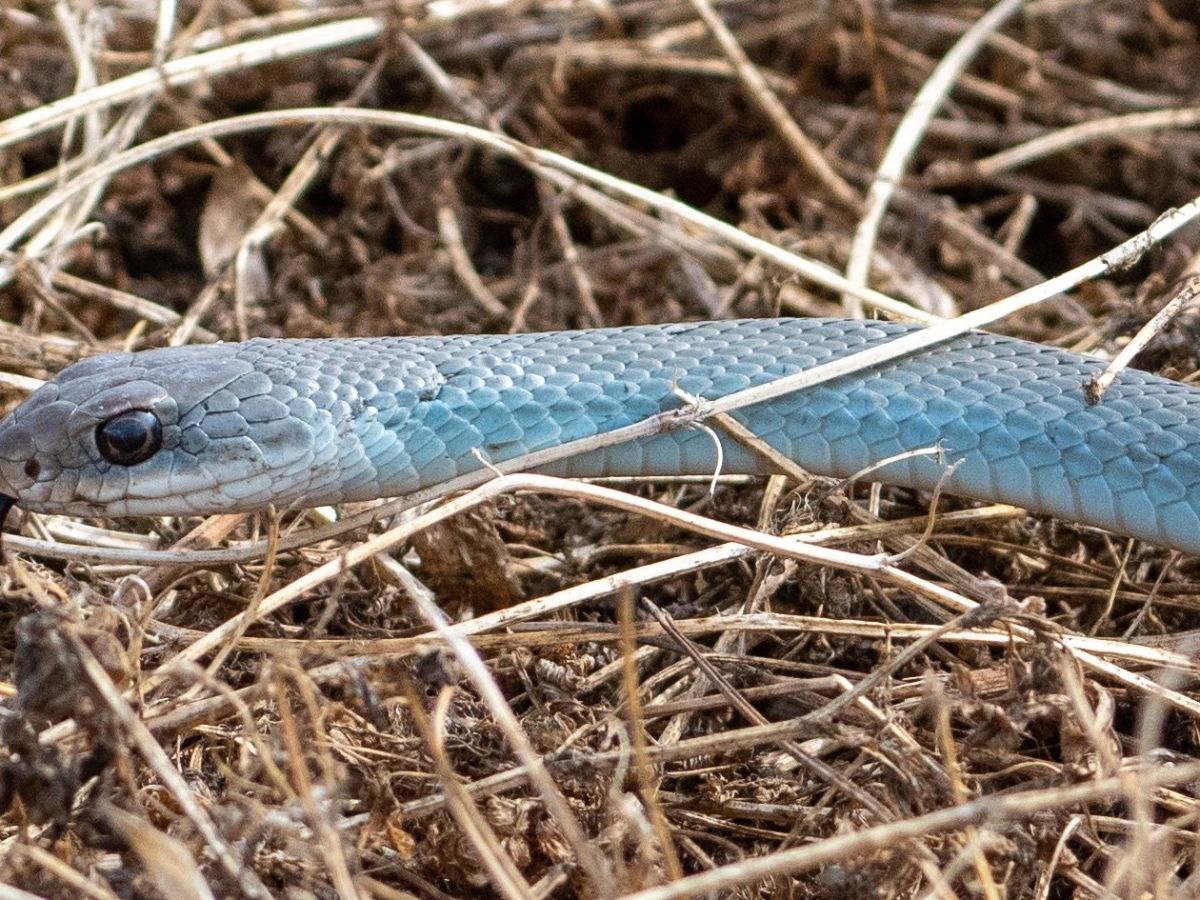
North American Racer vs Western Ratsnake
(c) Jonathan Eisen, some rights reserved (CC BY)
North American Racer
Coluber constrictor
Non-venomous(c) Francis, some rights reserved (CC BY)
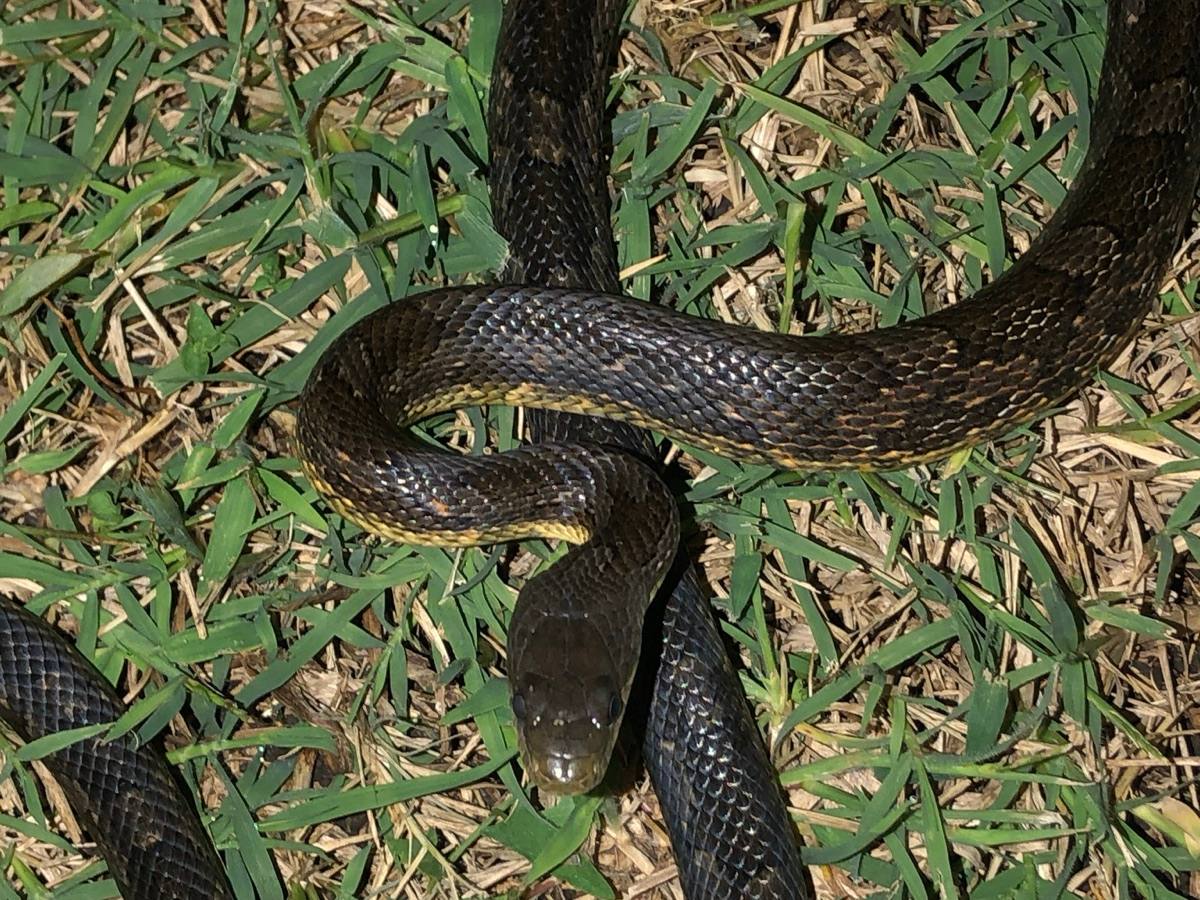
Western Ratsnake
Pantherophis obsoletus
Non-venomousThe quick way to tell
For adults, look at the body and scales. The racer is slim, smooth and evenly colored all over. An adult Western Ratsnake is heavier and duller, and often shows pale specks between its scales or faint leftover blotches.
Pattern ★ This settles it
Plain black, blue-gray, olive or tan; belly pale to gray; young strongly blotched.
Adults black in the north, blotched on yellowish or gray in Texas; young boldly blotched.
Head
Small head only a little wider than the neck; large eyes.
Narrow head only a little wider than the neck; white to gray chin and throat.
Eyes
Round pupil in a large eye - a sight hunter; no heat-sensing pit.
Round pupil, fairly large dark eye; no heat-sensing pit.
Pits
None. There is no pit between the eye and the nostril.
None. There is no pit between the eye and the nostril.
Tail
Long and slender; no rattle.
Tapers evenly; no rattle - but it vibrates the tip in dry leaves.
What it does
Fast and nervous; vanishes at speed, bites when held.
Kinks its body and rattles its tail in leaves as a bluff; climbs to escape.
Where it lives
Nearly nationwide: every lower-48 state except Arizona, and into southern Canada, but absent from most of the desert Southwest.
Central US west of the Mississippi River: southeastern Minnesota, Iowa, Nebraska and Kansas south through Missouri, Arkansas, Oklahoma, Louisiana and Texas.