‹ Compare two snakes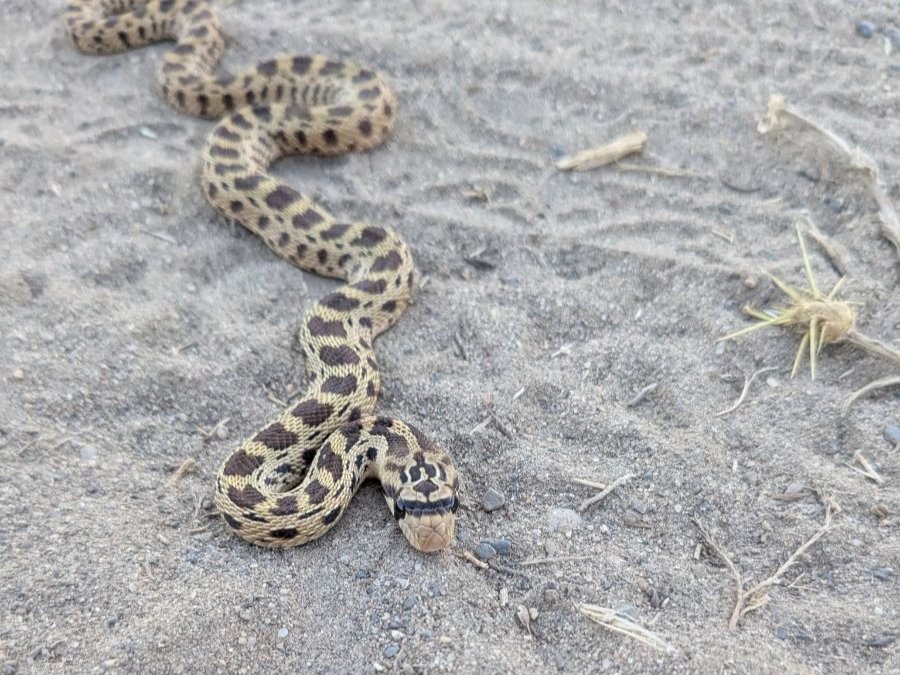
Gophersnake vs Western Hog-nosed Snake
Tap a part to see it on both. Tap it again to turn it off.
Abby Benson, no rights reserved
Gophersnake
Pituophis catenifer
Non-venomous(c) Meghan Cassidy, some rights reserved (CC BY-SA)
Western Hog-nosed Snake
Heterodon nasicus
Mildly venomousThe quick way to tell
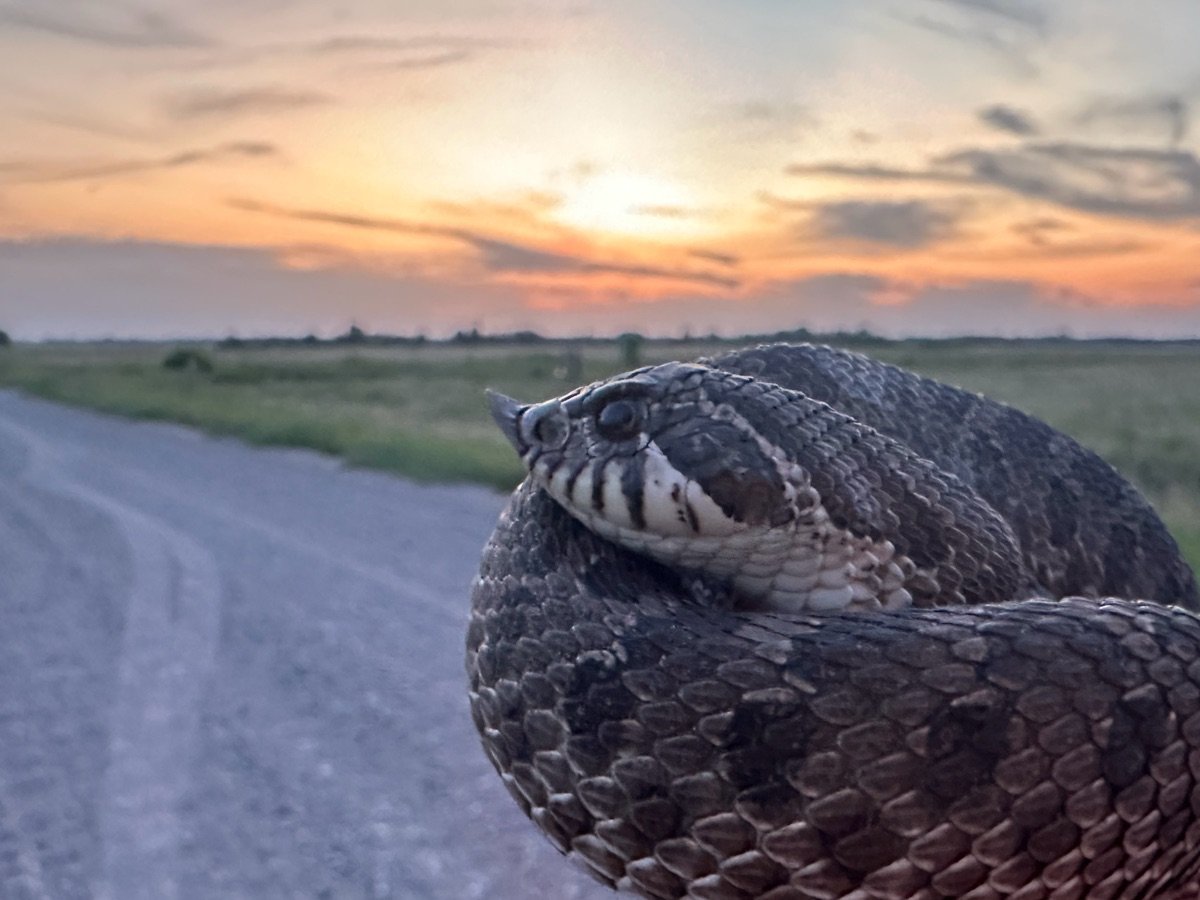
Look at the tip of the snout. The Western Hog-nosed has a sharply upturned, shovel-like nose. The Gophersnake's snout is plain and pointed, with no upturn.
Head ★ This settles it
Narrow head with a pointed snout and a dark line through the eye; it can flatten it to look triangular.
Sharply upturned, shovel-like snout; flattens its head and neck when alarmed.
Pattern
Dark blotches on yellow to cream, turning into clean crossbands near the tail.
Dark brown blotches down a sandy-tan back; belly mostly black with pale patches.
Eyes
Round pupil, small dark eye; no heat-sensing pit.
Round pupil, with the upturned snout above; no heat-sensing pit.
Pits
None. There is no pit between the eye and the nostril.
None. There is no pit between the eye and the nostril.
Tail
Tapers evenly; no rattle - but it shakes the tip hard in leaves.
Short; underside black like the belly; no rattle.
What it does
Hisses very loudly, flattens its head and strikes with its mouth closed - all bluff.
Flattens, hisses and strikes with its mouth closed; may play dead.
Where it lives
Western and central US: Pacific coast east to Indiana and Wisconsin, south through Texas, into Canada and Mexico.
Great Plains: southern Canada south through Montana, the Dakotas, Nebraska, Kansas, Oklahoma and Texas, west to eastern Wyoming, Colorado and New Mexico, east to Minnesota, Iowa, Missouri and Illinois.