Western Hog-nosed Snake
Heterodon nasicus · Hognose Snakes
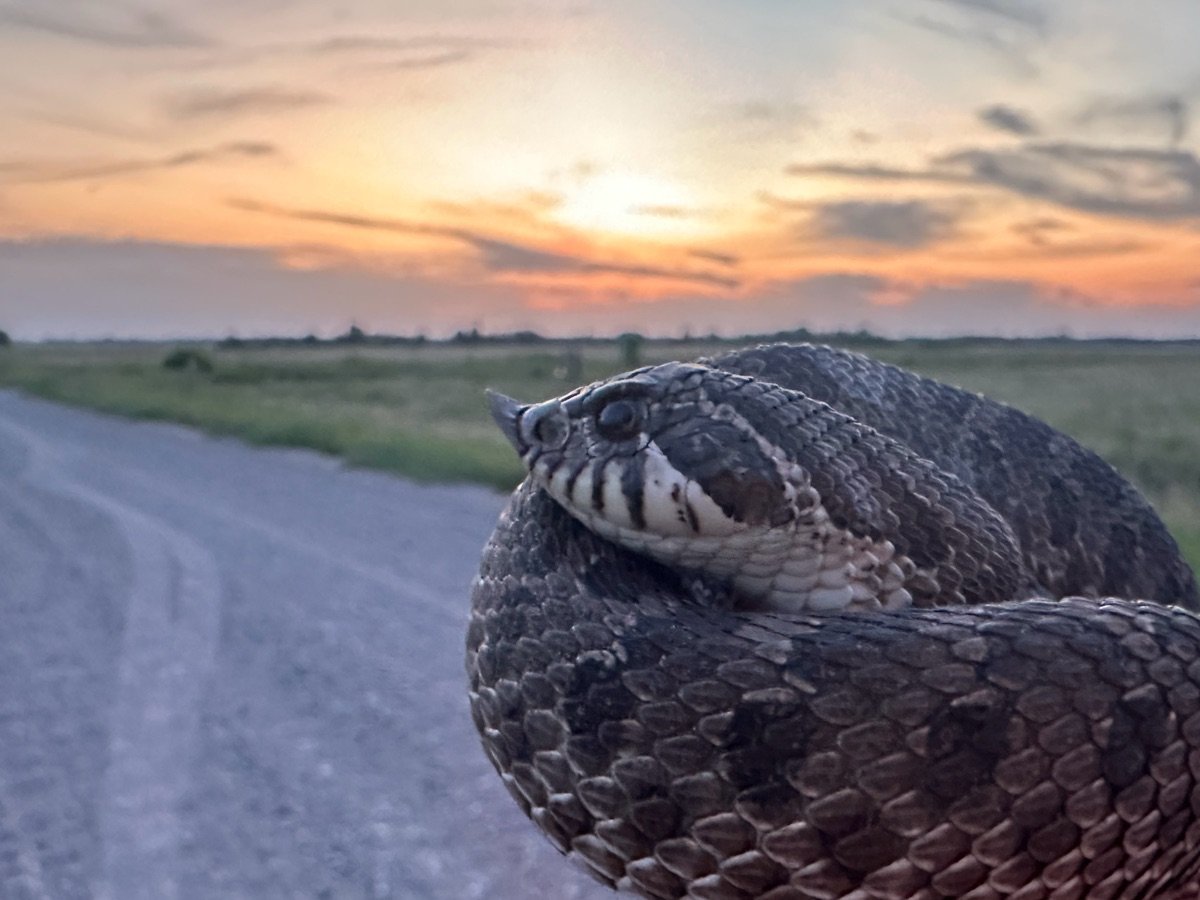
Tap a part to see what to look for. Tap it again to turn it off.
Mild venom from its enlarged rear teeth, used on toads. It bluffs and hisses, and rarely bites. (Generally considered harmless to people.)
How to identify
- Head
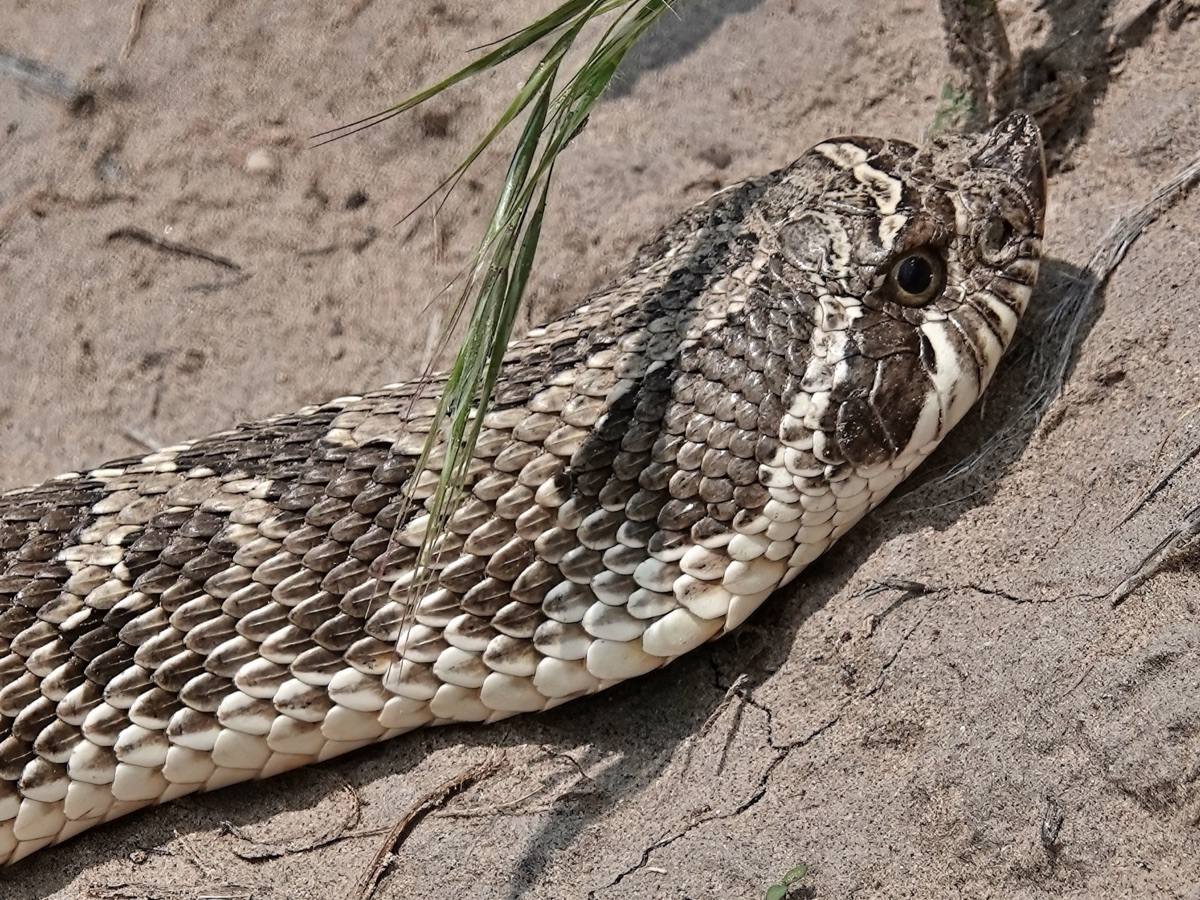
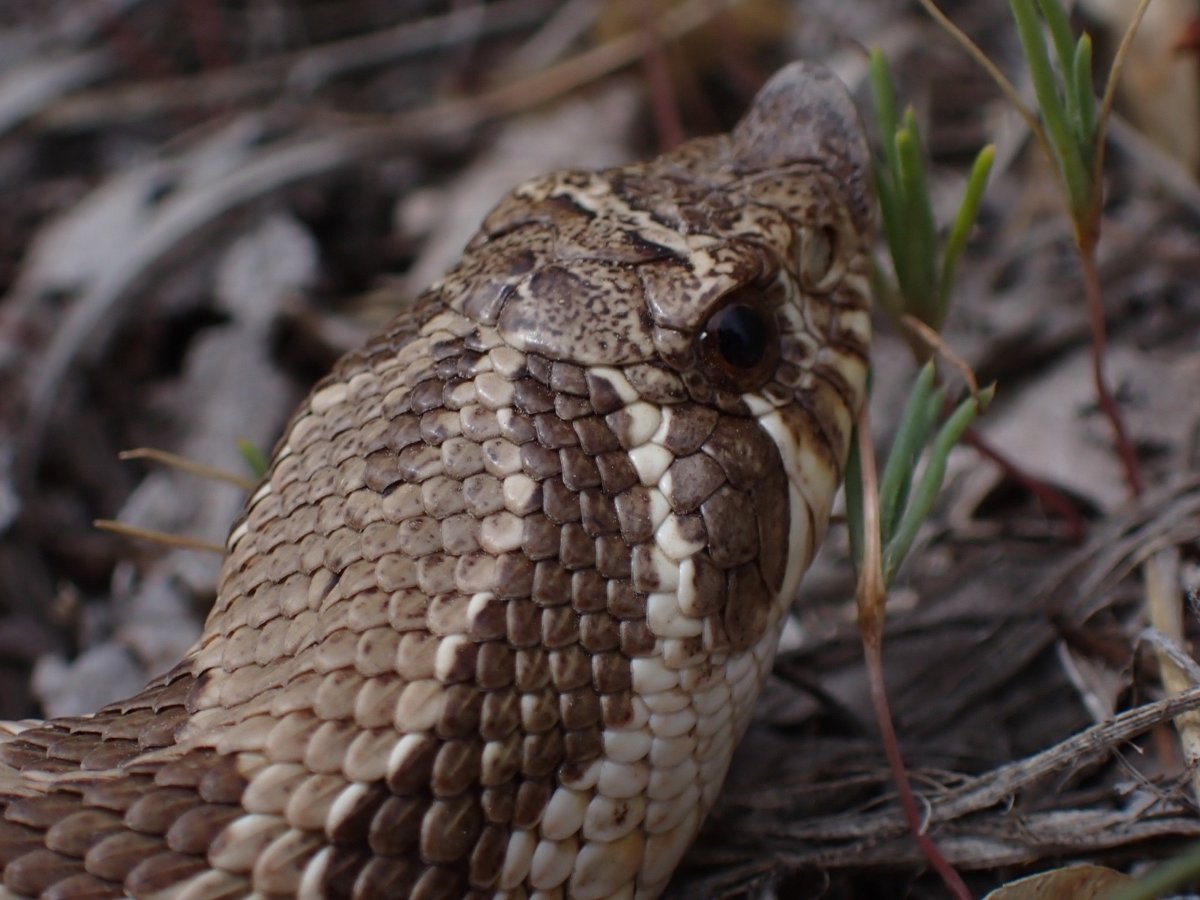
- Sharply upturned, shovel-like snout; flattens its head and neck when alarmed.
- Pattern
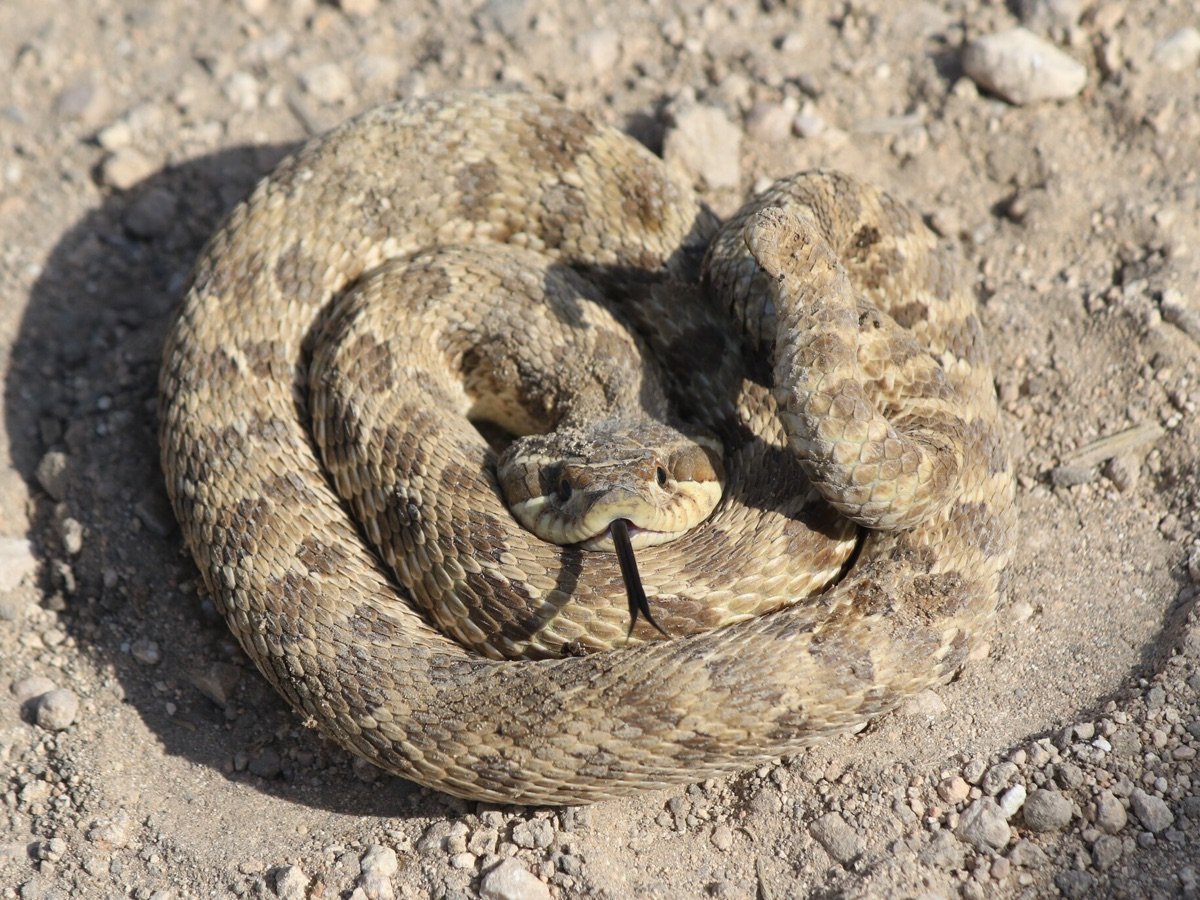
- Dark brown blotches down a sandy-tan back; belly mostly black with pale patches.
- Eyes
- Round pupil, with the upturned snout above; no heat-sensing pit.
- Pits
- None. There is no pit between the eye and the nostril.
- Tail
- Short; underside black like the belly; no rattle.
- What it does
- Flattens, hisses and strikes with its mouth closed; may play dead.
Often confused with
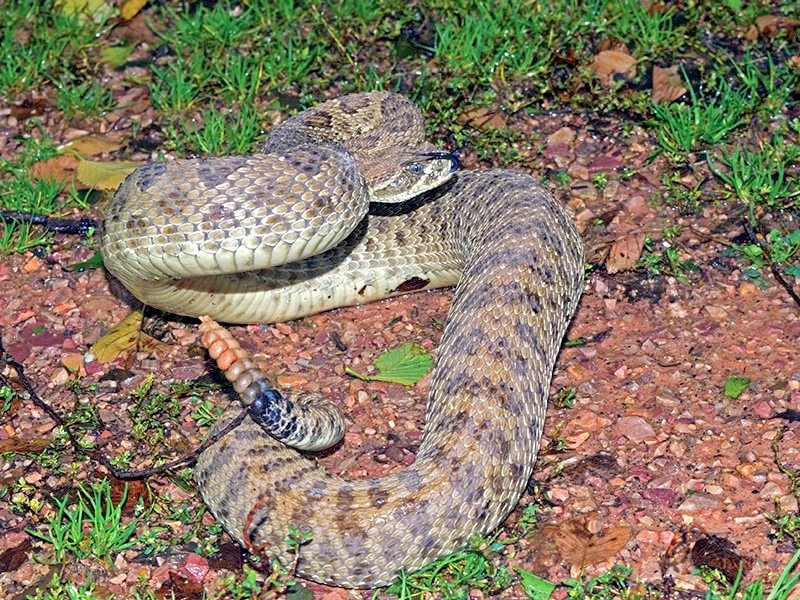
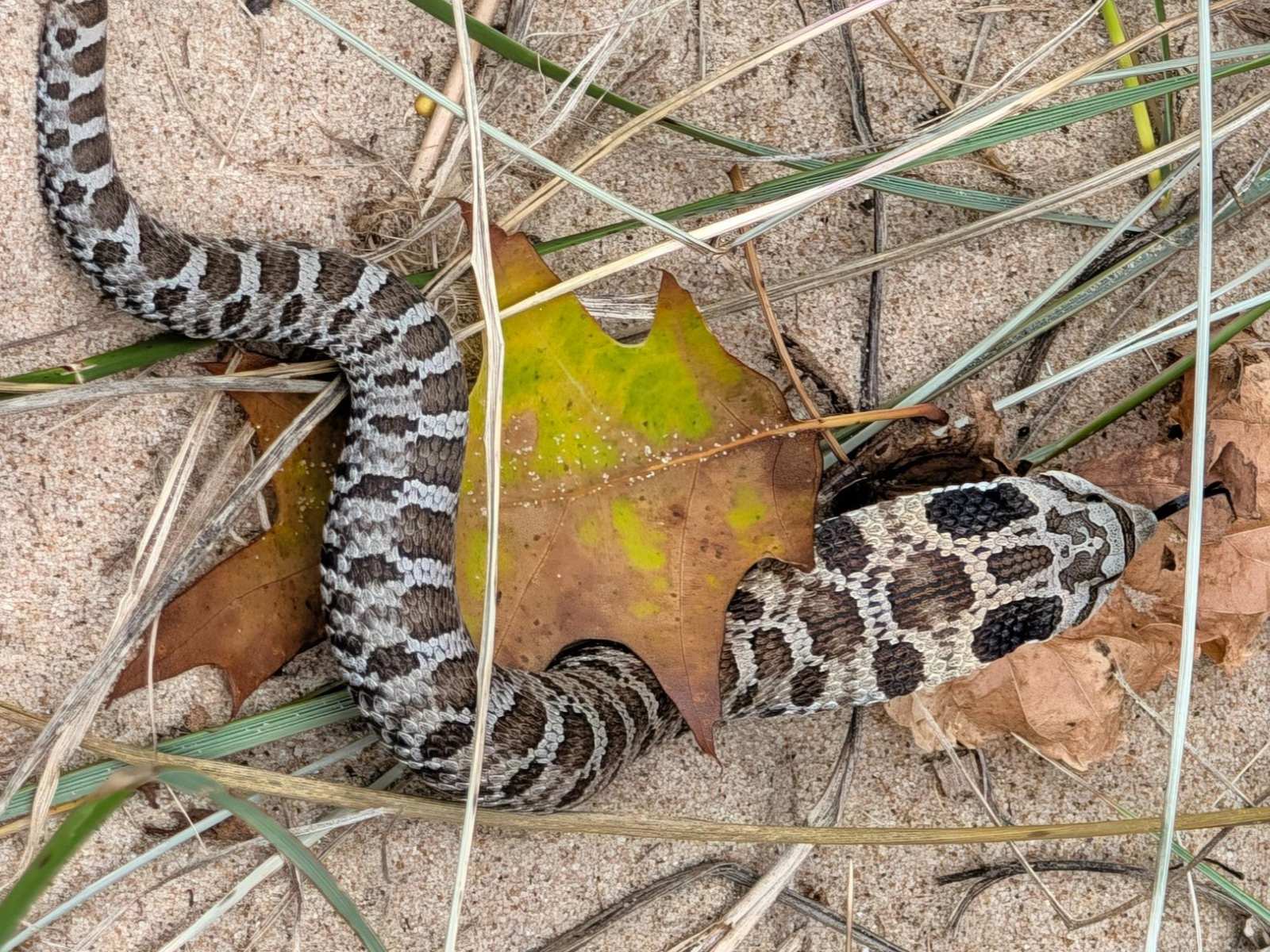
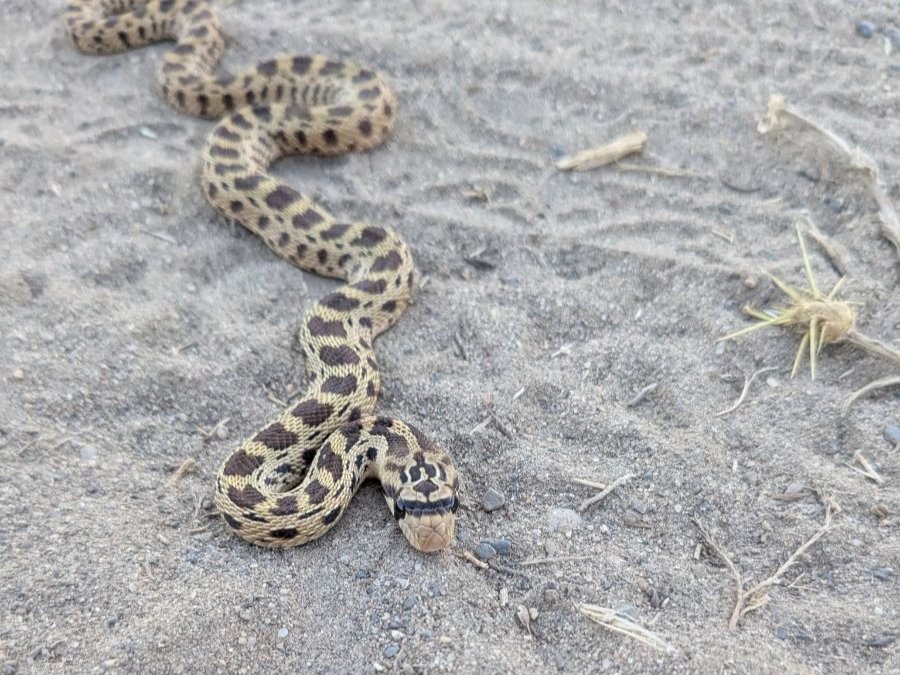
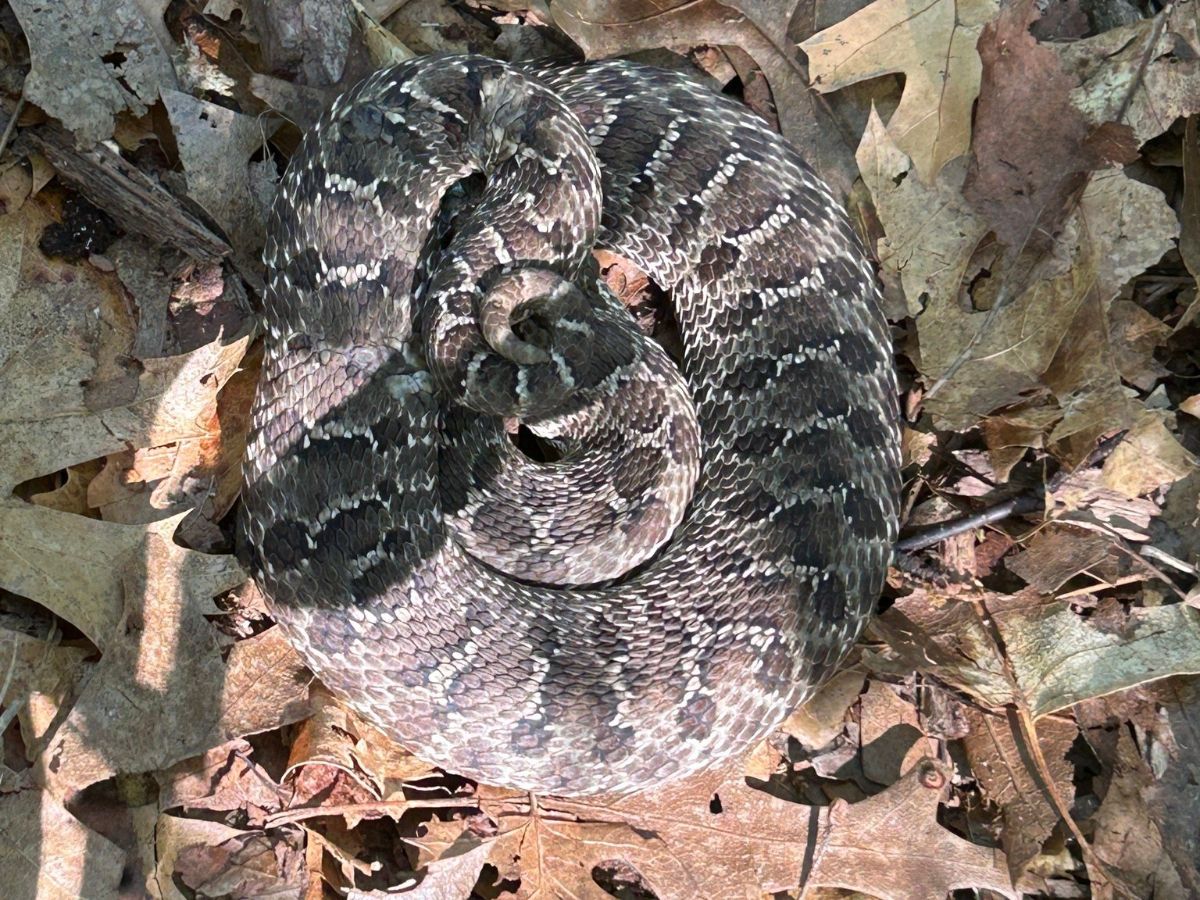
Prairie Rattlesnake and Gophersnake have similar blotches, but neither has the sharply upturned snout, and only the rattlesnake has a rattle and cat-like pupils. Eastern Hog-nosed Snake overlaps on the eastern edge of the range.
How to tell them apart
Western Hog-nosed Snake vs Prairie Rattlesnake›
The quick way to tellLook at the snout. The hog-nosed snake's is upturned like a shovel. The rattlesnake has a normal snout, vertical pupils and a rattle.
Western Hog-nosed Snake: Sharply upturned, shovel-like snout; flattens its head and neck when alarmed.
Prairie Rattlesnake: Broad triangular head, clearly wider than the neck, with two pale diagonal stripes on the cheek.
Western Hog-nosed Snake vs Eastern Hog-nosed Snake›
The quick way to tellLook underneath if you can. The Western's belly and under-tail are mostly black. The Eastern's belly is lighter, and the underside of its tail is lighter still.
Western Hog-nosed Snake: Short; underside black like the belly; no rattle.
Eastern Hog-nosed Snake: Underside of the tail is lighter than the belly; no rattle.
Western Hog-nosed Snake vs Gophersnake›
The quick way to tellLook at the tip of the snout. The Western Hog-nosed has a sharply upturned, shovel-like nose. The Gophersnake's snout is plain and pointed, with no upturn.
Western Hog-nosed Snake: Sharply upturned, shovel-like snout; flattens its head and neck when alarmed.
Gophersnake: Narrow head with a pointed snout and a dark line through the eye; it can flatten it to look triangular.
About the Western Hog-nosed Snake›
A digging snake of sandy prairie, dunes and farmland in the plains, using its shovel snout to root out toads.
Its defense is pure theater: it flattens, hisses and strikes with a closed mouth, and if that fails it may roll over and play dead with its tongue hanging out.
The details
Size Usually 16–25 inWeight Under 1 lbLifespan 10–15 years
Typical range›
Great Plains: southern Canada south through Montana, the Dakotas, Nebraska, Kansas, Oklahoma and Texas, west to eastern Wyoming, Colorado and New Mexico, east to Minnesota, Iowa, Missouri and Illinois.
Activity›
Day active in spring and fall, often underground in heat; burrows and winters below the frost line.
Diet›
Mainly toads and frogs, plus lizards, reptile eggs and small rodents.
Reproduction›
Lays eggs, usually 4–23, in early summer.
Found in parts of 14 states›
Ranges are approximate. It may be found in only part of a state, or be rare there, and snakes can turn up outside of them.