‹ Compare two snakes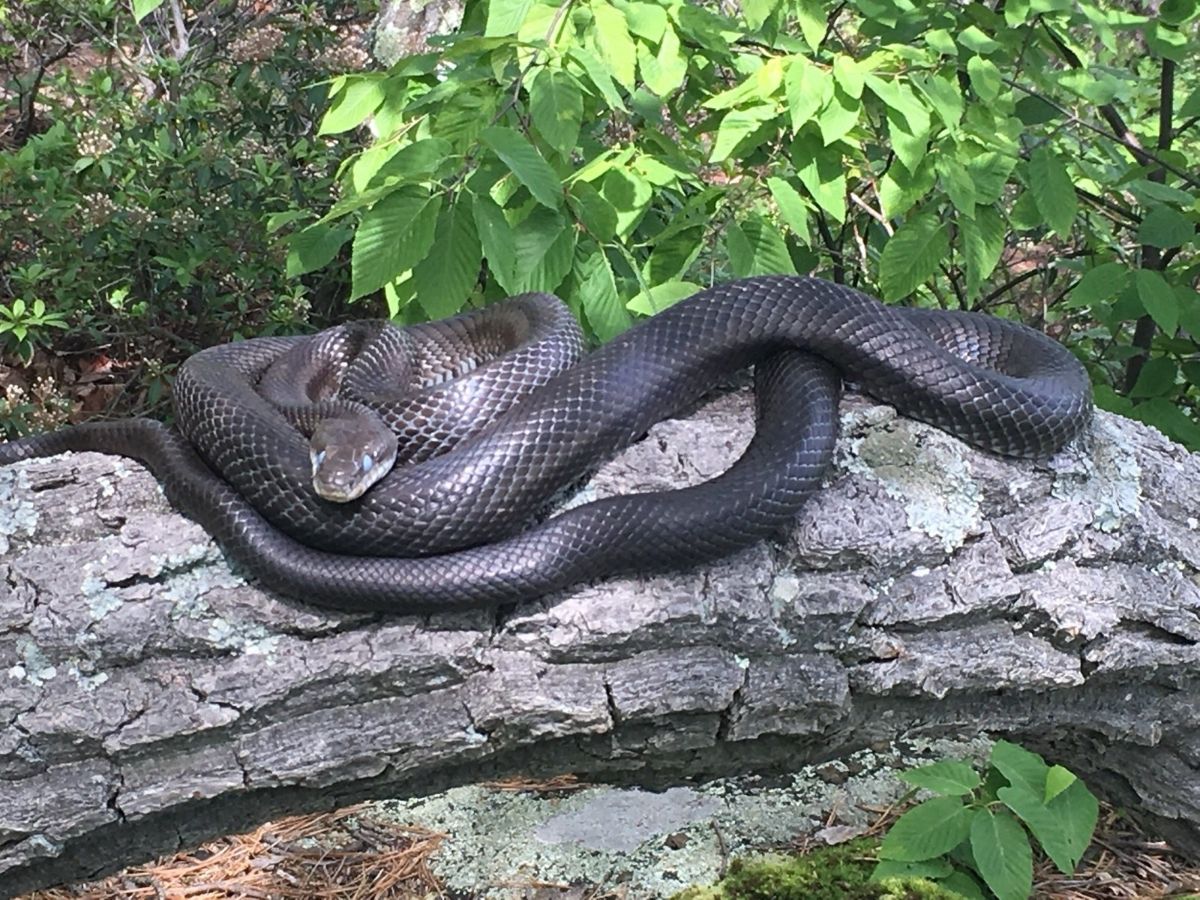
Eastern Ratsnake vs Red Cornsnake
Tap a part to see it on both. Tap it again to turn it off.
Alejandro Santillana, no rights reserved
Eastern Ratsnake
Pantherophis alleghaniensis
Non-venomousDia D, no rights reserved
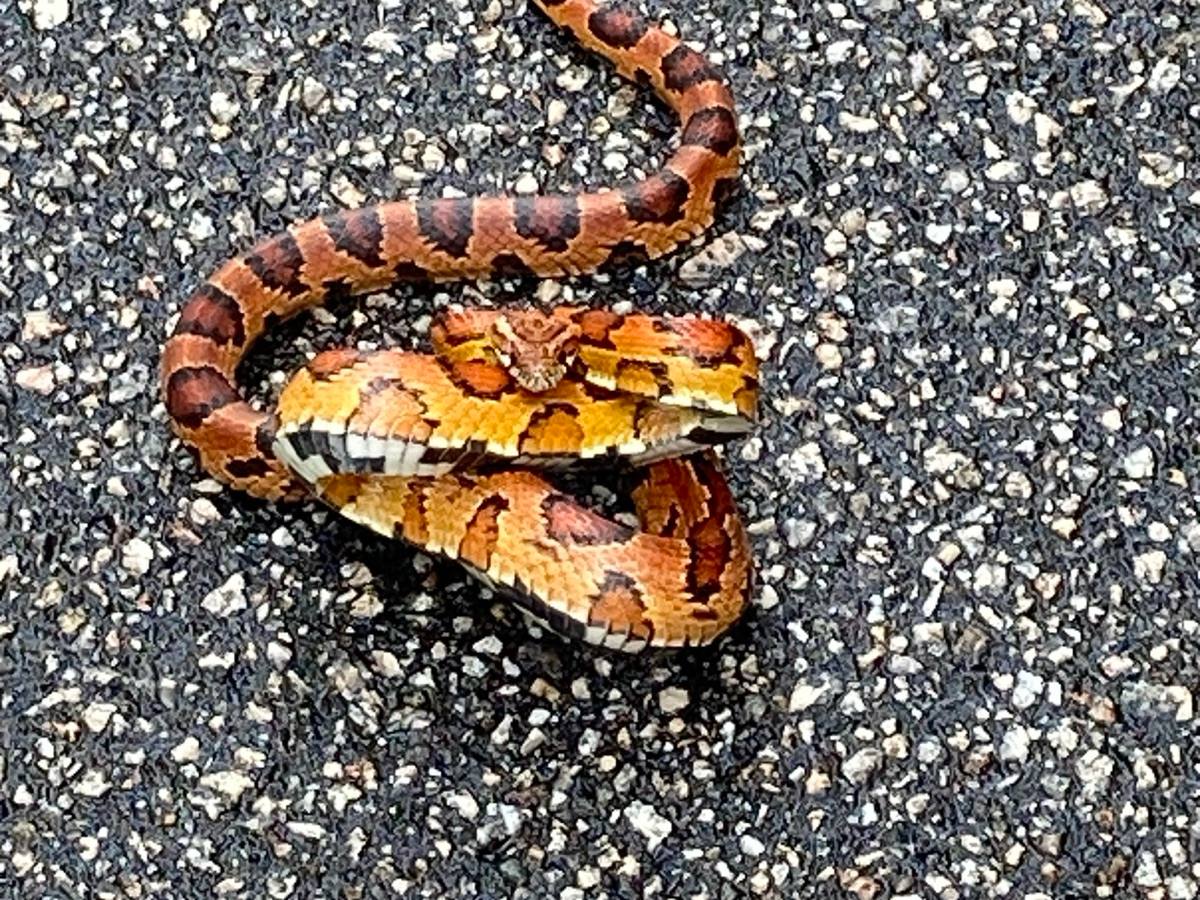
Red Cornsnake
Pantherophis guttatus
Non-venomousThe quick way to tell
Check the top of the head. The cornsnake has a dark spear-point mark pointing forward between the eyes. The Eastern Ratsnake lacks it. Adult Eastern Ratsnakes are also mostly black, or striped in Florida, not red-orange.
Head ★ This settles it
Narrow head barely wider than the neck; white or cream chin and throat.
Narrow head with a spear-point marking running forward between the eyes.
Pattern
Adults black, often with pale skin showing between scales; young gray and blotched.
Bold red-orange saddles edged in black on orange to gray; black-and-white checkerboard belly.
Eyes
Round pupil, fairly large dark eye; no heat-sensing pit.
Round pupil, orange-brown iris; no heat-sensing pit.
Pits
None. There is no pit between the eye and the nostril.
None. There is no pit between the eye and the nostril.
Tail
Tapers evenly; no rattle.
Tapers evenly, often striped underneath; no rattle.
What it does
Climbs trees and walls; vibrates its tail in leaves when cornered.
Calm and slow to bite; freezes or slips into cover.
Where it lives
Atlantic states east of the Appalachians: western Vermont and southern New England south through New York, Pennsylvania, Virginia and the Carolinas to Georgia and all of Florida east of the Apalachicola River, including the Keys.
Southeast: New Jersey south through Florida, west to Louisiana, Tennessee and Kentucky.